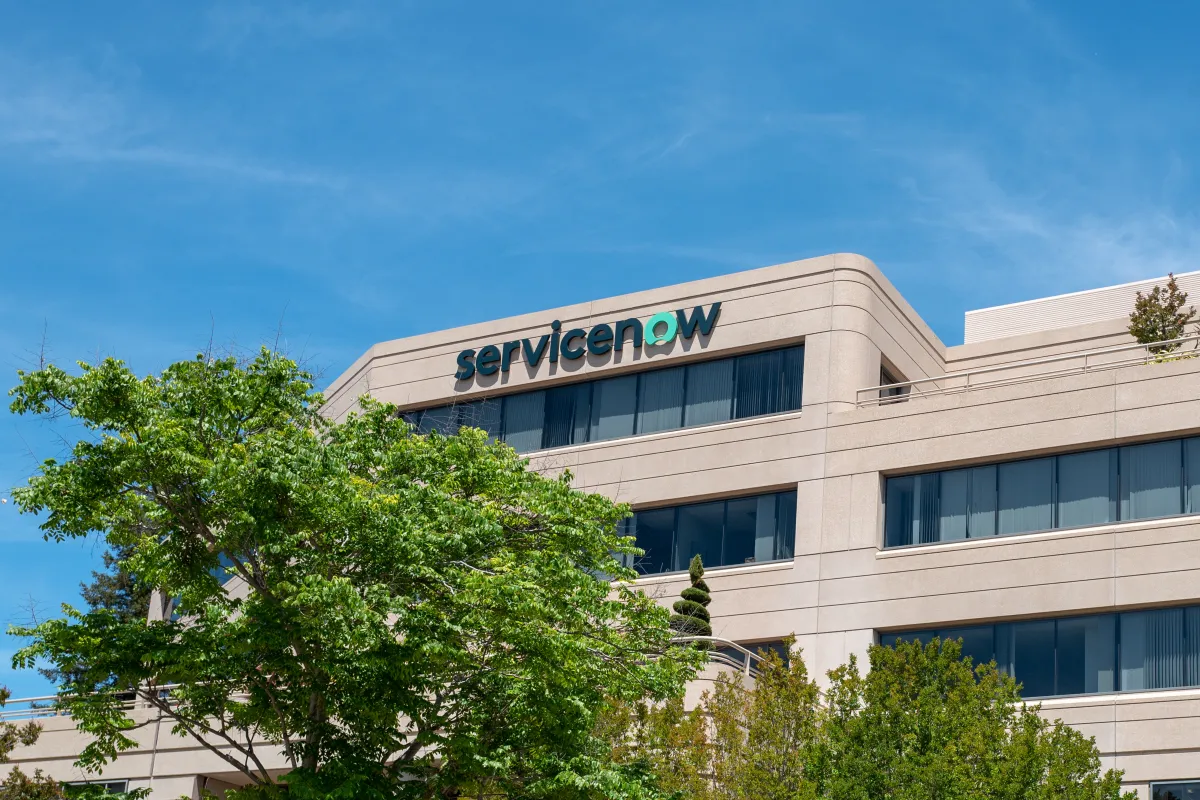
Updated July 24, 2026 6:54 am
In short
ServiceNow has invested $40 million in BusinessNext, taking about a 5% stake to expand AI-driven banking software sales globally as BusinessNext leans on ServiceNow’s distribution network.
- ServiceNow invested $40 million in BusinessNext at a $700 million valuation.
- BusinessNext serves more than 70 banks and gets about half its revenue from outside India.
- The deal combines ServiceNow’s workflow platform with BusinessNext’s banking software expertise.
- BusinessNext will gain access to ServiceNow’s global sales reach to accelerate expansion.
- The move reflects growing pressure on enterprise SaaS vendors to prove value in the AI era.
Update — July 24, 2026 6:54 am
ServiceNow’s India and SAARC chief, Kulmeet Bawa, said the banking sector is now moving from digital experimentation to broader AI-led operations. That adds a new executive view of why the company is leaning into BusinessNext.
The updated source also says BusinessNext has raised more than $60 million in outside funding and was last valued at $181 million in 2021, according to Tracxn. Its existing backers include Avataar Ventures, Norwest Venture Partners and Ascent Capital.
BusinessNext’s leadership said overseas markets are expected to drive much of its future growth, and the company chose ServiceNow over financial investors to get faster access to the U.S. company’s sales network.
ServiceNow has invested $40 million in Indian banking software company BusinessNext, valuing the 24-year-old firm at $700 million and strengthening its bid to win more financial-services customers with AI-enabled tools. The deal gives ServiceNow a deeper foothold in banking software while giving BusinessNext access to the U.S. company’s global sales reach.
The move matters because large enterprise software vendors are under growing pressure to prove they still deserve premium subscriptions in an era where AI-native tools are reshaping how companies buy, deploy, and automate software. For ServiceNow, the investment is both a bet on a profitable niche provider and a way to expand further into banking workflows that are increasingly being redesigned around artificial intelligence.
BusinessNext, based in Noida, India, said the partnership will help it scale beyond its home market and bring its banking-focused platform to more customers overseas. The company already works with more than 70 banks across India, Southeast Asia, the Middle East, and the United States, including the Reserve Bank of India, State Bank of India, and HDFC Bank.
What ServiceNow is buying with the BusinessNext stake
ServiceNow is not simply writing a check and waiting for a financial return. It is investing in a company that already has a product, a customer base, and deep domain expertise in banking, then pairing that with its own workflow automation platform and sales infrastructure.
BusinessNext’s software focuses on customer-facing banking operations, such as CRM-style workflows, while ServiceNow is better known for automating internal enterprise processes like IT service management and HR. Together, the companies intend to offer banks a more complete stack that spans both front-office and back-office use cases.
That combination is central to the logic of the deal. Banks are increasingly looking for software that can connect customer service, compliance, workflow orchestration, and AI-driven automation without stitching together many different systems. ServiceNow is betting that a partnership with a specialized financial-services vendor can help it sell more aggressively into that market.
“Think of it as a strategic partnership, which is cemented with funding,” BusinessNext founder and CEO Nishant Singh said, describing the investment as a way to expand internationally rather than as a conventional cash-out event.
Why banking has become a priority for ServiceNow
ServiceNow has long been associated with enterprise workflow automation, but financial services has become a more important growth avenue as the company looks for higher-value verticals. Banking is especially attractive because institutions are large buyers, often run complex legacy systems, and face constant pressure to digitize customer experience and improve operational efficiency.
In this case, ServiceNow is also buying time and expertise. BusinessNext already understands the regulatory and operational requirements of banks in markets where ServiceNow’s banking presence is thinner. By backing a specialist instead of building every capability internally, ServiceNow can move faster and potentially shorten the sales cycle.
For BusinessNext, the appeal runs in the other direction. Access to ServiceNow’s global sales network could help it reach institutions in markets where it does not yet have scale, especially outside India. That kind of distribution advantage can be more valuable than a pure financial investor, particularly for a profitable company with international ambitions.
How the partnership could change sales for both companies
The collaboration is expected to work as a channel expansion play. BusinessNext has said it wants to “borrow” ServiceNow’s sales machinery in overseas markets where its own direct presence is limited. In practical terms, that means introductions, bundled enterprise conversations, and a clearer route into banks already buying from ServiceNow.
For ServiceNow, the arrangement could help it deepen account relationships with financial institutions by adding a niche offering that addresses banking-specific pain points. That makes the investment more than a financial asset; it becomes a commercial bridge into a vertical that often demands tailored software.
- BusinessNext gains global distribution support.
- ServiceNow gains banking expertise and product depth.
- Banks may get a more integrated AI workflow stack.
- Both firms can sell into the same customer base with complementary tools.
How big is BusinessNext, and what has it built?
BusinessNext is a profitable company with about $32 million in revenue in its latest financial year, according to figures shared in the deal announcement. It employs more than 1,300 people and says roughly half of its revenue now comes from outside India.
The company was founded in 2002 and operated for years under the name CRMNext before rebranding in 2022. That evolution reflects a broader change in the company’s positioning: from a customer-relationship-management vendor to an AI-driven banking platform.
According to Singh, the firm spent years reworking its product stack around what it calls “autonomous banking” — software designed to automate workflows with AI agents while still keeping sensitive data on private infrastructure. The privacy angle is important in financial services, where regulations and data residency concerns often limit how banks can use cloud-based or public AI tools.
Singh said AI was not added as a late-stage marketing feature. Instead, he described it as foundational to the product architecture, saying the company effectively rebuilt its stack around AI and even changed its name to reflect that shift.
What “autonomous banking” means in practice
In BusinessNext’s framing, autonomous banking refers to banking workflows that can be initiated, routed, resolved, or assisted by AI agents with minimal human intervention. That can include customer onboarding, service requests, case handling, and other repetitive tasks that traditionally require staff coordination across multiple systems.
The company says it keeps sensitive data on private AI infrastructure so banks can meet compliance and privacy requirements. That approach is likely to resonate with institutions that want the productivity benefits of AI without exposing regulated data to public models or uncontrolled environments.
| Metric | BusinessNext | What it means |
|---|---|---|
| Investment | $40 million | ServiceNow’s strategic stake in the company |
| Valuation | $700 million | Implied post-money valuation in the deal |
| Ownership | About 5% | ServiceNow’s approximate equity position |
| Revenue | About $32 million | Latest annual revenue disclosed by the company |
| Customers | 70+ banks | Banking footprint across multiple regions |
| Employees | 1,300+ | Size of the company’s workforce |
Who is BusinessNext serving today?
BusinessNext is already embedded in some of India’s most important financial institutions and central banking infrastructure. Its client list includes the Reserve Bank of India, State Bank of India, and HDFC Bank, giving the firm credibility in a market where trust and compliance matter as much as product features.
Its broader customer base stretches across India, Southeast Asia, the Middle East, and the U.S., which helps explain why ServiceNow sees the company as more than a domestic software vendor. Nearly half of BusinessNext’s revenue already comes from overseas, suggesting that its next phase of growth will depend heavily on expansion outside its home market.
That international profile is one reason the deal stands out. The investment is not aimed at rescuing a struggling startup; it is backing a company that already generates revenue, remains profitable, and has demonstrable traction in a highly regulated industry.
Why did BusinessNext choose ServiceNow over a traditional investor?
BusinessNext appears to have prioritized strategic distribution and product alignment over a standard capital injection. Singh said the company selected ServiceNow because it could help unlock markets, customers, and sales capabilities that a purely financial backer would not provide.
That decision reflects a broader trend in enterprise software: startups and mature vendors alike are increasingly looking for strategic investors who can help with go-to-market execution, not just valuation uplift. In a crowded AI software market, access to customers can matter as much as the size of the check.
For a banking software company, the logic is especially clear. Selling into financial institutions is often slow, relationship-driven, and highly trust-based. A global enterprise vendor with existing bank relationships can shorten that path significantly.
Singh said the goal was to tap ServiceNow’s global reach and sales infrastructure in places where BusinessNext has limited presence, underscoring that the partnership is intended to accelerate expansion rather than simply raise capital.
How much has BusinessNext raised before this deal?
Before the ServiceNow investment, BusinessNext had raised more than $60 million from external investors. Its backers include Avataar Ventures, Norwest Venture Partners, and Ascent Capital, according to company and market data referenced in the report.
The company’s previous valuation was far lower. Tracxn, a private market intelligence platform, valued it at $181 million in 2021. The new $700 million valuation therefore represents a sharp step up and suggests that the business has either significantly improved its fundamentals, increased its strategic importance, or both.
For existing investors, the deal likely offers validation that enterprise AI infrastructure in financial services is becoming more valuable. For ServiceNow, it means buying into a company with operating history, customers, and a mature product line rather than an early-stage bet.
What does ServiceNow gain in the AI era?
ServiceNow gains a relevant answer to a difficult question facing every established SaaS vendor: how to stay indispensable when customers are reassessing what software they truly need. The rise of AI-native products has made some buyers more skeptical of legacy enterprise tools, especially when those tools do not appear to deliver enough automation or intelligence.
By investing in BusinessNext, ServiceNow can tell banks a more compelling story. It is not only a workflow platform; it is part of a broader AI-enabled operating model for financial institutions. That positioning may help it defend revenue and expand wallet share in a market where software spend is increasingly scrutinized.
The move also fits ServiceNow’s broader approach of using acquisitions, investments, and partnerships to grow beyond its original IT-service-management roots. Rather than attempting to build every product line organically, the company has increasingly leaned on ecosystem moves to reach adjacent markets faster.
Why this deal fits the current SaaS pressure point
Enterprise software vendors are dealing with an uncomfortable market reality: customers want automation and AI, but they are also looking for proof that software budgets are producing measurable value. That tension is putting pressure on classic subscription models and forcing vendors to prove they can evolve.
ServiceNow’s stake in BusinessNext should be read in that context. It is a strategic move designed to help the company remain relevant in a banking market that is rapidly modernizing and increasingly willing to buy from vendors that can demonstrate AI outcomes, not just software licenses.
- Traditional SaaS vendors face rising competition from AI-native alternatives.
- Banks want automation that works within compliance constraints.
- Strategic partnerships can speed market entry and product depth.
- Distribution access is becoming as important as product innovation.
Timeline of the BusinessNext deal and company evolution
The following timeline puts the main milestones in context.
| Year | Milestone | Why it matters |
|---|---|---|
| 2002 | BusinessNext founded | Company begins serving enterprise customers in India |
| 2021 | Valued at $181 million | Provides a baseline before the latest jump in valuation |
| 2022 | Rebrands from CRMNext to BusinessNext | Signals a shift toward AI-driven banking software |
| 2026 | ServiceNow invests $40 million | Strategic partnership deepens global financial-services push |
What happens next?
The most immediate outcome will likely be tighter commercial alignment between the two companies. Expect joint selling motions, more coordinated product messaging, and a stronger push into banks that want AI-enabled workflow automation without giving up regulatory control over their data.
Longer term, the investment could become a test case for how large enterprise software vendors participate in the AI transition. If ServiceNow and BusinessNext can prove that combining workflow automation with banking-specific intelligence creates a clearer sales proposition, similar deals could follow in other regulated sectors.
For now, the message is straightforward: ServiceNow is not waiting for the AI wave to pass over its core market. It is using capital, partnerships, and vertical expertise to place itself closer to the banks that are deciding which software platforms will power the next phase of digital transformation.
BusinessNext, meanwhile, gets something many software companies want but few achieve: a global route to market paired with strategic credibility from one of the best-known names in enterprise automation.
In a sector where growth increasingly depends on combining AI capabilities with trusted distribution, both sides may have found exactly what they needed.
Frequently asked questions
How much did ServiceNow invest in BusinessNext?
ServiceNow invested $40 million in BusinessNext. The deal values the Indian banking software company at $700 million and gives ServiceNow an approximate 5% stake, while also formalizing a broader strategic partnership focused on financial-services AI.
Why is ServiceNow investing in BusinessNext?
ServiceNow is investing in BusinessNext to strengthen its AI banking strategy and expand deeper into financial services. The partnership gives ServiceNow access to banking-specific expertise while helping both companies sell a more complete workflow and automation offering to institutions.
What does BusinessNext do?
BusinessNext builds software for banks, with a focus on customer-facing workflows and AI-driven automation. The company says its platform supports “autonomous banking” by using AI agents to handle banking processes while keeping sensitive data on private infrastructure for compliance and privacy.
Which banks use BusinessNext?
BusinessNext says it works with more than 70 banks across India, Southeast Asia, the Middle East, and the U.S. Its customers include the Reserve Bank of India, State Bank of India, and HDFC Bank, among other financial institutions.
How does this deal help BusinessNext grow?
The deal helps BusinessNext grow by giving it access to ServiceNow’s global sales network and enterprise relationships. That should make it easier for the company to expand beyond India, especially in markets where it has limited direct reach.