Updated September 2, 2026 1:53 pm
In short
Nvidia has launched DLSS 5 in NBA 2K27 only, with no timetable for other teased games, and the feature still requires very strong hardware despite a more restrained look in the official demo.
- DLSS 5 launches officially on September 3 with NBA 2K27 as the first supported game.
- Support at launch is limited to RTX 50-series GPUs and GeForce Now.
- Nvidia says developers can fine-tune how much the AI changes a scene.
- The feature still carries a significant performance cost despite improved visuals.
- Earlier DLSS 5 demos drew criticism for altering character appearances too aggressively.
Update — September 2, 2026 1:53 pm
Nvidia says DLSS 5 still has no official support beyond NBA 2K27, and it did not say when any of the other games it showed in March might get the feature.
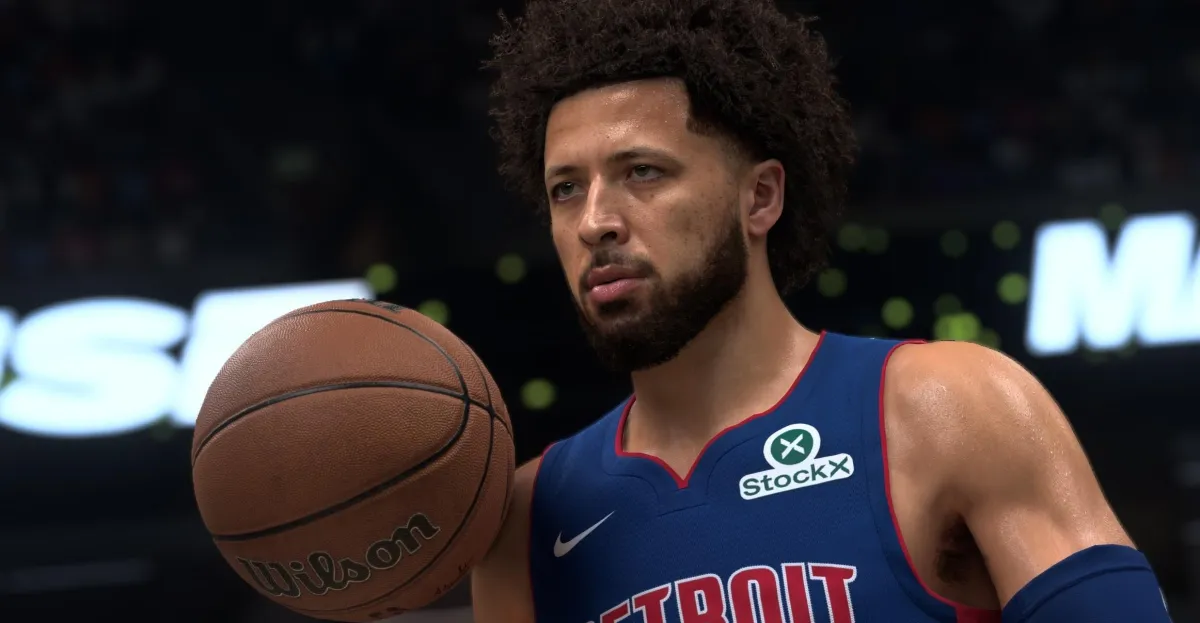
In the company’s briefing, the NBA 2K27 implementation also looked less extreme than the early demos, with the AI changes reading more like a realism boost than a full character makeover.
Nvidia also said the feature remains demanding even on newer hardware: the company says a single RTX 5060 can hit 1080p with ray tracing and DLSS 5 on ultra settings only if paired with one of the fastest gaming CPUs and 6x frame generation.
Update — September 1, 2026 4:25 pm
Nvidia’s launch still appears limited to NBA 2K27 for now, and the company has not said when, or if, other previously shown games will get DLSS 5.
In its press briefing, Nvidia also showed that the NBA 2K27 version looks more restrained than its earlier demos, with the AI changes leaning toward sharper realism rather than the more exaggerated character shifts that drew backlash in March.
The company says a single RTX 5060 can reach 1080p in the game with ray tracing and DLSS 5 at ultra settings, but only with one of the fastest CPUs and 6x frame generation enabled.
Nvidia has officially launched DLSS 5 on September 3, debuting the upgraded AI graphics feature in NBA 2K27 and limiting formal support to RTX 50-series GPUs and GeForce Now. The rollout matters because it turns one of the company’s most polarizing graphics technologies into a real product, but it also shows how narrow the first wave of support remains.
The release follows months of debate over whether DLSS 5 enhances games or overprocesses them. Nvidia says the technology is its biggest graphics advance since real-time ray tracing, while critics have worried that its AI-driven changes can alter character detail too aggressively. The first official implementation suggests the company is trying to control that narrative with tighter developer tools and a more measured visual result.
What Nvidia launched and why it matters
Nvidia has moved DLSS 5 from presentation stage to shipping feature, but only in a highly controlled form. The technology is now officially available in NBA 2K27, which launches on PC September 3 at 9 p.m. PT, and is supported on RTX 50-series desktop and laptop GPUs as well as GeForce Now cloud streaming.
That limited debut is important for two reasons. First, it gives Nvidia a live test case for its latest AI upscaling and frame-generation system. Second, it exposes the gap between Nvidia’s broad ambition for the technology and the much smaller reality of its initial rollout.
DLSS has long been one of Nvidia’s defining features, helping its graphics cards produce smoother gameplay and higher frame rates. DLSS 5 is the company’s attempt to push that concept further by using AI not just to sharpen frames, but to shape the visual presentation of scenes in more granular ways.
How DLSS 5 works
DLSS 5 is designed to let Nvidia’s AI system reconstruct and enhance a game’s image using information from the original scene. The company says the goal is to improve realism while giving developers more control over how the final image changes.
In practice, that means a studio can decide how aggressively DLSS 5 should affect a scene. Developers can adjust the look of characters, backgrounds, props and lighting separately, rather than applying a one-size-fits-all treatment to every frame.
Developers get more control than before
Nvidia says teams can use sliders and tuning tools to decide where the AI should do the most work. One project might keep faces largely unchanged while using the technology to improve foliage, food, metal surfaces or ambient textures. Another may choose a broader visual pass that affects the entire scene more strongly.
That level of control is one of Nvidia’s main arguments for DLSS 5. The company wants it to be seen as a creative tool, not just a performance booster. Nvidia is also trying to separate the official version from early reaction to its demonstrations, which many observers felt pushed character renders too far.
Nvidia has described DLSS 5 as its most important graphics leap since real-time ray tracing arrived in 2018, framing the feature as a major step forward in AI-assisted rendering.
Why the launch drew skepticism
Nvidia’s March reveal triggered immediate backlash because the early examples appeared to noticeably alter character appearances. Instead of simply improving clarity or detail, some of the shown images made people look heavily reshaped, leading to jokes and criticism across gaming and tech communities.
The most discussed reaction centered on whether the feature was enhancing games or turning them into something closer to a live AI filter. For critics, the concern was not only visual style but also authorship: if the AI can substantially reshape what players see, how much of the final image still belongs to the game’s original art direction?
That concern has not gone away. Even with the official release, the broader question remains whether DLSS 5 will be welcomed as a graphics breakthrough or treated as an intrusive layer that changes the look of games in ways players do not want.
What game supports DLSS 5 first?
NBA 2K27 is the first and, for now, only official game to support DLSS 5 at launch. Nvidia highlighted the title in press briefings as the showcase for the technology’s public debut.
That choice makes strategic sense. Sports games are visually dense, rely heavily on detailed player models and arenas, and can benefit from sharper textures and smoother motion. They are also a good venue for Nvidia to demonstrate subtle environmental enhancements without the same scrutiny that a story-driven game might bring to characters and faces.
Still, the narrowness of the launch is striking. During its March announcement, Nvidia pointed to several other games as examples of what DLSS 5 could look like. At release, those titles are not yet officially listed as supported.
| Item | Status at DLSS 5 launch | Notes |
|---|---|---|
| Official launch date | September 3, 2026 | Timed with the PC release of NBA 2K27 |
| First supported game | NBA 2K27 | Only official title at launch |
| Supported hardware | RTX 50-series GPUs and GeForce Now | Desktop, laptop and cloud access |
| Previously teased games | Not officially confirmed at launch | Includes titles shown in March such as Resident Evil Requiem, EA Sports FC, Starfield and Hogwarts Legacy |
| Performance target | High-end settings at 1080p | Requires very strong CPU support and heavy frame generation |
Which GPUs can use DLSS 5?
DLSS 5 is officially aimed at Nvidia’s RTX 50-series desktop and laptop graphics cards, plus cloud gaming through GeForce Now. That is a major constraint, since it leaves older RTX owners out of the supported launch window.
In Nvidia’s own framing, the technology is not being positioned as a universal upgrade for the entire RTX ecosystem. Instead, it is a premium feature tied to the newest hardware generation.
That limitation has both technical and business implications. It helps Nvidia showcase the capabilities of its newest chips, but it also raises the bar for players who want to experience the feature locally rather than through the cloud.
Can a midrange GPU really run it?
Nvidia says a single RTX 5060 can handle NBA 2K27 at 1080p with ray tracing and DLSS 5 set to ultra, but the company adds an important caveat: that result depends on one of the fastest CPUs available and on 6x frame generation.
That means the game is not actually rendering six full frames for every six images shown. Instead, one true frame is being expanded into several displayed frames by the AI pipeline. The result may look smooth, but the underlying rendering load remains a reminder that DLSS 5 is not free performance.
Nvidia’s own estimates suggest the feature still imposes a 50% to 60% performance penalty. In other words, it helps create a more advanced image, but it does not magically remove the cost of high-end graphics processing.
How much visual change is too much?
That is the central question surrounding DLSS 5. Nvidia wants the system to be seen as configurable enhancement, while critics fear it may drift into over-stylized image manipulation.
In the official NBA 2K27 examples shown to reporters, the changes appeared more restrained than in the March reveal. Rather than turning people into exaggerated AI versions of themselves, the updated demos focused on realism, texture and lighting. The players looked more grounded and detailed, not wildly remade.
That difference matters. If the first public use case looks closer to selective enhancement than full-scale image rewriting, Nvidia may have a better chance of winning over skeptical gamers. But the company still has to prove that the effect remains consistent across different art styles and engines.
Why the early demos caused a backlash
The problem with the first DLSS 5 examples was not just technical quality. It was also aesthetic judgment. Some of the images appeared to over-sharpen or reshape faces in a way that made them look less like game assets and more like synthetic renderings.
That created an immediate social-media reaction and a lasting reputation problem. Once players start joking that a graphics feature is “yassifying” characters, the burden shifts to Nvidia to show that the tool can be subtle when it needs to be.
For game studios, that is not a trivial concern. Visual consistency is a core part of identity, and a tool that changes how characters or environments appear can quickly become a creative liability if the results are not carefully tuned.
What Nvidia told developers
Nvidia’s message to studios is that DLSS 5 is not an all-or-nothing system. Developers can control the intensity of the effect and choose exactly which parts of the scene receive more AI enhancement.
The company says that means teams can preserve character design while boosting the quality of non-human elements such as scenery, reflective surfaces, food, clothing materials or background objects. In theory, that gives game creators a way to balance performance, realism and artistic intent.
For developers, the promise is flexibility. For players, the test will be whether that flexibility is actually used to maintain visual coherence rather than to chase dramatic before-and-after marketing shots.
Why this launch is smaller than Nvidia’s ambitions
The debut of DLSS 5 is notable partly because it is so limited. Nvidia presented the feature in March as a major step in graphics technology, but by launch day it is still attached to a single game and a narrow set of devices.
That gap suggests the company is being cautious after the criticism surrounding its reveal. A controlled release in one sports title gives Nvidia time to refine the pitch, monitor the visual reception and avoid a wider backlash from rolling it out across several blockbuster games all at once.
It also gives the company a chance to build a proof point. If NBA 2K27 looks good and performs well, Nvidia can point to a real game rather than a demo reel. If not, the feature risks being remembered as an overhyped showcase that struggled in real-world use.
What happens next?
Nvidia has not said when DLSS 5 will arrive in additional games, and it has also not clearly restated that the titles featured in March will definitely receive the feature later. That uncertainty is part of the story now.
For the moment, the company is offering a launch with strong marketing language but limited breadth. The key next step will be whether it expands beyond NBA 2K27 quickly enough to convince developers and players that DLSS 5 is a platform feature rather than a one-off showcase.
Until then, the technology will likely be judged on three fronts: image quality, performance cost and how much control developers really have over the final look. Those factors will determine whether DLSS 5 becomes a mainstream tool or remains a niche experiment for the newest GPUs.
Timeline of DLSS 5 so far
The rollout of DLSS 5 has moved from tease to launch in a matter of months, but the path has been shaped as much by criticism as by technical ambition.
- March 2026: Nvidia unveils DLSS 5 and presents it as a major graphics breakthrough.
- Spring 2026: The early demos spark debate over how much the technology changes character appearances.
- Late summer 2026: Nvidia briefs reporters on NBA 2K27 examples and shows more controlled visual results.
- September 3, 2026: DLSS 5 officially launches with NBA 2K27 on PC, RTX 50-series GPUs and GeForce Now.
Why gamers should care
Gamers should care because DLSS 5 could shape the next phase of PC graphics the same way earlier DLSS releases helped define Nvidia’s market lead. If the technology works well, it could deliver more realistic images without requiring every game to run at native rendering costs.
But gamers should also care because the first version appears to bring sharper trade-offs. The technology is tied to the latest GPUs, depends on heavy frame generation and still imposes a notable performance burden. That means it is not simply a free boost; it is a high-end feature with real costs and visible consequences.
Whether DLSS 5 becomes a must-have rendering standard or a contentious visual layer will depend on what happens after this launch. For now, Nvidia has finally shipped its newest AI graphics tool. The hard part is convincing players that it improves games more than it changes them.
Bottom line
DLSS 5 is now real, but its debut is cautious, restricted and closely watched. Nvidia has paired it with NBA 2K27 and RTX 50-series hardware in an effort to prove the technology’s value after months of skepticism. The launch may settle some questions about visual quality, yet it also creates new ones about access, performance and how far AI should be allowed to reshape games.
Frequently asked questions
What is DLSS 5?
DLSS 5 is Nvidia’s latest AI graphics technology, designed to improve image quality and frame generation in games. Nvidia says it can enhance scenes more flexibly than earlier versions by giving developers greater control over how the AI affects characters, environments and visual details.
Which game supports DLSS 5 first?
NBA 2K27 is the first official game to support DLSS 5 at launch. Nvidia is using the sports title as the showcase for the feature’s debut, with the PC version launching on September 3 at 9 p.m. PT.
What GPUs can use DLSS 5?
DLSS 5 is officially available on Nvidia RTX 50-series desktop and laptop GPUs, as well as through GeForce Now. Nvidia has not made the launch feature broadly available to older RTX cards, making the rollout much narrower than many players expected.
Does DLSS 5 improve performance?
Yes, but not without trade-offs. Nvidia says DLSS 5 can help deliver advanced visuals and smoother gameplay, but the company also estimates a 50% to 60% performance hit, and its own demo requires heavy frame generation to reach high settings.
Why is DLSS 5 controversial?
DLSS 5 is controversial because early Nvidia demos appeared to change character appearances too dramatically, prompting criticism that the feature looked more like an AI filter than a graphics upgrade. The official NBA 2K27 examples appear more restrained, but skepticism remains.