In short
Lingverse has raised $29 million to build iKairos, an AI wearable and tabletop device that claims to capture daily moments and turn them into AI-generated memories. The product revives Jibo’s legacy, but it also faces obvious questions about privacy, utility, and whether people want their lives turned into AI slop.
- Lingverse says it raised $29 million to build iKairos, a wearable AI device and home-mounted assistant.
- The product borrows the legacy of Jibo, the beloved social robot that failed commercially.
- iKairos is being marketed as an AI journal that turns real-life moments into generated reflections and images.
- Lingverse says it will not record video, will use a camera shutter, and will not train models on user data.
- The device enters a crowded market that already includes smart speakers, AI wearables, and home assistants from major tech firms.
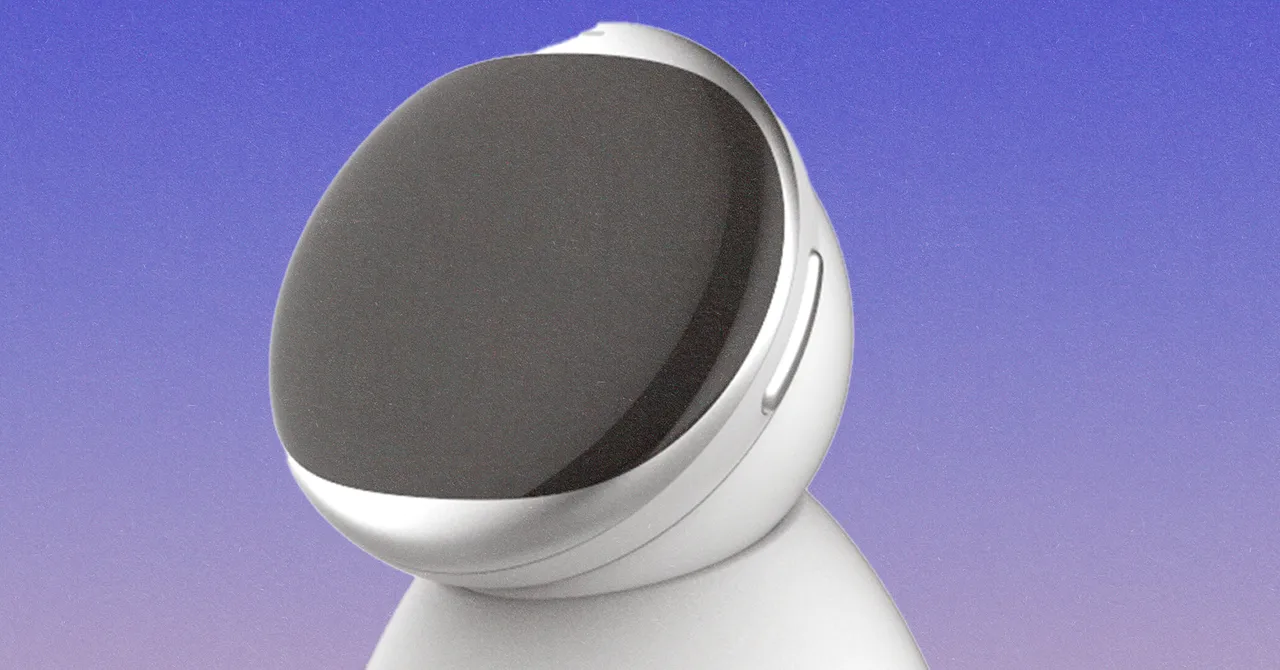
Lingverse, the company formerly known as Ling AI, says it has raised $29 million to build iKairos, a wearable AI device that borrows the nostalgia of Jibo while pushing far deeper into always-on personal data capture. The product is meant to sit on your body or on a table mount, observe your surroundings, and turn everyday moments into AI-generated memories, raising fresh questions about privacy, usefulness, and whether the market really wants another camera-wearing assistant.
The announcement matters because it revives one of the internet’s most beloved failed robot brands at the same moment tech giants and startups are racing to define the next category of AI hardware. But unlike the original Jibo, which aimed to be a charming home companion, iKairos appears designed less to socialize and more to record, summarize, and remix life into what Lingverse calls an AI journal.
What is iKairos, and why is it getting attention now?
iKairos is a new AI wearable and tabletop device from Lingverse that the company says will capture moments from daily life and convert them into generated images, reflections, and assistant-style interactions. The timing is notable: generative AI hardware is becoming crowded, and brands are hunting for a compelling consumer product that can do more than simply answer questions.
Lingverse is framing iKairos as the successor to Jibo’s emotional idea of a friendly home robot. Jibo, which launched in the mid-2010s, became a cult favorite for its expressive movements and playful personality, but it never found a durable market. iKairos borrows that legacy while moving the concept into a wearable form factor better suited to the current AI boom.
From robot companion to wearable recorder
The original Jibo was stationary, voiced, and designed to feel like a personality in the room. iKairos keeps the concept of a home presence, but extends it into a pendant, clip-on device, and desk-mounted unit. That flexibility suggests Lingverse wants the product to follow the user through the day and then continue observing from a fixed point at home.
According to the company, that dual perspective is important because it gives the system a more complete view of a person’s context. In practice, that means iKairos is not just a voice assistant, but a sensor-rich logging device with ambitions to create a memory layer on top of daily life.
How does the iKairos device work?
Lingverse says iKairos can be worn as a pendant or clipped to clothing, and also used in a mount that lets it sit on a surface and watch the room. The company has shared few technical details, but it describes the product as capable of answering questions, completing tasks, and providing the kinds of features users now expect from modern AI assistants.
The most distinctive claim is that iKairos watches for important moments and then turns them into visual summaries. The company has referred to the product as an AI journal and says it is built to preserve daily reflections rather than raw footage. In other words, the device is meant to decide what matters, save it, and then present it back to the user in a stylized form.
What Lingverse says it captures
Lingverse says iKairos uses a camera and audio context to assess what is happening around the wearer. The company describes a quality filter that cross-checks scene details with sound, including where the user is, who is present, and what is being said. It says only moments that pass that filter make it into the journal.
That framing is intended to distinguish the product from simple lifelogging devices. Still, the end result appears to be a system that transforms lived experience into machine-generated imagery, a concept that may appeal to some users and unsettle others.
| Key detail | What Lingverse says | Why it matters |
|---|---|---|
| Product name | iKairos | Signals a reboot of the Jibo-era vision |
| Company | Lingverse, formerly Ling AI | Shows the startup is repositioning around AI hardware |
| Funding | $29 million | Gives the company capital to build and market the device |
| Form factor | Wearable pendant, clip-on, or table mount | Combines mobile and home use cases |
| Expected price | $199 to $249 | Places it in the premium consumer gadget range |
| Privacy claim | No video recording, shutter included, no model training on user data | Attempts to answer surveillance concerns |
Why is Lingverse invoking Jibo again?
Lingverse is leaning on Jibo because the name still carries emotional weight in technology circles. Jibo was not a commercial success, but it became a symbol of a product that felt ahead of the market: cute, conversational, and technically limited by the era in which it appeared.
Jiawei Gu, Lingverse’s chief executive, said the company sees iKairos as a continuation of that original ambition. Gu told WIRED that the timing is now better for combining the hardware, software, and AI capabilities that Jibo lacked.
“It’s the right time to combine all the stuff,” Jiawei Gu said, describing iKairos as a way of carrying forward Jibo’s original dream.
Gu’s connection to Jibo lends the project a degree of continuity. Although he was not part of the founding team, he served on Jibo’s board before the company shut down. Lingverse also says it has the blessing of Jibo’s founders, even though it does not own the intellectual property rights to Jibo.
What Lingverse does and does not own
That point matters because brand heritage can be a powerful marketing tool, but it does not always translate into legal ownership. Lingverse lists Jibo as a product on its site, yet the company says it does not own the full rights to the name or the original brand. It does say it holds several core Jibo patents, but it has not publicly identified which ones.
In practical terms, the company is using Jibo as a conceptual and cultural reference point rather than claiming to be a direct continuation of the old business. That strategy may help it attract attention, but it also makes the project vulnerable to skepticism if the new product does not clearly justify the comparison.
What will iKairos cost, and when can people buy it?
Lingverse says iKairos will likely cost between $199 and $249, with an additional subscription expected to unlock other AI features. The company also says presales are planned for later this year, though it has not yet provided a firm launch date.
That pricing places the device in a competitive consumer hardware tier. It is affordable enough to invite curiosity, but expensive enough that buyers will expect a meaningful amount of utility, polish, and trust.
Projected rollout timeline
- Wednesday: Lingverse announces the $29 million funding round.
- Later this year: Presales are expected to begin.
- After launch: Subscription-based AI features may follow.
How is Lingverse handling privacy concerns?
Lingverse says the device is designed to avoid constant video recording and to keep more processing local to the hardware. The company says iKairos does not record video at all, instead taking snapshots of the environment and deleting them later. It also says the device only records audio when it detects a human voice.
The company further says the wearable will include a physical camera shutter, and that data will either be processed on-device or encrypted while in transit. Lingverse says user data will not be used to train its AI models.
In response to questions, a company representative said the device captures real moments, then runs them through a quality filter before anything is added to the journal.
Those assurances are likely to be central to the product’s success or failure. The more iKairos resembles a personal memory device, the more trust it will need. Consumers may be intrigued by the promise of automatic journaling, but many will hesitate before inviting a camera-equipped AI system into private spaces.
Why the privacy pitch may not be enough
Even if Lingverse avoids storing video, the device still depends on observing people, places, and conversations. That means the privacy debate is not only about data retention, but also about consent, social norms, and whether users around the wearer are comfortable being captured by a device that is designed to notice them.
AI hardware companies often present local processing and encryption as proof of responsibility. But the core concern is broader: people may not want their daily life translated into AI-generated “memories” in the first place, especially if the device is always listening for a voice trigger or watching for moments to preserve.
What makes this device different from other AI wearables?
iKairos enters a market that is already exploring AI journals, wearables, and camera devices. Lingverse itself has experience in this area through Luka AI Reading bot and the Luka AI cube, which it showed at CES 2026. Those products demonstrate the company’s interest in making AI feel physical, domestic, and consumer-friendly.
But the concept of iKairos is broader than a child-friendly educational gadget or a chatbot on a screen. It tries to merge companion device, memory tool, and assistant into one object that follows the user through different settings.
- Wearable presence: It can go with the user through the day.
- Home mode: It can sit on a mount and observe from a fixed spot.
- Memory creation: It generates AI images and reflections from captured moments.
- Assistant functions: It is meant to answer questions and help with tasks.
That combination gives iKairos an unusual identity. It is part assistant, part camera, part scrapbook, and part surveillance-adjacent device. Whether consumers see that as appealing or intrusive will likely determine its prospects.
Who else is competing in the AI home-device race?
Lingverse is not entering a quiet market. Major technology companies are investing heavily in the next generation of smart speakers and home assistants, and many of them have far deeper distribution channels and stronger brand trust than a startup can command.
Google recently introduced a new AI-enabled smart speaker. Apple is widely believed to be working on a home hub with a display. Amazon continues to push its Alexa ecosystem. OpenAI, working with designer Jony Ive, is also expected to produce some kind of home-oriented assistant device.
That competitive backdrop matters because consumer hardware is unforgiving. A novel idea is not enough; a device needs to earn a place in the home, provide recurring value, and avoid becoming another novelty gadget that gets tucked in a drawer.
How the market is already crowded
There are also several smaller products competing for the same attention. The market already includes AI wearables and logging devices such as Bee AI and the Looki L1 AI bodycam, and Google Photos already offers AI-powered image transformations for people who simply want to rework personal memories.
In other words, iKairos is entering a category where the novelty is no longer the only selling point. The device must justify why a person should wear, mount, or trust it over software that already lives on a phone or in a cloud app.
Could iKairos become an AI slop machine?
That is the central criticism hanging over the product. Lingverse says iKairos will generate reflections and images from real moments, but the company’s own visuals lean heavily into the uncanny, synthetic look that has become associated with low-quality AI output.
The company insists it will keep the output under control through quality checks and user selection. It says users can choose which images best capture a moment and that the system will verify context before adding anything to the journal. Even so, the challenge is obvious: once a device is making daily life into visualized memory, the difference between sentimentality and automated content can get thin quickly.
A Lingverse representative said the journal is intended to help users look back on their days and understand their lives over time, rather than simply dump raw data into a feed.
That goal sounds benign. But if the images feel generic, over-processed, or emotionally manipulative, the product may reinforce the very criticism it is trying to escape. The term “AI slop” has become shorthand for content that is technically generated but aesthetically empty, and it is hard to imagine a memory product being more vulnerable to that label.
Why this launch matters beyond one startup
The reappearance of Jibo in almost any form is a reminder that consumer AI hardware is still looking for its defining object. Smartphones absorbed many assistant features, smart speakers normalized voice control, and wearables already track health and location. What remains unclear is whether people want a device that interprets their lives back to them.
iKairos represents one possible answer: a personal AI that becomes meaningful not by performing tasks in the moment, but by archiving, selecting, and reconstructing life afterward. That vision fits the age of generative AI, where systems can produce images, summaries, and conversational reflections with ease.
At the same time, it raises the possibility that consumer AI hardware will increasingly blur the line between convenience and constant observation. The product’s promise is that it helps people remember. Its risk is that it encourages them to live with yet another device that is always capturing, sorting, and interpreting their behavior.
Bottom line
Lingverse has revived the emotional language of Jibo for a new kind of device: one that is less about a lovable robot sitting in your home and more about an AI wearable that turns daily life into curated memory. With $29 million in fresh funding, an expected price between $199 and $249, and a planned presale later this year, iKairos is now one of the more unusual entries in the growing market for AI home and wearable devices.
Whether it becomes a useful personal journal or just another glossy example of AI-generated content will depend on execution, trust, and whether consumers want their lives transformed into machine-made reflections in the first place.
Frequently asked questions
What is iKairos?
iKairos is a new AI wearable and tabletop device from Lingverse that is designed to observe daily life and turn selected moments into an AI journal. The company says it can also answer questions and handle assistant-style tasks.
How much will iKairos cost?
Lingverse says the device will likely cost between $199 and $249, with a subscription expected for extra AI features. The company has not yet announced a final retail price or shipping date.
Is iKairos related to Jibo?
Yes, iKairos is being positioned as a spiritual successor to Jibo, the social robot that became a cult favorite before shutting down. Lingverse says the project carries forward Jibo’s original dream, though it does not own Jibo’s full intellectual property rights.
Does iKairos record video all the time?
No, Lingverse says the device does not record video and instead takes snapshots that are later deleted. The company also says it only records audio when a human voice is detected and includes a physical camera shutter.
Why are people worried about iKairos?
People are concerned because the device is built to observe personal moments and convert them into AI-generated content. Even with privacy safeguards, the idea of a wearable camera that creates memories from daily life raises questions about consent, surveillance, and low-quality AI output.