In short
Travis Kalanick’s Atoms is reportedly moving toward the robotaxi business after raising $1.7 billion. The startup is said to be hiring aggressively, considering acquisitions and talking with Uber about possible technology use.
- Atoms raised $1.7 billion in a round led by Andreessen Horowitz.
- The startup is reportedly preparing for hiring and acquisitions.
- Uber has invested $100 million in Atoms and has discussed possible use of its robotaxi tech.
- Robotaxis appear to be a major part of Atoms’ plans, though not necessarily the only one.
- The company’s strategy echoes Kalanick’s long-standing interest in transportation and autonomy.
Travis Kalanick’s startup Atoms is reportedly positioning itself to become a serious player in robotaxis, with plans that could include hiring aggressively, buying companies and potentially selling its autonomous vehicle technology to Uber. The move matters because it signals Kalanick’s clearest push yet to re-enter the mobility race after his Uber exit, this time through self-driving cars.
The new details, reported by the Financial Times, suggest that Atoms is no longer just another well-funded AI-era startup with an opaque mission. Instead, it may be building toward a direct role in the autonomous vehicle market, while keeping open the possibility that robotaxis are only one part of a broader strategy.
Earlier this summer, Atoms announced a $1.7 billion funding round led by Andreessen Horowitz, one of the largest early-stage raises in the current startup cycle. Even with that capital in hand, Kalanick had been notably guarded about the company’s exact product roadmap. The latest reporting offers the strongest indication yet that transportation automation could be at the center of the plan.
What Atoms appears to be building
Atoms is reportedly laying groundwork for expansion through hiring and acquisitions, a combination that would give the company the people, intellectual property and engineering depth needed to compete in autonomous driving. That matters because robotaxi development is capital-intensive, technically demanding and increasingly shaped by partnerships with established ride-hailing and automotive companies.
According to the Financial Times, the startup has also had discussions with Uber about how Atoms’ robotaxi technology could fit into Uber’s business. Uber already works with a wide range of autonomous vehicle developers, so a relationship with Atoms would not be unusual on the surface. Still, it would carry extra symbolism given Kalanick’s history as Uber’s co-founder and former chief executive.
Uber has already put $100 million into Atoms, a figure TechCrunch had previously confirmed. That investment gives Uber a financial stake in the startup’s direction and may also explain why the companies have reportedly discussed ways the technology could be used in Uber’s operations.
Why the robotaxi angle matters
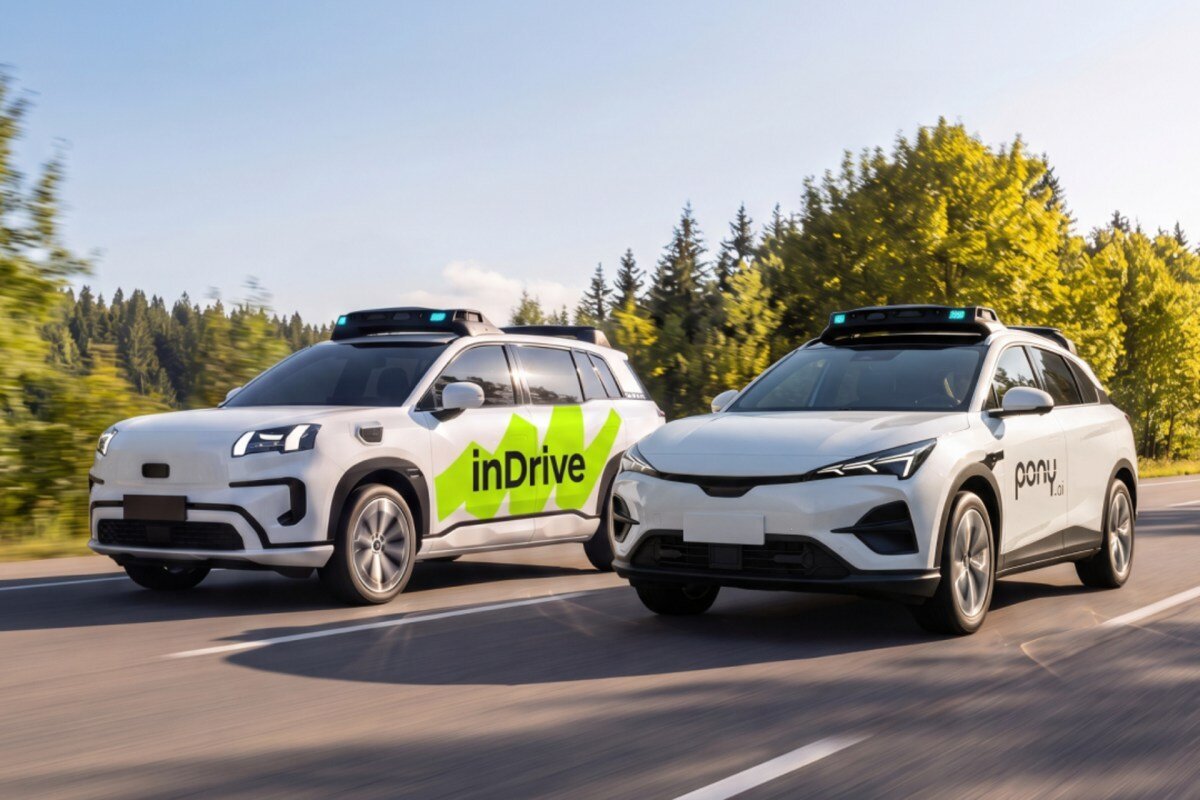
Robotaxis are one of the most closely watched segments in transportation technology because they promise a future of driverless ride-hailing, lower operating costs and potentially higher margins for mobility platforms. At the same time, the category has proved difficult to commercialize, with safety, regulation and unit economics all slowing adoption.
For Kalanick, a focus on robotaxis would also carry strategic and personal significance. He spent years building Uber into one of the defining companies of the ride-hailing era, then left amid intense pressure from investors and regulators. A pivot into autonomy would let him return to a space adjacent to the one he helped create, but with a new technological foundation.
The company’s silence has only amplified the speculation. When Atoms announced its huge financing round, Kalanick described it as “unfinished business,” a phrase that suggested ambition without spelling out the exact destination. The latest reporting makes that comment look less like a vague flourish and more like a hint toward a long-running transportation thesis.
Kalanick has framed Atoms’ funding as “unfinished business,” a remark that now appears to align with a larger effort to build in autonomous mobility rather than a single narrow AI product.
How does Atoms fit into the autonomous vehicle race?
Atoms fits into the autonomous vehicle race as a potential new entrant with abundant capital, an experienced founder and a willingness to move through partnerships and deals. That combination could allow it to scale faster than a typical startup, particularly if it chooses to acquire technical teams or assets instead of building everything from scratch.
The timing is also notable. The broader self-driving market is at a stage where several companies are seeking clearer paths to commercialization. Some are focused on trucking, others on ride-hailing integration, and others on specialized industrial uses. A startup with Kalanick’s profile and Uber’s backing could be trying to occupy a more central position in that emerging ecosystem.
One reason the reporting caught attention is that Atoms has not publicly committed to a single, easy-to-define business. That ambiguity can be a strategic advantage in the early stages of a company, but it also invites scrutiny. In the case of Atoms, the best clues are the size of the raise, the hiring plans and the reported interest in acquisitions.
Uber’s role in the story
Uber’s involvement gives Atoms immediate relevance. The ride-hailing giant has spent years trying to secure access to autonomous vehicle capabilities through a network of partnerships, and any startup linked to Kalanick would naturally attract attention from both Wall Street and Silicon Valley.
If Uber were to integrate Atoms’ technology, the arrangement could take multiple forms: fleet access, software licensing, operational collaboration or a deeper commercial partnership. The report does not specify the structure, and there is no indication that any deal has been finalized.
What is clear is that Uber remains active in autonomous mobility as a platform company rather than a pure self-driving developer. That makes a startup like Atoms, if it can deliver usable technology, an appealing potential partner.
Who is behind Atoms’ autonomous ambitions?
Travis Kalanick is behind Atoms’ autonomous ambitions, and his history explains much of the interest. As Uber’s co-founder, he helped popularize the app-based ride-hailing model that transformed urban transportation around the world. He later became closely associated with Uber’s early push into self-driving technology, an area that was expected to shape the company’s next era.
Atoms’ recent acquisition of Pronto adds another layer to that story. Pronto was an autonomous mining startup led by Anthony Levandowski, who previously served as Uber’s self-driving chief. That connection is striking because Levandowski later faced criminal charges related to trade secret theft and served prison time before receiving a pardon from President Donald Trump.
The Pronto purchase suggests Atoms is willing to assemble capabilities through both talent and transaction, even if the assets come with a complicated history. In the autonomous vehicle industry, such moves can speed up development, though they can also invite criticism and close regulatory attention.
| Key item | Details | Why it matters |
|---|---|---|
| Funding round | $1.7 billion, led by Andreessen Horowitz | Gives Atoms the war chest to hire, acquire and develop autonomy technology |
| Uber investment | $100 million | Links Uber financially to Atoms and raises the possibility of future collaboration |
| Reported strategy | Hiring spree and acquisitions | Suggests Atoms may scale quickly in the competitive AV market |
| Potential focus | Robotaxi technology | Places Atoms in one of the most watched segments of transportation tech |
| Notable acquisition | Pronto | Provides a foothold in autonomy and connects the company to former Uber self-driving leadership |
Why this raises fresh questions about Kalanick’s comeback
Atoms’ reported direction raises a broader question about whether Kalanick is trying to build a next-generation transportation company that learns from Uber’s mistakes. That would mean combining the consumer familiarity of ride-hailing with the long-term economics of autonomy, a vision many companies have chased but few have managed to execute.
It also raises questions about governance and execution. Mega-round funding can buy time, talent and flexibility, but it does not guarantee a working robotaxi product. The autonomous vehicle industry has repeatedly shown that technical promise can outpace deployment by years.
For Kalanick, the challenge is likely to be twofold: prove that Atoms has a defensible technological edge and convince partners, regulators and investors that the company can translate ambition into a scalable service. With Uber already in the picture, the company may have one significant route to market. Whether it has the rest of the ingredients remains the open question.
How the timeline has unfolded
The story has developed in a fairly quick sequence, with a major funding announcement followed by more concrete reporting about the company’s intentions. That sequence has turned Atoms from a mysterious new venture into one of the more closely watched startups tied to transportation technology.
- Earlier this summer: Atoms disclosed a $1.7 billion financing round led by Andreessen Horowitz.
- During the same period: Kalanick kept the company’s core product plans largely under wraps.
- Subsequently: The Financial Times reported that Atoms was preparing to hire and acquire companies.
- Also reported: The startup had discussed with Uber how its robotaxi tech could be used.
- Previously confirmed: Uber had invested $100 million in Atoms.
- More recently: Atoms acquired Pronto, deepening its connection to autonomous vehicle talent and infrastructure.
What happens next?
The next phase for Atoms will likely be defined by execution rather than fundraising. Investors and industry observers will be watching for signs of product development, leadership hires, technical partnerships and any acquisitions that could reveal the company’s roadmap more clearly.
If Atoms is indeed building for robotaxis, it will enter a market that is both crowded and unforgiving. The winners are likely to be companies that can pair technical reliability with regulatory approval and a practical business model. That is a high bar, but the company’s financing gives it room to attempt a serious push.
For now, the clearest takeaway is that Kalanick’s new venture is no longer an abstract idea floating on top of AI enthusiasm. It appears to be moving toward a concrete place in the autonomous vehicle sector, with Uber, robotaxis and acquisitions all part of the picture.
That makes Atoms one of the more important transportation startups to watch, not only because of the money behind it, but because of the identity of the person trying to build it.
Why investors are paying attention
Investors are paying attention because Atoms combines three elements that are rare in one company: a large early capital base, a founder with global name recognition and exposure to a strategic market where partnerships matter as much as technology.
The startup’s opaque public messaging has probably added to the intrigue rather than reducing it. In a sector where companies often announce bold visions before they have products, Atoms now has enough cash and enough profile to influence expectations across the mobility landscape.
Whether that influence turns into a meaningful commercial moat will depend on what the company does next. For now, the reported robotaxi strategy is the strongest evidence yet that Kalanick’s latest venture is trying to do more than simply join the AI startup boom.
Frequently asked questions
Is Travis Kalanick’s Atoms really entering the robotaxi business?
Yes, that is the clearest implication of the latest reporting. The Financial Times says Atoms is preparing to hire, acquire companies and potentially work with Uber on robotaxi technology, although sources also indicated that autonomy is not necessarily the startup’s only focus.
How much money has Atoms raised?
Atoms raised $1.7 billion in a summer funding round led by Andreessen Horowitz. That is a massive amount for a young startup and gives the company the resources to recruit talent, buy assets and build out autonomous vehicle capabilities.
What is Uber’s connection to Atoms?
Uber has invested $100 million in Atoms and has reportedly discussed how Atoms’ robotaxi technology might be used by the ride-hailing company. Uber already works with several autonomous vehicle companies, so a deal would fit its broader strategy.
Why is Pronto important to this story?
Pronto matters because Atoms acquired the autonomous mining startup, which was led by Anthony Levandowski, Uber’s former self-driving chief. The purchase suggests Atoms may be building its autonomy business partly through acquisitions and legacy talent.
What does this mean for Travis Kalanick’s comeback?
It suggests Kalanick is aiming to re-establish himself in transportation through a new generation of autonomous mobility products. If Atoms succeeds, it could become a meaningful player in the robotaxi market and revive his influence in the industry.