Updated September 2, 2026 3:55 pm
In short
Sonos is rolling out Sonos 27, an AI-heavy app and platform refresh, alongside new Ace Ultra headphones and Beam Ultra soundbar models that deepen integration across the company’s audio ecosystem.
- Sonos launched Sonos 27, a new app and platform layer built around AI and better system controls.
- The company introduced Sonos voice, Custom Agents, and opt-in generative AI features for supported devices.
- Sonos also announced the Ace Ultra headphones and Beam Ultra soundbar, both tied to its new Sonos Fabric system.
- Older Sonos hardware will not support every new feature, especially those requiring the newer S2 app and more recent capabilities.
Update — September 2, 2026 3:55 pm
Sonos also detailed two new platform features tied to its newly named network layer, Sonos Fabric. One lets users move speakers between rooms and have them automatically rejoin surround setups, while another allows playback to shift between speakers and headphones.
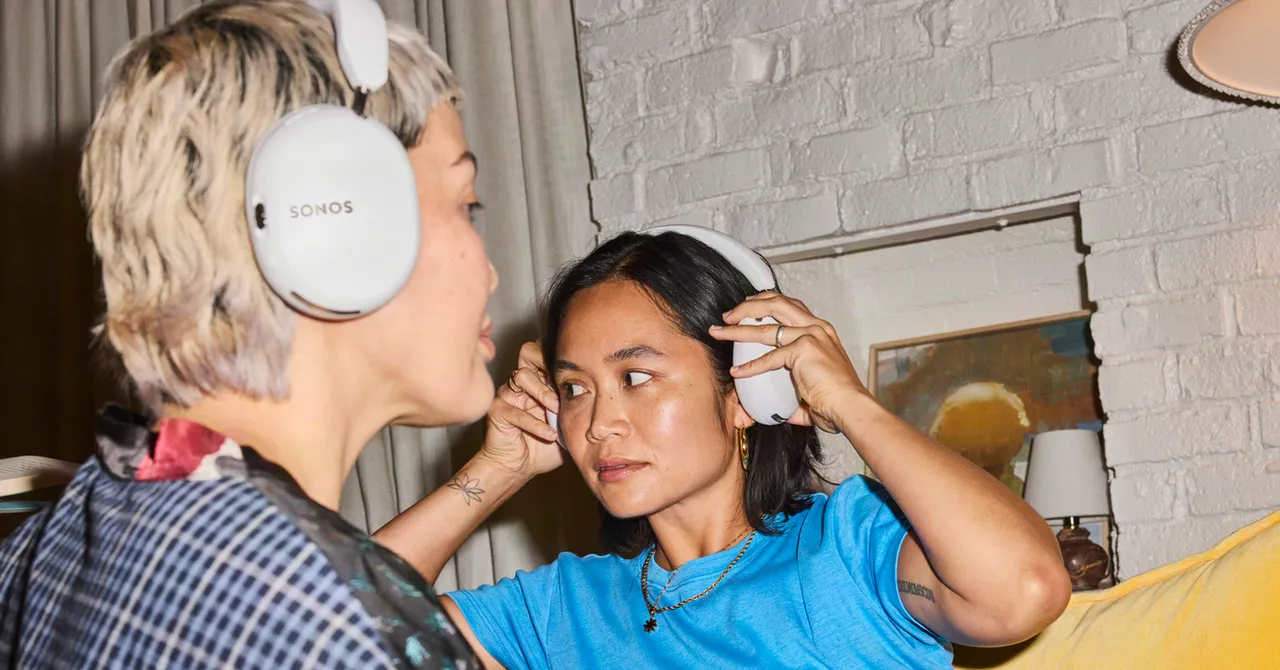
On the hardware side, the company said the Ace Ultra headphones can now hook into the wider Sonos system over Wi‑Fi, while the Beam Ultra soundbar adds nine drivers and AI-based speech enhancement designed to make dialogue easier to hear in noisy scenes.
Sonos also clarified that the AI tools will be optional, and that older hardware running the S1 app will not support the new Sonos 27 features.
Sonos is trying to move past its 2024 app debacle with a sweeping software reset, a new generation of hardware, and a stronger push into generative AI. The company on Tuesday unveiled Sonos 27, a new app experience and platform layer it says will unify speakers, headphones, and home theater products under what it now calls an audio operating system.
The overhaul matters because Sonos is still recovering from one of the worst customer trust crises in its history, when a flawed app update stripped away core features, frustrated users, and eventually helped force out the company’s chief executive. Now Sonos is asking customers to trust it again — this time with an AI-driven app, new room-syncing tools, and products designed to make the company feel less like a speaker maker and more like a connected audio platform.
At the center of the strategy is a clearer claim about what Sonos thinks it is becoming: not simply a hardware brand, but a software-controlled ecosystem for home audio. The company paired that message with two headline products, the Sonos Ace Ultra headphones and the Beam Ultra soundbar, both built to showcase the updated platform.
Why Sonos is redefining itself as an audio platform
Sonos executives say the company’s future depends on being understood as more than a premium speaker brand. That shift in language is not just marketing. It reflects a broader attempt to rebuild the company around software, system-level connectivity, and AI features that can tie together devices in different rooms and across categories.
Brandon Holley, Sonos’ interim hardware lead, said the company wants to be seen less as a speaker manufacturer and more as an “audio operating system.”
That framing is important because Sonos’ original appeal was based on convenience: one app, one ecosystem, seamless playback across rooms. When the company broke that promise with its problematic app rewrite in 2024, it did more than annoy users. It damaged the trust that made the ecosystem work in the first place.
Sonos now appears to be betting that the best way to repair that damage is to make the platform smarter, more modular, and more visibly connected to the company’s hardware roadmap. The new strategy reaches into software, AI assistants, multiroom audio behavior, and accessory-level integration between speakers and headphones.
What is Sonos 27?
Sonos 27 is the company’s name for the new platform layer tying together the app and device experience. In practice, it is a major software update that includes a redesigned app, AI voice tools, smarter room controls, and broader system diagnostics.
The company says the update was built with more direct customer feedback than in past cycles. Sonos software vice president Sid Patel said the team has been paying closer attention to user forums, community feedback, and public complaints as it rebuilt the product experience.
Patel said the company adopted what he described as a customer-centric feedback approach, including closer engagement with users in places such as Reddit and other community forums.
That is a notable message for Sonos, which spent much of the past year apologizing for the fallout from its previous app changes. This time, the company is emphasizing small but practical improvements that should matter to everyday users, such as better tab navigation, improved room sorting, and refined volume controls inside the app.
Later in the fall, Sonos says it will also add system health views, which are designed to help users troubleshoot connection problems for individual products. For a brand whose selling point has always been “it just works,” that diagnostic layer could be especially valuable.
How does the new Sonos app use AI?
The new Sonos app adds generative AI features that let users talk to the system in a more natural way. The headline addition is called Sonos voice, which is being rolled out in early access and is meant to handle music requests in conversational language, similar to smart assistants from Amazon or Google.
Users will be able to ask for music based on mood, activity, or preference, rather than needing to browse manually. Sonos says the AI layer can also connect with outside services through Model Context Protocol support, a technical approach that could allow users to route commands through tools such as ChatGPT.
Sonos is also introducing what it calls Custom Agents, a set of configurable assistants that can perform tasks inside the system. In practical terms, that could mean automating playback in a specific room at a specific time, or setting up personalized responses and routines.
The company even envisions letting users choose different voices for different rooms. In Sonos’ examples, that could mean a kitchen speaker sounding like an elegant French chef or a bathroom speaker adopting a pirate-style persona. The concept is playful, but it also signals how aggressively Sonos is leaning into the current AI wave.
The company was careful to say the AI tools will be optional. That matters after last year’s backlash, when many customers felt forced into a new software experience they did not want and which did not fully support the features they relied on.
What the AI features mean for Sonos users
The key takeaway is that Sonos is trying to make its app feel more conversational and more adaptive, while avoiding the impression that AI is being imposed on everyone. Users who do not want the new tools should be able to ignore them.
Still, the move introduces a delicate balancing act. Sonos needs its AI pitch to feel modern and competitive, but it also needs to reassure longtime owners that basic reliability and control remain the top priority.
Which Sonos products will support the new features?
Sonos says the new platform is not universal across every product it has ever made. The company confirmed that Sonos 27 works through the newer S2 app, but not through the older S1 app used by some legacy hardware.
That means owners of older devices will miss out on the new AI functions and some of the latest platform features. Sonos said the limitations exist because the new software is designed to use more recent hardware capabilities.
The company says it wants to continue supporting older products with security updates for as long as the hardware allows, but it is not yet spelling out detailed compatibility lists or product-by-product upgrade paths. Sonos says that information will come later.
For consumers, that creates a familiar Sonos tension: the company wants to modernize quickly without alienating people who have invested heavily in previous generations of hardware. Given the size of the installed base, that challenge could shape the reception of Sonos 27 as much as the software itself.
What is Sonos Fabric?
Sonos Fabric is the name the company is now giving to the wireless network behavior that lets its products coordinate across rooms. In simple terms, it is the system that allows multiple speakers and other devices to act in sync, whether they are playing music in a whole-home setup or supporting a home theater arrangement.
Patel described Sonos Fabric as the underlying “magic” that has long enabled one speaker, two speakers, or several speakers to function together as a bonded system.
By giving that technology a formal name, Sonos is making a marketing and product strategy point: the company wants customers to think of its ecosystem as a living, connected layer rather than a collection of separate gadgets.
Two new features will run on top of this system. The first is portable surround, which lets users move speakers between rooms and have them automatically adapt to their new location. In a movie-night scenario, that could mean borrowing speakers from elsewhere in the house and letting them function as surround channels near the TV.
The second is Headphone Linking, a feature that lets audio move between speakers and headphones more easily. That creates a more fluid listening environment, where users can shift from room audio to personal audio without starting over.
Sonos Ace Ultra: what changed in the new headphones?
The Sonos Ace Ultra is the company’s next attempt to make headphones an active part of its home-audio system. Sonos introduced its first over-ear headphones in 2024, but despite strong audio quality, the original Ace model did not integrate tightly with the company’s broader speaker ecosystem.
The Ultra version is designed to fix that omission. Sonos says the new model delivers 35 hours of battery life and supports both USB-C and 3.5 mm wired connections. More importantly, it can connect to Sonos speakers over Wi-Fi and operate as part of the wider Sonos Fabric environment.
That means users should be able to move playback between a room speaker and the headphones more seamlessly than before. Sonos described the process as something users can trigger with a single button press.
From a product strategy standpoint, the Ace Ultra is significant because it shows Sonos trying to turn headphones into an extension of the same software ecosystem that powers its speakers. That approach may help justify premium pricing if customers see the benefit of an integrated system rather than a standalone headset.
Beam Ultra: why Sonos is upgrading its soundbar line
The Beam Ultra is Sonos’ latest soundbar and a substantial update to the existing Beam family. The new model includes nine drivers, which is four more than the previous Beam generation, and adds upward-firing drivers intended to bounce sound off the ceiling for a more immersive experience.
Sonos is also adding AI-related processing to the soundbar. The most practical feature is AI speech enhancement, a tool meant to make dialogue easier to hear in scenes with heavy background noise or layered effects.
Connectivity is broad: the Beam Ultra supports Wi-Fi, Bluetooth, and wired HDMI eARC. That combination should make it easier to place the device into a variety of entertainment setups, whether the user wants a fully wireless audio ecosystem or a more traditional TV connection.
The company’s broader pitch is that the soundbar is not just a speaker under the television. It is a node in the Sonos Fabric system, capable of working with the app, other speakers, and headphones as part of a unified home environment.
Timeline of Sonos’ app crisis and recovery effort
Sonos’ latest launch cannot be separated from the company’s recent history. The timeline helps explain why this announcement carries more weight than a routine product refresh.
| Period | Event | Why it mattered |
|---|---|---|
| 2024 | Sonos rolled out a redesigned app | The update broke key functions and angered many users |
| After the rollout | Customers complained about missing features and accessibility issues | The company faced widespread criticism, especially over lost volume controls and accessibility tools |
| Following the backlash | Sonos apologized and explored restoring the old app experience | It signaled how severe the product failure had become |
| Later | The CEO was removed and new leadership took over | The company tried to reset its reputation and internal priorities |
| 2026 | Sonos unveiled Sonos 27, Sonos Fabric, new hardware, and AI features | The company is attempting to rebuild trust and reposition itself as an audio platform |
Why the company is emphasizing AI now
Sonos is launching its AI push at a moment when consumer technology firms are trying to weave generative tools into familiar products. For Sonos, that means positioning voice control and automation as natural extensions of the home audio experience.
There is also a competitive angle. Smart speakers have long been associated with Amazon and Google, while consumer headphones and soundbars are crowded categories with intense pressure on features and pricing. By combining AI voice, multiroom behavior, and device linking, Sonos hopes to offer something neither category can fully match on its own.
At the same time, the company appears to know that AI alone will not persuade customers. Its messaging repeatedly returns to reliability, feedback, and opt-in controls. That suggests the leadership team understands the danger of making another abrupt software move without enough user buy-in.
Why this release is different from the last one
This release is different because Sonos is trying to rebuild the platform from the ground up while also acknowledging that users need more control. The company is no longer presenting software as an invisible upgrade. Instead, it is treating user trust as a product feature in its own right.
That approach could help the company avoid repeating the mistakes of 2024. But it will only work if the new app is genuinely easier to use and the AI features feel additive rather than intrusive.
What risks remain for Sonos?
Sonos still faces a credibility problem. Many customers remember the app fiasco vividly, and the company’s promise of a better future will be judged against a very recent record of failure. Even well-designed features can be undermined if setup remains confusing or if older products are left behind too quickly.
There is also the challenge of support. Sonos hardware is often purchased as part of a long-term ecosystem, which means many customers expect old and new products to coexist gracefully. The company’s decision to limit some features to newer hardware is understandable, but it may also create frustration among loyal users.
Another risk is that the company’s AI framing could distract from the basics. Most Sonos owners want dependable playback, intuitive controls, and a stable app before they want AI personalities or custom voices. If the new platform does not deliver the fundamentals, the extra features will not matter much.
How customers may respond
Customer response will likely depend on whether Sonos 27 feels like a genuine fix or just a rebrand. If the redesigned app is stable, easier to navigate, and restores confidence in multiroom control, it could mark a meaningful turning point.
But if users encounter another round of glitches, compatibility confusion, or missing tools, the company may struggle to recover. Sonos is no longer being judged simply on sound quality. It is being judged on whether it can run a software ecosystem responsibly.
That is why the optional nature of the AI features is important. Sonos is effectively giving customers room to opt in, rather than forcing a dramatic shift on everyone at once. For a company still repairing trust, restraint may be more valuable than spectacle.
Bottom line
Sonos is trying to turn a painful software failure into a broader reinvention. With Sonos 27, Sonos Fabric, the Ace Ultra headphones, and the Beam Ultra soundbar, the company is staking its future on the idea that the best home audio experience will come from a tightly connected platform, not just well-tuned hardware.
Whether that bet works will depend on execution. For now, Sonos is asking customers to believe that a company once burned by its own app can build the next version of smart audio around software, AI, and trust.
| Product / Feature | Main purpose | Notable detail |
|---|---|---|
| Sonos 27 app | Unified control and diagnostics | Improved navigation, room sorting, and system health views |
| Sonos voice | AI-powered voice control | Early access launch with mood-based music requests |
| Custom Agents | Automation and personalization | Can trigger tasks across rooms and support custom voices |
| Sonos Fabric | Cross-device audio coordination | Enables portable surround and headphone linking |
| Sonos Ace Ultra | Headphone integration | 35-hour battery life and Wi-Fi linking with speakers |
| Beam Ultra | Home theater audio | Nine drivers and AI speech enhancement |
For a company that once sold the promise of seamless listening, the new challenge is larger than sound. Sonos must now prove that its software can be as elegant and reliable as its speakers were supposed to be.
Frequently asked questions
What is Sonos 27?
Sonos 27 is Sonos’ new platform layer that combines a redesigned app, AI voice tools, device diagnostics, and multiroom audio features. The company says it is meant to make Sonos function more like an audio operating system than a simple speaker app.
Will older Sonos speakers work with the new AI features?
No, not all older products will support the new features. Sonos says Sonos 27 works with the S2 app but not the older S1 app, so legacy hardware will miss out on some AI tools and newer platform functions.
What is Sonos Fabric?
Sonos Fabric is the company’s name for the network behavior that lets its products synchronize across rooms. It powers features like portable surround and headphone linking, allowing audio to move more fluidly between speakers and headphones.
What are the Sonos Ace Ultra headphones?
The Sonos Ace Ultra is Sonos’ follow-up over-ear headphone model. It offers 35 hours of battery life, USB-C and 3.5 mm support, and Wi-Fi integration with Sonos speakers so users can switch playback between devices more easily.
Why is Sonos changing its software strategy now?
Sonos is changing course to rebuild trust after its 2024 app failure, which angered customers and damaged the brand. The company is using the new release to show that it can deliver more stable software while adding useful AI and ecosystem features.