In short
Apple’s redesigned Siri AI is a substantial upgrade, especially for finding content on a user’s phone. But early beta use suggests many people may still prefer old habits or other chatbots, limiting its immediate impact.
- Siri AI is a noticeable improvement over older Siri versions, especially for personal-data search.
- Apple’s privacy reputation could help drive adoption among cautious users.
- Early beta testing suggests better AI does not automatically change daily phone habits.
- Analysts say Apple’s default placement gives Siri a major distribution advantage.
Apple’s redesigned Siri AI is a meaningful upgrade that can search through personal data, answer more reliably, and feel more polished than older versions of Siri, but early beta testing suggests it still may not become the must-use assistant Apple is hoping for. The bigger question for Apple is whether users will treat the new Siri as a daily companion or simply as a better search box built into the iPhone.
That tension emerged after a month of using Apple’s Siri AI developer beta in iOS 27, during which the assistant impressed with its ability to surface messages, photos, and other information stored on a device. Yet even with those gains, the assistant gradually faded into the background as familiar phone habits reasserted themselves, highlighting a central challenge for Apple’s AI strategy: being improved is not the same as being indispensable.
Apple’s new Siri is a real upgrade, not a cosmetic one
The first thing the beta experience made clear is that Apple has not merely added a chatbot skin to Siri and called it innovation. The assistant appears to be much better at understanding requests, pulling in personal context, and locating content buried deep inside a phone.
For users who have long treated Siri as little more than a timer-setting shortcut, that is an important shift. The new version can feel more useful in concrete, everyday ways, particularly when it comes to finding old texts, remembered photos, or other fragments of personal information that are otherwise hard to track down manually.
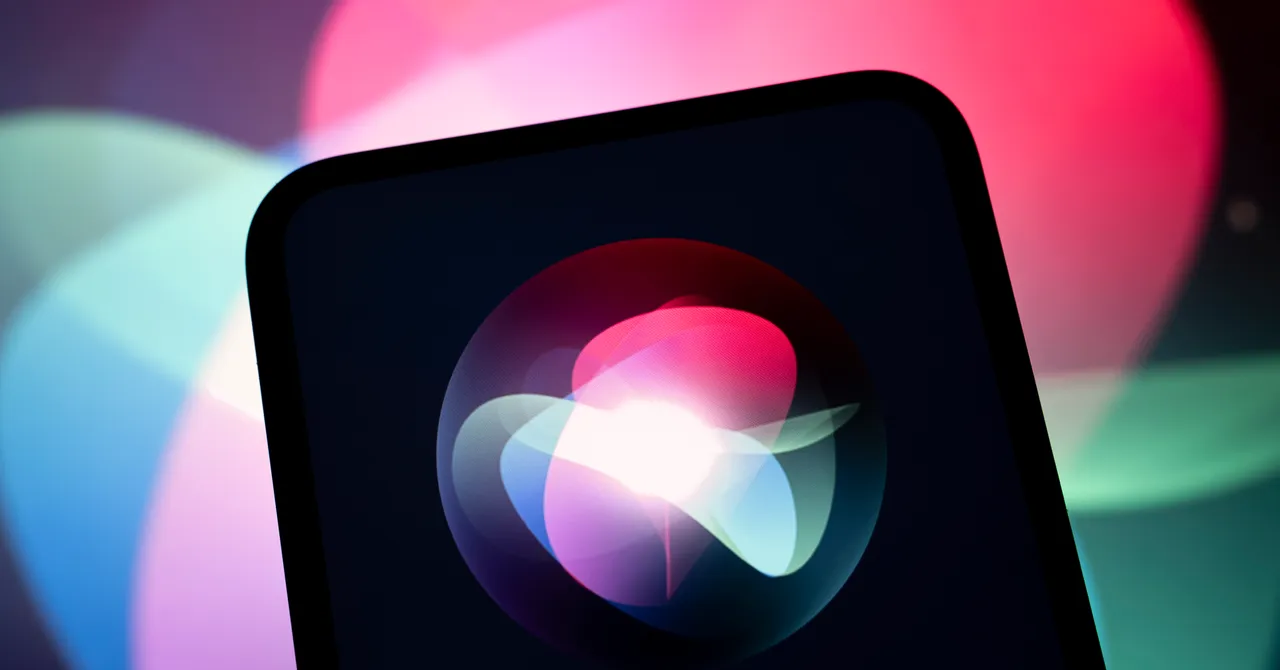
It also arrives with Apple’s familiar design language. The chatbot-style interface reportedly feels sleek and unmistakably Apple, which matters because presentation has always been part of the company’s value proposition. Apple rarely wins by being first; it often wins by making the technology feel approachable, safe, and integrated.
What changed in Siri AI?
The key change is that Siri now behaves less like a voice command shell and more like a system-level assistant that can draw on content already on the device. In practice, that means better retrieval, stronger relevance, and a more conversational feel when users ask about things tied to their own phone history.
The improvement is especially visible in three areas:
- finding older texts and photos faster
- surfacing more contextually relevant personal information
- delivering stronger dictation and broader world knowledge
That combination gives Siri AI a more credible identity than previous versions, which often frustrated users by misunderstanding simple requests or failing to respond helpfully enough to justify use.
Why did the assistant still fail to stick?
Because better technology does not automatically change human behavior. Even when Siri AI proved genuinely useful, it did not fully break through the habits that govern how people actually use their phones.
After the initial excitement, the assistant gradually became less central to daily routines. Instead of turning to Siri AI first, the test user drifted back toward the old defaults: scrolling social apps, browsing review platforms manually, and typing or swiping directly rather than asking a phone to do the work.
That pattern matters. A smartphone assistant can be technically impressive and still lose out to muscle memory, faster visual browsing, and the convenience of apps people already trust.
It also suggests that Apple’s greatest challenge is not capability alone. The company must persuade people that speaking to their phones is easier, faster, or more rewarding than the established habits they already rely on. That is a much harder marketing and product-design problem.
How personal context makes Siri more useful
Personal context is the feature that gives Siri AI its strongest case for relevance. By indexing on-device content, the assistant can search across a user’s own digital history in ways that feel more intimate than generic web search or traditional voice commands.
That matters because phones are archives. They hold messages, photos, appointments, notes, links, and fragments of conversations that are frequently hard to retrieve when needed. A smart assistant that can expose that archive quickly has the potential to become one of the phone’s most practical tools.
In the reported beta testing, that personal-data search capability stood out as the most persuasive part of the experience. It made the assistant feel less like a novelty and more like a practical interface layer for the device itself.
How does Apple’s privacy reputation shape Siri AI’s future?
Apple’s privacy reputation may be the feature that most differentiates Siri AI from rival assistants. The company has spent years building trust around data protection, and that trust could help convince users who are hesitant about other AI products to try Apple’s version first.
That advantage is especially important in a moment when many consumers are skeptical about how AI systems collect, store, and use data. For some people, the fact that Siri is built by Apple may matter as much as the assistant’s raw capability.
Apple’s pitch is not just that Siri AI is smarter. It is that users can get AI features without feeling like they are surrendering the same level of personal information they might elsewhere.
“Apple’s base advantage is trust,” analysts suggest, with the company’s long-standing privacy posture potentially giving Siri AI an edge among users who are wary of sharing sensitive information with other AI platforms.
That trust could be particularly valuable inside Apple’s ecosystem, where many users already store photos, messages, documents, and passwords across multiple devices linked to the same account. For those customers, a more capable Siri may feel like an extension of an already familiar system rather than a risky new product.
What do analysts think about adoption?
Analysts generally believe Siri AI does not need to become the favorite assistant of power users in order to be a success. Apple’s enormous installed base gives it a distribution advantage that most AI companies cannot match.
One view is that even if critics compare Siri unfavorably with more advanced chatbots, that will not necessarily drive millions of iPhone owners to switch ecosystems. Many users simply accept the default tools that come on their devices, especially when those tools already work well enough.
According to Forrester analyst Dipanjan Chatterjee, Siri may attract criticism for lagging behind some competing assistants, but he does not expect that to push ordinary iPhone users to seek out alternatives in meaningful numbers.
The logic is straightforward: most people do not shop for an assistant the way they shop for a standalone app. If Siri is built into the phone, visible by default, and good enough for common tasks, many users will stop there.
That helps explain why Apple can afford to be patient. It does not need every customer to become an AI enthusiast. It only needs enough people to find Siri useful enough to keep using it.
Why default behavior still favors Apple
Default software has enormous power, especially on a platform with as many active users as the iPhone. If Siri AI becomes the path of least resistance for common tasks, many customers may adopt it without making any conscious decision to do so.
That gives Apple a structural advantage:
- The assistant is preinstalled and easy to access.
- It is embedded in the device rather than layered on top of it.
- It benefits from user familiarity with the broader Apple ecosystem.
- It is backed by Apple’s brand and privacy messaging.
Those factors do not guarantee enthusiasm, but they may be enough for widespread use.
What are the limits of the early beta experience?
The biggest limitation is that early enthusiasm often looks different from long-term adoption. A new feature can feel transformative during the first few uses, especially when it solves an immediate pain point, but that excitement may fade once users return to their habitual workflows.
That is what happened in this case. The assistant was initially impressive enough to suggest a major shift in how a phone could be used. Over time, though, it became less central, not because it stopped working well, but because other ways of using the phone remained easier or more familiar.
This does not mean the beta is a failure. It means Apple’s task is unfinished. A better Siri is only the starting point for creating a product people will reach for automatically.
How much better is Siri at the basics?
The new assistant appears to be better across a range of basic functions that users notice quickly, including transcription and retrieving information from the phone. Those are not flashy upgrades, but they are the sort of improvements that determine whether a digital assistant feels frustrating or dependable.
Better dictation, better retrieval, and better answers may not generate viral demos forever, but they matter in daily use. For many users, the difference between “useful” and “ignored” is often a handful of small reliability improvements.
Why do some users still resist AI assistants?
Because not everyone is excited about more AI, even when it is packaged inside a familiar product. A growing cultural backlash against generative AI means some people will reject Siri AI on principle, not performance.
That resistance can take several forms. Some users dislike the environmental and social implications of AI. Others distrust the broader industry. Some simply do not want another layer of algorithmic mediation between themselves and their devices.
For that group, improvements in Siri may not be enough. They may view the assistant’s new AI features as a reason to avoid it rather than embrace it.
That puts Apple in a delicate position. It wants to promote the intelligence of the assistant while also reassuring customers that they remain in control of their device and data. Those messages can reinforce one another, but they can also conflict if users suspect the company is pushing AI too aggressively.
How does Siri AI compare with other chatbots?
Siri AI is not being judged in a vacuum. It is entering a market shaped by more established and often more capable AI chatbots, including tools that many power users already consult regularly on their phones.
For frequent AI users, that creates a high bar. If another chatbot already does a better job at reasoning, writing, or answering general questions, Siri must offer something distinctive enough to justify switching.
Apple’s answer is context. The assistant is not meant to replace every chatbot in the world. Instead, it is designed to be the best way to work with an iPhone, especially when the task involves personal data, device contents, or tightly integrated mobile functions.
That distinction may prove decisive. Siri does not necessarily need to beat every rival at every task. It needs to win the specific use cases that matter most on the iPhone.
Who is most likely to use the new Siri?
The most likely adopters are everyday iPhone owners who value convenience, trust Apple’s brand, and want a quick way to search their own device. They are less likely to compare AI models and more likely to care whether the assistant saves them time.
Power users may still prefer specialized chatbots for broader tasks. But for the vast majority of iPhone owners, the deciding factor may be whether Siri is close enough to “good” and already there by default.
Key facts about Siri AI and the beta experience
The following timeline and comparison summarize the main points of the early Siri AI rollout and the reported month-long test experience.
| Topic | What happened | Why it matters |
|---|---|---|
| Initial impression | Siri AI felt more reliable and more polished than older Siri versions. | Suggests Apple has made a real product leap, not a cosmetic update. |
| Core strength | The assistant could search personal content on the phone, including old messages and photos. | This is the main practical advantage over generic AI chatbots. |
| Longer-term use | Usage declined over a month as old phone habits returned. | Shows the difficulty of turning novelty into routine behavior. |
| Competitive context | Some users already rely on other chatbots on their phones. | Raises the bar for Siri among AI-savvy users. |
| Apple’s edge | Privacy trust and ecosystem loyalty may encourage adoption. | Could help Siri win mainstream users even if it is not best-in-class. |
What Apple still has to prove
Apple still has to prove that Siri AI can become part of the default rhythm of phone use rather than a feature people try occasionally and forget. That means the assistant must do more than impress in isolated tests; it must become indispensable in repeatable, everyday moments.
It also has to demonstrate that AI can feel native to the iPhone experience without making users uneasy. Apple’s advantage is not simply that it is adding intelligence to Siri. It is that it can attempt to do so while preserving the design polish and privacy assurances that define its brand.
If Apple succeeds, Siri AI could become one of the company’s most important platform features in years, not because it replaces every chatbot, but because it quietly changes how millions of people search, find, and interact with their own devices.
If it fails, the assistant may still be useful, just not transformative. And for Apple, that would be a more complicated outcome: a better Siri that people like when they try it, but do not quite think to use when they need it.
The bottom line
Siri AI is better than the old Siri by a noticeable margin, and its ability to search a user’s personal data makes it one of Apple’s most promising AI features yet. But early beta testing suggests that technical gains alone may not be enough to change how people actually use their iPhones.
For Apple, that makes Siri AI both encouraging and unfinished: a smarter assistant with real upside, but not yet the default “everything tool” some hoped it would become.
Frequently asked questions
What is new about Siri AI?
Siri AI is a much more capable version of Apple’s assistant that can search personal content on the iPhone, improve dictation, and answer more reliably than older Siri versions. Its biggest selling point is tighter integration with device data, not just conversational chat.
Will Siri AI make iPhone users switch from other chatbots?
Probably not in large numbers. Siri AI may win casual and default use because it is built into the iPhone, but many power users will still prefer more advanced standalone chatbots for broader tasks and deeper reasoning.
Why does Apple’s privacy reputation matter for Siri AI?
Apple’s privacy reputation matters because many users are uncomfortable sharing personal data with AI systems. If Siri AI feels safer and more controlled than competing assistants, that trust could be a major reason people try it and keep using it.
Is Siri AI good enough to change how people use their phones?
It is better enough to be useful, but early testing suggests it may not yet be compelling enough to replace existing habits. Users may appreciate Siri AI for searches and retrieval while still relying on manual phone use for most tasks.