Updated August 13, 2026 6:26 pm
In short
Nvidia is still pitching its $500 billion AI data center financing push as a way to support long-lived infrastructure and a healthier used-GPU market, while also facing fresh scrutiny over circular-deal risk.
- Nvidia is backing a plan tied to up to $500 billion in AI data center funding.
- The company will cover part of the loss if collateralized GPUs sell for less than expected.
- The strategy is meant to create a healthier secondary market for aging chips.
- Analysts see both upside and “wrong way” risk if the AI market cools.
- Jensen Huang is framing the effort as outside institutional capital, not classic circular financing.
Update — August 13, 2026 6:26 pm
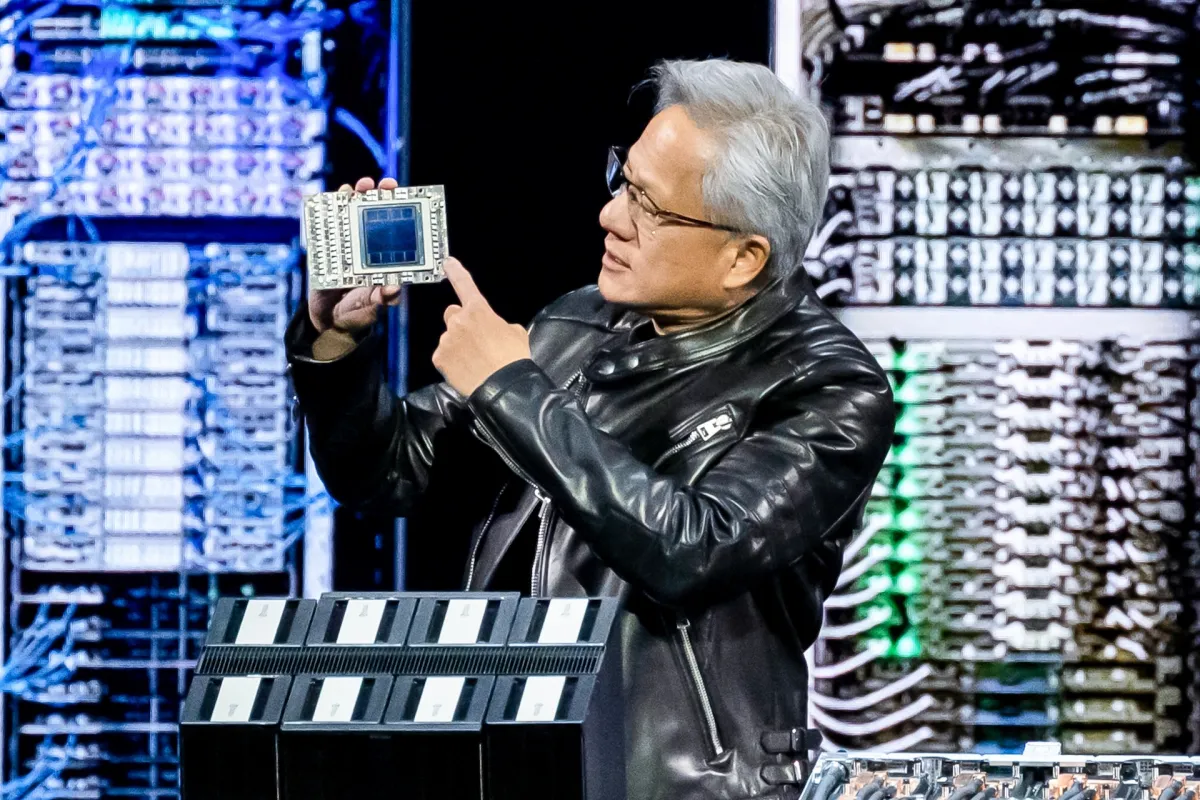
Jensen Huang has now publicly tried to calm nerves around the structure, saying on X that Nvidia’s goal is to bring in independent, long-term capital rather than create a closed loop of vendor financing.
The new source also adds that Nvidia has already committed billions to customers such as OpenAI, Anthropic, CoreWeave, Nebius, Firmus and Lambda, and that Bloomberg has estimated the company has been involved in another $750 billion in circular deals this summer.
Huang is also leaning harder into the idea that Nvidia’s servers should be treated as long-lived infrastructure, arguing that chips can keep finding buyers as they age because the broader ecosystem will help preserve resale value.
Nvidia has unveiled a sprawling plan that could channel up to $500 billion into AI data center construction, backed by heavyweight investors including Apollo, BlackRock, Blackstone, Brookfield, Goldman Sachs and KKR. The headline number is striking, but the more important story is that Nvidia is also trying to build a secondary market for aging GPUs so its chips keep holding value long after they leave the factory.
That matters because Nvidia is now effectively willing to put its own balance sheet behind part of that future resale value. If the chips used as collateral in these financing deals do not fetch the expected price, the company has agreed to cover up to a quarter of the shortfall. It is a bold attempt to keep AI infrastructure funding flowing, but it also exposes Nvidia to meaningful financial risk if demand cools.
The deal underscores how far the AI boom has pushed the industry into novel financing territory. Data centers are increasingly being funded not just with cash from hyperscalers, but through debt, equity, and now structures that resemble asset-backed lending tied to the chips inside the buildings. Nvidia’s pitch is that this is not circular financing in the dangerous sense critics fear, but rather a way to bring in long-term institutional capital while stabilizing the market for used AI hardware.
What Nvidia announced and why it matters
Nvidia said this week that a group of major financial firms is prepared to commit as much as $500 billion toward AI data center development. The companies named in the announcement include Apollo, BlackRock, Blackstone, Brookfield, Goldman Sachs and KKR, all of which bring deep pools of capital and experience in large infrastructure or credit transactions.
On the surface, the plan looks like another giant financing package aimed at keeping the AI buildout moving. In practice, it could become one of the most consequential experiments yet in how the industry pays for the physical backbone of AI. Demand for high-end GPUs remains intense, but the life cycle of that hardware is short, and data center economics depend heavily on whether older chips can still be monetized after newer generations arrive.
Nvidia’s strategy is designed to solve that problem. By helping create a more predictable market for used GPUs, the company can make its older products less likely to become stranded assets. That, in turn, can make lenders more comfortable financing AI facilities that may eventually need to sell or refinance equipment.
How does Nvidia’s GPU value guarantee work?
Nvidia is offering a backstop that covers part of the downside if collateralized chips are worth less than expected when a borrower defaults. In simple terms, if a data center operator cannot repay a loan and the lender has to sell the GPUs, Nvidia will make up as much as 25% of the difference between the expected value and the actual liquidation value.
The mechanism is unusual because it places Nvidia indirectly behind the residual value of its own products. That is common in some hardware financing arrangements, but rare at this scale in a fast-moving sector like AI. The company is not buying the chips back outright. Instead, it is providing a partial guarantee meant to reassure lenders that the hardware will retain enough value to support the loan structure.
The result is a financing model that could expand the pool of money available for new data centers while also giving Nvidia a role in the future resale market for used accelerators.
Why financiers call it “wrong way” risk
Financial analysts describe the most obvious danger as “wrong way” risk: the company’s liability rises when the market is weakening. If AI demand softens, chip prices could fall, defaults could become more likely, and Nvidia could owe more just as its own sales momentum slows.
That creates a feedback loop that is easy to see and difficult to hedge. Nvidia’s plan could work beautifully if the AI infrastructure market continues to expand and used GPUs remain relatively liquid. But if the market turns, the company could find itself defending chip values at the worst possible time.
Why is this being compared with Lucent?
Observers have pointed to Lucent Technologies as an old cautionary tale, but the comparison is only partly fair. Lucent, which was a major telecom equipment supplier during the dot-com era, famously helped fuel its customers’ spending before the bubble burst. Nvidia’s current plan is different in one important respect: it is not directly financing customers to buy its equipment in the same way Lucent did.
Instead, Nvidia is leaning on outside institutional investors and making a limited guarantee to support asset values. That difference matters because it shifts most of the capital burden to lenders and investors rather than keeping it on Nvidia’s books in the same direct fashion. Still, the resemblance is enough to make Wall Street nervous, especially given how central Nvidia has become to the AI economy.
Jensen Huang has been working to blunt those concerns. After the structure of the plan drew attention, he explained publicly that the goal was to bring independent long-term capital into AI infrastructure rather than create a closed loop of vendor financing.
Huang framed the effort as a way to address fears of circular financing by bringing outside institutional money into the AI infrastructure market.
What is driving the need for new AI financing?
The AI buildout is becoming expensive enough that traditional funding methods are starting to look stretched. Hyperscalers have already absorbed large costs in different ways: some have borrowed heavily, some have sold new equity, and some have used large amounts of internal cash to keep projects moving.
That is part of why Nvidia’s proposal matters. As the compute arms race accelerates, companies are searching for financing structures that can support large-scale expansion without forcing every buyer to bear the full cost upfront. Data centers are not cheap to build, and the hardware inside them loses value quickly as newer chips arrive.
In that environment, even a partial guarantee from the world’s most important AI chipmaker can make financing easier to assemble.
Existing pressure points in the market
- Data center capacity is growing more slowly than demand for AI compute.
- Hyperscalers are already using debt, equity issuance, and cash reserves to fund expansion.
- AI hardware depreciates quickly, which complicates lender confidence.
- Some deals already resemble circular financing, drawing scrutiny from investors and regulators.
How Nvidia is trying to avoid the “bubble” narrative
Nvidia’s leadership is clearly aware that the company is being watched through the lens of past market booms. The AI industry has attracted comparisons to railroads, telecom, and even speculative episodes of financial engineering that ended badly. To counter that, Huang is presenting Nvidia’s servers as long-lived infrastructure rather than disposable equipment.
He has repeatedly described AI data centers as “AI factories,” a phrase meant to suggest durable industrial value rather than a fleeting technology fad. Under that vision, the same facility could serve different customers over time, much like other forms of infrastructure can be repurposed as markets change.
The key argument is that AI compute is not a one-shot product. Nvidia wants investors to think of its architecture as a reusable platform with a residual market, where older systems can still find buyers even as newer hardware arrives.
Nvidia’s chief has argued that the facilities should be treated like investable infrastructure that can be used by different customers over time, helping support resale value.
That framing is not just about optics. It is central to the economics of the plan. If the market accepts that older GPUs will have a healthy afterlife, the company’s guarantee becomes cheaper to support and more useful as a financing tool.
What makes aging GPUs so important to Nvidia?
Aging GPUs are important because they may determine whether AI hardware behaves more like a durable asset or like rapidly obsolete consumer electronics. If used chips can still be deployed profitably by startups, research groups, regional cloud providers, or enterprises with smaller workloads, then the market for old inventory becomes deeper and more predictable.
That would benefit everyone in the ecosystem. Lenders would gain confidence, buyers of secondhand hardware would get access to cheaper compute, and Nvidia could protect the brand value of older chip generations instead of watching them collapse in worth as soon as the next product cycle arrives.
For startups and enterprises, this may eventually open the door to a broader tiered market. The most powerful frontier systems would still rely on cutting-edge chips, but many workloads could run on cheaper, older hardware or on open-weight models that do not require the absolute latest accelerators.
Who could use the used-GPU market?
The likely buyers include smaller cloud providers, startups, enterprise IT departments, universities, and research labs that need AI compute but cannot afford the newest systems. If the secondary market matures, it could help spread access to AI infrastructure beyond the biggest companies.
That is one reason Nvidia’s bet is interesting beyond Wall Street. A stable resale market would not only support financing; it could help normalize a more layered AI hardware ecosystem, where performance, cost, and model requirements determine which chips get used.
How does this compare with other AI funding strategies?
Nvidia’s approach arrives after several other methods of financing AI growth have become strained. The largest cloud and AI players have already tapped debt markets, raised equity, or spent heavily from cash flow. Those options are not disappearing, but they are becoming less flexible as the capital needs grow.
The new structure is different because it blends industrial equipment finance with a form of residual-value support. That combination could become more common if AI infrastructure keeps expanding at the current pace.
Below is a snapshot of the financing landscape implied by the current boom:
| Financing approach | How it works | Strength | Risk |
|---|---|---|---|
| Corporate debt | Borrowing against future cash flows | Quick access to large sums | Raises leverage and interest costs |
| Equity issuance | Selling new shares to raise capital | Does not require repayment | Dilutes existing shareholders |
| Internal cash flow | Funding from operating profits | Simple and flexible | Consumes liquidity needed elsewhere |
| GPU-backed financing | Loans secured by chip value, with partial guarantees | Can unlock hardware-heavy projects | Depends on resale values staying strong |
Could this reshape the AI hardware market?
Yes, if the plan works, it could change how the market thinks about GPUs after their first deployment. Instead of treating older hardware as near-trash once the newest generation arrives, buyers and lenders may begin to view it as tradable infrastructure with a measurable remaining life.
That shift would have consequences beyond Nvidia. Other chipmakers, cloud providers, and data center financiers could follow with similar structures if the model proves reliable. A healthier used-hardware market would also change procurement strategies, giving customers more ways to enter the AI ecosystem at lower cost.
At the same time, the very success of the plan depends on continued demand growth. If the appetite for AI services slows, or if software advances allow models to do more with less hardware, the assumptions behind the residual-value market could weaken quickly.
That is the core tension in Nvidia’s bet: it is trying to finance the next phase of AI infrastructure by assuming the current phase will not end abruptly.
What could go wrong?
The obvious downside is that Nvidia may be underwriting an industry that is closer to saturation than it appears. If businesses and consumers start using AI less aggressively, or if newer techniques reduce the need for expensive infrastructure, then chip prices could soften and the guarantee could be triggered more often.
Another risk is concentration. Nvidia is already at the center of the AI hardware market, and this plan increases its exposure to the broader ecosystem’s performance. The company is not merely selling chips anymore; it is increasingly tied to the financing, resale, and long-term monetization of those chips.
That makes the strategy powerful, but also vulnerable. Nvidia is effectively betting that its own hardware will stay useful long enough for a second market to mature around it.
Key scenarios to watch
- AI demand keeps climbing and chip resale values remain strong, making the plan a success.
- Demand plateaus but secondary-market usage remains healthy, allowing older GPUs to preserve value.
- The market slows sharply, defaults rise, and Nvidia’s guarantee becomes a material cost.
Why the timing matters now
The timing is important because the AI sector is entering a phase where the first generation of capital-intensive deployments must prove they can earn durable returns. Early growth was driven by excitement and urgency. The next stage will be judged on utilization, depreciation, refinancing, and how much value older equipment still has after the hype fades.
That is why Nvidia’s effort is so significant. It is not just trying to sell more chips. It is trying to shape the financial plumbing of AI infrastructure before the market settles into a less forgiving phase.
If successful, the company could preserve demand for its products across multiple generations and give the broader AI industry a more resilient way to fund expansion. If it fails, it could become a reminder that even the most dominant company in a hot sector can be pulled into the same cycle of overextension it tried to manage.
The bottom line
Nvidia’s $500 billion data center initiative is more than a funding headline. It is a deliberate attempt to transform GPUs into long-lived financial assets and to build a secondary market that sustains value after the newest chips arrive.
That makes the strategy innovative, controversial, and potentially very lucrative. It also means Nvidia is taking on a new class of risk tied not just to sales, but to the future resale price of its own hardware. In a market as fast-moving as AI, that may be the most important bet of all.
| Event | Details | Why it matters |
|---|---|---|
| Nvidia financing plan announced | Up to $500 billion tied to AI data center construction | Signals scale of capital needed for AI infrastructure |
| Backstop commitment | Nvidia may cover up to 25% of collateral value shortfalls | Makes lenders more comfortable with used GPUs |
| Market concern | Investors questioned whether the structure is circular financing | Raises bubble and risk-management concerns |
| Strategic goal | Strengthen a secondary market for aging GPUs | Helps preserve long-term value of Nvidia hardware |
Frequently asked questions
What did Nvidia announce?
Nvidia announced a financing initiative tied to as much as $500 billion for AI data center construction, with support from major financial firms. The program is designed to make large-scale AI infrastructure easier to fund while also helping Nvidia protect the value of older GPUs.
How does Nvidia’s GPU guarantee work?
Nvidia will cover up to 25% of any gap between the expected collateral value of its GPUs and the amount lenders recover if a borrower defaults. The goal is to reassure financiers that the hardware will hold enough value to support the loan.
Why is this plan risky for Nvidia?
It is risky because Nvidia’s exposure rises if the AI market weakens. If chip values fall, defaults increase, or demand slows, the company could owe money just as its own sales momentum cools, creating a classic wrong-way risk scenario.
Is this the same as circular financing?
Not exactly. Nvidia says the structure brings in independent long-term institutional capital rather than directly lending customers money to buy its products. Still, critics see echoes of circular financing because the company is supporting the value of the hardware it sells.
Why does Nvidia care about aging GPUs?
Nvidia cares about aging GPUs because a strong resale market helps preserve the long-term value of its hardware. If used chips remain useful to startups, cloud providers, and enterprises, lenders are more likely to finance future AI data centers.