In short
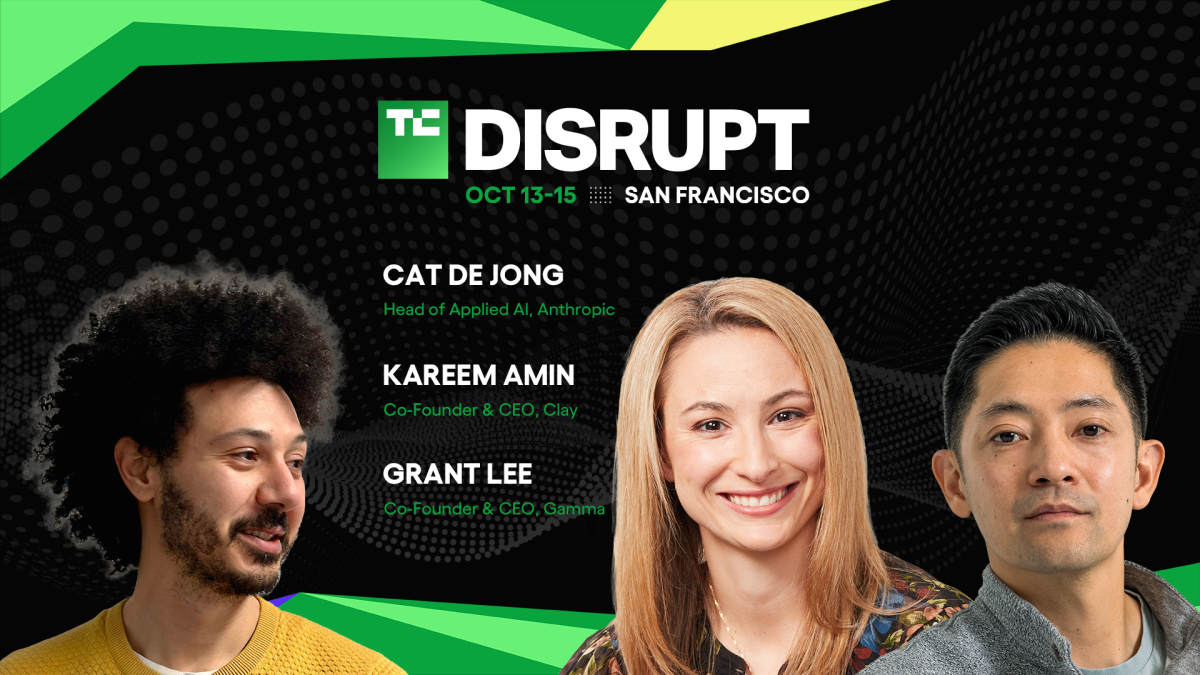
TechCrunch has revealed five more venture capital judges for Startup Battlefield 200 ahead of Disrupt 2026 in San Francisco. The panel will help decide which startups advance toward the finals and compete for a $100,000 equity-free prize.
- TechCrunch added five venture capital judges to the Startup Battlefield 200 panel.
- Disrupt 2026 takes place October 13-15 at Moscone West in San Francisco.
- The competition will feature 200 selected startups and a final prize of $100,000 equity-free plus the Disrupt Cup.
- The judge roster highlights current investor focus on AI, infrastructure, cybersecurity, robotics and physical AI.
- Five final judges are still to be announced before the championship round.
TechCrunch has added five more venture capital judges to the Startup Battlefield 200 selection process ahead of Disrupt 2026 in San Francisco, bringing the competition closer to its final lineup. The announcement matters because these investors will help determine which startups move from a broad field of applicants into one of the most closely watched live pitch contests in tech.
After reviewing thousands of applications and narrowing the field through multiple rounds, TechCrunch is preparing to host 200 startups at Disrupt 2026, where a smaller group will advance to the stage for the final competition and a chance to win a $100,000 equity-free prize and the Disrupt Cup.
The newly revealed judges represent a wide slice of the startup ecosystem, from AI and infrastructure to cybersecurity, consumer software, robotics and physical AI. Their addition signals how competitive the Battlefield process has become, and how much weight the final judge roster carries in shaping which companies get the spotlight.
What TechCrunch announced ahead of Disrupt 2026
TechCrunch said five more investors have joined the judging panel for Startup Battlefield 200, the long-running startup competition that sits at the center of its annual Disrupt conference. The judges will help evaluate startups that have already survived an extensive screening process before the event itself.
Disrupt 2026 is scheduled for October 13-15 at Moscone West in San Francisco, where more than 10,000 founders, investors, operators and tech workers are expected to gather for panels, networking, product demos and the Battlefield competition.
The company is also using the announcement to promote registration, including discounts for early buyers and group attendees. For founders and investors, though, the bigger story is the quality of the judging panel and the rare access it gives startups to some of the sector’s best-known decision-makers.
Why Startup Battlefield still matters
Startup Battlefield remains one of the most influential public launchpads for early-stage companies because the competition can turn a promising startup into a widely recognized name almost overnight. The format gives founders exposure to investors, media, prospective customers and the broader tech industry, all in one place.
For many startups, the biggest benefit is not just the prize money. It is the combination of visibility, credibility and the chance to be evaluated in front of investors who are actively looking for the next breakout company. A strong performance at Disrupt can accelerate fundraising, hiring and customer interest.
TechCrunch says the final winner will receive an equity-free $100,000 award along with the Disrupt Cup, underscoring the competition’s mix of prestige and practical support. That equity-free structure also means founders do not give up ownership to participate in the prize round.
How the competition works
Startup Battlefield 200 begins with a large applicant pool, then moves through several rounds of review before the chosen startups are invited to exhibit at Disrupt. From there, only a subset advance to the live competition stage, where they pitch and field questions from judges in front of a large audience.
The process is designed to do more than reward polished presentations. Judges look for product depth, market opportunity, technical differentiation and the founders’ ability to execute under pressure. That means the event often highlights companies that may not yet be household names but show unusual potential.
| Event detail | Information |
|---|---|
| Conference | TechCrunch Disrupt 2026 |
| Dates | October 13-15, 2026 |
| Location | Moscone West, San Francisco |
| Startup cohort | 200 selected startups |
| Top prize | $100,000 equity-free and the Disrupt Cup |
| Audience | 10,000+ tech leaders, VCs and founders |
Meet the five newly announced judges
The latest judges reflect the current direction of venture capital, where investors are increasingly focused on AI-native software, security, infrastructure and startups that can bridge digital and physical worlds.
Caleb Appleton, Bison Ventures
Caleb Appleton is a partner at Bison Ventures, where he focuses on physical AI investments spanning robotics, tech bio and systems that connect intelligence to the real world. Before moving into venture, he worked as an operator at TuneIn and also invested at Innovation Endeavors, giving him experience across both startup execution and early-stage backing.
Appleton’s background combines engineering, operating experience and frontier-tech investing, positioning him to evaluate companies building hardware-heavy products or AI systems with real-world applications.
His portfolio includes companies such as Cobot, Vivodyne, Passkey, Sleuth, Inner Logic, Cosmon and Grid Aero, which points to a strong interest in robotics, biomedical tools and physical intelligence.
Sara Deshpande, Maven Ventures
Sara Deshpande is a general partner at Maven Ventures, where she invests in seed-stage startups tied to changing consumer habits. Her work spans consumer software, digital health and consumer-facing AI applications, areas that have become increasingly competitive as generative AI filters into everyday products.
Deshpande joined Maven in 2014 as the firm’s first employee and has spent roughly a decade in venture capital. She also teaches entrepreneurship at Stanford, which suggests a close connection to both academic startup training and practical company-building.
Deshpande’s profile suggests she will be particularly attentive to products that feel native to new consumer behaviors rather than simply adding AI features to older business models.
Aatish Nayak, Kleiner Perkins
Aatish Nayak became a partner at Kleiner Perkins in May 2026, where he focuses on AI-native founders with deep domain knowledge. His track record includes work at Harvey, Scale AI and Shield AI, giving him a mix of product, infrastructure and defense-oriented experience.
At Harvey, he served as the first product manager and vice president of product, helping build core functions including product, design, marketing, analytics and support. Earlier, he worked on data infrastructure, GPT-2-related work and autonomous vehicle projects at Scale AI, and before that he contributed to the knowledge stack for robotic defense systems at Shield AI.
Nayak brings a founder-adjacent perspective shaped by building early products rather than only financing them, which is often valuable in a live pitch competition.
Jason Risch, Greylock
Jason Risch is a Greylock partner investing in enterprise security, AI and machine learning infrastructure, data platforms and developer tools. That combination makes him a strong fit for the types of technically ambitious companies that often emerge from Startup Battlefield.
His portfolio includes Onehouse, a cloud-native managed lakehouse platform, and Baseten, a model-serving toolkit used by data science teams. Before Greylock, Risch worked in business operations at Opendoor, advised companies at McKinsey and helped build startups at AI Fund.
Risch’s investment focus suggests a sharp eye for products that serve other builders, especially companies selling infrastructure to technical teams.
Mark Xu, Index Ventures
Mark Xu is a partner at Index Ventures covering cybersecurity, infrastructure and AI across stages. He has backed a range of companies operating at the edge of AI and enterprise software, including Fireworks, Parallel, 7AI, Simile and Flapping Airplanes.
Before Index, Xu was a growth investor at Lightspeed and supported companies such as Wiz, Glean and Grafana. That experience gives him a view across both early technical bets and later-stage scaling, which can be useful when judging founders who need to show both ambition and discipline.
Xu said, in effect through his published profile, that he looks for technical founders who combine deep expertise, strong execution and an intense focus on customer needs.
How this judge lineup reflects the market
The composition of the panel offers a useful snapshot of what venture capital is prioritizing in 2026. AI remains central, but the emphasis has shifted from generic software automation toward more specialized products: AI infrastructure, vertical applications, robotics, cybersecurity and physical-world intelligence.
That shift mirrors broader startup trends. Many of the most heavily funded companies now sit at the intersection of foundation models, enterprise workflows, automation and hardware-adjacent systems. Investors want founders who can show real differentiation, not just access to the latest model API.
Disrupt’s Battlefield judges often serve as a proxy for what the market thinks matters most. This year’s roster suggests the bar is especially high for technical depth, domain expertise and clear commercial use cases.
Why investors care about AI-native founders
AI-native founders are building products with artificial intelligence at the core rather than treating it as an add-on. That matters because investors increasingly believe the strongest startups will be those designed around new workflows, not legacy software models retrofitted with a chatbot.
Judges like Nayak, Risch and Xu are well positioned to spot whether a startup truly has an AI advantage. They can assess whether the team has access to proprietary data, whether the product has real technical moats and whether the company can survive in a crowded market.
Why physical AI is gaining attention
Physical AI refers to systems that bring machine intelligence into the physical world through robots, autonomous devices, sensors and specialized hardware. Appleton’s presence on the panel highlights the growing venture interest in companies that make AI tangible rather than purely digital.
That category includes robotics, biomedical automation and other industries where software alone is not enough. These companies often face longer development timelines, but they can also build stronger moats and larger market opportunities if their technology works at scale.
What founders can expect on the Disrupt stage
Founders selected for Startup Battlefield 200 will not just be showing their products to a casual conference audience. They will be pitching in a setting that brings together experienced investors, journalists and potential customers who are used to evaluating early-stage risk quickly.
The live format rewards clarity. Founders need to explain the problem, why their solution is different, how big the market could be and why the team is uniquely suited to win. In a room full of sharp observers, weak assumptions tend to get exposed fast.
That pressure is part of what makes the competition so influential. A startup that can communicate well under questioning often earns more credibility than one that simply has a flashy demo.
Who benefits most from this competition?
The clearest winners are the startups themselves, but the benefits extend well beyond the finalists. The broader Disrupt audience gains a first look at emerging companies, investors get early access to potential deals, and media outlets get a curated window into where innovation is heading.
- Founders get exposure, feedback and a chance to accelerate fundraising.
- Investors get a concentrated look at curated early-stage opportunities.
- Customers can discover products before they become mainstream.
- The tech ecosystem gets a benchmark for what quality early-stage companies look like in the current market.
For TechCrunch, the competition also reinforces Disrupt’s role as an annual industry checkpoint. It is where the conference tries to answer a simple question: which companies are most likely to shape the next phase of tech?
Timeline: how Startup Battlefield 200 leads into the finals
The judging announcement is one step in a sequence that culminates on the Disrupt stage. The timeline below shows how the competition unfolds.
| Stage | What happens | Why it matters |
|---|---|---|
| Applications | Startups submit to Startup Battlefield 200 | Creates the initial global applicant pool |
| Review rounds | TechCrunch evaluates companies through several filters | Narrows the field to the strongest contenders |
| Selected cohort | 200 startups are invited to Disrupt | Gives founders exhibit space and conference access |
| Live competition | A smaller group pitches on stage before judges | Determines who advances toward the finale |
| Final decision | Judges select the winner | Award includes $100,000 equity-free and the Disrupt Cup |
How to read the final judge announcement
TechCrunch says five more judges are still to be revealed before the full panel is complete. That final announcement will determine the people who judge the finalists and choose the company that leaves Disrupt with the trophy and prize money.
The remaining names will matter because the last-stage judges often become part of the event’s broader narrative. They help define the competition’s credibility and can influence which companies attract attention after the conference ends.
For founders, the takeaway is straightforward: the Battlefield process is almost complete, and the set of investors making those decisions is becoming clearer. For the rest of the market, it is another reminder that the next generation of breakout startups is already being sorted, scored and prepared for the spotlight.
Why Disrupt 2026 could shape the year ahead
Disrupt often acts as an early barometer for startup trends that later show up in funding rounds, product launches and M&A activity. Because the conference combines investor access, media coverage and founder networking, it can compress months of visibility into a few intense days.
This year’s Battlefield panel suggests that AI will remain central, but the conversation is broadening. Investors are not only looking at model companies; they are also watching for startups that apply AI to security, infrastructure, consumer behavior, robotics and physical industries.
If the final competition produces a standout winner, it is likely to reflect those broader market themes. In that sense, the latest judge announcement is not just a conference update. It is an early signal of what the startup world may reward next.
Frequently asked questions
What did TechCrunch announce about Startup Battlefield 200?
TechCrunch announced five additional judges for Startup Battlefield 200 ahead of Disrupt 2026. The new names bring the judging panel closer to completion as the event prepares to narrow the field of selected startups and identify finalists for the live competition.
When and where is TechCrunch Disrupt 2026 happening?
TechCrunch Disrupt 2026 is scheduled for October 13-15, 2026, at Moscone West in San Francisco. The conference is expected to draw more than 10,000 founders, investors, and tech professionals for sessions, networking and the Startup Battlefield competition.
What do startups compete for in Startup Battlefield?
Startups compete for a $100,000 equity-free prize and the Disrupt Cup. Just as important, they gain exposure to investors, media and customers during one of the most watched early-stage startup events in the tech industry.
Why does the judge lineup matter?
The judge lineup matters because these investors help determine which startups advance through the competition and ultimately who wins. Their backgrounds also signal which sectors are most important to venture capital right now, including AI, infrastructure, security and robotics.
How many startups are selected for Startup Battlefield 200?
TechCrunch selects 200 startups for Startup Battlefield 200 after reviewing thousands of applications. Those companies then exhibit at Disrupt, and a smaller subset advances to the live pitch competition before the final winner is chosen.