In short
Microsoft is merging its consumer and business Copilot apps while removing several underused AI features. The move reflects a broader industry push to simplify AI products and make them more useful.
- Microsoft is combining its consumer Copilot app with Microsoft 365 Copilot.
- Several features, including Group Chats and AI podcasts, are being removed.
- Deep Research will disappear for consumers, but Researcher remains for paid business users.
- The redesign reflects growing pressure to simplify AI apps and boost daily use.
Microsoft is combining its consumer Copilot app with Microsoft 365 Copilot and removing several underused AI features, a shift that signals the company is tightening its consumer AI strategy after an expansive and uneven rollout. The changes, which Microsoft says are meant to make Copilot simpler and more useful, also show how the company is adjusting to a crowded market dominated by ChatGPT, Claude and Gemini.
The cleanup comes as Microsoft quietly abandons features that did not gain traction, including Group Chats, AI-generated podcasts, Copilot Labs experiments and Deep Research for consumer users, with the changes set to take effect by August 18, 2026. For business subscribers, Microsoft says Researcher will serve as the replacement for deep research capabilities.
Behind the product reshuffle is a broader admission: Microsoft’s Copilot branding grew into too many separate experiences, and the company now appears to be correcting course by merging overlapping tools into a single, more coherent product line.
Why Microsoft is merging Copilot apps now
Microsoft is consolidating its Copilot apps because the company appears to have concluded that its split consumer-and-business approach created unnecessary confusion. The move reflects both practical product management and a competitive need to make Copilot easier to understand in a market where rivals have increasingly unified their own AI experiences.
Two years ago, Microsoft framed artificial intelligence as the next major platform shift and positioned itself as a leader in that transition. Since then, the company has launched a wide range of Copilot-branded features across Windows, the web, Microsoft 365, and consumer experiences. But the result has been a fractured product family that has not always felt clearly differentiated to users.
By merging the apps, Microsoft is trying to narrow the distance between personal and professional AI usage. Many people already expect an assistant that can help draft work documents, answer personal questions, summarize research, and manage files in one place. The company’s own product design appears to be catching up with that reality.
How the new Copilot structure will work
The simplified setup will bring together the consumer Copilot app and the business-focused Microsoft 365 Copilot app, according to Microsoft’s support materials and reporting first surfaced by GeekWire. The practical effect is that users should encounter fewer distinct entry points and a more unified interface across home and workplace scenarios.
Microsoft says the transition is intended to create a “simpler, more cohesive experience,” though the company is also clearly pruning features that did not justify their complexity.
Microsoft has indicated that the goal of the redesign is to make Copilot feel more unified and easier to use, while shifting resources away from products that failed to earn consistent usage.
That statement matches an internal message reported in July, in which Microsoft executive Jacob Andreou reportedly told employees that Copilot needed to earn “the right to exist” in users’ lives. In plain terms, the company seems to believe that a product with too many novelty features can lose the trust and regular use that matter most.
What features are being removed?
Microsoft is eliminating several consumer-facing features that appear to have fallen short of expectations. The company says users will lose access to Group Chats, AI-generated podcasts, Copilot Labs experiments and Deep Research by August 18, 2026.
For paying professional users, Microsoft says the Researcher tool will continue to provide deeper research functionality. That leaves business customers with a more targeted alternative even as consumer users lose one of the more advanced capabilities from the standalone app.
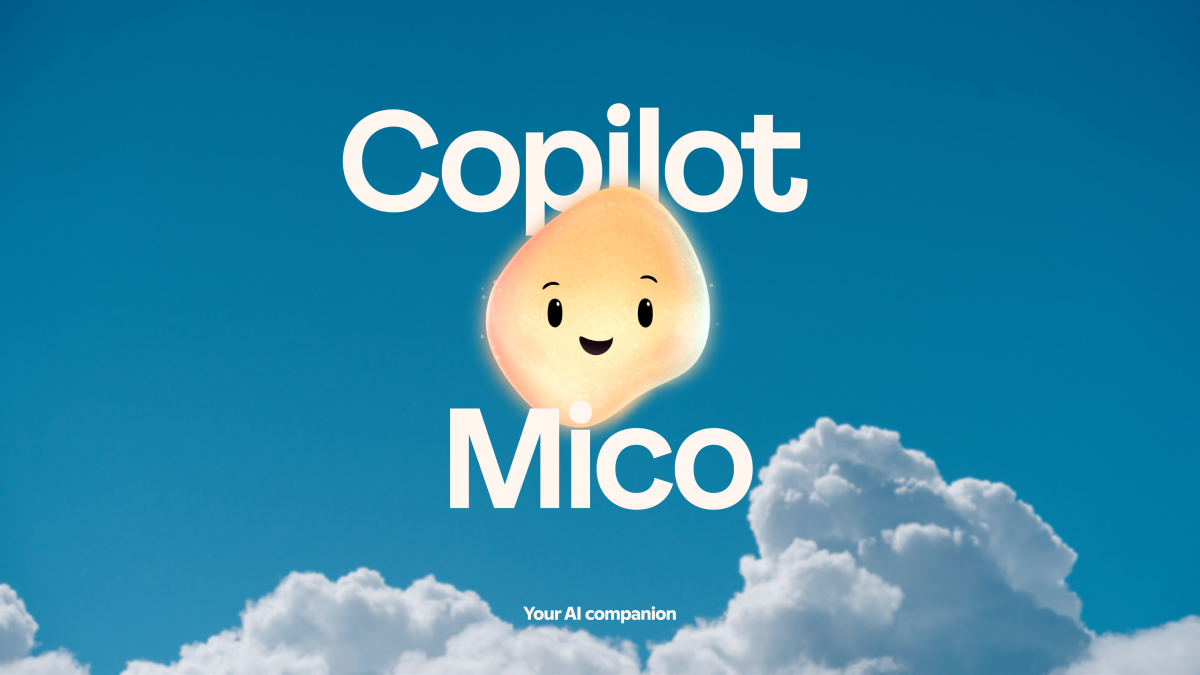
The company is also removing Mico, the floating animated character that served as Copilot’s mascot. The character was meant to give the assistant a friendlier personality, but it never became a defining feature of the product. Its disappearance suggests Microsoft is moving away from playful branding and toward a more conventional productivity identity.
Features going away and what happens next
Some generated files from the standalone Copilot app will be moved into OneDrive during the transition, and Microsoft warns that other features could temporarily disappear while the consolidation is underway. That kind of migration is common during platform simplification, but it can still create friction for users who have built workflows around features that may not survive the redesign.
For consumers, the immediate effect is a leaner Copilot experience. For Microsoft, the long-term goal is to reduce overlap and make it easier for the company to market a single AI assistant that serves both work and personal tasks.
| Change | What Microsoft is doing | Who is affected | Timing |
|---|---|---|---|
| App consolidation | Merging consumer Copilot and Microsoft 365 Copilot | Consumers and business users | Rolling transition |
| Group Chats | Removing the feature | Consumer users | By Aug. 18, 2026 |
| AI podcasts | Ending AI-generated podcasts in Copilot | Consumer users | By Aug. 18, 2026 |
| Copilot Labs | Discontinuing experimental features | Consumer users | By Aug. 18, 2026 |
| Deep Research | Removing consumer access; keeping professional replacement | Consumer and business users | By Aug. 18, 2026 |
| Mico mascot | Retiring the animated character | Consumer users | During transition |
How does this fit into the wider AI app shakeout?
Microsoft’s move is part of a broader industry trend in which major AI companies are collapsing multiple tools into single, more powerful apps. The pattern suggests that the early phase of adding standalone features is giving way to a more mature phase centered on simplification, consistency and retention.
Across the industry, companies have begun to realize that users often do not want a menu of separate AI destinations. They want one place to chat, search, generate, research and act. That realization has driven several recent product consolidations.
Other AI companies are simplifying too
Microsoft is not acting alone. Anthropic recently merged Cowork into its Claude chat experience, OpenAI folded Operator into ChatGPT, and Google has been layering specialized functions into Gemini, including combinations of deep research and web browsing.
These moves suggest the market is converging around a common design philosophy: the best AI product may not be the one with the most branded sub-features, but the one that makes those abilities feel invisible and easy to reach.
That trend also raises a harder question for AI product teams: how much differentiation can users actually absorb before the app becomes cluttered? Microsoft’s answer seems to be that less is more, at least for now.
What does the change say about Copilot’s position in the market?
It suggests that Copilot still has work to do to establish itself as a must-use consumer AI product. Microsoft may have scale, distribution and deep Windows integration, but those advantages do not automatically translate into user loyalty when the product identity feels scattered.
The company has spent heavily to make Copilot a central pillar of its AI strategy, yet the latest changes imply that the brand has not fully delivered on its original ambition. In removing low-usage features, Microsoft is signaling that novelty alone is not enough.
There is also a competitive angle. ChatGPT, Claude and Gemini have each become increasingly polished conversational systems with broad utility. For Microsoft, success will likely depend less on branding theatrics and more on whether Copilot can offer a clearer, more reliable everyday experience.
According to Microsoft’s internal thinking reported by The Information, Copilot has to justify its place in users’ routines by proving that it is useful enough to keep, not just interesting enough to try.
Consumer versus business AI is blurring
One of the most important lessons in Microsoft’s redesign is that the line between personal and professional AI use is thinner than vendors once assumed. A user may ask the same assistant to summarize a work email in the morning and plan a weekend trip in the evening.
That overlap makes separate products harder to maintain. It also means companies can no longer rely on artificial boundaries between “home” and “office” assistants if the underlying tasks are increasingly similar.
- Consumers want one assistant that handles everyday questions and creative tasks.
- Business users want the same assistant to work securely with documents and collaboration tools.
- AI vendors are under pressure to reduce app sprawl and unify workflows.
- Features that do not drive daily engagement are becoming expendable.
What happens to users during the transition?
Users should expect some interruption, but Microsoft says it is managing the change with file migration and staged feature removal. The company’s warning that some functions may disappear temporarily suggests that the rollout will not be perfectly seamless.
For people who relied on Deep Research in the consumer app, the change may be the most noticeable. For business users, Researcher appears intended to cover much of that use case, but the experience will likely feel different depending on which version of Copilot they use and what subscription tier they have.
Files created in the standalone Copilot app will be moved to OneDrive, a move that fits Microsoft’s broader ecosystem strategy. By keeping content inside its storage and productivity stack, Microsoft can maintain continuity across apps while also reinforcing the role of its own cloud services.
Key dates to watch
The most important deadline is August 18, 2026, when Microsoft says the consumer-facing removals will take effect. Until then, users may see a transition period as the company folds features together and phases out branding elements like Mico.
The company has not said publicly whether the changes are the end of Copilot experimentation or simply a reset. Based on Microsoft’s recent direction, however, the likely answer is that experimentation is not ending; it is being hidden inside a more disciplined product structure.
| Date | Event | Significance |
|---|---|---|
| 2024 | Microsoft begins framing AI as a generational platform shift | Sets the stage for aggressive Copilot rollout |
| July 2026 | Internal memo reportedly says Copilot must earn its place with users | Signals strategic rethink |
| Aug. 13, 2026 | Microsoft announces consolidation and feature cuts | Public confirmation of the reset |
| Aug. 18, 2026 | Consumer feature removals take effect | Major transition deadline |
Why this matters beyond Microsoft
This is more than a housekeeping update. Microsoft’s decision is a case study in how the AI industry is maturing after an initial wave of feature inflation. The winners may not be the companies that launch the most side projects, but the ones that can turn AI into a dependable habit.
For the broader market, the message is clear: the era of packing AI products with experimental extras is giving way to one of consolidation, product discipline and workflow integration. Microsoft’s Copilot reset may be uncomfortable for some users, but it also reflects a more realistic view of how AI tools are actually adopted.
If the company succeeds, the new Copilot could become a stronger contender by being less confusing and more dependable. If it fails, the changes will reinforce the idea that Microsoft still has not found the right formula for a consumer AI assistant that feels essential.
For now, the company is betting that a smaller set of better-integrated features will do more for Copilot than a longer list of underused experiments ever could.
Frequently asked questions
What is Microsoft doing with Copilot apps?
Microsoft is merging its consumer Copilot app with Microsoft 365 Copilot into a more unified experience. The company says the goal is to reduce confusion, simplify the product lineup and make Copilot easier to use across personal and professional tasks.
Which Copilot features are being removed?
Microsoft is removing Group Chats, AI-generated podcasts, Copilot Labs experiments and Deep Research for consumer users. The company says those changes will take effect by August 18, 2026, while business users will still have access to a professional research tool called Researcher.
Why is Microsoft changing Copilot now?
Microsoft is changing Copilot now because the app family became too fragmented and some features did not gain enough traction. The company appears to be responding to user confusion, weak feature adoption and stronger competition from ChatGPT, Claude and Gemini.
What happens to files created in the Copilot app?
Files generated in the standalone Copilot app will be migrated to OneDrive during the transition. Microsoft says that should help preserve user content while it shifts people toward the merged Copilot experience.
Is Microsoft the only company simplifying its AI apps?
No. Microsoft is part of a wider trend across the AI industry. Anthropic, OpenAI and Google have also been folding specialized tools into their main chat apps, suggesting the market is moving toward fewer, more integrated AI experiences.