In short
Cal AI’s rapid growth was powered by a deliberate influencer marketing strategy that helped the AI calorie-tracking app generate more than $30 million in revenue before MyFitness acquired it. Founder Zach Yadegari also used the stage at TechCrunch Disrupt to preview his next startup, Persona.
- Cal AI says its viral growth came largely from a paid influencer marketing strategy.
- A single creator post reportedly drove about 1,000 users in two days, validating the approach.
- The app generated more than $30 million in two years and was acquired by MyFitness in March.
- Founder Zach Yadegari has now launched Persona, an AI agent startup backed by $10 million.
- The story highlights how distribution and audience targeting can matter as much as product design in consumer AI.
Cal AI’s rise was driven less by a breakthrough in product virality than by a deliberate creator-marketing machine. The AI calorie-tracking app, founded in 2024 by 19-year-old Zach Yadegari, used a network of influencers to fuel rapid user growth, helping the company generate more than $30 million in revenue in two years before being acquired by MyFitness in March.
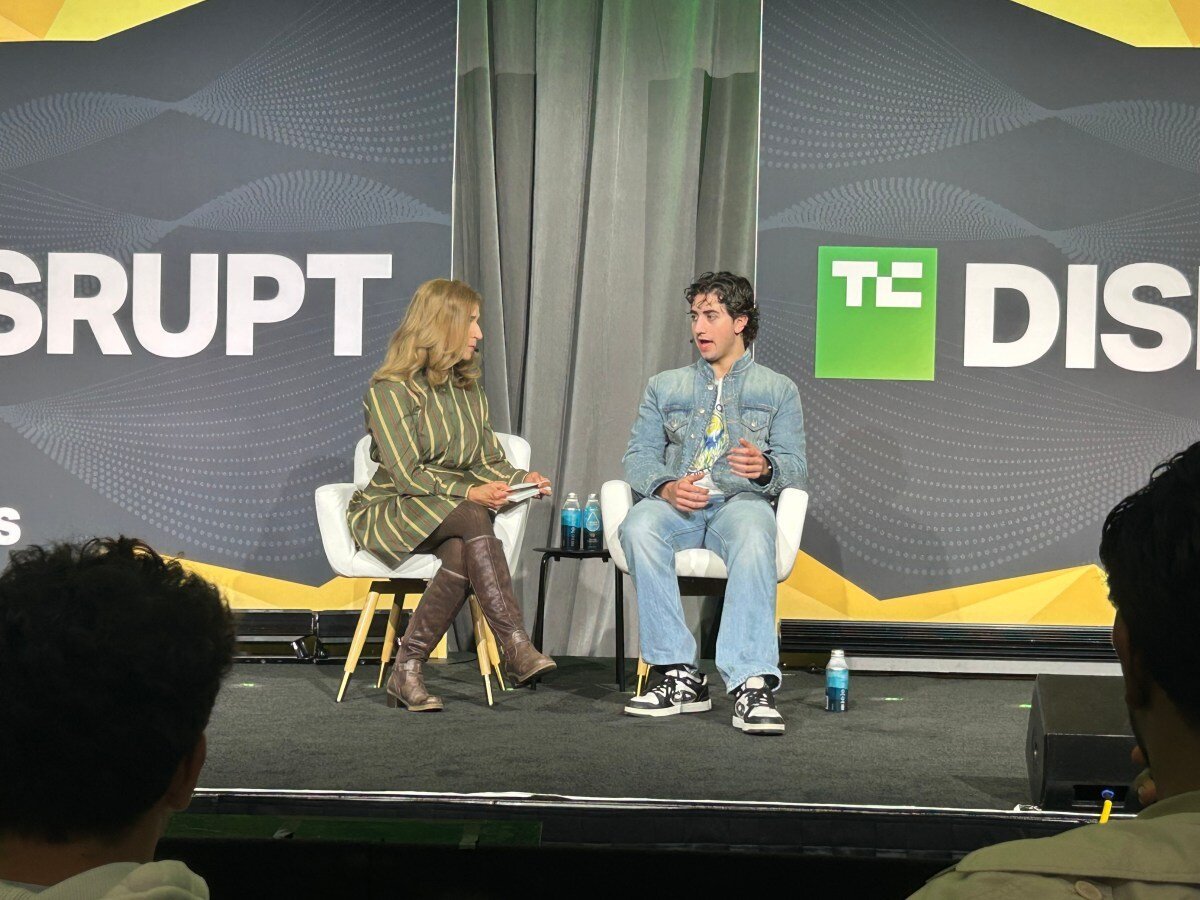
Speaking at TechCrunch Disrupt on Thursday, Yadegari described a growth strategy that leaned heavily on paid posts, tight audience targeting and repeated testing to identify creators whose followers would actually convert. The approach, he said, turned what started as one successful post into a scalable playbook for expansion.
Why Cal AI’s growth matters
Cal AI is a useful case study in how consumer AI products can break out in a crowded app market. Instead of relying purely on organic buzz, the company paired a trendy use case — calorie tracking with AI-assisted image recognition — with an aggressive influencer strategy designed to drive immediate installs.
That matters because the app’s success suggests that distribution can matter as much as model quality or product novelty in consumer AI. For founders, it also underscores how social platforms have become a primary acquisition channel for apps aimed at younger, mobile-first audiences.
Yadegari’s comments also land in a broader debate about whether AI startups are being built around sustainable products or around short-lived growth tactics. Cal AI’s numbers show that, at least in the short term, the formula can work.
How did Cal AI get its first wave of users?
Cal AI’s first meaningful lift came from a single influencer post that drove roughly 1,000 new users in just two days, according to Yadegari. That early spike convinced the company that creator-led distribution could be turned into a repeatable acquisition channel.
From there, the startup moved quickly to recruit more influencers and expand the campaign. The goal was not just awareness, but measurable conversions — creators would be paid to post, and the company would monitor how many users each promotion produced.
Yadegari said that after the initial boost, the team concluded the model could scale and began signing creators as quickly as possible, paying as many as it could to keep posting for the app.
He characterized the results as highly predictable: each post tended to bring a certain number of viewers and a corresponding share of those viewers converted into users. In his telling, the relationship between spend and outcome was not magical, but consistent enough to pour fuel on.
What was the influencer strategy behind Cal AI?
The company’s strategy depended on volume, but not random volume. Yadegari said the startup focused on creators with “tight communities,” meaning audiences that were engaged, specific and easier to reach with a product like Cal AI.
That distinction matters. Large followings do not always translate into installs, sign-ups or subscriptions. Cal AI’s playbook, as described by its founder, favored influencers whose followers trusted their recommendations and were likely to act quickly.
Negotiating with creators
According to Yadegari, the company negotiated deals that tied payouts to performance targets. In practice, that meant offering a creator a set amount of money for reaching a defined scale of impact, then continuing the collaboration as long as it kept delivering new users.
He also described many influencers as cash-hungry college students looking for straightforward payments, suggesting that the startup’s offer was often simple: take the deal, keep posting, and hit the agreed thresholds.
Why tight communities converted better
Audiences with strong niche interests are more likely to respond to a product recommendation that feels personally relevant. For Cal AI, that likely meant health-conscious, fitness-oriented or productivity-minded viewers were a better fit than broad entertainment audiences.
In other words, the company was not just buying reach. It was buying the right kind of reach — the kind that can quickly turn a social post into an app download.
| Milestone | What happened | Why it mattered |
|---|---|---|
| 2024 | Cal AI was founded by Zach Yadegari | Marked the start of the app’s rapid consumer push |
| Early growth phase | An influencer post brought in about 1,000 users in two days | Validated paid creator marketing as a growth channel |
| Two-year period | The company generated more than $30 million in revenue | Showed the scale the strategy could achieve |
| March | Cal AI was acquired by MyFitness | Closed the company’s first major chapter |
| October 2026 | Yadegari discussed the strategy publicly at TechCrunch Disrupt | Offered a rare look at the mechanics behind the growth |
Who is Zach Yadegari?
Yadegari is a rare founder story: a teenager who moved from high school graduation to building a fast-growing AI consumer startup in a matter of years. He is 19, already a Forbes 30 Under 30 alumnus, and now has one exit and a fresh startup behind him.
At the Disrupt conference, he spoke with the confidence of someone who has already seen the payoff of moving quickly. He also framed his success as a mix of personal ambition and family support, saying his upbringing gave him the freedom to pursue big goals.
His comments on college were less flattering. In a remark that drew laughter from the audience, he suggested that the main reason to attend is the social experience rather than the educational one, at least for someone trying to build a company fast.
Yadegari told the audience that college makes the most sense if someone wants the traditional social side of the experience, rather than as a prerequisite for entrepreneurial success.
How did Cal AI monetize its attention?
Cal AI’s revenue growth points to a business model that was not just about downloads. Turning users into paying customers — or otherwise monetizing them over time — was essential to reaching more than $30 million in just two years.
While Yadegari did not detail every monetization stream on stage, the scale of revenue suggests the app converted attention into meaningful financial performance. That makes the influencer strategy more significant: it was not simply a branding exercise, but the top of a funnel that fed a highly lucrative consumer product.
For AI startups, this is an important distinction. A viral app with no monetization can still fade quickly, but a viral app that consistently turns users into revenue can attract acquirers, investors and imitators.
What does Cal AI’s story say about consumer AI?
Cal AI’s trajectory shows that consumer AI success may increasingly depend on mastery of distribution. The technology inside the app may matter, but in crowded markets the bigger differentiator can be how quickly a startup can reach the right users at the right time.
That helps explain why influencer marketing has become such a powerful lever for apps built for phones, especially products that can be demonstrated visually and understood in seconds. A short video, a creator recommendation and a simple signup flow can be enough to create a surge.
At the same time, Cal AI’s story raises questions about durability. Marketing tactics that generate rapid growth can be effective without guaranteeing long-term retention, and consumer AI is full of products that flash brightly before fading. The company’s acquisition by MyFitness suggests the business had enough momentum to become strategically valuable, but the long-term test will be whether the audience sticks.
What is Persona, and how does it fit Yadegari’s next move?
Persona is Yadegari’s new AI agent startup, launched earlier this month and already backed by $10 million in funding. The company’s stated mission is to make computing feel more seamless in everyday life.
Yadegari said Persona’s assistant is designed to be available across wherever people already communicate — from iMessage to email to phone calls — and he suggested the company is also thinking beyond software by developing a hardware ecosystem around the product.
That ambition places Persona in one of the most crowded and closely watched areas of AI: agentic assistants that can operate across apps and communication channels. The pitch is broad, but the execution challenge is enormous. Consumers may want an assistant that follows them everywhere; building one that actually feels useful, trustworthy and persistent is another matter.
How Persona differs from a standard chatbot
Persona is aiming beyond a chat interface. Rather than simply answering questions, it is meant to live inside the user’s digital environment and act more like an always-available assistant.
If the startup succeeds, the product could blur the line between messaging, scheduling, calls and app-based tasks. That makes it part of the larger race to define what an AI agent should actually do in daily life.
Why the acquisition matters for MyFitness
MyFitness’ purchase of Cal AI shows the strategic value of a product that can attract users quickly and convert them efficiently. Although the acquisition price was not disclosed, the deal suggests the app had enough momentum and brand recognition to become a meaningful asset.
For a fitness-related company, buying a popular calorie-tracking app with a strong user acquisition engine could make sense both defensively and offensively. It can help consolidate users, strengthen engagement and prevent competitors from taking a fast-growing slice of the market.
It also signals that high-growth consumer AI apps remain acquisition targets even when the underlying product is relatively narrow. In a market where distribution is expensive and attention is scarce, speed can be valuable enough to buy.
How important are influencers in AI app launches?
Influencers are becoming central to AI app launches because they can translate a technical product into a relatable, repeatable demonstration. For many users, seeing a creator show a product in action is more persuasive than reading a feature list or ad copy.
But Cal AI’s case suggests the most effective campaigns are not just about big personalities. They are about creator-audience fit, pricing discipline and the ability to trace a clear line from post to install to revenue.
- Cal AI used paid influencers to drive rapid user growth.
- An early post reportedly brought in around 1,000 users in two days.
- The startup generated more than $30 million in revenue over two years.
- MyFitness acquired Cal AI in March for an undisclosed amount.
- Yadegari has since launched Persona, an AI agent startup backed by $10 million.
The bigger picture
Cal AI’s story sits at the intersection of three big trends: the rise of AI consumer apps, the growing power of creator marketing and the continued appetite for startups that can show fast traction. It is a reminder that in software, distribution often determines whether a product becomes a company or just an idea.
Yadegari’s path also reflects a new kind of founder archetype: young, social-first, highly fluent in online attention and willing to treat influencer marketing as a system rather than a side tactic. Whether that approach will scale into the next phase of AI remains to be seen, but its effectiveness in Cal AI is hard to ignore.
As Persona begins its own journey, the market will be watching to see whether Yadegari can repeat his formula in a harder category. Calorie tracking is one thing; becoming a personal AI assistant that fits into every corner of digital life is another.
Frequently asked questions
How did Cal AI become so popular?
Cal AI became popular by using influencer marketing as its main growth engine. According to founder Zach Yadegari, an early creator post brought in about 1,000 users in two days, which convinced the team to recruit more influencers and scale the strategy aggressively.
What is Cal AI?
Cal AI is an AI-powered calorie-tracking app founded in 2024 by Zach Yadegari. The app uses artificial intelligence to help users track food intake and grew quickly enough to generate more than $30 million in revenue before being acquired by MyFitness.
Why did Cal AI focus on influencers instead of traditional ads?
Cal AI focused on influencers because creator posts could be tied to measurable user acquisition. Yadegari said the team looked for creators with tight-knit communities, since those audiences were more likely to install the app and convert than broad, less engaged followings.
What is Persona, Zach Yadegari’s new startup?
Persona is Yadegari’s new AI agent startup, launched earlier this month and backed by $10 million. The company aims to build a personal assistant that works across iMessage, email, phone calls and other internet-connected environments, with hardware ambitions as well.