In short
Hollywood is releasing a new wave of films in 2026 that portray Silicon Valley founders far more critically than in the past. The projects around Zuckerberg, Musk, Holmes and Altman reflect a broader tech backlash and growing public skepticism of Big Tech power.
- New 2026 films depict Big Tech leaders as dangerous, manipulative or socially harmful.
- The Social Reckoning, Musk, You Can See Everything and Artificial all reflect a harsher cultural mood toward Silicon Valley.
- Distribution and marketing for some of the films have already been affected by corporate and platform pressure.
- The trend shows how public distrust of social media, AI and billionaire influence has deepened.
Hollywood is releasing a wave of films in 2026 that treat Silicon Valley not as a source of inspiration, but as a cautionary tale. New projects about Mark Zuckerberg, Elon Musk, Elizabeth Holmes and Sam Altman suggest that the entertainment industry has moved from celebrating tech founders to scrutinizing the damage their companies can cause.
That shift matters because these movies are arriving as public skepticism of Big Tech deepens, and as filmmakers increasingly focus on misinformation, mental health, corporate power and the political influence of tech billionaires.
For years, movies about internet moguls and startup founders tended to flatter the myth of the genius outsider. They framed disruption as ambition, and ambition as progress. This latest crop of films does something different. It treats the people who built some of the world’s most powerful companies as figures whose decisions now shape elections, public trust, journalism, health, and the daily experience of being online.
At the center of that trend are four high-profile titles: Aaron Sorkin’s The Social Reckoning, Nathan Fielder and Lance Oppenheim’s You Can See Everything, Alex Gibney’s Musk, and Luca Guadagnino’s Artificial. Taken together, they show how sharply the cultural conversation around technology has changed.
| Film | Subject | Format | Core angle | Release / status |
|---|---|---|---|---|
| The Social Reckoning | Mark Zuckerberg and Meta | Fictionalized drama | How Facebook’s internal choices and algorithms affected democracy, teens and misinformation | In release cycle in 2026 |
| You Can See Everything | Elizabeth Holmes | Documentary | Holmes’ self-presentation and whether she is using the film to reshape her image | Screening |
| Musk | Elon Musk | Documentary | How Musk amassed influence and why critics say that power went unchecked | In theaters; HBO/Skydance plans |
| Artificial | Sam Altman and OpenAI | Dark comedy / character study | Portrait of Altman as manipulative and emblematic of AI’s power politics | Wide release set for Dec. 25 |
Why Hollywood’s tech backlash is peaking now
Hollywood’s tech backlash is intensifying now because public attitudes toward Silicon Valley have hardened after years of scandals, layoffs, misinformation, antitrust scrutiny and anxiety about generative AI. The result is a new appetite for stories that question whether tech founders were ever the heroic figures they were once made out to be.
That is a major departure from the era when tech movies often leaned on the thrill of innovation. In the 2010s, several acclaimed films and dramas treated startup culture as a fascinating, if morally messy, engine of progress. The founders at the center of those stories were often complicated, but not yet fully condemned by history.
By contrast, the new films arrive after a decade in which social media has been linked to political polarization, mental health concerns among teens, algorithmic amplification of extremism and a general sense that a small number of companies now mediate public life. In that environment, a movie about a tech founder is no longer just a character study. It is also a cultural diagnosis.
The films are not all identical in tone or method. Some are fictionalized, others documentary-based. But they share a common assumption: the age of viewing Silicon Valley through a primarily admiring lens is over.
How The Social Reckoning reframes Mark Zuckerberg
The Social Reckoning treats Mark Zuckerberg less as a misunderstood innovator and more as a dangerous executive whose ambitions have had consequences far beyond one company’s balance sheet. The movie is driven by the concerns raised by whistleblower Frances Haugen, whose disclosures in 2021 drew attention to how Facebook’s own research appeared to show the platform could worsen harmful content and intensify polarization.
The new film lands years after those warnings first became public, but that delay may actually strengthen its argument. Rather than racing to be first, it can connect the internal decisions of Facebook and Meta to a wider set of outcomes that audiences now understand more clearly: misinformation campaigns, teen mental health concerns, and the extraordinary power a platform can exert over public attention.
Sorkin’s project appears to move away from the smirking, ambiguous portrayal of Zuckerberg that defined David Fincher’s The Social Network. That earlier film made room for the idea that Zuckerberg was an alienated prodigy whose genius and immaturity were inseparable. The Social Reckoning, by contrast, seems to focus on the idea that scale itself can become a form of recklessness.
What makes this version different?
What makes this version different is that it is less interested in the origin story than in the systems that followed it. It is not only asking who Zuckerberg was when Facebook started, but what happens when a platform designed to maximize growth is allowed to shape democratic discourse at global scale.
That framing makes the film feel of the moment, even if the underlying reporting is not new. The issues it explores are not historical curiosities; they are live questions about how Meta operates right now and how much influence social platforms should have over what people see, believe and share.
The film’s framing suggests that Zuckerberg’s obsession with expansion is no longer just a business story; it is a democratic problem.
What is Musk about and why has it already drawn backlash?
Musk is a documentary that examines Elon Musk’s rise and the extraordinary degree of power he has accumulated through companies such as Tesla, SpaceX and xAI. It also asks why governments, investors and much of the public were willing to give him so much latitude for so long.
That approach has already provoked a pointed response from Musk. According to the reporting around the film, X blocked advertising for the documentary on its platform, and Musk threatened legal action by dismissing the project as a smear. The reaction is notable not just because it came from a subject used to public feuds, but because Musk has long styled himself as a champion of open expression.
The irony is obvious. A figure who often presents himself as a “free speech absolutist” has reportedly tried to make it harder for the film to find an audience online. The dispute underscores one of the central tensions in the current tech moment: the people who control vast communications platforms may also control the terms on which criticism reaches the public.
How the distribution fight became part of the story
How the distribution fight became part of the story is important because it turned a documentary into a test case for platform power. Ads for Musk were reportedly missing, at least at first, from several major services, including YouTube, Facebook, Instagram and TikTok. Some of those restrictions were eventually eased, but the episode raised questions about whether big platforms were reluctant to host a film critical of one of the most prominent men in tech.
TikTok’s refusal to back down was especially interesting given the broader corporate and political web around the company’s U.S. ownership structure and its relationship to powerful investors. The episode illustrated how entertainment, media distribution and tech politics now overlap in ways that can shape what the public sees.
The documentary is currently playing in select theaters, with broader distribution expected later through HBO under Skydance-linked plans. Even before a wide rollout, it has already become part of the broader argument about whether Musk’s public image is beginning to collapse under the weight of his own influence.
Why Amazon backed away from Artificial
Amazon’s decision to step away from distributing Artificial appears to reflect the same discomfort that is now surrounding many films about tech leaders. The company was originally set to release Luca Guadagnino’s project, but later exited the deal after having also invested heavily in OpenAI.
That context matters. Once a studio has substantial financial ties to AI firms, a movie that portrays a top executive in a harsh or cynical light can become more complicated to support. In this case, the withdrawal looked to many observers like a sign that the entertainment business is weighing corporate relationships against editorial independence.
The film itself is described as a dark comedy and character study that presents Sam Altman as manipulative and emotionally untrustworthy. That kind of portrayal is likely to resonate at a moment when OpenAI and other AI companies are trying to normalize generative tools across business, media and daily life. The film arrives as the AI sector is moving from novelty to infrastructure, and that makes criticism of its leaders more commercially and culturally charged.
Amazon’s retreat suggests that companies tied to the AI boom may be wary of lending their brands to projects that challenge the public narratives surrounding their partners and investments.
Why the timing matters for OpenAI
Why the timing matters for OpenAI is straightforward: the company is now operating under much heavier scrutiny than it was only a few years ago. Questions about governance, product safety, labor displacement and the cultural power of large language models have become mainstream. If OpenAI eventually moves toward a public offering, as many expect, the company’s public image will become even more consequential.
That gives a film like Artificial extra relevance. A critical portrayal of Altman at this stage is not just about one executive. It is about how the public should understand the people building the tools that may shape work, media and creativity for years to come.
How You Can See Everything blurs the line between subject and filmmaker
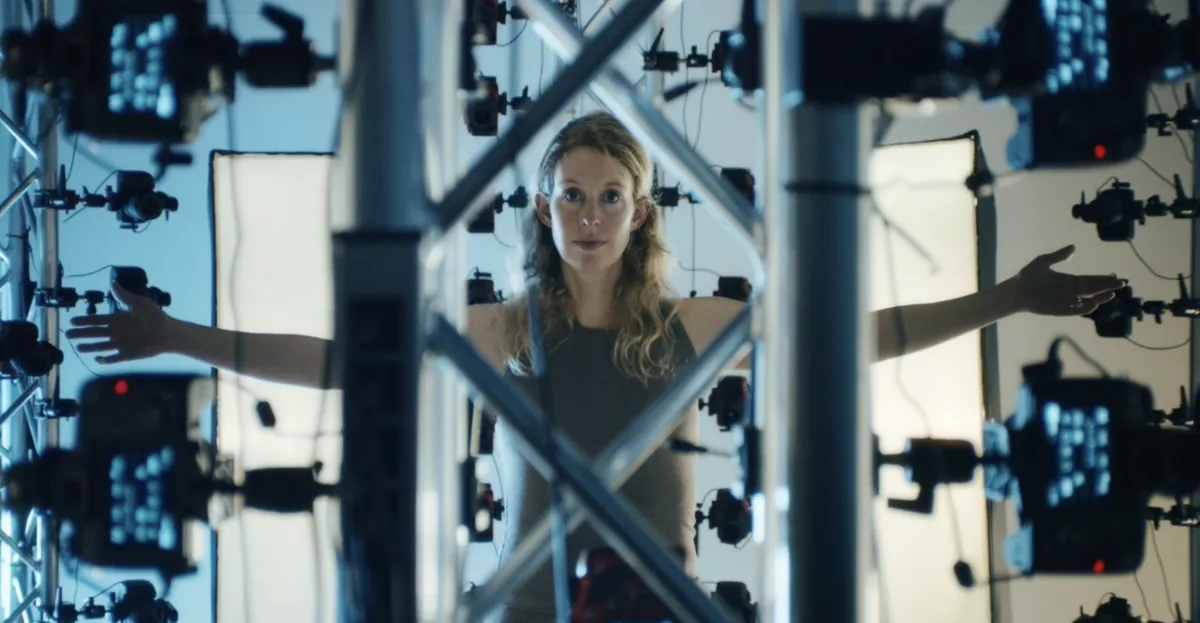
You Can See Everything stands apart because it is not a broad indictment of an industry titan from a distance. It is a close, unsettling encounter with Elizabeth Holmes herself. The documentary begins after Holmes has already been sentenced to more than 11 years in prison, and it follows filmmaker Nathan Fielder as he probes whether her claims of innocence are sincere or performative.
The film’s premise is unusually intimate. Holmes and her partner William Evans allow Fielder to live with them in a rental home during the month before she is set to begin her sentence. That setup gives the documentary an unusual texture: it is part profile, part confrontation, part psychological experiment.
Rather than presenting Holmes as a settled historical figure, the film appears to examine the ongoing power of image management. Holmes has spent years trying to explain herself to the public, and the documentary asks whether she is using the camera as another tool of self-justification.
What is Fielder really investigating?
What Fielder is really investigating is not only Holmes’ version of events, but the mechanics of persuasion itself. He seems interested in whether Holmes believes her own story, whether she is consciously manipulating others, or whether those two possibilities are impossible to separate.
That ambiguity gives the documentary its edge. It forces the viewer to decide whether the film is exposing Holmes or merely giving her a new stage. In that sense, You Can See Everything becomes a movie about the uneasy relationship between exposure and control.
Fielder’s central concern is whether Holmes is using the film as a form of rehabilitation — and whether the audience can tell the difference.
The documentary also benefits from the fact that Holmes is already one of the most heavily documented figures in modern startup history. Audiences familiar with The Dropout or years of coverage about Theranos will come to the film with strong assumptions. The challenge for the documentary is not to establish who Holmes is, but to test how she continues to present herself after conviction and public disgrace.
How the films compare: sympathy, distance and critique
The current wave of tech movies differs from earlier Hollywood treatments in the level of sympathy they extend to their subjects. That shift can be seen clearly when comparing them to earlier landmark films about the digital economy and social media.
| Earlier approach | Current approach | What changed |
|---|---|---|
| Complicated but sometimes admiring founder portraits | More skeptical, less forgiving depictions | Public trust in tech leaders has eroded |
| Emphasis on disruption and ambition | Emphasis on consequences and accountability | Social harm is now part of the frame |
| Tech as a symbol of innovation | Tech as a source of instability and influence | Platforms now shape democracy, culture and commerce |
| Founders as flawed geniuses | Founders as power brokers | The scale of their control is harder to ignore |
This does not mean every film is equally hostile. Some lean more toward irony, some toward investigative rigor, and some toward character study. But even the more playful projects are working in a cultural atmosphere that is distinctly less enchanted with Big Tech than it was a decade ago.
What does this say about audience appetite?
It says viewers are increasingly interested in stories that explain how modern power works. Audiences no longer need to be convinced that tech companies are influential; they live with that reality every day. What they want now is a narrative that makes sense of how those companies became so powerful and what that power costs.
That appetite has been building for years. Reported misconduct, workplace blowups, regulatory fights and platform failures have steadily chipped away at the glossy image of the visionary founder. The tech sector once sold a future built on convenience and democratized access. Today, it is often associated with concentration of wealth, political leverage and algorithmic control.
Hollywood tends to follow the cultural mood, but in this case it may also be accelerating it. By packaging criticism of tech leaders into prestige dramas and documentaries, the film industry is helping turn abstract anxieties into concrete stories.
Could these movies perform well commercially?
Could these movies perform well commercially? Yes, especially if the backlash around them helps generate attention. Movies about powerful executives often benefit from controversy, and audiences are more likely to show up when a film seems to challenge someone famous and influential.
That said, box office performance is not guaranteed. Some of these projects are more niche than others, and the broader theatrical market remains difficult. Still, even modest commercial success could encourage more studios to back movies that confront Big Tech rather than celebrate it.
Big Tech, politics and the new cultural mood
The broader meaning of these films goes beyond entertainment. They reflect a cultural moment in which technology companies are no longer seen as neutral engines of progress. Instead, they are increasingly understood as political actors with the power to shape debate, elections, labor markets and public behavior.
That is why the subject matter feels so current. The films are arriving after years of debate about social media moderation, misinformation, AI safety and billionaire influence. They also arrive amid anxieties about how tech founders move between corporate power and public policy, often with enormous freedom.
In that sense, the new wave of projects is not simply about individuals. It is about systems of power that have become embedded in everyday life. Zuckerberg, Musk, Holmes and Altman are useful as characters because they personify a broader problem: the concentration of technological, financial and cultural authority in the hands of a small elite.
Hollywood has always been drawn to larger-than-life founders. What is different now is the moral framing. The current films do not merely ask whether these people are geniuses. They ask whether their genius has been used to excuse harm.
Timeline of the recent tech-film backlash
The following timeline shows how quickly the current wave of criticism has accelerated in 2026 and how each project fits into that larger pattern.
| Date / period | Event | Why it matters |
|---|---|---|
| 2021 | Whistleblower Frances Haugen’s disclosures about Facebook become public | Provides the core reporting backdrop for The Social Reckoning |
| June 2026 | Amazon exits the distribution deal for Artificial | Raises questions about corporate discomfort with criticism of OpenAI figures |
| 2026 | Musk faces platform resistance to advertising | Shows how distribution itself can become politically charged |
| Late 2026 | Artificial prepares for a December 25 wide release | Positions the film to capitalize on growing interest in AI accountability |
| January 2027 expected | Musk reportedly set for HBO release through Skydance | Could further amplify debate around the documentary and its subject |
What comes next for Hollywood and Silicon Valley
What comes next for Hollywood and Silicon Valley is likely to be a deeper collision between storytelling and corporate power. As tech companies move further into entertainment, media infrastructure and AI deployment, filmmakers will have more reason to interrogate the people making those decisions.
That could produce more films, but it may also produce more resistance. Studios with financial ties to the tech sector may hesitate to back projects that criticize their partners or investors. Platforms that control distribution may be unwilling to publicize films that paint prominent executives in an unfavorable light. And founders themselves are increasingly likely to fight back through public statements, legal threats or influence over the services that carry the films.
The current moment suggests that none of this is slowing down. If anything, the opposite is true. The more power tech companies gain over the economy and public discourse, the more Hollywood seems inclined to turn them into dramatic subjects.
That makes the new wave of films important not just as entertainment, but as a record of changing public sentiment. They capture a moment when the glamour of innovation has been overtaken by questions about accountability, ownership and control. In that sense, Hollywood’s tech backlash is not a trend on the side. It is a sign of where the culture is heading.
- The newest Silicon Valley films are far less sympathetic to tech founders than earlier Hollywood portrayals.
- The Social Reckoning, Musk, You Can See Everything and Artificial all frame Big Tech as a source of social harm or manipulation.
- Distribution and marketing for these projects have already been complicated by the companies and executives they portray.
- The trend reflects broader public distrust of social media, AI companies and billionaire influence.
Frequently asked questions
What is the Hollywood tech backlash about?
The Hollywood tech backlash is about a wave of 2026 films that criticize Big Tech founders and companies more openly than earlier movies did. Instead of celebrating innovation, these projects focus on harm, manipulation, misinformation and the concentration of power in Silicon Valley.
Which tech leaders are portrayed in the new films?
The new films focus on Mark Zuckerberg, Elon Musk, Elizabeth Holmes and Sam Altman. Each project uses a different format, but all of them challenge the public image of these figures and examine the influence of the companies they built.
Why did Amazon drop Artificial?
Amazon dropped Artificial after initially planning to release it, a move that appears to have been influenced by the film’s critical portrayal of OpenAI chief Sam Altman and the company’s own investment ties to AI. The exit also reflected growing sensitivity around tech-related content.
Why did Musk face distribution pushback?
Musk faced distribution pushback because the documentary is sharply critical of Elon Musk and his rise to power. Reports said X blocked ads for the film, and some other major platforms initially did not run promotional material before later changing course.
How is The Social Reckoning different from The Social Network?
The Social Reckoning is more openly accusatory than The Social Network. Where the earlier film portrayed Zuckerberg as a brilliant but complicated outsider, the newer movie frames him as a powerful executive whose pursuit of growth has helped destabilize society.