Updated July 21, 2026 4:53 pm
In short
Halliday’s Gen 2 smart glasses are now open for preorder with a $10 deposit and $100 discount, and the company says shipping should start in September.
- Halliday’s Gen 2 smart glasses use dual waveguide displays for better visibility.
- The camera-free design is aimed at privacy, battery life and office use.
- New AI tools focus on meetings, including summaries, action items and decision tracking.
- The glasses cost $599, require only a $10 deposit to preorder and are due in September.
Update — July 21, 2026 4:53 pm
Halliday now says buyers can reserve the Gen 2 with a $10 deposit, and the company will knock $100 off the final purchase price. The glasses are still expected to begin shipping in September.
The Verge’s hands-on report also says Halliday is positioning the glasses with a four-microphone array that could hear commands in noisy settings, and notes the company believes it can support very strong prescriptions, though that remains to be seen.
Update — July 21, 2026 1:25 pm
WIRED adds that Halliday’s G2 is aimed at “high-performance professionals” and uses microphones to listen in on meetings, translate speech into subtitles, and feed its Meeting Flow transcription service.
The publication also says Halliday is offering a free tier with 120 minutes of recording, while paid AI plans run from $10 to $99 per month. It reports first shipments are planned for September 2026, and notes that Halliday told WIRED wearers should disclose when recording is happening, since the glasses do not include an indicator light.
WIRED also points out that the new model resembles Even Realities’ camera-free G2 glasses, even as Halliday says its Stealth mode dims the display in dark rooms and a Cheatsheet teleprompter mode keeps key reminders visible.
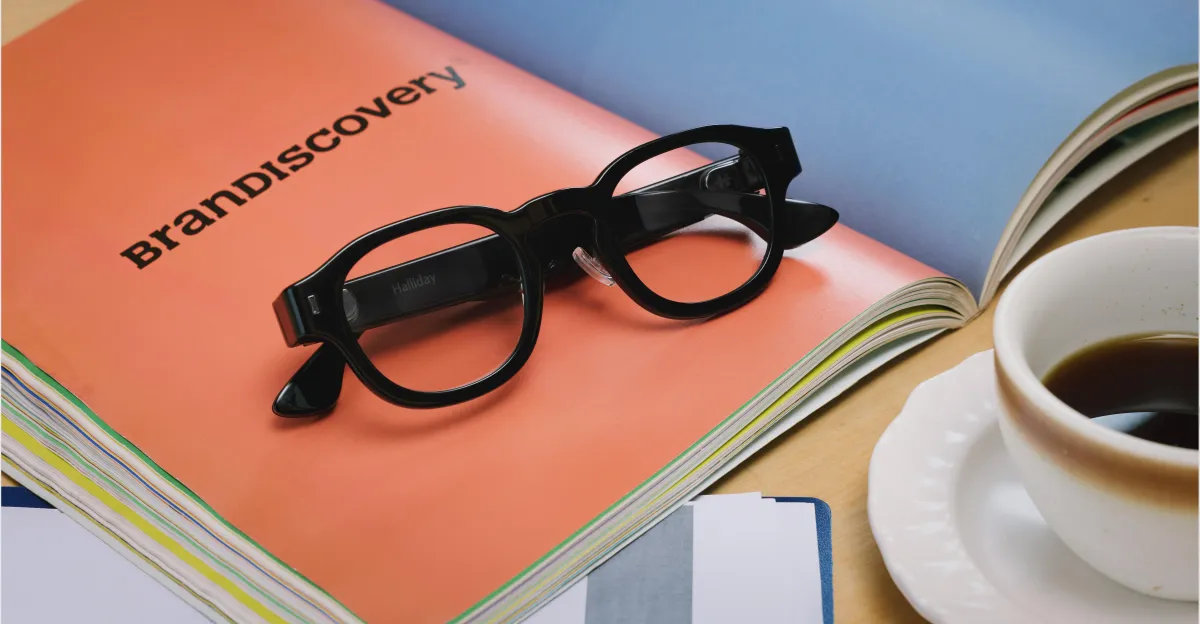
Halliday has unveiled its second-generation smart glasses, a redesigned model that replaces the company’s awkward first effort with a much easier-to-view display and a sharper focus on workplace AI. The Halliday Gen 2 is now available for preorder at $599, with shipping expected in September, and it is being positioned as a camera-free tool for meetings, note-taking and live language support.
The update matters because Halliday is trying to do what many wearable makers have struggled with: build smart glasses people can actually use for productive tasks without burning through battery life or making the user look like they are wearing a prototype. After a disappointing original version, the company says the Gen 2 is a more practical attempt at turning AI into something that sits in front of your eyes rather than in your pocket.
What changed in Halliday’s second attempt?
Halliday’s biggest shift is visual. The original model used a tiny movable display embedded in the frame, a design that was hard to see and, for some users, physically uncomfortable. The Gen 2 discards that approach in favor of more conventional waveguide optics, a move that makes the screen easier to access while still keeping it relatively subtle from the outside.
The new system uses one display per eye rather than a single-lens setup, effectively creating a larger viewing area. According to Halliday, the panels are monochrome green and reach up to 1,600 nits of brightness, with a resolution of 600 by 300 pixels per eye. The company says that should make the content readable across a range of environments, from dim indoor spaces to brighter settings.
In practical terms, the Gen 2 is still clearly a display-first product rather than a full augmented-reality headset. It is meant to show concise information, not cover your field of vision with floating windows. That restraint may help Halliday avoid the design excesses that have kept many smart glasses from becoming everyday wear.
Why did Halliday remove the camera?
Halliday says the camera was intentionally left out to improve privacy and extend battery life. That choice also helps define the product’s purpose: instead of trying to be an all-purpose capture device, the Gen 2 is being marketed as a meeting companion.
That positioning is important. Camera-equipped smart glasses often trigger concerns about bystanders, office privacy and social acceptability. By removing the lens entirely, Halliday sidesteps one of the biggest barriers to adoption while giving itself more room to claim the device is suited for professional environments.
Battery life is another major selling point. Halliday says the Gen 2 can last about 12 hours with typical use, which would put it among the more durable display glasses on the market if real-world performance comes close to that figure. The absence of a camera likely helps on that front, though actual endurance will depend heavily on brightness, audio use and AI functions.
How does the Halliday Gen 2 work in meetings?
The company’s main pitch is a feature set called Meeting Flow, which is designed to help users keep up during discussions without constantly checking a laptop or phone. The glasses use AI to surface context during conversations and to organize what is being discussed in real time.
Halliday says Meeting Flow includes three core tools: Thread Tracker, Decision Confirmation and Commitment Check. Together, they are meant to turn a meeting into a structured timeline of topics, conclusions and assigned tasks.
Halliday describes the system as a way to show what the conversation is about, what decisions were made and who owns each next step, so users can stay engaged without losing track of action items.
That may sound incremental, but the details matter. Many workplace AI tools can transcribe meetings or generate summaries after the fact. Halliday is trying to move one step earlier, using the glasses as a live assistant that surfaces the most relevant pieces while the discussion is still happening.
What do the new meeting tools actually do?
Thread Tracker is meant to map the flow of a discussion, showing how the group moved from one topic to another. In Halliday’s example, a meeting might begin with budget talk, move into hiring plans and then settle on a timeline for new roles.
Decision Confirmation is designed to capture the outcome of that discussion. If the group agrees that a hiring round must be completed by a certain date, the glasses would call that out clearly instead of leaving the decision buried in a long transcript.
Commitment Check adds accountability by identifying which action items were assigned, and to whom, along with deadlines. In theory, that means the user can leave a meeting with a more complete sense of ownership and next steps than a standard recording or handwritten note provides.
After the meeting ends, Halliday says the glasses can produce transcripts and summaries, giving users a more traditional record for later review.
What else can the glasses do?
Although meetings are the centerpiece, Halliday is also including broader AI features that could make the device more useful outside the office. The Gen 2 supports live captioning, real-time translation in more than 45 languages, phone calls and a teleprompter or notecard mode for speakers.
The glasses also include voice control through Halliday’s own AI assistant, allowing users to trigger functions hands-free. In theory, that gives the product a wider range of use cases: business travel, presentations, quick language support and accessibility features for users who benefit from live captions.
Still, the company’s messaging suggests this is not meant to be a general-purpose entertainment device or a camera-first wearable. Halliday appears more interested in building a focused productivity accessory than competing directly with consumer-style smart glasses that emphasize photography, livestreaming or social sharing.
How does Halliday compare with earlier smart glasses?
Halliday’s first-generation glasses were interesting but not widely convincing. The tiny display window was difficult to use, and the experience reportedly caused eye strain during testing. The new version appears to be a response to that criticism, trading novelty for visibility and trying to make the interface feel less fragile.
That puts Halliday in the middle of a broader wearables race in which many companies have struggled to balance practicality, privacy and comfort. Some products emphasize camera functions, others lean into AR, and a growing number are trying to turn glasses into discreet AI assistants. Halliday’s approach is narrower than most, but that may be a strength.
The company is also making a calculation about what users will tolerate. A lightweight frame, a visible but subtle display and a clear productivity purpose may appeal more to office workers than a feature-heavy device that looks futuristic but is hard to wear for long stretches.
| Feature | Halliday Gen 2 | Why it matters |
|---|---|---|
| Display type | Dual waveguide displays | Easier to see than the first model’s tiny embedded window |
| Display color | Monochrome green | Helps preserve battery life and keeps the interface simple |
| Brightness | Up to 1,600 nits | Improves readability in different lighting conditions |
| Resolution | 600 x 300 per eye | Enough for text-driven productivity features |
| Camera | None | Reduces privacy concerns and supports longer battery life |
| Battery life | About 12 hours | Suggests all-day wear for meetings and travel |
| Price | $599 | Places it in premium consumer territory |
| Availability | Preorder now, shipping in September | Gives Halliday a near-term launch window |
Why this launch matters for AI wearables
Halliday’s second-generation glasses arrive at a moment when AI hardware companies are still searching for the right form factor. Phones remain the default place for AI assistants, but wearables promise something different: information delivered at the moment it is needed, with less friction.
The challenge is that many AI wearables make a broad promise and deliver a narrow, awkward experience. They can misread context, surface the wrong data or simply get in the way. Halliday is trying to solve that by focusing on a specific setting—meetings—where transcription, summarization and task tracking are easy to understand and immediately useful if they work reliably.
That does not guarantee success. A meeting assistant is only as helpful as its ability to distinguish important decisions from background chatter, and AI still struggles with nuance, context and attribution in live conversations. If the system gets even small details wrong, the user could end up with a polished summary that is inaccurate in ways that matter.
There is also the question of price. At $599 before prescription lenses, the Gen 2 is not a casual impulse purchase. That puts pressure on Halliday to prove that the hardware feels worth the premium and that the software delivers more value than a phone app plus headphones.
What is the user experience like so far?
Early impressions suggest the Gen 2 is a meaningful improvement, especially in ergonomics and readability. The frame is reportedly lightweight and visually restrained, which helps it avoid the look of a bulky tech demo. In a darker environment, the display was easy to make out, and the microphone array was able to pick up voice commands despite surrounding noise.
That said, some questions remain. Bright sunlight performance has not yet been fully tested, and the usefulness of the AI meeting tools will depend heavily on whether the system can correctly understand discussion context in the wild. The product also has to balance being useful enough to justify wearing it with being discreet enough that users do not feel self-conscious in professional settings.
Prescription support is another practical issue. Halliday says the glasses should be able to handle a wide prescription range, though real-world fitting and optical comfort will determine whether that promise holds up for users with stronger corrections.
Halliday says its updated design is intended to be both more wearable and more useful, with the display and AI features built around real work instead of novelty.
How much do the Halliday Gen 2 glasses cost and when can you buy them?
The Halliday Gen 2 is priced at $599 and is available to preorder immediately with a $10 deposit. Halliday says early buyers will receive a $100 discount on the final price, and shipping is expected to begin in September.
That pricing puts the glasses in competition with other premium smart wearables, though the category is still young enough that comparisons are imperfect. Consumers are not just buying hardware; they are effectively betting on whether Halliday’s software vision will become part of their daily workflow.
What happens next for Halliday?
The company now has to prove that its improved hardware can support an AI product people will actually use beyond the first week. The design is more sensible, the display appears more legible and the feature set is more targeted than before. Those are the right ingredients, but smart glasses still have a long history of sounding better in presentations than they do in daily life.
If Halliday can make meeting summaries, task tracking and live translation feel natural rather than intrusive, the Gen 2 could find a niche among professionals who spend a lot of time in calls and planning sessions. If not, it may join the long list of promising wearable ideas that were technically interesting but never fully essential.
For now, the Gen 2 represents a more serious attempt at AI glasses than Halliday’s first model. The display is better, the product has a clearer purpose and the privacy trade-offs are easier to defend. Whether that is enough to make smart glasses truly useful is the question the September launch will begin to answer.
Timeline: Halliday Gen 2 launch at a glance
| Date | Milestone | Details |
|---|---|---|
| CES 2025 | First model shown | Halliday’s original glasses drew criticism for their hard-to-see display |
| Mid-2026 | Gen 2 unveiled | Company introduces waveguide-based display and meeting-focused AI tools |
| July 21, 2026 | Preorders open | Buyers can reserve a pair with a $10 deposit |
| September 2026 | Expected shipping | Halliday says the glasses should begin reaching customers |
For now, Halliday is betting that a simpler, camera-free wearable with a clearer screen and practical AI will succeed where a more experimental first version did not. The market will decide whether that bet is smart—or just a more polished version of the same hard problem.
Frequently asked questions
What is new in Halliday’s Gen 2 smart glasses?
Halliday’s Gen 2 smart glasses replace the earlier tiny display with a more visible dual waveguide system, add meeting-focused AI tools and remove the camera entirely. The redesign is meant to improve usability, privacy and battery life while making the glasses more suitable for work settings.
How much do the Halliday Gen 2 glasses cost?
The Halliday Gen 2 glasses cost $599 before prescription lens add-ons. Customers can preorder with a $10 deposit, and Halliday is offering a $100 discount on the final price for early buyers. Shipping is expected to begin in September.
Do the Halliday Gen 2 glasses have a camera?
No, the Halliday Gen 2 glasses do not include a camera. Halliday says that decision was made to protect privacy and to help the battery last longer, while keeping the product centered on meeting assistance rather than photo or video capture.
What AI features does Halliday include in the Gen 2?
Halliday includes Meeting Flow, which is designed to surface context during conversations, along with Thread Tracker, Decision Confirmation and Commitment Check. The glasses also offer live captions, translation in more than 45 languages, phone calls, teleprompter support and voice control.
When will Halliday Gen 2 ship?
Halliday says the Gen 2 smart glasses are expected to ship in September after preorder availability begins now. Buyers can reserve a pair immediately with a small deposit, but the company has not yet described final retail availability beyond the initial launch window.