In short
TechCrunch Disrupt 2026 will run breakout sessions on AI agents, physical AI, trust, fundraising and startup growth when the conference returns to San Francisco on October 13-15. The limited-capacity format is designed for deeper Q&A and practical advice on the biggest startup and AI issues.
- Breakout sessions at Disrupt 2026 will focus on practical startup and AI questions, not just broad trends.
- The agenda highlights AI agents, physical AI, trust, inference economics and fundraising.
- Attendance is limited and first come, first served, so early planning matters.
- The conference takes place October 13-15 at Moscone West in San Francisco.
- TechCrunch is offering registration discounts, including second-ticket savings and a low-cost Expo+ pass for laid-off attendees.
TechCrunch Disrupt 2026 will bring more than 10,000 founders, investors, operators and tech executives to Moscone West in San Francisco from October 13-15, with breakout sessions designed to answer the startup ecosystem’s most pressing questions. The sessions matter because they move beyond keynote-stage theory and give attendees direct access to experts on AI agents, physical AI, fundraising, growth and the changing economics of building companies.
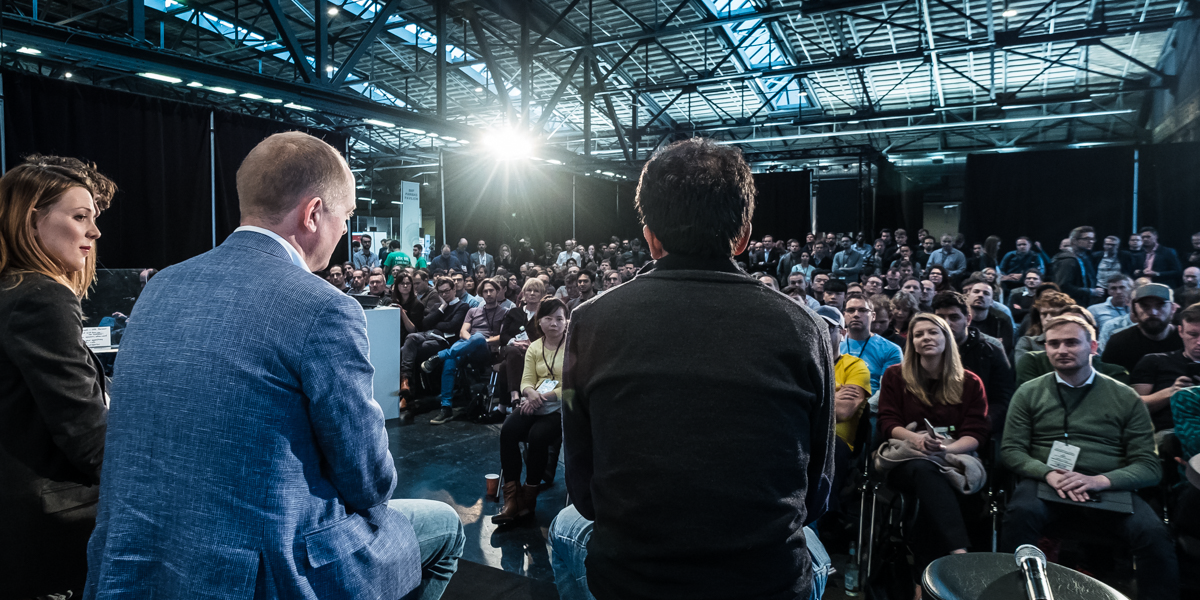
The breakout program is built around 50-minute, small-room discussions that mix expert presentations with audience Q&A. Attendance will be limited and admitted on a first-come, first-served basis, making early planning important for attendees who want to get into the room for the highest-demand topics.
This year’s lineup reflects a startup market being reshaped by artificial intelligence at multiple layers at once: how teams work, how software is priced, where infrastructure value accumulates, and what kinds of products may emerge when AI extends beyond screens and into physical systems.
Why the breakout sessions matter
Disrupt’s breakout rooms are designed for the kinds of conversations that do not fit neatly into a main-stage talk. Instead of broad trend summaries, the format gives speakers time to go deeper on practical tactics and gives attendees space to challenge assumptions, ask follow-up questions and compare notes with peers.
That is especially valuable in a year when startup founders are trying to separate lasting opportunities from short-lived hype. The agenda includes sessions on everything from scaling teams with AI tools to understanding how inference economics may change the way companies are built and financed.
Organizers are also using the format to connect theory with execution. Sessions on fundraising, team performance and startup growth are aimed at founders who need operational guidance, not just macro commentary. For many attendees, those discussions can be as useful as the larger conference programming because they focus on immediate decision-making.
What the format offers attendees
Each breakout session runs for 50 minutes and includes audience participation. That combination gives attendees a chance to hear how experienced leaders think through real problems and then ask about the details that matter most to their own businesses.
- More room for detailed explanations than a main-stage panel
- Direct access to speakers for audience questions
- Practical advice on near-term startup decisions
- Limited seating that rewards early arrival
How the 2026 agenda reflects the current AI cycle
The breakout slate shows just how broad the AI conversation has become. It is no longer limited to model performance or chatbots. Instead, Disrupt is framing AI as an operating layer for engineering teams, a driver of infrastructure economics, a catalyst for new evaluation methods and a bridge to physical systems that need to sense and act in the real world.
That shift is evident in the range of topics. One session looks at how to use AI agents in day-to-day technical work. Another examines the rise of inference as a business category. Others focus on physical AI, trust and evaluation, and the execution challenges that determine whether a system can actually do something useful outside the lab.
The agenda also suggests a changing startup playbook. If the previous wave of AI companies was about access to model APIs and rapid product experimentation, the next wave may be about workflow design, latency, data pipelines, cost control and the ability to build reliable systems that operate in messy conditions.
| Session topic | Speakers | Main theme | Why it matters |
|---|---|---|---|
| What Is Physical AI, Anyway? | Susan Schofer; Duncan Turner | Defining AI in machines and real-world environments | Helps investors and founders identify what qualifies as physical AI |
| Outnumbered Either Way: How an Engineer and an Architect Run Their Jobs on Agents | Steve Androulakis; Sachin Malhotra | Using multiple AI agents in engineering workflows | Shows how agentic tools are already being used in technical work |
| How to build AI we can trust | Robbie Goldfarb | Evaluation, reliability and human judgment | Addresses the challenge of making AI dependable in consequential settings |
| The Inference Economy: Why AI’s Next Trillion Dollars Won’t Look Like Its First | Hagay Lupesko; Rudina Seseri | Inference economics and startup defensibility | Explains where value may accrue as training becomes less differentiated |
| Building a Growth Engine in the AI Era | Patrick Burke | Distribution, experimentation and AI-driven growth | Offers tactics for faster product-market learning and marketing |
What Is Physical AI, Anyway?
Physical AI is the idea that artificial intelligence can move beyond software interfaces and into systems that perceive, decide and act in the physical world. Susan Schofer and Duncan Turner of SOSV HAX will focus on what that actually means for builders and backers, and why the category requires a different mindset from pure software.
The session is likely to be especially relevant for founders building robotics, industrial systems, autonomous hardware and other products that depend on real-world sensing and movement. In these markets, the challenge is not only intelligence but execution: the ability to reliably convert decisions into action when conditions are unpredictable.
For investors, the conversation should also help clarify which companies deserve the label and what kinds of technical and commercial risks are embedded in the category. That matters because “physical AI” has quickly become a buzzy phrase, but not every product using AI and hardware will create the same kind of defensible business.
Why investors are watching the category
Physical AI can imply a longer development cycle, higher capital needs and more complex operational risk than software alone. At the same time, it can create stronger moats if a company develops proprietary data, field-tested systems or deeply integrated workflows that are hard to replicate.
That combination of risk and potential durability is drawing attention from venture firms looking for the next generation of industrial AI companies.
How are teams already using AI agents?
They are using them as active helpers inside engineering workflows, according to the Anthropic session led by Steve Androulakis and Sachin Malhotra. The pair will describe how they run multiple Claude agents at once, delegate tasks, inspect output and recover when the systems make mistakes.
The practical significance is that this is no longer a speculative conversation about what agents might someday do. It is a look at how people who build AI products themselves are already incorporating agentic systems into daily technical work.
That is important because agents are often marketed as a future layer of software that can autonomously handle tasks. In reality, adoption still depends on oversight, judgment and workflow design. The session is likely to highlight both the promise and the limits of the current generation of tools.
Anthropic’s speakers are expected to explain how they use several Claude agents in parallel, assign real engineering work to them, review the results and step in when outputs go wrong.
What founders can learn from that workflow
- Agents can speed up routine or parallelizable tasks
- Human review remains essential for accuracy and quality
- Good workflows matter as much as model capability
- Teams need recovery plans when agents produce bad output
How to build AI we can trust
Trust is becoming one of the central issues in AI deployment, and Robbie Goldfarb’s session will tackle that problem directly. His focus is on the idea that high accuracy alone does not make a system dependable, especially when the output affects safety, public information or important business decisions.
The challenge, as framed in the agenda, is how to turn expert human judgment into scalable evaluation systems. That matters because many AI failures are not obvious model bugs; they are subtle errors, misleading claims or context problems that only show up when systems are used in the real world.
Goldfarb’s background spanning misinformation, online safety and foundation-model work suggests a session grounded in the realities of evaluation rather than abstract AI optimism. For builders, that can mean better ways to test systems before deployment. For investors, it may signal where durable advantage can emerge in AI assurance, oversight and verification.
The Inference Economy: Why AI’s Next Trillion Dollars Won’t Look Like Its First
One of the most consequential sessions on the agenda looks at how AI economics are changing as frontier models become less differentiated and more widely available. Hagay Lupesko of Cerebras Systems and Glasswing Ventures’ Rudina Seseri will examine a market in which the value may shift away from training and toward inference.
Inference is the stage where a model is actually used to generate outputs, and its economics can differ sharply from training. As the agenda describes it, speed and responsiveness are becoming part of the product itself, which means latency, reliability and deployment architecture are now business decisions, not just technical ones.
This has major implications for startups. If model access becomes commoditized, companies may need to compete on infrastructure efficiency, application design, user experience and the operational value they can deliver at scale. Investors, in turn, may begin to scrutinize defensibility more closely in areas where the model alone no longer creates a moat.
What changes when inference matters more than training?
When inference becomes the economic center of gravity, companies have to optimize for usage rather than model-building prestige. That can mean lower margins for inefficient products, greater emphasis on custom workflows and stronger incentives to control infrastructure costs.
It also means the market may reward companies that can deliver AI with lower latency, better reliability and clearer business value.
Best Practices for Running a Successful Fundraise
Fundraising sessions remain a staple at startup conferences because capital raising is still one of the hardest and most important processes for founders. The Disrupt agenda includes an interactive session focused on the full arc of a raise, from preparation and targeting to investor outreach and due diligence.
According to the description, founders will be taken through the process from both sides of the table, which suggests a practical rather than purely inspirational format. Topics include relationship building, cap tables, data rooms, momentum management and closing strategy.
That kind of advice is especially useful in a fundraising environment where preparation often determines whether a company can create leverage or ends up reacting to investor feedback too late. A better process can improve both terms and timing, while a sloppy one can weaken a round before it gets started.
The session is designed to help founders understand that a successful raise starts well before the pitch meeting and depends on organized execution across outreach, materials and investor follow-through.
Fundraising Mistakes That Will Kill Your Round, and How to Avoid Them
The conference doubles down on the fundraising theme with a second session that looks at the ways promising companies lose traction during the capital-raising process. This panel brings together leaders from healthcare, accelerators and venture capital to dissect common mistakes and show how founders can avoid them.
That focus is timely because many entrepreneurs underestimate how quickly investor confidence can erode if positioning is unclear or the raise lacks discipline. Even strong businesses can struggle when the process is poorly sequenced or when founders misread investor interest.
The session appears set to cover everything from narrative framing to execution errors, giving attendees a chance to compare real examples and adjust their own strategy before entering the market.
Common fundraising errors founders should watch for
- Starting outreach before the company is fully prepared
- Targeting the wrong investors for the stage or sector
- Failing to maintain momentum during the process
- Neglecting cap table and diligence readiness
- Weak positioning that does not clearly explain the opportunity
What is the startup growth playbook in the AI era?
The AI era is changing how quickly startups can test, learn and scale, and Patrick Burke’s session on Hostinger aims to show how that works in practice. The core idea is that AI is shrinking the time between spotting an opportunity and acting on it.
That means startups can experiment faster, identify distribution opportunities sooner and launch new products or campaigns with fewer manual bottlenecks. The session will likely be of interest to founders trying to build growth systems that are more adaptive and more efficient.
Hostinger is framed in the agenda as a bootstrapped unicorn, which gives the talk an additional dimension: how to sustain rapid growth without relying on the same venture-backed playbook every time. The lesson may be that AI can improve speed, but disciplined distribution strategy still matters.
Building Then vs Now
One of the most intriguing breakout sessions brings together voices from AI, data, entrepreneurship and strategy to compare how company building has changed over time. The lineup includes Dr. Rumman Chowdhury, Payal Kadakia, Cassie Kozyrkov and Holly Ransom.
The session’s premise is that the fundamentals of building a company remain familiar, but the available tools are different. AI can help founders make faster decisions and move with more information, but the speakers are expected to explore where human judgment, bias and leadership still matter.
That balance is likely to resonate with executives who are trying to adopt AI without turning company culture into a purely automated process. The most valuable organizations may be those that use AI to improve decision-making while preserving accountability and strategic clarity.
The discussion is expected to weigh the speed and efficiency AI provides against the human considerations that still shape strong companies, including bias, judgment and leadership.
How does AI connect to space, security and industrial systems?
AI builders are increasingly looking beyond traditional software markets, and Disrupt 2026 includes a session that maps AI capabilities onto the space industry. The panel features leaders from The Aerospace Corporation and Little Place Labs and focuses on the kinds of technical problems space companies face.
The relevance is straightforward: space operations involve large data streams, autonomous decisions, real-time processing and complex agent systems. Those are all areas where AI techniques can potentially create value if the systems are robust enough for high-stakes environments.
For founders, the session may help identify opportunities that are not obviously consumer-facing but still represent real commercial and government demand. For the broader ecosystem, it is another sign that AI is spreading into sectors where reliability and verification are not optional.
Talent as the Operating System
Not every breakout session at Disrupt is about models or capital. Nomi Khedawala of Reddit will lead a discussion on how high-performance teams scale in the AI era and how leaders can maintain alignment as work becomes more complex and more distributed.
The session positions talent as the operating system of the company, a useful reminder that even the most advanced tools still depend on people who trust one another and execute well. AI may change workflows, but it does not eliminate the need for accountability, communication and leadership systems.
For founders, that perspective is especially important as they try to adopt AI tools without creating confusion inside their organizations. Scaling faster only helps if teams remain aligned on priorities, responsibilities and quality standards.
What attendees should know before they arrive
Disrupt 2026 will run October 13-15 at Moscone West in San Francisco. The conference is expected to draw 10,000-plus attendees, and the breakout sessions will fill on a first-come, first-served basis because room capacity is limited.
TechCrunch is promoting several discounts tied to registration, including savings of up to $100 on a pass and 50% off a second ticket. The event also advertises group discounts for four or more attendees, along with a lower-cost Expo+ option for people who have recently been laid off.
For attendees, the strategic move is simple: identify the sessions most relevant to your goals early, because the most useful conversations may be the hardest to access once the conference opens.
| Key event detail | Information |
|---|---|
| Event | TechCrunch Disrupt 2026 |
| Dates | October 13-15, 2026 |
| Location | Moscone West, San Francisco |
| Expected attendance | 10,000+ founders, investors, operators and tech leaders |
| Breakout format | 50-minute sessions with audience Q&A |
| Access | Limited capacity, first come, first served |
Why this agenda stands out
What makes the Disrupt 2026 breakout slate notable is its range and timing. The agenda reflects a startup market that is trying to move from AI hype to operational reality. It also shows that the most important questions are becoming more specialized: how agents are actually used, how AI systems are trusted, how economics shift when models are commoditized, and how founders adapt their fundraising and growth strategies.
That breadth mirrors the current state of the industry. AI is not a single market anymore; it is a layer reshaping many markets at once. Some companies are building directly on foundation models, others are applying AI to hardware or infrastructure, and many more are redesigning internal workflows around it.
By putting those conversations in breakout rooms rather than only on the main stage, Disrupt is signaling that the most valuable insights may come from detailed operational discussion rather than sweeping predictions. For attendees, that makes the conference less of a spectator event and more of a working session for the next phase of startup building.
In an ecosystem still searching for the next durable winners, that may be exactly the point.
Frequently asked questions
When is TechCrunch Disrupt 2026 taking place?
TechCrunch Disrupt 2026 is scheduled for October 13-15, 2026, at Moscone West in San Francisco. The event will bring together more than 10,000 founders, investors, operators and technology leaders for three days of programming.
What are the breakout sessions at Disrupt 2026 about?
The breakout sessions are about practical issues founders and operators are facing now, including AI agents, physical AI, trusted AI systems, the inference economy, fundraising strategy, growth and team performance. They are built to go deeper than main-stage talks and include audience Q&A.
How do attendees get into breakout sessions?
Attendance is limited and works on a first-come, first-served basis. That means attendees should plan their schedules early and get to the room in advance if they want access to a high-demand session.
Why is physical AI included in the agenda?
Physical AI is included because investors and builders are increasingly interested in AI systems that can perceive, decide and act in the real world. The session will help define the category and explain what it takes to build durable companies in it.
What discounts are available for Disrupt 2026?
TechCrunch says attendees can save up to $100 on a pass and get 50% off a second ticket. The event also mentions additional savings for groups of four or more and a $75 Expo+ pass for people who have recently been laid off.