In short
San Francisco singles are increasingly using AI as a dating filter, with some rejecting AI users and others treating AI jobs as a status boost. The Verge says the trend now reaches profile bios, dating apps, emotional support and even family-planning discussions.
- San Francisco daters are using AI attitudes as a compatibility test.
- AI jobs can be a dating plus in the Bay Area because of pay and stability.
- Some singles now outsource swiping, messaging and scheduling to AI agents.
- Dating apps are adding AI features even as some people grow more anti-AI.
- AI anxiety is spilling into long-term planning, including whether to have children.
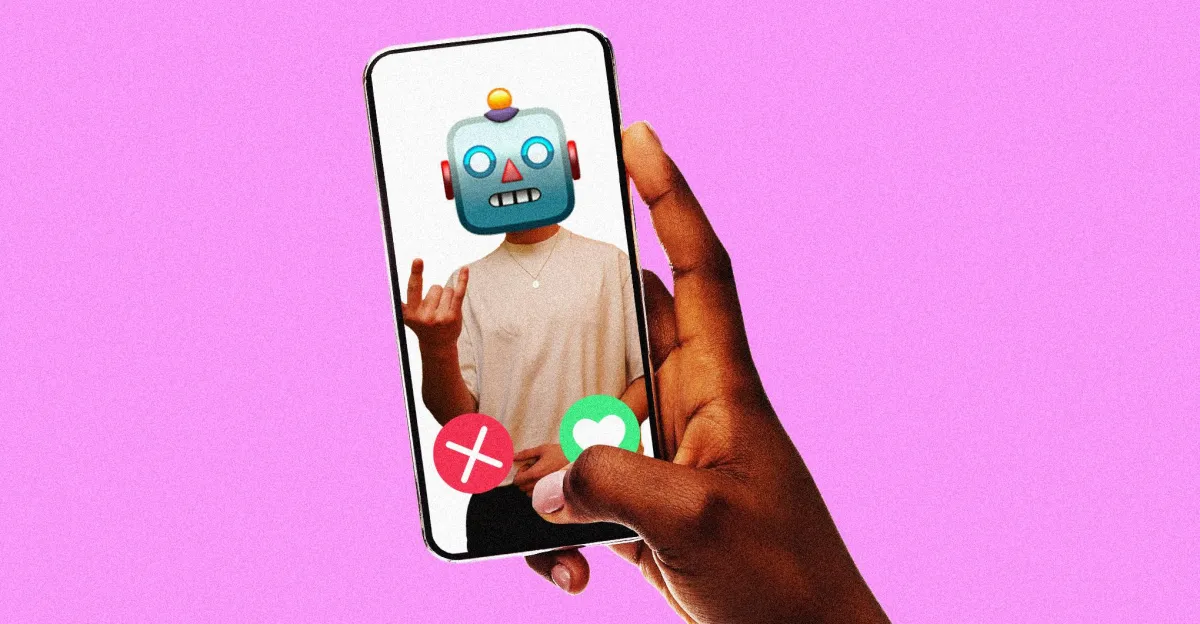
San Francisco singles are increasingly using AI as a filter for love, turning a technology once treated as a work issue into a marker of compatibility, status and even moral character. In profiles, at mixers and through dating apps, daters are saying they will not date people who use AI, while others see an AI job as a plus because it can signal pay, stability and technical ambition.
AI is no longer just a job title in the dating pool
What used to be a simple question about where someone works has become a more loaded one in the Bay Area. According to The Verge, some San Francisco profiles now treat AI attitudes as explicit dealbreakers, with daters writing that they do not want to date people who use AI at all.
That shift cuts both ways. Some singles are avoiding people tied to AI because of worries about the technology itself. Others see a person who works in AI or tech as especially attractive, in part because the jobs can come with higher pay and more perceived stability in an expensive city.
The result is a dating market where AI is functioning as both identity and shorthand. It can signal politics, income, work culture and even whether someone is seen as aligned with the future.
Why it matters
AI has moved from a professional specialization into a social sorting mechanism, and that matters because dating is one of the clearest places where private attitudes become public behavior. In San Francisco, where the tech industry heavily shapes local culture and the cost of living rewards high salaries, work in AI can now affect not just careers but intimate relationships.
The implications extend beyond one city. If AI becomes a proxy for values, optimism or distrust, then relationship choices can start mirroring the same social divides shaping the broader debate over the technology. The story also shows how quickly people are folding AI into decisions about family formation, long-term planning and emotional trust.
How did AI become a dating filter?
San Francisco’s dating scene has long been shaped by the tech industry around it, but the arrival of ChatGPT in 2022 appears to have intensified the conversation. The Verge reports that the release helped make AI a constant topic in local social life, including on dating apps and at singles events.
The Bay Area’s job market is part of the reason. A CBRE report cited by The Verge says the region added more than 20,000 AI jobs while overall tech talent in the Bay Area fell 6% since 2022. That change has altered the dating pool as much as the labor market, especially for singles who view job growth as a sign of social and financial resilience.
For some daters, a person’s employer now matters less than the subject of the work. A matchmaker quoted by The Verge said clients are asking for “AI engineer” as a preferred trait, which suggests that the label itself has become a shorthand for desirability in some circles.
How much does the job matter?
It depends on who you ask. One person working at a frontier AI company told The Verge that AI affiliation barely registers in dating. A San Francisco AI worker gave an even more grounded explanation: fitness and appearance still do more of the work when it comes to matches.
That divide is part of the story. For some singles, AI is a signal of intellect, earning power or closeness to a hot industry. For others, it is either irrelevant or a red flag. The same profession can read as aspirational to one person and off-putting to another.
“I just don’t think it’s a factor at all. Like, it’s the least [relevant] thing”
The speaker, Bryan, works at a frontier AI company and told The Verge that AI itself is not what makes or breaks a date. His view contrasts sharply with those who now make AI use part of their compatibility tests.
What is changing in profiles and first dates?
Dating app bios are becoming more ideological and more specific. According to The Verge, some profiles now explicitly reject AI users, while others weigh whether a potential partner works in AI or the broader tech sector. Those preferences are not just about occupation; they are also a way of telegraphing identity, taste and values before a first conversation even starts.
That makes AI function like a social shorthand in two directions. It can be a signal of success and future prospects, but it can also signal unease about how a person thinks, works or uses technology. In a city where professional identity already matters a great deal, AI has become a new filter layered on top of older ones.
At the same time, app behavior itself is changing. Hinge now offers AI-generated suggested responses, while Bumble plans to move toward AI assistant-led matchmaking instead of swiping. That means the technology is not just influencing who people date. It is beginning to shape the mechanics of how they find each other in the first place.
How are people actually using AI in dating?
Some singles are not merely judging AI—they are outsourcing parts of dating to it. The Verge describes a 21-year-old software engineer who fully hands over Hinge swiping to an AI agent that drafts outreach, screens compatibility and schedules dates. He works 14 hours a day and says the tool helps him manage a packed schedule while still keeping his dating life moving.
The practice is no longer niche enough to ignore. A 2025 Match and Kinsey Institute survey cited by The Verge found that 26% of U.S. singles use AI tools to enhance dating. Separately, an Elon University study cited in the story found that 27% of Americans turn to AI chatbots with personal, emotional or social queries.
Those numbers point to a larger behavioral shift: people are not only using AI to work faster, but to think through feelings, messages and relationships. The Verge also cites survey data showing that 38% of respondents sometimes tell AI things they would not tell other people, including partners.
By the numbers
| Metric | Figure | What it refers to |
|---|---|---|
| AI jobs added in Bay Area | 20,000+ | CBRE report cited by The Verge |
| Overall tech talent change since 2022 | 6% decline | CBRE report cited by The Verge |
| Average salary of an AI researcher | $300,000 | Approximate figure cited by The Verge |
| Singles using AI tools for dating | 26% | 2025 Match and Kinsey Institute survey |
| Americans using chatbots for personal or social queries | 27% | Elon University study cited by The Verge |
| People telling AI things they would not tell others | 38% | Survey result cited by The Verge |
What does AI mean for trust in relationships?
For some Bay Area daters, the issue is not whether a partner uses AI, but how they use it. The Verge reports that one AI security analyst worries chatbot misuse can reveal bad character in a potential partner.
That concern is emotional as much as practical. If someone is comfortable manipulating or gaming an AI system, some singles read that as a sign they may also be manipulative with people. In that sense, AI becomes a moral test, not just a technical preference.
One quote from the story captures the tone of that anxiety. Andromeda, identified as an AI security analyst, EMT and registered behavior technician, told The Verge:
“If they treat ChatGPT badly today, it will be me tomorrow!”
That line reflects a broader unease: the way someone talks to a machine may feel like a preview of how they will behave in a relationship.
Why some daters see AI as a red flag for the future
The Bay Area’s AI safety community adds another layer to the local dating conversation. A Berkeley-area AI safety worker told The Verge that fears about AI risk shape decisions about having children and making long-term plans. In that world, dating is not only about chemistry or lifestyle compatibility; it can also be about whether two people agree on humanity’s future.
The same worker, Kyle, said:
“For me, it’s hard to have that planning conversation because I don’t really expect a long-term future”
He is referring to the belief among some AI safety experts that there is a meaningful risk of catastrophic harm from advanced AI, including a 10% chance of human extinction from AI takeover cited in the story.
That kind of outlook naturally affects mate selection. If a person believes the world may face existential danger from AI, then decisions about partnership, children and even where to live can start to look very different. The Verge notes that some Bay Area daters are already discussing whether to have children before or after a possible AI “singularity.”
What is a singularity?
A singularity is a hypothetical point at which technology surpasses human control. In the context of this story, it shows how future-facing AI debates are crossing into ordinary relationship talk.
Background: how the Bay Area dating market got here
The Bay Area has long been a place where careers and relationships intersect, but AI has sharpened that overlap. The region’s tech culture influences dating expectations, social status and even the language people use to describe what they want. When a new industry starts generating wealth, prestige and anxiety at the same time, it tends to show up in romance too.
That is especially true in San Francisco, where a person’s job can shape not just income but social circles and daily routines. The Verge’s reporting shows AI sitting at the center of all three. It affects who people meet, how they communicate and what they assume about one another’s values.
ChatGPT’s release in 2022 gave the topic a public jolt, but the cultural shift has continued to build. By 2025, the Match and Kinsey Institute survey suggests AI was already entering mainstream dating behavior. By the time The Verge published its story on November 6, 2026, anti-AI sentiment had reportedly spilled into local in-person singles events as well.
Why it matters for readers, the market and the region
For readers outside the Bay Area, the story offers a view of how quickly a new technology can reshape even the most personal parts of life. AI is not just changing offices and software products. It is starting to affect how people choose partners, judge trustworthiness and imagine the future of a family.
For the market, the story is a reminder that AI is not merely a workplace tool but a consumer behavior category. If dating apps increasingly integrate AI assistance, and if users become more comfortable outsourcing emotional and logistical tasks to chatbots, the sector could become a new front in the race to normalize AI in everyday life.
For the region, the stakes are local and immediate. The Bay Area’s concentration of high-paying AI jobs is changing who lives there, who dates there and which traits carry social value. In a place where a salary can affect housing, lifestyle and partner selection all at once, AI employment has become part of the social hierarchy.
What happens next?
The biggest question is whether this is a San Francisco-specific pattern or an early sign of a wider shift. The Verge’s reporting makes clear that the Bay Area is unusually exposed to AI’s economic and cultural effects, but it does not answer how far the trend spreads beyond the region.
Several developments are worth watching:
- Dating app design: Hinge’s suggested AI responses and Bumble’s move toward AI assistant-led matchmaking may change how people initiate and sustain conversations.
- Local dating norms: It remains unclear whether anti-AI preferences will stay limited to a visible subset of singles or become more common.
- Job-market pressure: If AI hiring continues to reshape the Bay Area workforce, it could keep shifting the dating pool and the status attached to certain roles.
- Relationship behavior: The line between using AI for support and relying on it too heavily is still blurry, especially when people use chatbots to process emotions.
- Family planning: The fact that some daters are discussing a possible AI singularity in the context of children suggests the social impact may deepen, not fade.
The most telling part of the story may be that AI is now being used both as a shortcut and a screening test. In San Francisco, it is helping some people date faster while helping others decide they do not want to date those people at all.
As Joseph, the software engineer who outsourced his dating to an AI agent, put it:
“Protect your dopamine, folks”
It is a flippant line, but it captures the logic running through the Bay Area right now: in a city shaped by technology, even romance is becoming a managed system.
Frequently asked questions
Why is AI becoming a dating factor in San Francisco?
AI is becoming a dating factor in San Francisco because the technology now signals status, income, values and future outlook. The Verge reports that some singles treat AI use as a dealbreaker, while others view AI jobs as attractive because they can mean higher pay and stability.
Are people really using AI to manage their dating lives?
Yes. The Verge reports that some singles are using AI chatbots and agents for emotional support, message drafting, compatibility screening and scheduling. One 21-year-old software engineer said he fully outsources Hinge swiping to an AI agent that helps handle the process.
How common is AI use in dating?
It is already fairly common. A 2025 Match and Kinsey Institute survey cited by The Verge found that 26% of U.S. singles use AI tools to enhance dating, while an Elon University study found 27% of Americans use chatbots for personal, emotional or social queries.
Does working in AI help or hurt dating prospects?
It can do either, depending on the person. Some San Francisco daters see AI work as a plus because it suggests pay and stability, while others avoid people tied to AI or tech. The Verge also found some profiles explicitly rejecting AI users.
Is this trend limited to San Francisco?
Not necessarily, but San Francisco is where the trend is most visible because the local economy and social scene are so tightly tied to tech. The Verge suggests the Bay Area’s AI hiring boom and tech culture are amplifying the effect, but it remains unclear how widespread it is elsewhere.