In short
Amazon has launched a text-based Alexa for Shopping test for selected U.S. users ahead of the holiday season. The move expands Alexa’s shopping tools while reinforcing Amazon’s control over who can access its marketplace with AI agents.
- Selected U.S. users can text Alexa to search products, add items to a cart and buy them.
- The rollout begins with invites and a waitlist before expanding more broadly.
- Amazon is pairing its own shopping agent with tighter restrictions on rival AI agents.
- The feature builds on Alexa’s existing tools, including lists, price checks, comparisons and order tracking.
Amazon has started testing a text-based version of Alexa for Shopping with selected U.S. customers, giving them a new way to search for products, add items to carts and buy through the assistant just as the holiday shopping season is beginning. The rollout matters because it shows Amazon pushing shoppers deeper into its own shopping ecosystem while tightening the walls around its marketplace from rival AI agents.
What Amazon launched
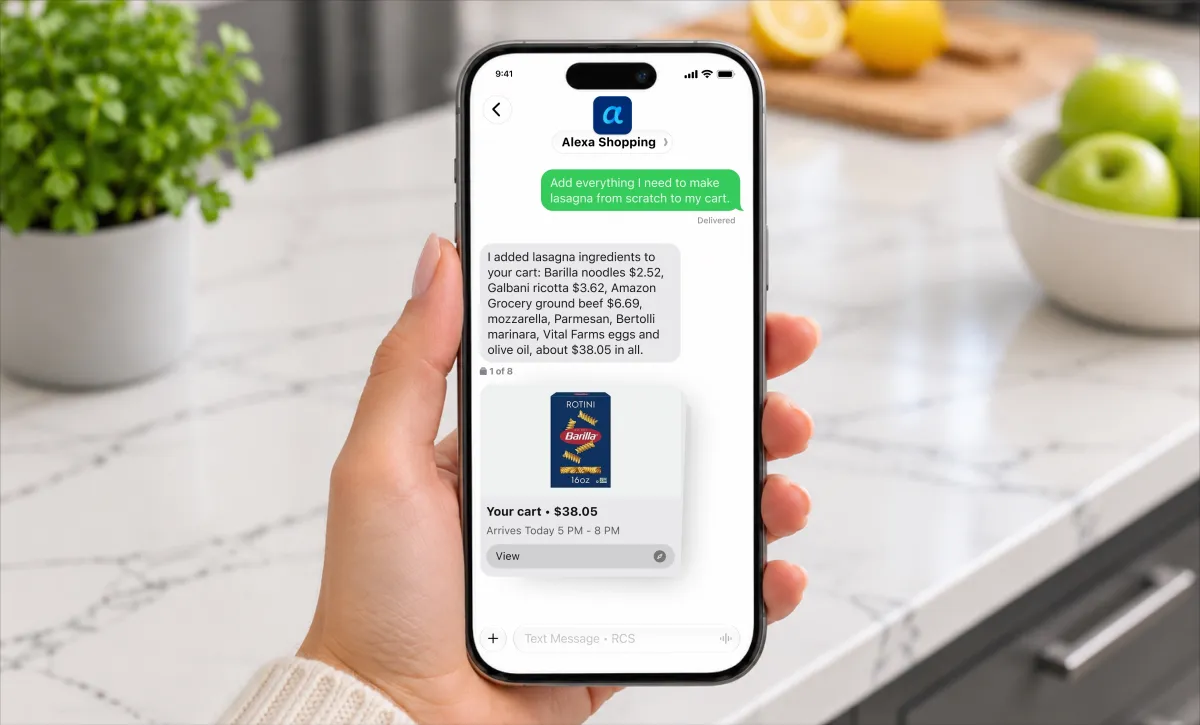
According to TechCrunch, Amazon announced on Friday that it is bringing text shopping to Alexa for Shopping for U.S. customers. The feature lets users send product queries by text, then use the assistant to add items to a cart and complete purchases. Amazon is positioning the update as an extension of Alexa’s existing shopping tools rather than a separate product.
The company already allows Alexa users to work with shopping lists, prices, web search, product comparisons and order tracking. TechCrunch reported that the new text interface adds another layer on top of those capabilities, and it arrives just ahead of the busiest shopping period of the year.
How the rollout works
Only selected U.S. customers are getting the first invite text to enable the feature, according to TechCrunch. Anyone not included in the initial group can sign up for a waitlist. The Verge said the launch begins with a small U.S. test group before expanding to millions more customers later on, while Reuters, as cited by AOL.com, described the first phase as invited U.S. customers followed by a broader launch in weeks.
That phased approach suggests Amazon wants to control the scale of the test while it watches how people use the tool for actual purchasing behavior, not just casual queries. The company has not said exactly how many people are in the first group, and the fact sheet does not provide a firm date for the wider expansion.
Why Amazon is doing this now
The timing is the clearest clue. TechCrunch said the launch is set just before the holiday shopping season, when consumers are most likely to compare prices, search for gifts and move quickly from browsing to buying. For Amazon, a text-based shopping flow can shorten the path between product discovery and checkout.
This is also happening as text-based AI shopping assistants have become a more visible consumer format. Amazon’s move positions Alexa for Shopping not simply as a voice assistant with retail features, but as a shopping agent that can work from chat-like prompts, photos and follow-up suggestions.
What can users do with text shopping?
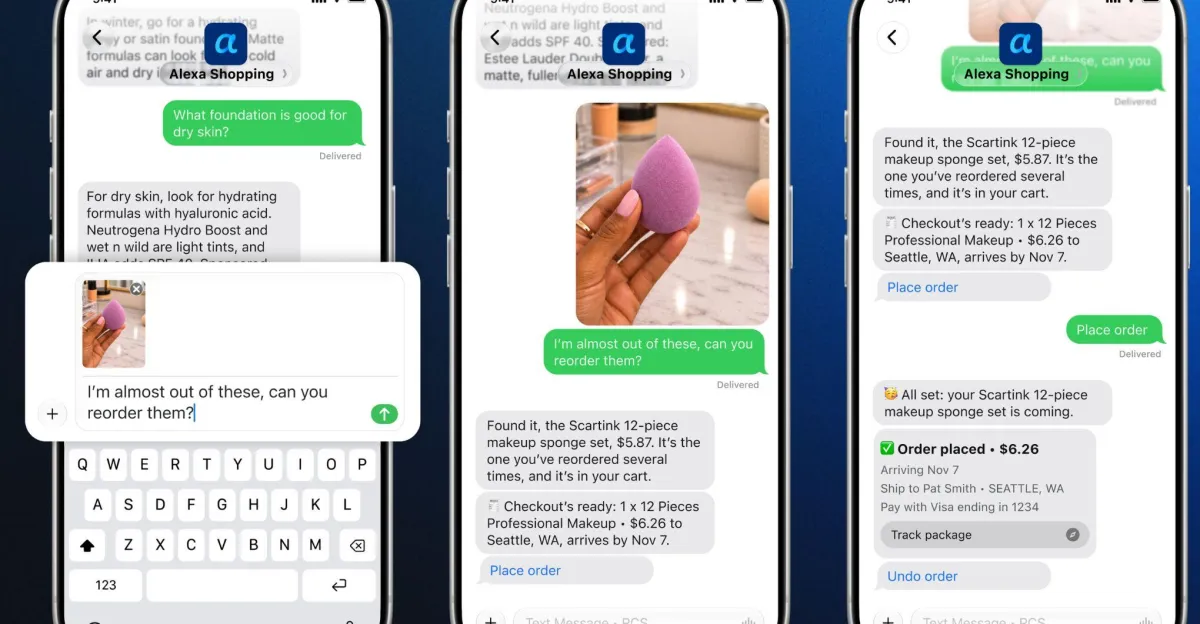
Users can text product queries, add items to carts and buy through Alexa, according to TechCrunch. The assistant also expands on earlier shopping functions by helping with lists, prices, web search, product comparison and order tracking. TechCrunch added that users can send photos of items or outfits to find similar Amazon listings, which broadens the service beyond typed searches.
The Verge reported a few additional details from Amazon’s presentation of the feature. The contact appears in users’ phones as “Amazon Alexa,” the outlet said, and Alexa can handle weekly grocery orders, suggest gifts and track deals by texting users when watched items fall in price.
“Now with Alexa for Shopping, your personal shopping agent is just a text away.”
The quote came from Rajiv Mehta, Amazon’s vice president of Conversational Shopping, and it captures the company’s pitch: not just a chatbot, but a more persistent retail helper that can keep working after the first request.
How does this fit Amazon’s larger strategy?
It fits a strategy of keeping shopping traffic inside Amazon’s own ecosystem. The company is making Alexa easier to use as a buying interface while also limiting the reach of outside AI agents that might otherwise search Amazon’s marketplace on behalf of users. Reuters, via AOL.com, reported that the new launch comes after Amazon blocked Meta’s Muse from marketplace access in September and after Amazon won a court order against Perplexity’s Comet in March; that ban was later overturned by an appeals court in August.
The pattern is notable. Amazon is simultaneously building its own agentic shopping tools and drawing hard lines around who else can operate inside its store. That dual approach points to a broader contest over who controls the relationship between customers, product search and checkout.
Background: how we got here
Amazon’s Alexa for Shopping is not a brand-new idea. The Verge said the product launched in May, and the latest update appears to be an evolution of the same service rather than a fresh standalone launch. Amazon has been steadily adding shopping functions to Alexa for years, but the new text layer reflects how quickly consumer expectations have shifted toward chat-style interfaces.
That shift has pushed major tech companies to rethink how people shop online. A typed prompt can be faster than voice in some settings, easier to refine, and more practical in public or noisy places. It also gives Amazon a direct channel to guide users through discovery, comparison and checkout without sending them to a browser tab or third-party assistant.
Timeline of the rollout and related moves
The recent sequence helps explain why the announcement drew attention. Amazon’s latest update did not emerge in isolation; it follows a series of moves in which the company both expanded Alexa’s shopping role and pushed back on rival AI systems.
| Date | Event | Source |
|---|---|---|
| May | Alexa for Shopping launched | The Verge |
| September | Amazon blocked Meta’s Muse from querying its site | TechCrunch |
| March | Amazon won a court order against Perplexity’s Comet | AOL.com / Reuters |
| August | An appeals court overturned that ban | AOL.com / Reuters |
| Friday, Nov. 6, 2026 | Amazon announced text-based Alexa shopping rollout | TechCrunch |
Why it matters
The significance goes beyond convenience. For shoppers, text-based Alexa could compress several steps of the buying process into a single exchange: ask, compare, add, purchase. That may be especially useful for routine purchases, grocery replenishment and holiday gift searches. The Verge’s report that Alexa can suggest gifts and track deals points to a service designed to influence both repeat buying and impulse purchases.
For Amazon, the bigger prize is customer retention. If shoppers use Alexa to find items, compare options and complete purchases, Amazon captures more of the transaction inside its own platform. That matters in a market where product discovery is increasingly mediated by AI tools rather than traditional search results or storefront browsing.
The move also has broader implications for the marketplace economy. If Amazon gives consumers a smoother way to shop through its own assistant while limiting outside agents, it may shape which AI systems become default shopping tools. That could affect referral traffic, seller visibility and the balance of power between platform operators and AI companies.
How is this different from a normal chatbot?
It is different because the assistant is tied directly to Amazon’s retail infrastructure. A generic chatbot can recommend products, but Alexa for Shopping can search Amazon listings, compare products, track orders, monitor prices and complete purchases inside the same environment. That integration is what makes the feature commercially important, not just technically interesting.
TechCrunch’s description of photo-based item matching adds another layer: users can upload an image of an outfit or object and search for similar Amazon listings. In practical terms, that turns Alexa into a visual and text shopping front end, not merely a voice interface.
What the reports agree on — and where they differ
The three outlets converge on the core point: Amazon is launching a text-based shopping feature for Alexa in the U.S. before the holiday season. They also agree that the release is gradual and invitation-based at first. Where they differ is in emphasis and detail.
- TechCrunch focused on the launch mechanics, holiday timing and the fact that users can sign up for a waitlist if not invited.
- The Verge added product behavior details, including deal tracking, grocery ordering and the way the contact appears in users’ phones.
- AOL.com, carrying Reuters reporting, emphasized Amazon’s legal and competitive posture toward rival AI agents.
Those differences matter because they show the feature through three lenses at once: consumer utility, product design and market control.
By the numbers
Amazon did not release a full public metrics sheet with the launch, but the fact sheet provides several concrete markers that help frame the rollout.
| Figure | What it refers to | Why it matters |
|---|---|---|
| Friday | Announcement day | Just before holiday shopping season ramps up |
| May | Alexa for Shopping launch | Shows the feature is an expansion, not a brand-new product |
| September | Meta’s Muse blocked from querying Amazon | Signals Amazon’s tougher stance on outside agents |
| March | Court order against Perplexity’s Comet | Part of Amazon’s effort to control marketplace access |
| August | Appeals court reversed that ban | Shows the legal fight around AI access is still active |
| Millions more customers | Expected expansion scale, per The Verge | Suggests this is meant to become a mainstream shopping feature |
What happens next
The most immediate question is who gets into the first invitation group. Amazon has not explained the criteria, and that leaves open whether the test is based on geography, shopping history, Alexa usage or some other internal measure. The waitlist suggests broader interest than the initial cohort can absorb, but the company has not said how quickly it will open the feature more widely.
Another question is scale. The Verge reported that Amazon intends to move from a small U.S. test group to millions more customers, but no public timeline has been set beyond the AOL.com report that the broader launch is coming in weeks. That makes the next several weeks important for tracking whether the company keeps the rollout limited or starts widening access faster than expected.
It is also unclear whether Amazon will take the feature beyond the U.S. The fact sheet does not say. Nor does it show how much shopping volume Alexa will actually generate compared with Amazon’s app or website. Those details will determine whether this becomes a niche convenience feature or a meaningful new shopping channel.
The competitive stakes
The launch arrives in a market where AI assistants are moving from answer engines to action engines. Shopping is one of the clearest commercial uses because it links a conversation directly to revenue. If users start by texting Alexa and end by purchasing inside Amazon, the company gets a stronger hold on the entire path from intent to transaction.
That is why the parallel legal and technical moves matter. Amazon is not only building a smarter front end for shoppers. It is also deciding which other AI systems may or may not access its marketplace. Reuters’ reporting via AOL.com makes clear that the company is treating agent access as a business issue, not just a technical one.
For consumers, the change may feel simple: type a request, get a recommendation, buy the item. But underneath that simplicity is a larger struggle over who owns the interface to online shopping. Amazon’s answer, for now, is increasingly clear: it wants Alexa to be the one doing the talking — or the texting.
Frequently asked questions
What is Amazon’s Alexa for Shopping text feature?
Amazon’s Alexa for Shopping text feature lets selected U.S. users send product queries by text, then add items to a cart and buy them through Alexa. It also extends shopping help into lists, price checks, comparisons, order tracking and photo-based product matching.
Who can use Alexa for Shopping text mode right now?
Selected U.S. customers are getting the first invite text to enable the feature. Amazon says users who are not invited can join a waitlist, which suggests the company is keeping the initial test relatively small before broader access.
Why is Amazon launching Alexa shopping text mode now?
Amazon is launching it just before the holiday shopping season, when people are more likely to compare prices, search for gifts and buy quickly. The timing also helps Amazon keep more shopping activity inside its own ecosystem as AI shopping agents become more common.
How is this different from other AI shopping tools?
This version is directly tied to Amazon’s retail system, so it can search Amazon listings, compare items, track deals and complete purchases in one place. That makes it more than a general chatbot; it is a shopping interface built into Amazon’s marketplace.
What happens next with the rollout?
Amazon has not given a full public timetable, but The Verge said the feature starts with a small U.S. test group and later expands to millions more customers. The next things to watch are who gets invited, how fast the broader launch arrives and whether Amazon opens it outside the U.S.