
In short
Ramp data cited by TechCrunch shows AI token spend slowed sharply in late summer even as usage continued to rise. The trend suggests model makers may face weaker revenue growth just as Anthropic approaches a potential IPO.
- Ramp data shows AI token spend grew 1.5% across August and September after a 42% jump in July.
- The top 1% of firms slightly reduced AI spend in August and September, even after summer peak levels just below $10,000 per employee.
- OpenAI and Anthropic have cut prices and offered enterprise discounts, making AI cheaper but pressuring revenue growth.
- TechCrunch says Anthropic’s filing cited about $600 million in reduced revenue growth after pricing cuts.
AI token spending flattened in late summer even as usage kept climbing, according to Ramp data cited by TechCrunch, a shift that could complicate the revenue outlook for model makers ahead of Anthropic’s planned public-market debut. The pattern suggests businesses are still adopting AI, but they are doing so at lower prices and with more discipline than the industry’s early growth curve assumed.
What Ramp’s data shows
Ramp’s spending data, which tracks purchasing across its customer base and is often treated as a proxy for business AI adoption, points to a sharp change in momentum after a hot start to the summer. Token spend rose 42% month over month in July, then slowed to just 1.5% across August and September, according to TechCrunch’s reporting on the firm’s report.
The picture changed again in October. Ramp said token spend re-accelerated, rising 8.9% from Sept. 23 to Oct. 23. That rebound matters, but it does not erase the broader message from the late-summer lull: AI usage did not collapse, yet the spending tied to that usage lost altitude.
How are companies spending on AI?
The clearest evidence of moderation came from the top end of Ramp’s customer base. The top 1% of firms slightly reduced spend in August and September, after reaching summer peak levels just below $10,000 per employee. That is a meaningful signal because the heaviest users often set the tone for the rest of the market.
Ramp’s report also draws a wide gap between ordinary users and power users. Median firms spend about $12 to $15 per employee per month on AI, while the top 10% spend roughly $600 to $1,000 per employee per month. In other words, a small group is still spending heavily, but the broader base remains far below those levels.
| Metric | Period / Segment | Reported level |
|---|---|---|
| Token spend growth | July 2026 | 42% month over month |
| Token spend growth | August-September 2026 | 1.5% combined growth |
| Token spend growth | Sept. 23-Oct. 23, 2026 | 8.9% |
| Top 1% of firms | Summer peak | Just below $10,000 per employee |
| Median firms | Current spending | $12-$15 per employee per month |
| Top 10% of firms | Current spending | $600-$1,000 per employee per month |
Why it matters
The immediate significance is that AI demand and AI revenue are not the same thing. Businesses can use more tokens without producing proportionally more revenue for the companies selling model access, especially when price cuts and enterprise discounts are part of the competitive strategy.
For investors, that distinction goes straight to the heart of the current AI trade. If usage continues to rise while spending growth cools, model providers may face a harder path to the kind of hypergrowth that has supported soaring private valuations. That is especially relevant as Anthropic approaches an IPO process watched closely by the market.
For customers, the trend cuts the other way: cheaper and more flexible AI pricing is making it easier to adopt the technology. But for the biggest model developers, a buyer’s market can expand usage while squeezing near-term margins and raising questions about how quickly revenue can catch up.
What Ramp’s economist is saying
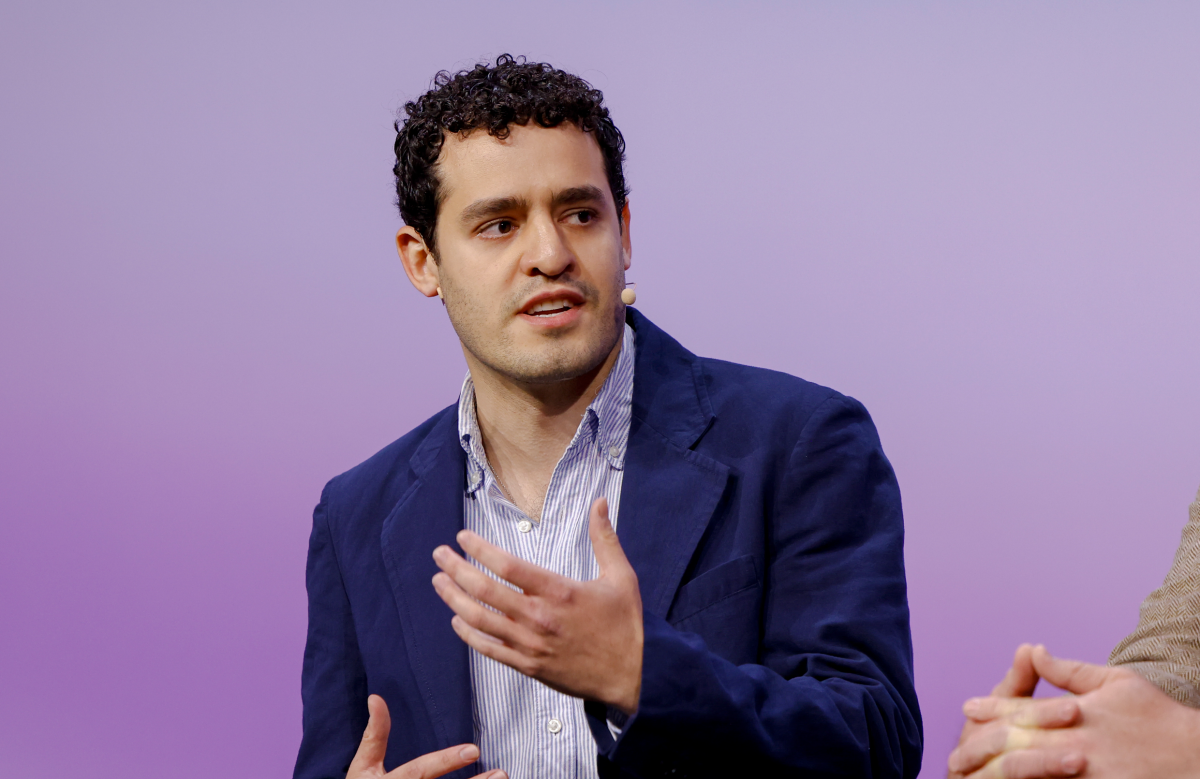
Ramp economist Ara Kharazian framed the slowdown as a pricing story rather than a demand story. In TechCrunch’s reporting, Kharazian said the recent pattern reflects pressure on prices, not a collapse in appetite for AI tools. He also described the market as one where “it has very much become a buyer’s market”.
That interpretation fits the data Ramp highlighted: more AI use, less expensive AI use. The question is whether lower prices will ultimately produce enough volume to offset the revenue hit, or whether the market is moving into a phase where growth in usage no longer translates into the same growth in spending.
Why did AI spending slow even as usage rose?
Because the major model companies have been cutting prices and offering incentives to keep enterprise customers inside their ecosystems. OpenAI cut API prices in half in September for GPT-6 Sol and GPT-6 Luna, according to TechCrunch. Anthropic also cut pricing for Fable 5.1 and Opus 5.5, and its filing said revenue growth fell by about $600 million after those changes.
Those cuts can make AI cheaper and more accessible, but they also reduce the amount of revenue generated per token. As a result, usage can keep rising while monetization stalls. In practical terms, the industry may be winning more customers even as it collects less from each one.
Competitive pressure is forcing the issue
The market is not just reacting to OpenAI and Anthropic. Meta and Nvidia are also offering enterprise AI products with cheap or open-source models, adding more pricing pressure across the stack. The broader result is a more competitive environment in which businesses can compare offerings, switch vendors more easily, and negotiate harder.
Ramp says a new model-routing tool called Jev is among the top performers in its data, a reminder that buyers are increasingly optimizing how they route workloads across models rather than committing blindly to a single provider. That kind of behavior tends to favor the customer and make revenue growth less predictable for suppliers.
TechCrunch also noted that Akshay Kothari posted internal data that matched Ramp’s pattern, reinforcing the idea that this is not an isolated reading. Multiple signals point in the same direction: AI remains in use, but the economics around that use are getting tighter.
Background: how the AI spending boom got here
Ramp’s data has become an important barometer because it reflects real business buying behavior rather than survey sentiment. The company’s customer base provides a view into how organizations are actually allocating money to AI tools, and token spend is a useful proxy for the revenues model companies can earn from API usage.
That matters because the AI market has been running on two linked but distinct engines. One is adoption: more teams, more workflows, and more applications using models. The other is monetization: how much those users pay for access. In the early phase of the boom, both engines appeared to be accelerating together. The latest data suggests they may now be separating.
July showed how fast the market can still move when demand spikes. Token spend jumped 42% month over month that month, a strong sign that businesses were willing to scale AI usage quickly. But by late summer, the pace had slowed sharply, and the top 1% of firms slightly cut back. That is the sort of pattern that raises alarms for companies whose valuations depend on sustained, outsized growth.
The timing is especially sensitive because Anthropic and OpenAI are both being watched not just as product companies but as financial narratives. Their pricing decisions are not merely operational choices; they help determine how much revenue the AI boom can generate in the near term and how believable the next round of fundraising or public-market pricing may be.
How the market is reacting
Bloomberg reported that Anthropic’s potential valuation had fallen to $1.2 trillion to $1.3 trillion from $2 trillion, and that the company may receive a high junk rating from credit agencies. Those reports, cited by TechCrunch, underline how quickly sentiment can change when growth expectations are revised downward.
TechCrunch also reported that OpenAI lowered its proposed valuation to $1.25 trillion from $1.4 trillion and cut its fundraising goals by about $10 billion. Even without taking any one report as definitive, the direction is clear: investors are becoming more cautious about what AI companies can justify in the current pricing environment.
Kharazian captured that shift in unusually blunt terms, saying “the era of hypergrowth may be over”. Whether or not that proves true across the entire sector, the recent data suggests the market is at least testing a new phase in which volume growth, not pricing power, carries more of the burden.
What this means for Anthropic and OpenAI
Anthropic’s IPO plans now sit in a market that is asking harder questions about durability. If token usage keeps rising but revenue growth is constrained by discounts and price cuts, then the company may need to prove that it can convert usage into a less fragile business model. That is difficult when competitors are also using lower prices to court the same corporate buyers.
OpenAI faces a similar challenge. Lower API prices can stimulate adoption and strengthen its position with enterprise customers, but the move also reinforces the idea that AI has entered a phase where providers must trade pricing power for market share. The company’s reduced valuation target and fundraising goals suggest that investors are already adjusting to that reality.
There is also a broader signaling effect. When the industry’s most visible players discount aggressively, smaller rivals and enterprise buyers adjust their expectations too. That can intensify competition even if overall AI demand remains healthy.
What happens next
The next few months should show whether October’s rebound is the start of a renewed climb or just a short-term bounce. Ramp’s data for later periods will be closely watched because it may reveal whether spending growth can regain the kind of momentum seen in July, or whether the market has settled into a slower, more price-sensitive pattern.
Investors will also watch whether the slowdown remains concentrated among the heaviest users or spreads through the broader customer base. If the top 1% of firms continue to trim spending, that would suggest even the most enthusiastic buyers are optimizing harder. If the median firms begin to scale up, the market could still broaden enough to support revenue growth.
Several questions now matter at once:
- Will October’s 8.9% increase continue into the following months?
- How much of the slowdown is due to lower prices versus saturation among the biggest users?
- Can AI spend expand far beyond the top 1% of firms?
- How will Anthropic’s IPO timing and valuation be affected by the spending data?
The answer to those questions will help determine whether AI remains a story of explosive monetization or shifts into a more mature market where adoption still grows, but the revenue curve flattens.
By the numbers
Seen together, the figures in Ramp’s data point to a market that is still active but no longer uniformly accelerating.
| Figure | What it indicates |
|---|---|
| 42% | July month-over-month growth in token spend |
| 1.5% | Combined growth across August and September |
| 8.9% | Growth from Sept. 23 to Oct. 23 |
| $600-$1,000 | Monthly AI spending per employee among the top 10% of firms |
| $12-$15 | Monthly AI spending per employee among median firms |
| $600 million | Revenue growth reduction Anthropic disclosed after pricing cuts |
For now, the clearest takeaway is that AI remains widely used, but the economics of that usage are tightening. The companies that sell the models may still be winning customers, yet they are increasingly doing so on terms that favor buyers more than vendors.
“tokens go brr. Costs go ahhh.”
That line, attributed to Kharazian in TechCrunch’s reporting, captures the essence of the moment: usage is still climbing, but the cost structure underneath it is under pressure. For Anthropic, OpenAI and their rivals, that pressure may shape the next chapter of the AI market more than another round of adoption headlines.
Frequently asked questions
Why did AI token spend slow down in late summer?
AI token spend appears to have slowed because pricing pressure increased, not because demand vanished. Ramp economist Ara Kharazian said the market has become a buyer’s market, while OpenAI and Anthropic both cut prices and offered enterprise discounts.
Does slower AI spending mean companies are using less AI?
No. TechCrunch’s reporting suggests usage kept rising even as spending growth weakened. That implies businesses are still adopting AI, but they are doing so at lower prices or with more aggressive vendor negotiations.
How much do companies spend on AI per employee?
Ramp says median firms spend about $12 to $15 per employee per month on AI. The top 10% spend about $600 to $1,000 per employee per month, and the top 1% were just below $10,000 per employee at summer peak levels.
Why does this matter for Anthropic’s IPO?
It matters because token spend is a revenue proxy for model providers. If usage rises but monetization weakens, investors may assign lower valuations or demand more proof that Anthropic can convert adoption into durable growth.