In short
Amazon will stop accepting new customers for Mechanical Turk on July 30, 2026, while allowing existing users to continue. The move marks a quiet retreat for a platform that shaped crowdsourcing, labor debates, and early AI data work.
- Amazon will stop onboarding new Mechanical Turk customers on July 30, 2026.
- Existing users can keep using the platform, but Amazon says no new features are planned.
- Mechanical Turk has long been central to debates over labor, data labeling, and hidden human work in AI.
- A 2023 analysis found many workers were already using LLMs to help complete tasks.
Amazon is putting Mechanical Turk on a long, slow fade-out. The company says the crowdsourcing marketplace will stop accepting new customers on July 30, 2026, effectively shutting the door on fresh adoption while allowing existing users to keep working on the platform.
The move does not amount to an immediate shutdown, but it does signal that one of the internet’s most famous labor platforms is being maintained rather than meaningfully expanded. Amazon Web Services said the decision followed “careful consideration,” adding that the company will continue making security and availability improvements while refraining from introducing new features.
That language is telling. Mechanical Turk is not disappearing overnight, but Amazon’s plans suggest the service is entering a maintenance phase, with no clear path to renewal. For a product that once sat near the center of conversations about online labor, automation, and the messy human work behind artificial intelligence, the decision feels like an end-of-life marker.
What Amazon is changing
According to the notice posted on the Mechanical Turk site, new customers will no longer be able to sign up after July 30, 2026. Current customers, however, will still be able to use the marketplace as usual.
Amazon has also indicated that it will keep the service operating, at least for now, with incremental support focused on reliability and security. What it will not do, according to the company’s statement, is invest in new product features.
In practical terms, that means Mechanical Turk will remain available to the existing base of requesters and workers, but it is no longer being positioned as a platform Amazon intends to grow.
| Key detail | Information |
|---|---|
| Service | Amazon Mechanical Turk |
| New customer cutoff | July 30, 2026 |
| Existing customers | May continue using the service |
| Amazon’s stated plan | Security and availability improvements only |
| New features | Not planned |
Why Mechanical Turk mattered
Launched in 2005, Mechanical Turk was built around a deceptively simple idea: break larger problems into tiny online tasks and pay people small amounts to complete them. In the earliest years of the service, those tasks often included CAPTCHA solving, image labeling, sentiment checks, and other jobs that machines struggled to do reliably.
That model made Mechanical Turk a practical workaround for companies seeking scalable human labor on demand. It also made the service a lightning rod. Critics argued that it normalized ultra-low wages, opaque working conditions, and a fragmented gig economy long before “platform labor” became a common phrase.
Supporters saw something different: an efficient marketplace for human judgment that could help companies move faster, experiment cheaply, and solve problems that weren’t yet fully automatable.
A foundational tool for early AI data work
By the late 2010s, Amazon began positioning Mechanical Turk as a data-annotation layer for machine learning workflows, particularly in connection with its SageMaker AI ecosystem. The platform became a source of human-labeled examples used to train neural networks, validate outputs, and prepare datasets for model development.
That role helped Mechanical Turk survive the rise of more sophisticated automation. Even as machine learning systems improved, training them still required human judgments: Is this image a stop sign? Does this text express positive or negative sentiment? Does this audio clip contain a command or a question?
Mechanical Turk fit neatly into that gap, bridging early AI ambitions with the realities of data preparation.
The ethics debate never really went away
From the beginning, Mechanical Turk was entangled with questions about labor fairness and digital exploitation. Workers were often paid pennies for tasks that could be monotonous, tedious, or difficult to evaluate from the outside. Researchers and advocates repeatedly raised concerns about compensation, transparency, and the lack of formal protections.
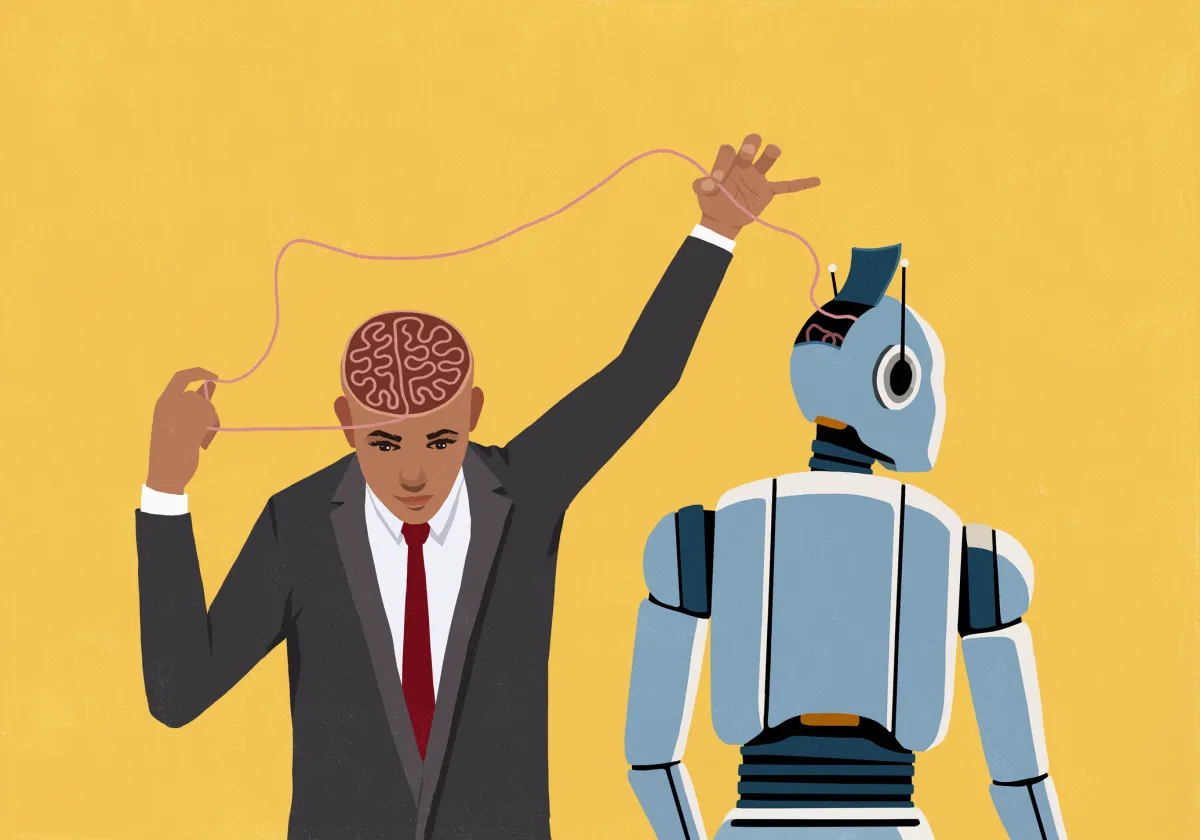
That criticism was not limited to wages. Mechanical Turk also became an emblem of hidden human labor inside supposedly automated systems — a reminder that many forms of “AI” and “smart” software were built on real people performing invisible work in the background.
The service’s name was itself a kind of irony. The original “Mechanical Turk” was an 18th-century hoax chess machine that secretly concealed a human operator. Amazon’s version borrowed that name for a platform built around human labor masquerading, in some contexts, as machine-like throughput.
When crowdsourcing crossed into scandal
Mechanical Turk also surfaced in one of the biggest political data controversies of the last decade. It played a small but notable part in the early stages of the Facebook-Cambridge Analytica scandal, underscoring how crowd labor platforms could be used in workflows that eventually drew public scrutiny and regulatory attention.
While Mechanical Turk was not the center of that story, its involvement added to the sense that the platform was embedded in a broader ecosystem of data extraction, behavioral analysis, and digital gray areas.
Mechanical Turk and the AI boom
The modern AI boom did not make Mechanical Turk irrelevant. If anything, it gave the platform a new if uneasy purpose. The explosion of large language models and generative AI systems increased demand for labeled data, evaluation tasks, and human feedback. Mechanical Turk remained one of the places where such work could be outsourced at scale.
At the same time, the relationship between the platform and AI systems became more complicated. A 2023 analysis found that a significant share of workers on the service — between 33% and 46% — were using large language models to help finish tasks.
That finding raised several uncomfortable questions. If workers rely on AI to complete annotation jobs, how trustworthy is the resulting data? If models are helping humans label data that will later train models, where does the human contribution begin and end? And if machines are becoming capable of handling more of these tasks, what does that mean for the future of the marketplace itself?
Researchers and observers have increasingly questioned whether Mechanical Turk still serves the same purpose it once did, particularly as workers themselves turn to large language models to get jobs done faster.
In other words, the platform became part of a feedback loop: humans helped train AI, AI began helping humans do the work, and the value proposition of the marketplace grew more uncertain.
Why Amazon may be stepping back now
Amazon has not offered a detailed explanation beyond saying the move followed careful consideration. But the decision makes sense in the context of a platform that has long been weighed down by reputational baggage, limited mainstream appeal, and shifting technical demands.
Mechanical Turk was never a mass-market product. It served a specialized audience of researchers, startups, data teams, and experimenters. As Amazon’s broader cloud and AI businesses matured, the platform likely became less strategically important than higher-growth offerings tied to infrastructure, model deployment, and enterprise AI services.
The company’s wording also suggests a low-cost support strategy. Keeping the lights on is one thing; investing in innovation is another. By choosing the former and explicitly rejecting the latter, Amazon is preserving the service without committing to its future.
Several forces likely shaped the decision
- Matured market demand: Other vendors and workflow tools now serve parts of the data-labeling and human-review market.
- Reputational concerns: Mechanical Turk has long been criticized for low pay and poor labor transparency.
- AI model evolution: Better automation has reduced the need for some of the platform’s original use cases.
- Operational burden: Maintaining a legacy marketplace may no longer justify meaningful investment.
How workers and researchers may feel the impact
For the workers who still use Mechanical Turk, the immediate effect is limited. Amazon says existing customers can continue to operate on the platform. But the long-term implications are harder to ignore.
Platforms in maintenance mode tend to age badly. If no new features arrive, if growth stops, and if attention drifts elsewhere, the ecosystem can slowly deteriorate. Fewer requesters may join over time, fewer high-quality tasks may appear, and workers may continue to migrate toward alternatives.
For researchers, Mechanical Turk has been a useful source of rapid human subject data for years. It has supported academic studies across fields including psychology, computer science, economics, and human-computer interaction. Even so, concerns about worker reliability, fraud, and bot activity have increasingly complicated its usefulness.
Some users on discussion forums reacted to the news by arguing that the platform had effectively been dead for years, pointing to fraud and declining trust as evidence that the end had already arrived informally.
One online commenter argued that the service had already lost its relevance and predicted Amazon would eventually decide it was no longer worth the cost of keeping the servers running.
What Mechanical Turk represented in the history of tech
Mechanical Turk occupies a peculiar place in internet history. It was a labor marketplace, a data engine, a proof-of-concept for the gig economy, and a cautionary tale about hidden human effort inside allegedly automated systems.
Its significance goes beyond the tasks performed on the site. The service anticipated a broader pattern that would define the next decade of platform technology: remote micro-work, on-demand labor, data-driven products, and the uneasy coexistence of human and machine intelligence.
In that sense, the platform was ahead of its time. It helped reveal a simple truth that still applies across AI: even the most advanced systems often depend on labor that is cheap, distributed, and easy to overlook.
Major milestones in Mechanical Turk’s arc
| Year | Development | Why it mattered |
|---|---|---|
| 2005 | Mechanical Turk launches | Creates a market for microtasks completed by people online |
| Early years | Used for CAPTCHA solving and simple classification | Shows how humans can handle tasks automation cannot yet perform well |
| 2010s | Becomes a recurring topic in labor and ethics debates | Raises concerns about pay, transparency, and worker protections |
| 2018 | Amazon promotes it for data annotation in AI workflows | Aligns the platform with machine learning training needs |
| 2023 | Analysis finds many workers using LLMs to help complete tasks | Highlights the changing relationship between humans and AI on the platform |
| 2026 | Amazon stops accepting new customers | Signals the start of the platform’s managed decline |
What happens next
The most immediate question is whether Amazon intends to keep Mechanical Turk alive indefinitely for existing users or whether this announcement is merely the first step toward a broader retirement.
Amazon has not said the service will be discontinued entirely. But companies rarely freeze growth and refuse new development without at least opening the door to eventual shutdown. If usage keeps falling, the platform could gradually become harder to justify internally.
Another question is what replaces it. In the current AI market, human-labeling work has become both more specialized and more contested. Some teams rely on dedicated vendors, internal annotation systems, or managed data operations providers rather than open marketplaces. Others are building pipelines that combine human review, synthetic data, and AI-assisted labeling.
If Mechanical Turk does fade away, it will not mean the end of crowdsourced AI labor. It will mean the end of one of its earliest and most visible homes.
The bottom line
Amazon’s decision to stop taking new Mechanical Turk customers is not dramatic in the way of a product launch or an overnight shutdown. Instead, it is the quieter kind of corporate retreat that often signals the end of a product’s strategic relevance.
Mechanical Turk helped define an era of internet labor, inspired debates over digital exploitation, and became a hidden building block for AI development. It also became, fittingly, a symbol of the strange loop between people and machines — a platform where automation was always incomplete and the human hand was never far away.
Now Amazon is telling the world that the future of that marketplace will be limited to preservation, not expansion. For a service built on the promise of scalable human effort, that may be the clearest sign yet that its era is drawing to a close.