In short
LinkedIn will keep its data center and GPU spending flat this fiscal year, saying efficiency gains let it launch more AI features without expanding infrastructure. The decision sets it apart from Big Tech rivals that are still racing to build bigger AI data centers.
- LinkedIn says it will not expand its data center footprint this fiscal year.
- The company claims GPU efficiency has roughly doubled over the past six months.
- LinkedIn estimates its optimization work saved about $24 million in the past year.
- The move contrasts with heavy AI infrastructure spending by OpenAI, Meta and Google.
- Executives say the strategy is temporary but could shape future capital spending decisions.
LinkedIn says it will not expand its data center footprint over the next fiscal year, choosing instead to keep its GPU spending, storage capacity and overall compute use essentially flat while it rolls out more AI-powered features. The move matters because the Microsoft-owned network is one of the largest consumer and enterprise-facing platforms yet to publicly push back against the industry’s rush to build ever-bigger AI infrastructure.
Executives told WIRED the company believes it can serve more compute-intensive products without increasing its hardware footprint, largely by making its existing GPUs work far more efficiently. The strategy arrives as rivals such as OpenAI, Meta and Google pour money into new data centers, chips and power contracts in an effort to stay ahead in the AI race.
For LinkedIn, the decision is less a retreat than a bet that operational discipline can keep pace with rising demand. Company leaders say the platform has already doubled the efficiency of its GPU use over the past six months and has built enough flexibility into its infrastructure to support a year of growth without major additions to storage or compute.
Why is LinkedIn holding data center spending flat?
LinkedIn is holding spending flat because it says the recent gains in engineering efficiency are strong enough to absorb the next wave of AI products without requiring a major infrastructure buildout. The company’s leaders describe the goal as keeping compute close to flat while still shipping more production AI systems.
That is a notable shift at a time when many technology companies are treating more chips, more power and more storage as the default answer to every new AI feature. LinkedIn’s executives argue that the economics of that approach are becoming harder to justify, especially as memory chips, GPUs and servers become more expensive.
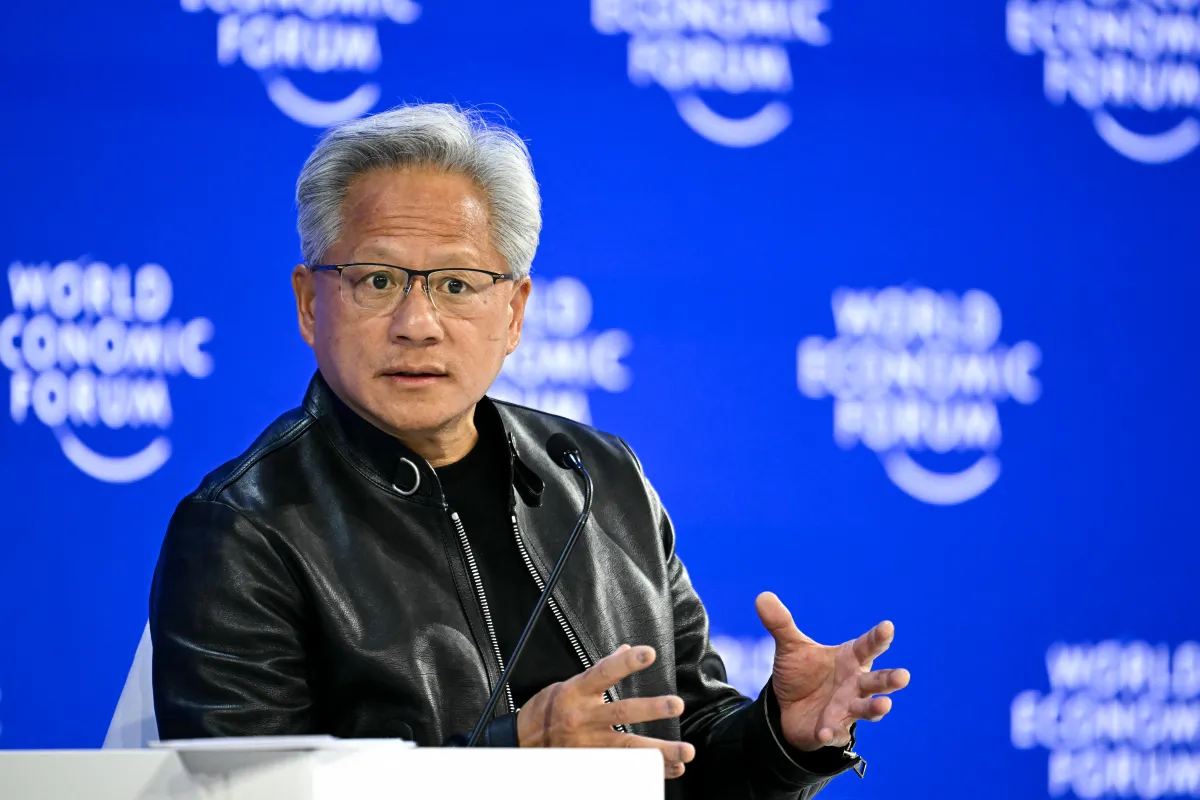
Chief technology officer for engineering Erran Berger said the company wants to preserve a steady footprint while still launching compute-heavy products. He described that goal as unusually ambitious in the current market environment, where AI infrastructure costs are climbing rapidly.
Berger said LinkedIn’s aim is to keep its compute footprint “flat or as close to flat as possible” even as it introduces more demanding AI systems, calling that a bold position in today’s market.
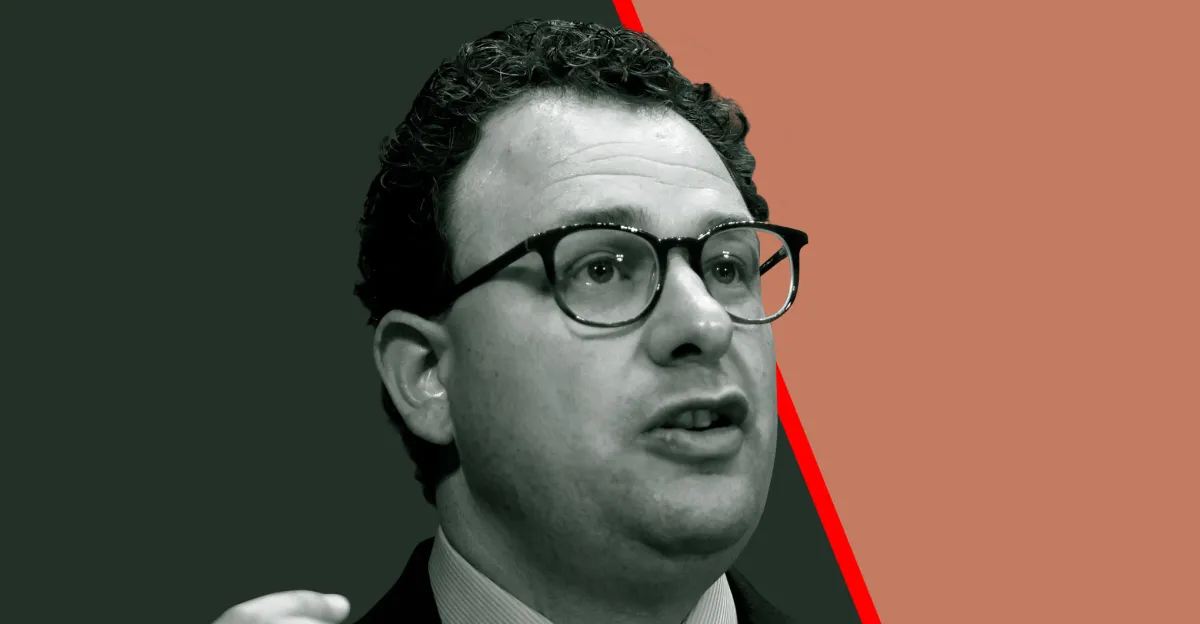
LinkedIn’s infrastructure chief, Raghu Hiremagalur, said the company is trying to be careful with capital while using tighter limits to push teams toward more inventive product development. In practice, that means the organization expects engineers to do more with the same resources rather than simply requesting bigger budgets.
How LinkedIn built a more efficient AI stack
LinkedIn’s answer has been to optimize nearly every layer of its AI pipeline, from model training to the delivery of results to users. The company says it has improved utilization of its graphics processors, redesigned some internal software and shifted certain workloads away from expensive GPUs and onto lower-cost CPUs.
That effort is not a single technical fix. It is a broad operating strategy that combines software tuning, workload management, model design and forecasting discipline. LinkedIn says the changes have allowed it to use the machines it already owns more effectively, which is particularly important as AI training and inference continue to become more demanding.
What changed inside LinkedIn’s infrastructure?
LinkedIn says it introduced measurement systems that let it see exactly how much compute and storage different teams were consuming. Once the company could observe usage in more detail, it could assign work to its data center hardware more efficiently and reduce idle time across servers.
According to Hiremagalur, GPU utilization on the training side is now running at more than 95 percent, a level he described as unusually strong for a company operating at LinkedIn’s scale. That level of efficiency suggests the company has been able to squeeze more value out of the same fleet of machines rather than simply buying additional ones.
The company also used model distillation, a process in which a smaller AI model is trained to imitate larger ones. In one example, a compact model learned from two larger systems so that it could both surface relevant job openings and predict which users were most likely to engage with them.
Berger said that smaller model still delivers strong quality while being less expensive to run. He said the improvements have already helped users discover jobs they were not finding before because the system better understands what they are looking for.
How did LinkedIn reduce the cost of recommendations?
LinkedIn reduced recommendation costs by redesigning the models and software that decide which posts, jobs and candidate matches to show. That work included streamlining training routines, reusing earlier recommendation data and better balancing workloads between processors.
Some of the changes involved modifying software built for Nvidia chips so those chips could handle larger tasks than they were originally designed for. LinkedIn also rewrote parts of the system so that certain jobs could run on CPUs instead of GPUs, which are usually more expensive, more power-hungry and harder to buy in bulk.
Berger said those changes helped turn what was once a costly feed-ranking system into something much more practical. The result, he said, is better performance at a lower operating cost.
How much money did LinkedIn save?
LinkedIn estimates that its efficiency work saved about $24 million over the last year, an amount the company equates to roughly 1,100 GPUs operating continuously for 12 months. That is a meaningful infrastructure win, even if it is modest relative to the platform’s reported annual revenue of about $18 billion.
Executives emphasize that the point is not only the direct cost savings. They say the bigger value lies in the added flexibility that comes from freeing up engineers and hardware for future work, rather than locking that capacity into avoidable overhead.
Hiremagalur argued that operational craft still matters at the scale of a business like LinkedIn. His view is that better efficiency can shorten the time required to launch new projects and let teams add AI features without a matching increase in capital spending.
Hiremagalur said that running a full year without incremental storage or compute is “no small feat” for a company of LinkedIn’s size and required extensive work to make possible.
Why LinkedIn’s approach stands out in Big Tech
LinkedIn’s decision stands out because it is happening during one of the most aggressive infrastructure buildouts in technology history. The biggest AI players are racing to secure land, electricity, chips and construction capacity for massive data centers designed to support training and inference at unprecedented scale.
OpenAI, Meta and Google have all been linked to enormous spending plans, strategic partnerships and long-term commitments aimed at ensuring they have enough compute. That spending spree has helped create shortages in labor and components, pushed up prices and forced some companies to limit how much customers can use certain AI tools.
By contrast, LinkedIn is publicly signaling that it can make progress without immediately joining the race to expand capacity. With more than 1.3 billion users, the platform may be the largest business so far to acknowledge that the economics of endless AI expansion deserve closer scrutiny.
The shift also reflects a growing anxiety inside the sector: not every AI use case may justify ever-larger hardware bills. If companies can improve output from the same cluster of GPUs, they may be able to delay expensive expansions and make their existing infrastructure last longer.
How LinkedIn got here
LinkedIn’s move toward infrastructure self-reliance began years earlier, after Microsoft acquired the company in 2016. For a time, LinkedIn explored moving onto Microsoft Azure, but executives concluded that a broad, general-purpose cloud environment was not the most economical fit for a platform of its size and workload profile.
The mismatch became more apparent as Microsoft’s cloud business grew and LinkedIn’s own demand climbed sharply. The company eventually decided that it needed more direct control over how its systems were built and operated.
In 2022, LinkedIn committed more fully to its own data centers in Oregon, Texas and Virginia. Owning those facilities gave the company greater control over the shape of its infrastructure and made it easier to adapt as AI workloads became more demanding.
That timing turned out to matter. Around the same period, LinkedIn began building AI assistants to help people write messages, search for jobs and recruit candidates. Those features increased the strain on every part of the platform’s technical stack, and executives say the cost of serving each query has risen over time.
Hiremagalur said the volume of stored data has been doubling every year, a trend that would be difficult for any company to sustain indefinitely without changes in efficiency.
What is tokenomics and why does it matter here?
Tokenomics is the emerging practice of analyzing the real cost of every AI interaction, and it is becoming central to how companies think about generative AI economics. In practical terms, it means asking how much it costs to generate answers, recommendations or summaries at scale and whether those costs can be reduced without undermining product quality.
LinkedIn’s strategy is a clear example of that discipline. Rather than simply assuming that each new AI feature requires a bigger infrastructure purchase, the company is trying to reduce the cost per query and make resource use more intentional.
Chirag Dekate, a Gartner consultant who advises companies on AI cloud strategy, said the sector is moving from a “buy more” mindset to a “do more” mindset. In his view, the old assumption that bigger purchases would automatically lower costs is no longer reliable.
Dekate said enterprises are entering a new phase in which they must focus less on adding infrastructure and more on getting better results from what they already have.
He also noted that smaller firms without LinkedIn’s level of infrastructure control are finding their own ways to save money, including cutting unused software, trimming headcount, renting capacity from lower-cost neocloud providers and choosing cheaper AI models when possible.
What risks could disrupt LinkedIn’s plan?
LinkedIn’s plan could still be overtaken by the pace of AI change. The company’s executives acknowledge that hardware requirements are moving fast, and future products may require more power or more storage than current forecasts suggest.
One risk is that the cost of memory chips, servers or other components could rise further, making even flat spending harder to maintain. Hiremagalur said some servers have risen in price dramatically in recent months, making procurement decisions more complicated than before.
Another risk is that the company’s own ambitions may outgrow its current efficiency gains. If LinkedIn introduces more demanding products than expected, it may need to revisit its capital plan sooner than anticipated.
Still, the company is not abandoning growth. It is simply refusing to assume that growth must come from larger facilities every time. Instead, it is choosing to manage by quarter, adjusting to real demand rather than relying on broad annual guesses about what teams will need.
How long can flat spending last?
Flat spending can last as long as efficiency gains continue to offset rising demand. LinkedIn’s executives suggest the strategy is sustainable for now because the company has already captured meaningful savings through software tuning, model compression and better hardware use.
But they also acknowledge that this approach is not permanent by definition. The company will still need to buy replacement servers as older machines age out or fail, and it will eventually have to expand again if product demand materially outpaces current capacity.
Berger’s view is that LinkedIn should be able to extract more value from future investments once it does expand again, because the efficiency work done now creates a stronger baseline.
Timeline: How LinkedIn’s infrastructure strategy evolved
| Year / Period | What Happened | Why It Matters |
|---|---|---|
| 2016 | Microsoft acquired LinkedIn | LinkedIn became part of a larger cloud and infrastructure ecosystem |
| Post-acquisition | LinkedIn tested Microsoft Azure | The move was not economical for LinkedIn’s workload profile |
| 2022 | LinkedIn committed to its own data centers in Oregon, Texas and Virginia | The company gained tighter control over infrastructure and costs |
| Past 6 months | GPU efficiency roughly doubled | Created the foundation for flat spending this fiscal year |
| Current fiscal year | LinkedIn plans no incremental storage or compute growth | Signals a rare pause in Big Tech’s AI infrastructure buildout |
What this means for the AI industry
LinkedIn’s decision could influence how other companies think about the economics of generative AI. If a platform with more than a billion users can deliver more AI-driven features without growing its data center footprint, it may encourage other firms to focus more on efficiency and less on brute-force expansion.
That does not mean the current buildout will stop. The largest AI companies still need vast amounts of compute, and many workloads cannot be optimized away. But LinkedIn’s example suggests a different path: treating infrastructure as something to be managed carefully, not just scaled endlessly.
Songyee Yoon, managing partner at Principal Venture Partners and a board member at server maker HP, said the company’s approach is a sign that AI is moving from experimentation to production discipline. She argued that the winners in the sector will be companies that control costs as well as they chase performance.
Yoon said the industry’s next phase will reward companies that manage infrastructure carefully, not just those that spend the most.
LinkedIn’s broader business logic
For LinkedIn, the strategy is also about preserving margins and maintaining its role as a strong contributor inside Microsoft. The company says it can improve job recommendations, candidate matching and feed ranking while still making money for its parent company.
That balance matters because AI features can be expensive even when they improve the user experience. If every query costs more, the business model becomes harder to defend unless the company can offset the expense through efficiency or monetization.
LinkedIn’s executives say they believe that better models, deeper inference and smarter infrastructure use can improve both quality and economics at the same time. In their view, cost control and product quality do not have to be in conflict.
Looking ahead
LinkedIn is not promising permanent restraint. It is saying that, for this fiscal year, it can meet its goals without adding more data center capacity. The company will keep replacing aging hardware, keep refining its models and keep launching new AI tools, but it intends to do so within a fixed infrastructure envelope.
If the plan works, it could become a case study in how large platforms adapt to the financial reality of AI. If it fails, it may simply prove that even the most disciplined operators eventually need more power, more storage and more chips.
Either way, LinkedIn has chosen to test the boundaries of what is possible when a major internet platform decides that scale alone is no longer the answer.
Frequently asked questions
Why is LinkedIn keeping AI spending flat?
LinkedIn is keeping AI spending flat because it says recent efficiency gains let it support new AI features without adding storage or compute capacity. Executives believe better software, higher GPU utilization and model optimization can absorb demand for now.
How much did LinkedIn save by improving efficiency?
LinkedIn estimates it saved about $24 million over the past 12 months through infrastructure and software optimization. The company says that is roughly equivalent to running about 1,100 GPUs nonstop for a year.
What AI features is LinkedIn building?
LinkedIn is developing AI tools that help people write messages, find jobs and recruit candidates. It is also improving recommendation systems for feeds, jobs and candidate matching so those products work better and cost less to operate.
Will LinkedIn stop building data centers permanently?
No. LinkedIn is not ending data center growth forever. The company says it still needs to replace aging servers and may expand again later, but for now it plans to keep compute and storage capacity essentially flat.