In short
Nvidia CEO Jensen Huang publicly backed President Donald Trump’s call to avoid an AI slowdown during a live phone-in at the All-In Summit. The moment highlighted the widening political battle over AI growth, data center expansion and public concern about the industry’s footprint.
- Jensen Huang and Donald Trump used a live All-In Summit call to push against any slowdown in AI development.
- The exchange underscored a growing split between AI acceleration advocates and leaders urging caution.
- Public opposition to data centers remains high, driven largely by environmental and cost-of-living concerns.
- Nvidia’s role at the center of AI infrastructure gives Huang’s comments outsized policy and market significance.
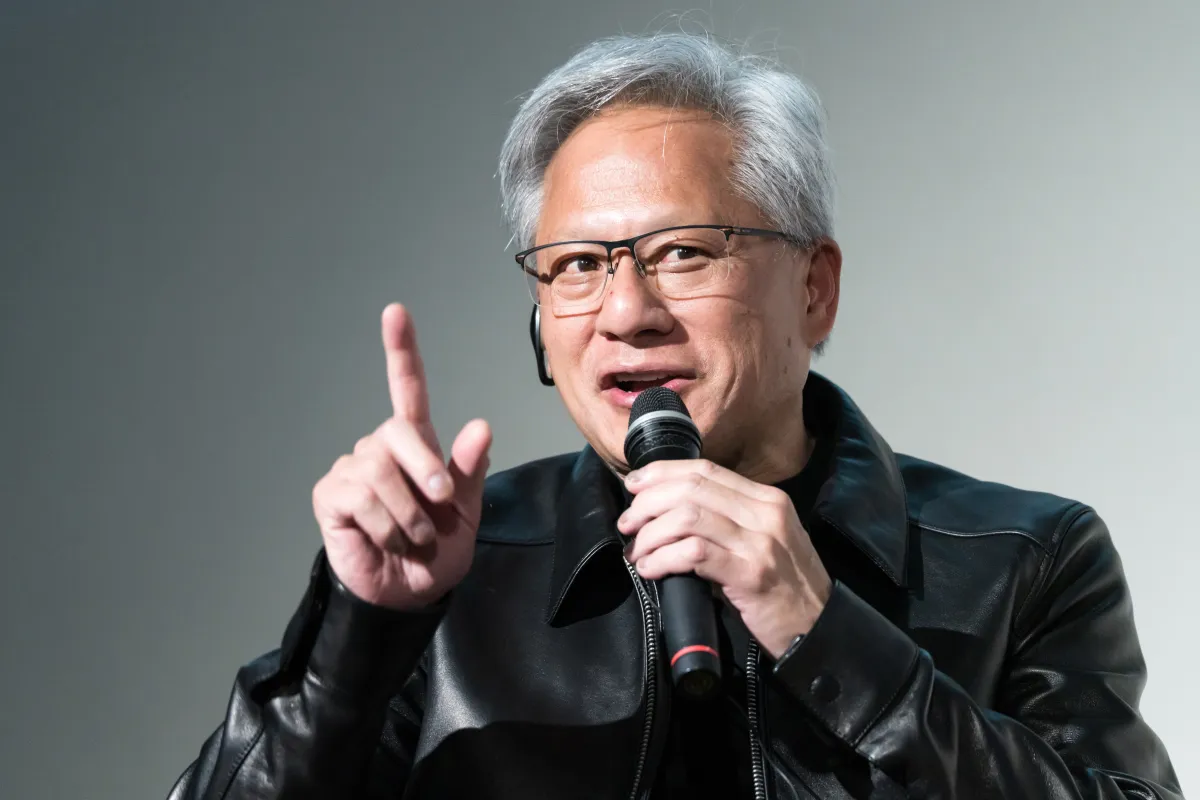
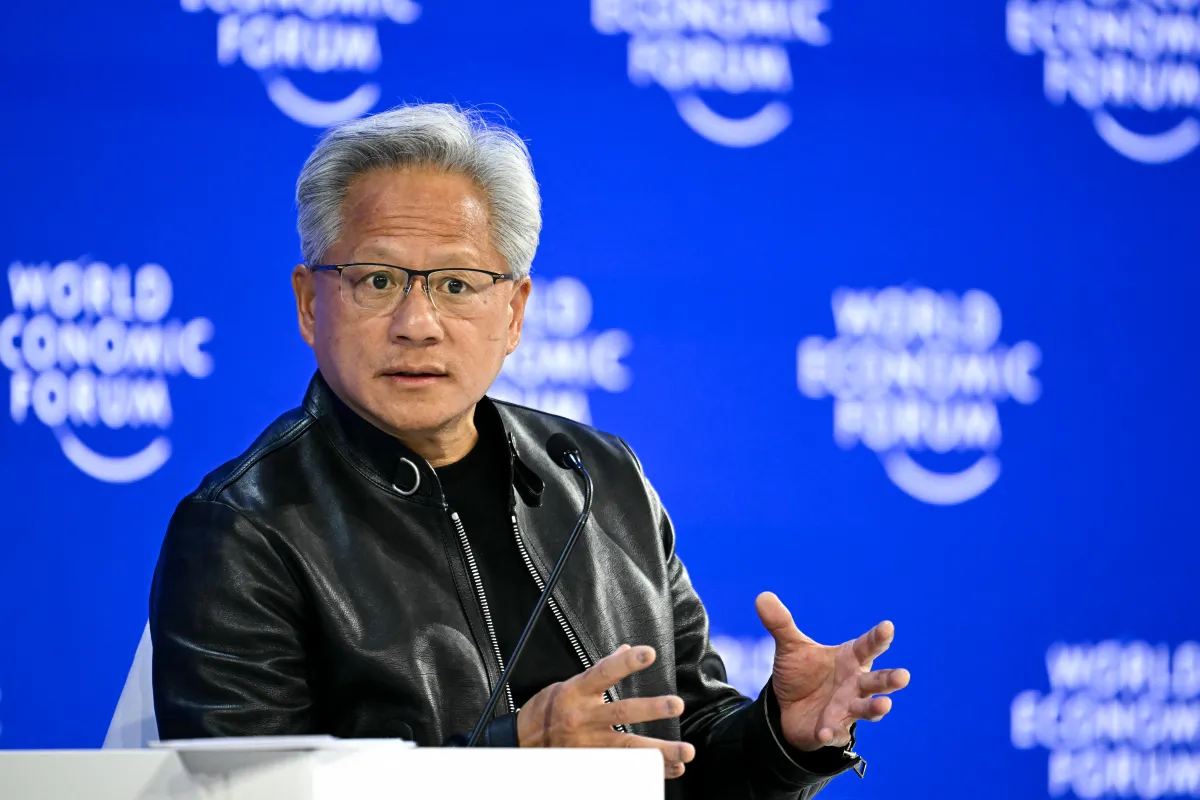
Nvidia CEO Jensen Huang publicly aligned himself with President Donald Trump on Monday in a live onstage phone call at the All-In Summit, telling the president, in effect, that the U.S. will not allow an artificial intelligence slowdown to take hold. The exchange mattered because it put one of the world’s most influential chipmakers squarely in the middle of a growing political fight over AI infrastructure, data center construction and how aggressively the industry should keep expanding.
The moment unfolded while Huang was speaking with the hosts of the All-In podcast, including venture capitalists Chamath Palihapitiya and Jason Calacanis, along with White House advisers David Friedberg and David Sacks. As the conversation turned to warnings from Anthropic chief executive Dario Amodei about slowing the pace of AI capability gains, Trump called Huang directly. Huang put the call on speaker so attendees could hear the president join the discussion in real time.
Trump used the call to frame opposition to AI expansion as a threat not only to American business, but also to national competitiveness. Huang responded by agreeing that the industry should keep moving forward. The exchange drew applause from the audience and instantly became one of the summit’s defining political-tech moments.
What happened at the All-In Summit?
Huang was on stage when Trump phoned in, creating an unusually public exchange between the president and one of Silicon Valley’s most powerful executives. Huang told Trump he was appearing before the “besties,” a reference to the All-In hosts, before holding the call up for the room to hear.
The call itself was informal, but the political message was unmistakable. Trump argued that criticism of AI infrastructure and slower development was being fueled by people who wanted to halt U.S. progress. Huang replied that the industry would not allow that to happen.
Trump said the country should not be “stopped” by what he described as opposition to AI growth, while Huang agreed that the sector would keep advancing.
The live call also turned into a bit of theater. Trump joked on the call about Huang’s ability to design some of the world’s most complex chips while still needing help getting the phone audio into the room. Huang appeared to be asking stage staff for another microphone so the audience could hear clearly.
Why does this matter for AI policy?
This matters because the dispute is no longer just about technology; it is about where AI gets built, how much electricity it uses and how quickly the industry should grow. Huang’s public backing of Trump’s position signals that Nvidia is comfortable siding with aggressive expansion at a time when some industry leaders are calling for caution.
Anthropic’s Amodei has argued for slowing the pace of improvement in AI capabilities. That view has found support from other major tech figures, including SpaceX chief executive Elon Musk and OpenAI chief executive Sam Altman. Huang, by contrast, has generally taken the position that innovation should continue without a deliberate brake.
The divide is important because Nvidia’s business sits at the center of the AI buildout. Its chips power much of the world’s advanced AI infrastructure, and any political push toward slowing the sector could affect demand, regulation and the pace of investment in data centers and related hardware.
How Trump and his allies are framing the backlash
Trump and supporters such as Y Combinator chief executive Garry Tan have portrayed resistance to new data centers as something larger than a local zoning or environmental dispute. In their telling, the pushback reflects organized attempts to weaken American economic leadership.
That argument is not the only way to read the public mood. Polling data suggests the backlash is grounded in practical concerns rather than conspiracy theories. Gallup recently reported that seven in 10 Americans oppose building data centers in their communities. More than half of those respondents pointed to environmental effects, including strain on natural resources. Roughly one-fifth said they worried about higher living costs and the effect on quality of life.
In other words, the political fight around AI infrastructure is taking shape at two levels at once. On one side are national-security and economic-growth arguments from Trump and his allies. On the other are local worries about water use, energy demand, noise, land use and utility bills.
What are communities worried about?
Communities are mainly worried about tangible, local costs. Data centers can consume large amounts of electricity and water, require new transmission and cooling infrastructure, and increase pressure on nearby housing, roads and public services if large workforces or construction projects arrive at once.
- Environmental strain: higher demand for electricity and water.
- Cost of living: concern that power and housing costs will rise.
- Quality of life: worries about noise, traffic and land use.
- Community planning: questions about whether local infrastructure can absorb rapid buildout.
What Huang’s support means for Nvidia
Huang’s comments reinforce Nvidia’s position as one of the clearest corporate beneficiaries of the AI buildout. The company has become synonymous with the hardware race that powers modern generative AI systems, from chatbots to image models to enterprise inference clusters.
By publicly embracing the argument that AI development should not be slowed, Huang is effectively backing continued capital spending across the AI supply chain. That includes semiconductor manufacturing, server assembly, cloud infrastructure, data center construction and power delivery.
For Nvidia, the stakes are both commercial and strategic. The company’s growth depends on the expansion of AI deployment worldwide, and a narrative that frames that expansion as a national priority can help support favorable policy, infrastructure approvals and investor enthusiasm.
At the same time, the optics are delicate. A president cheering on a major tech executive during a live conference call can look like political theater, but it also highlights how tightly entwined AI hardware leaders have become with Washington’s industrial-policy agenda.
How does this compare with the caution camp?
It is a direct contrast. Huang is aligning with an accelerationist view of AI, while Amodei and other prominent figures have warned that the industry may be moving too fast.
Amodei’s position has helped crystallize a broader debate about whether the AI sector should pause, slow down or at least build in stronger safeguards before models become more capable. Supporters of caution argue that the pace of progress is outstripping the industry’s ability to manage risks, from labor disruption to security threats and possible misuse.
Huang’s response, by contrast, reflects a belief that the United States should keep building, testing and deploying AI systems as fast as possible in order to stay ahead of rivals such as China. Trump adopted that framing during the call, portraying resistance as a potential advantage for America’s competitors.
The president argued that concerns about AI expansion play into the hands of people who do not want the U.S. to lead, while Huang agreed that the industry would keep pushing forward.
Timeline of the exchange and the broader debate
The call was the latest flashpoint in a debate that has sharpened over the last year as AI development accelerated and the physical footprint of the industry expanded. Here is a quick summary of the key moments surrounding the episode.
| Time/Context | Event | Why it matters |
|---|---|---|
| Before the call | Huang appears onstage at the All-In Summit with the podcast hosts. | Places one of the world’s most important AI hardware leaders in a high-visibility political-tech setting. |
| During the discussion | Participants talk about Amodei’s warning to slow AI progress. | Highlights the split between AI acceleration and AI caution. |
| Mid-conversation | Trump phones Huang and joins live on speaker. | Turns the panel into a public signal of presidential support for rapid AI expansion. |
| Immediately after | Huang agrees that the industry will not allow an AI slowdown. | Shows Nvidia’s top executive publicly endorsing continued growth. |
| Ongoing backdrop | Public concern over data centers remains high. | Underscores the gap between industry priorities and local community sentiment. |
What the polling says about public sentiment
Public opinion appears to be moving in the opposite direction from the industry’s fastest proponents. Gallup’s findings suggest Americans are not simply abstractly worried about AI; many are concerned about the physical infrastructure required to support it.
That distinction matters. AI systems are often discussed as software products or digital tools, but they depend on warehouses of servers, heavy power use, cooling systems, fiber connections and long-term utility planning. Once communities start seeing those facilities as neighbors rather than remote cloud abstractions, the politics become much harder.
For elected officials, that creates a tension. Supporting AI investment may appeal to growth-minded business leaders and federal policymakers, but approving large data center developments can provoke backlash from voters who fear they will bear the costs.
Why the local response is so strong
The local response is strong because the costs are immediate and visible. Unlike the benefits of AI, which may be distributed across national markets and corporate earnings, the burdens of a new data center are often concentrated in a single town, county or utility district.
That imbalance helps explain why local opposition can be intense even when national leaders celebrate expansion. In practical terms, residents are asked to accept new lines, new substations, more construction traffic and higher resource demand in exchange for a promise of future technological growth.
How the AI race became a political issue
The AI race became political because it sits at the intersection of economic competition, industrial policy and national security. Control of AI infrastructure is increasingly viewed as a strategic asset, not just a private-sector opportunity.
That is why Trump’s comments focused on the idea of America “leading” rather than simply innovating. It is also why Huang’s agreement mattered: Nvidia is not a fringe player in the debate, but the company that supplies the picks and shovels of the current AI boom.
The live call also illustrates how quickly AI has moved from a specialist tech topic to a cultural and political flashpoint. A year or two ago, a conversation about model scaling and data centers might have stayed inside industry circles. Now it reaches presidential politics, summit stages and national headlines.
Who benefits from this alignment?
Several groups benefit from the alignment between Trump and Nvidia’s chief executive, at least in the short term. Nvidia benefits from a political climate that favors continued AI spending. Trump benefits from backing a marquee U.S. tech leader while reinforcing his image as an advocate for industrial growth.
Investors and hyperscale cloud companies may also read the exchange as a sign that federal policymakers will remain supportive of large-scale AI buildouts. That could encourage further commitments to chips, servers, cooling, land acquisition and power contracts.
But the alignment may also sharpen resistance among critics who believe the industry is moving too fast or is too willing to externalize costs onto local communities. The more visible the federal endorsement becomes, the more likely opponents are to frame data center approval battles as a fight over democratic accountability.
What comes next for the AI slowdown debate?
The debate is likely to intensify, not fade. More AI models are being deployed, more power is being committed to data centers, and more communities are encountering the physical footprint of the industry for the first time.
Expect future fights over permits, energy supply, water access and zoning to become even more central to AI policy. Expect also that executives like Huang will continue arguing that the U.S. must build quickly if it wants to retain leadership in the field.
Meanwhile, critics will continue pressing for guardrails, disclosure requirements, local consultation and possibly slower deployment. The result is a broader national argument over whether AI should be treated like a race that must be won, or a technology so powerful that it should be deliberately constrained.
Key facts from the Trump-Huang call
Here is a compact look at the main details from the exchange:
- Where it happened: the All-In Summit.
- Who was involved: Nvidia CEO Jensen Huang and President Donald Trump.
- What was discussed: whether the U.S. should slow AI development.
- Why it stood out: Trump called in live while Huang was onstage, and the conversation was played for the audience.
- Broader issue: public resistance to data center expansion and the environmental and economic concerns behind it.
Huang’s onstage call with Trump was more than a viral conference moment. It was a public display of the coalition behind fast AI expansion — and a reminder that the debate over chips, data centers and model development is now deeply political.
Frequently asked questions
What did Jensen Huang say about an AI slowdown?
Jensen Huang signaled that he does not support slowing AI development and agreed with Trump that the industry should keep moving forward. His remarks came during a live onstage phone call at the All-In Summit, where the pair discussed criticism of rapid AI expansion.
Why was Trump calling Nvidia’s CEO on stage?
Trump called in while Huang was speaking at the All-In Summit to weigh in on the debate over AI growth. The call turned into a public show of support for continued AI expansion and a rejection of arguments for slowing the pace of development.
Why are people opposing new data centers?
People are opposing new data centers because many see them as heavy users of electricity and water that can raise local costs and affect quality of life. Gallup found seven in 10 Americans oppose construction in their area, with environmental concerns cited most often.
How does this affect Nvidia?
This affects Nvidia because the company supplies the chips powering much of the AI buildout. A political climate that favors faster expansion can support demand for Nvidia’s products and strengthen the company’s influence in debates over AI infrastructure and national competitiveness.
Who is Dario Amodei and what did he say?
Dario Amodei is the CEO of Anthropic, and he has called for slowing the pace at which AI capabilities improve. His position contrasts with Huang’s and has been echoed by other prominent tech leaders who are more cautious about the speed of AI progress.