In short
Nvidia has moved its RTX Spark platform from concept to real hardware, with Lenovo, Acer and other PC makers unveiling AI PCs designed to run local agentic workflows. The first devices are premium, memory-heavy and likely expensive, signaling a new phase in the race to build on-device AI computers.
- RTX Spark is Nvidia’s push to make local AI PCs a mainstream premium category.
- Lenovo’s Yoga 9n 2-in-1 and Yoga Pro 9n are among the first showcase laptops.
- Acer, Asus and AMD-based rivals are also targeting compact AI desktops and mini PCs.
- High memory capacity, not just GPU power, is becoming the key spec for local AI.
- Pricing could be a major barrier, with top configurations likely aimed at professionals and enthusiasts.
Nvidia has given the public its first close-up view of the RTX Spark era, and the message is clear: the next wave of premium PCs is being built to run AI agents locally instead of depending entirely on the cloud. The first hands-on examples shown at IFA 2026 in Berlin included Lenovo’s Yoga 9n 2-in-1 and new mini desktops from Acer and Asus, marking a significant step toward a market of on-device “AI PCs.”
That matters because the industry is increasingly chasing workflows that can operate directly on a user’s machine, including agentic systems that can handle email, documents, scheduling, and other sensitive tasks without sending as much data to remote servers. If Nvidia’s latest hardware push succeeds, the result could reshape premium laptops and compact desktops in much the same way Apple silicon changed expectations for performance and efficiency.
What Nvidia showed at IFA 2026
The announcements at the Berlin trade show turned a concept Nvidia introduced three months earlier into something more concrete. RTX Spark had been presented as a “superchip” platform for AI-capable PCs, but until now the industry mostly had specifications and concept images to work with. At IFA, attendees could finally inspect production-oriented machines built around that architecture.
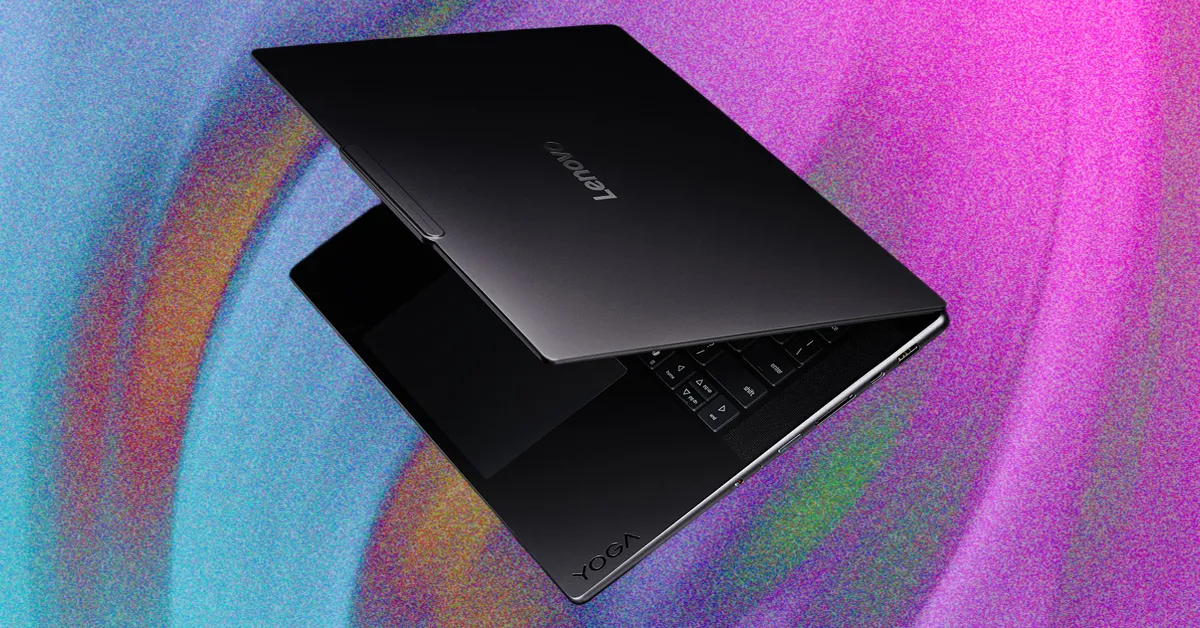
The most visible example was Lenovo’s Yoga 9n 2-in-1, a 16-inch convertible laptop that looks designed to compete directly with the MacBook Pro on build quality, screen technology, and overall polish. Alongside it, Nvidia’s ecosystem expanded into compact desktop systems from Acer and Asus, as well as additional laptop designs from other PC makers.
The broader significance is not just that these products exist, but that they are clearly aimed at a new use case: local AI workloads that require a lot of memory, strong integrated graphics, and enough efficiency to keep the machine thin and portable. That combination has been difficult to deliver in traditional Windows hardware.
Why these PCs are different from standard laptops
These systems are not being sold as ordinary productivity machines with a few AI features layered on top. They are being positioned as hardware that can run large models and agentic workflows on the device itself. That means the laptop or mini PC becomes the primary AI computer, not just a window into someone else’s cloud service.
For many users, that shift could be important for both privacy and practicality. Running AI locally can reduce reliance on network access, lower latency, and give users more control over sensitive data. It also opens the door to more persistent, autonomous workflows that can access local files, apps, calendars, and accounts without bouncing every request through external servers.
Industry focus around local AI is intensifying because the value proposition is no longer limited to novelty features. Vendors are now selling the idea that a personal computer can host serious, private AI agents on the same machine where the user works every day.
That is the market Nvidia appears to be targeting with RTX Spark. Instead of an incremental spec bump, the platform is meant to support a new class of PC behavior: models that live, think, and act directly on the device.
How the Lenovo Yoga 9n 2-in-1 is built
The Yoga 9n 2-in-1 is Lenovo’s showcase device for the RTX Spark generation, and the hardware tells you a lot about the audience it is meant to attract. It is a premium 16-inch convertible with a 360-degree hinge, an OLED touchscreen, and the kind of industrial design that aims squarely at high-end creative laptops.
Lenovo has packed in details that buyers in this tier tend to care about. The display resolution is 2880 x 1800, the panel refreshes at 120 Hz, and the chassis uses rounded metal edges with slim bezels. The machine also includes a six-speaker system and a 9.2-megapixel webcam, both of which suggest Lenovo is trying to make the device feel fully flagship rather than narrowly specialized.
At 0.69 inches thick, the laptop is notably slim for a 16-inch machine, and only slightly thicker than Apple’s 16-inch MacBook Pro. That thin profile is made possible by the new Arm-based Nvidia architecture, which integrates a Grace CPU and a Blackwell RTX GPU into a single system-on-chip rather than relying on a more conventional discrete laptop GPU setup.
Key specifications at a glance
The RTX Spark configuration used here combines a CPU with up to 20 cores and a GPU with up to 6,144 cores, putting the design in a performance class that could compete with high-end laptop graphics solutions currently on the market. Based on the core count alone, the integrated graphics capability may land somewhere between the mobile RTX 5070 Ti and RTX 5080, although actual performance will depend on thermal limits, software optimization, and the specific configuration sold.
One notable omission from the early details is battery-life data. Still, because the system uses an Arm-based SoC instead of a more traditional CPU-plus-discrete-GPU arrangement, it is reasonable to expect Nvidia and its partners to emphasize efficiency as one of the platform’s main advantages.
| Device | Type | Display / Form Factor | Memory Ceiling | Notable AI Hardware |
|---|---|---|---|---|
| Lenovo Yoga 9n 2-in-1 | Laptop | 16-inch OLED, 2880 x 1800, 120 Hz | Up to 64 GB | Nvidia RTX Spark SoC with Grace CPU and Blackwell RTX GPU |
| Lenovo Yoga Pro 9n | Laptop | 15-inch OLED, 2560 x 1600 | Up to 128 GB | RTX Spark platform, Force Pad touchpad |
| Acer SFF RTX Spark | Mini PC | Compact desktop, Mac mini-sized | Up to 128 GB | RTX Spark, “petaflop of AI performance” |
| Lenovo ThinkCentre X Ultra | Desktop | Small-form-factor PC | Up to 128 GB | AMD Ryzen Max+ Pro 495 |
What is Lenovo’s Yoga Pro 9n?
The Yoga Pro 9n is Lenovo’s second RTX Spark laptop and, in some ways, the more intriguing model for users who want high-end performance without the bulk of a 16-inch convertible. It uses a smaller 15-inch OLED panel with a 2560 x 1600 resolution and measures 0.66 inches at its thinnest point.
Lenovo did not display this model in person at IFA, but the company described it as sharing many of the 16-inch model’s premium features. That includes the rounded design language, a very large haptic touchpad, and the upgraded webcam. The Pro version also has one unusual trick: its Force Pad touchpad can be used with a stylus, such as the Yoga Pen Gen 2, to write or draw directly on the surface.
For AI-focused buyers, the more important distinction may be memory. While the Yoga 9n 2-in-1 tops out at 64 GB, the Yoga Pro 9n can be configured with up to 128 GB, making it a better fit for workloads that demand larger model sizes and more demanding local processing.
How local AI is changing PC design
Local AI is pushing the PC industry toward a different set of priorities than the one that shaped laptops over the last decade. Instead of focusing only on raw CPU speed or thinness, manufacturers now have to consider memory capacity, graphics acceleration, power efficiency, and the thermal envelope required to keep large models useful on the device.
That is especially true for agentic AI, which is increasingly marketed as a workflow tool rather than a chatbot novelty. An agent needs enough memory to keep state, enough compute to respond quickly, and enough onboard resources to handle multiple tasks without collapsing into the cloud at every turn.
For PCs, this means the system itself becomes part of the AI product. A machine with 32 GB of RAM and a midrange GPU may be fine for basic generative features, but a serious local agent platform appears to need much more headroom. That is why many of the new devices are being built with 128 GB configurations in mind.
Why memory is becoming the bottleneck
Memory, not just compute, is emerging as the key constraint in local AI systems. Large models, especially those running on the device, can consume enormous amounts of RAM, and that demand is increasing as users expect more complex behavior from their AI tools.
As a result, manufacturers are moving quickly to advertise high-memory builds, even if most buyers will not choose the most expensive option. The architecture may be new, but the economics are familiar: bigger RAM configurations drive pricing upward fast.
The new machines also suggest a broader industry convergence. Apple has already made the Mac mini and Mac Studio central to its own local-AI strategy, while Windows PC makers are now trying to create similar advantages in laptop and mini-desktop form factors. The result is a new competition not just over specs, but over how much AI a personal computer can realistically host.
What is happening in the mini PC market?
Mini desktops are becoming one of the most important categories for local AI because they deliver a rare combination of compact size, good thermals, and substantial memory capacity. Nvidia’s RTX Spark platform is entering that space alongside products from Acer and Asus, both of which are positioning small-form-factor systems as serious AI boxes rather than entry-level desktops.
The Acer SFF RTX Spark and Asus ProArt Mini PC are roughly Mac mini-sized, but they are being framed as much more capable AI machines than typical compact desktops. Nvidia’s pitch is that these systems can deliver around a petaflop of AI performance and support up to 128 GB of memory, enough to make them credible hosts for local agentic applications.
That timing is notable. The compact-PC push arrives shortly after Apple’s updates to the Mac mini and Mac Studio, which have helped normalize the idea that a small desktop can serve as a serious personal AI workstation. Nvidia, AMD, and their partners now appear eager to claim that same ground on the Windows side.
Where AMD fits in
Nvidia is not alone in chasing the local AI desktop market. Lenovo also showed an AMD-based ThinkCentre X Ultra, which pairs AMD’s Ryzen Max+ Pro 495 with support for up to 128 GB of memory. That makes it another serious candidate for users who want to run large models locally.
AMD has already become a familiar option for local AI enthusiasts, including in systems such as the Framework Desktop, and its developer kit can also be purchased today with 128 GB of RAM. Lenovo’s system is expected to start at $3,699, though that base price is before any fully loaded memory configuration is considered.
The fact that both Nvidia and AMD are being used to build AI-heavy compact systems underscores where the market is heading. These are no longer niche hobby machines. They are increasingly being treated as premium productivity hardware with specialist workloads in mind.
How expensive will RTX Spark PCs be?
They are unlikely to be cheap, and that may be the biggest immediate obstacle to mainstream adoption. Nvidia and its partners have not yet provided complete pricing for every system, but early indications suggest that high-memory AI PCs will occupy the expensive end of the market.
That follows a familiar pattern in the premium laptop and desktop world: the more unified memory a system offers, the more expensive it becomes. High-capacity RAM has become both more valuable and more costly, especially in machines that need to support on-device AI at a serious level.
To understand the likely pricing challenge, it helps to compare the current market:
- The least expensive MacBook Pro above Apple’s base model starts at $2,349 with an M5 Pro chip and 24 GB of memory.
- A 128 GB MacBook Pro can currently climb to $6,139.
- Lenovo’s ThinkCentre X Ultra is expected to start at $3,699 before top-tier memory upgrades.
That pricing context suggests that RTX Spark systems will probably be aimed first at professionals, developers, creators, and enthusiasts rather than mainstream shoppers. In other words, the initial audience is likely to be people with a specific need for local AI performance, not casual consumers looking for a slightly smarter laptop.
Why this launch matters for the PC industry
The appearance of working RTX Spark devices is important because it moves the conversation beyond speculation. A few months ago, Nvidia’s vision for AI-native PCs was still largely aspirational. Now, with actual hardware on display, the category looks much closer to a commercial product line than a concept.
That shift could influence nearly every major PC maker. If customers respond positively to local AI performance, high-memory systems may become an expected tier in premium Windows devices, just as high-refresh displays and OLED panels eventually became standard in high-end laptops.
It could also change software design. Once more PCs can run local agents effectively, developers may create apps that assume persistent on-device AI support rather than cloud-only access. That would be a meaningful change in how software is built, distributed, and used.
The challenge, as always, is whether buyers will see enough practical value to justify the price premium. AI hardware trends often move faster than real-world use cases. But this time, the proposition is less abstract: local systems can offer privacy, responsiveness, and independence from bandwidth constraints in ways cloud-first tools cannot always match.
What comes next for RTX Spark?
The next stage will be about shipping, benchmarking, and proving the platform in the real world. Announcements are one thing; battery life, software compatibility, thermals, and actual local model performance are another. Nvidia and its partners still need to show that these machines can deliver the promised experience without major tradeoffs.
There is also the question of how wide the product range will become. Lenovo’s lineup alone includes both the Yoga 9n 2-in-1 and the Yoga Pro 9n, but not every buyer needs a large convertible or a heavy creator machine. The market will likely need thinner, cheaper, and more diverse options before local AI laptops become common.
Still, the direction is clear. The PC industry is moving toward a future where AI capability is measured not just by a marketing badge, but by how much model power can be built into the machine itself. Nvidia’s RTX Spark is now one of the most concrete attempts yet to make that future real.
Timeline of the RTX Spark rollout
The pace of announcements shows how quickly AI hardware is moving from concept to product.
| Date | Event | Why it matters |
|---|---|---|
| Three months before IFA 2026 | Nvidia unveils RTX Spark and a first batch of planned laptops | Introduces the idea of an Arm-based AI PC platform built for local models |
| Summer 2026 | Asus shows an RTX Spark-based ProArt Mini PC | Signals that compact AI desktops are part of the strategy |
| IFA 2026 | Lenovo, Acer, and others show final or near-final hardware | Moves the platform from concept into hands-on reality |
| Fall 2026 | Expected launch window for multiple RTX Spark laptops and mini PCs | Determines whether buyers will embrace local AI hardware at premium prices |
The bottom line
Nvidia’s RTX Spark platform is not just another PC chip announcement. It is an attempt to create a new category of machine: a premium laptop or mini desktop that can run meaningful AI workloads locally, with enough memory and efficiency to support agentic software as a core feature rather than a gimmick.
The Lenovo Yoga 9n 2-in-1 offers the clearest preview so far, while the Yoga Pro 9n, Acer’s mini PC, Asus’ compact desktop, and AMD-based alternatives show that the entire industry is racing toward the same destination. The unanswered question is whether customers will pay the required premium to get there.
For now, what Nvidia has shown at IFA 2026 is enough to prove that AI PCs are no longer theoretical. They are arriving in metal, glass, OLED, and silicon — and they are being built for the era of local agents.
What are the main specifications of the RTX Spark platform?
The core platform pairs an Arm-based Grace CPU with a Blackwell RTX GPU in a single SoC. Nvidia says the CPU can include up to 20 cores and the GPU up to 6,144 cores, with some systems supporting as much as 128 GB of memory depending on the model and configuration.
Who are these machines for?
These systems are primarily aimed at creators, developers, AI enthusiasts, and professionals who want to run local AI models and agentic workflows on their own devices. The high memory ceilings and premium pricing also suggest that they are likely to appeal first to users with specialized workloads.
Will they replace cloud AI?
No, they are more likely to complement cloud AI than replace it. Local AI is best viewed as a way to handle privacy-sensitive, latency-sensitive, or repetitive tasks on-device while still using cloud services for heavier or more expansive workloads.
Frequently asked questions
What is Nvidia RTX Spark?
Nvidia RTX Spark is an Arm-based AI PC platform that combines a Grace CPU and a Blackwell RTX GPU into a single system-on-chip. It is designed to help laptops and mini desktops run AI models locally, with a focus on agentic workflows and high-memory configurations.
Which laptops use Nvidia RTX Spark first?
The first announced laptops include Lenovo’s Yoga 9n 2-in-1 and Yoga Pro 9n, with additional models from Dell, Asus, Microsoft, and HP also expected. Lenovo’s machines are positioned as premium devices for creators and AI users who want local model performance.
Why are AI PCs important now?
AI PCs are important now because more users want to run sensitive or complex AI tasks on their own devices instead of in the cloud. Local AI can improve privacy, reduce latency, and support persistent agent workflows that rely on large amounts of memory.
How much memory do RTX Spark PCs support?
Many RTX Spark systems are being announced with up to 128 GB of memory, although some models, such as Lenovo’s Yoga 9n 2-in-1, top out at 64 GB. That memory ceiling is a major reason these machines are being targeted at serious local AI workloads.
Will RTX Spark PCs be affordable?
RTX Spark PCs are unlikely to be cheap, at least at launch. High-memory configurations and premium hardware designs suggest prices will be closer to professional creator laptops and compact workstations than to mainstream consumer notebooks.