In short
Nvidia has agreed to acquire Hugging Face for nearly $13 billion, giving the chipmaker a major foothold in open-source AI software and developer tools. The move deepens Nvidia’s push beyond hardware and into the software layer of the AI ecosystem.
- Nvidia is buying Hugging Face for nearly $13 billion.
- The deal strengthens Nvidia’s push into open-source AI software and developer tools.
- Hugging Face has become a central platform for datasets, code, and open-weight models.
- Nvidia says it will keep Hugging Face’s open standards in place.
- The acquisition comes as the industry debates open models versus proprietary AI systems.
Nvidia has agreed to buy Hugging Face for nearly $13 billion, turning one of the most influential open-source AI hubs into part of the world’s dominant chipmaker as the race to build and distribute generative AI intensifies. The acquisition, announced Thursday morning after weeks of market speculation, gives Nvidia a deeper foothold in the software layer of AI development and signals a bigger bet on open-weights models as an alternative to closed systems from rivals such as OpenAI and Anthropic.
The deal matters because it is not just about one company buying another. It is a strategic move that could shape how developers access models, datasets, and tools in the next phase of the AI market, while also reinforcing Nvidia’s influence beyond GPUs and data-center hardware.
Hugging Face has become a central distribution point for open-source machine learning resources, from datasets and code to model checkpoints and developer tools. Nvidia, meanwhile, has spent the last several years trying to ensure that the software and infrastructure around AI remain tied to its ecosystem even as customers increasingly explore custom chips and alternative deployment stacks.
What Nvidia is buying
Nvidia is acquiring a company that has evolved from a startup idea into a key infrastructure layer for the AI community. Hugging Face is best known for hosting developer tools and a large public library of open datasets and models, but its role in the industry goes beyond storage or distribution. For many engineers, it has become the place to discover, test, and share the building blocks of modern AI systems.
The company was founded about a decade ago in New York by three French entrepreneurs who originally wanted to create an AI companion app. That product idea did not succeed, but the team pivoted toward natural language processing tools and developer software. Over time, Hugging Face grew into a platform that helped make advanced AI resources far more accessible to researchers and builders.
As generative AI took off, Hugging Face became even more important. Instead of only hosting code, it became a central marketplace and collaboration layer for large language models, open weights, and model-related tools. That helped it stand out at a time when the industry was increasingly split between proprietary API access and open, community-driven development.
Why the price tag is so large
The nearly $13 billion valuation reflects Hugging Face’s strategic importance rather than traditional software revenue alone. It sits at the intersection of developer adoption, model distribution, and the open-source movement that has accelerated AI experimentation across startups, universities, and enterprises.
PitchBook data showed that as of December 2025, Hugging Face had raised close to $400 million in venture capital. That funding base, along with its brand strength and community reach, helped turn it into one of the most recognizable names in the AI ecosystem.
| Key detail | Information |
|---|---|
| Acquirer | Nvidia |
| Target | Hugging Face |
| Deal value | Nearly $13 billion |
| Announcement | Thursday morning, Sept. 3, 2026 |
| Hugging Face funding raised | Nearly $400 million by December 2025 |
| Primary strategic focus | Open-source and open-weights AI infrastructure |
Why does Nvidia want Hugging Face?
Nvidia wants Hugging Face because the company gives it direct influence over the software ecosystem that developers use to build AI applications. That is especially valuable as competition over chips becomes more intense and as cloud providers, frontier labs, and large tech companies search for more control over their own AI stacks.
For years, Nvidia’s advantage came largely from selling the fastest and most essential chips for training and running AI models. But that hardware advantage is under pressure from companies designing their own accelerators and from hyperscalers that want more independence. By moving deeper into software and model access, Nvidia is making sure its platforms remain central even if the hardware landscape shifts.
The company already offers Nemotron, a family of free customizable open-weights models. Buying Hugging Face extends that strategy by giving Nvidia a huge developer-facing community and a trusted brand that has long been associated with openness, collaboration, and interoperability.
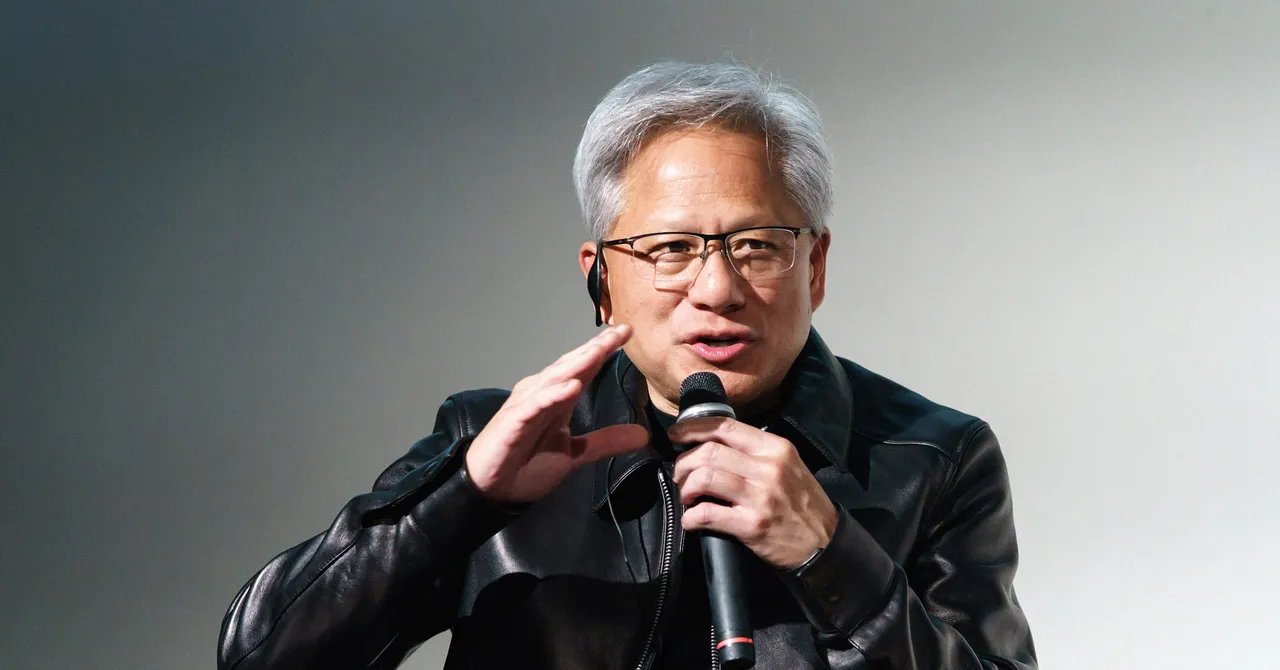
In announcing the acquisition, Nvidia chief executive Jensen Huang said open models allow startups, universities, businesses, and public institutions to build on advanced capabilities without having to train everything from scratch. He added that AI progresses more quickly when people can build together.
That message is not just about philosophy. It is also about market positioning. By aligning itself with open systems, Nvidia can present its platform as the default choice for developers who do not want to be locked into one company’s API or proprietary model stack.
How the acquisition fits Nvidia’s broader strategy
The deal fits a larger campaign by Nvidia to expand from a GPU company into a broader AI platform provider. CUDA remains central to its software moat, but the company has been widening its offerings to include CPUs, tools, and services designed to keep developers inside its ecosystem.
That push has become more urgent as some of Nvidia’s biggest customers look for alternatives. Amazon and Meta are among the large companies pursuing custom silicon, and frontier AI developers have shown increasing interest in vertically integrated infrastructure. Nvidia’s response has been to make its platform harder to leave by adding more layers of value.
Hugging Face adds a new layer: community trust. Developers who already use the platform for sharing datasets, models, and code may now find themselves interacting even more frequently with Nvidia-backed tooling, documentation, and deployment pathways.
Why open-source AI is now a battleground
Open-source AI has become a strategic issue because it is no longer a niche technical preference. It is a competitive model for how the AI industry may scale, who gets to innovate, and whether the next generation of tools will be controlled by a few dominant vendors or broadly accessible to the market.
Nvidia has recently made that argument more aggressively. Earlier this month, the company helped rally more than 80 organizations behind an open letter urging the U.S. government to defend open-weight AI models. The move positioned open models as an economic and innovation issue, not just a developer convenience.
At the same time, Nvidia launched SAFE, short for Shared AI Findings Exchange, an initiative designed to encourage companies to confidentially gather and analyze AI incidents and near misses, identify recurring safety failures, and publish evidence-based recommendations that reduce systemic risk.
That combination — support for open weights plus a safety collaboration framework — suggests Nvidia wants to lead both the technical and policy conversation around how AI should be built and governed.
Open weights versus closed models
Open-weights models let developers inspect and adapt model parameters, which can make them easier to customize, deploy, and integrate into private or regulated environments. Closed models, by contrast, are generally accessed through APIs and remain controlled by the vendor.
The distinction matters in sectors such as healthcare, education, government, and enterprise software, where institutions may want more control over data handling, latency, costs, and compliance. It also matters to startups, which often prefer open tooling because it reduces dependence on a single provider and can lower long-term development costs.
- Open weights: Easier to adapt and host independently
- Closed APIs: Faster to consume, but more vendor-controlled
- Developer benefit: More flexibility and lower barriers to experimentation
- Vendor benefit: Stronger platform lock-in for closed systems
Hugging Face has long sat on the open side of that divide, and Nvidia’s acquisition suggests the chipmaker sees strategic value in owning a company that helps define the open alternative.
How Hugging Face grew into a must-have AI platform
Hugging Face’s rise reflects the broader evolution of AI development over the last decade. What started as a consumer app concept eventually became a developer platform because the founders recognized a more durable opportunity: reducing the complexity of machine learning tools.
The company initially built tools around natural language processing, a field that later became one of the foundations of modern generative AI. As the ecosystem expanded, Hugging Face became a home for source code, datasets, and eventually model hosting. Its library approach made advanced AI resources easier to search, share, and reuse.
That ease of access helped it become a default destination for many AI practitioners. In practical terms, Hugging Face lowered the friction between research and deployment. Builders could discover a model, test it, adapt it, and move forward faster than they could with many proprietary systems.
Why developers trusted it
Developers trusted Hugging Face because it was built around openness rather than exclusivity. The company’s brand became tied to community collaboration, reproducibility, and access to shared building blocks. For AI teams, that made it both a technical resource and a signaling mechanism: using Hugging Face often meant aligning with an open, experimental workflow.
That reputation is part of what Nvidia is buying. Acquiring the company is not simply a way to add product features. It is a way to inherit a developer community that already views Hugging Face as an important neutral ground in an increasingly commercialized sector.
What does the deal mean for the AI market?
The deal could intensify competition around developer tools, model hosting, and the infrastructure layer beneath AI applications. If Nvidia can successfully integrate Hugging Face without undermining its independence in the eyes of the community, the combined entity may become even more influential than either company alone.
For startups, the acquisition could be a double-edged development. On one hand, Nvidia’s backing could bring more compute, more product support, and broader distribution for open tools. On the other hand, some developers may worry that a community platform tied to a dominant hardware vendor could become less neutral over time.
For established AI labs and cloud providers, the transaction is a reminder that control over the developer layer is becoming just as important as control over model quality or chip performance.
Hugging Face cofounder and chief executive Clément Delangue said in an X post that open-source AI is at a turning point and that wider adoption will require more compute, support, collaboration, and visibility.
That framing helps explain why the acquisition was attractive. Hugging Face has community momentum, but scaling open AI infrastructure requires expensive resources. Nvidia can provide those resources, especially in the form of compute and technical reach, while also benefiting from the reputational capital that Hugging Face has built.
How the timeline unfolded
The acquisition followed several weeks of speculation. Business Insider reported earlier that the companies were in talks, and The Information later said a deal had been reached. The formal announcement arrived Thursday morning, ending the market chatter and confirming one of the biggest AI transactions of the year.
| Timeline | Event |
|---|---|
| 2015 | Hugging Face is founded in New York by three French entrepreneurs |
| 2023 | Clément Delangue says the number of AI developers could reach 100 million within five years |
| December 2025 | PitchBook estimates Hugging Face has raised nearly $400 million |
| Early September 2026 | Nvidia publicly pushes open-weight AI policy and launches SAFE |
| Thursday, Sept. 3, 2026 | Nvidia announces the acquisition of Hugging Face |
Who benefits most from the acquisition?
The biggest immediate winner may be Nvidia, because it gains a stronger presence in the software and developer ecosystem that surrounds AI. But Hugging Face could also benefit if Nvidia provides the compute, capital, and operational support needed to expand its open-source mission.
Startups and smaller research teams may benefit too, if the acquisition results in better access to models, infrastructure, and tooling. Universities and public institutions could also gain from a better-funded open platform, especially if the company preserves its current standards as Nvidia has promised.
Still, the real test will be whether the platform remains trusted as an open space. Community-driven systems depend on credibility, and users will be watching closely for any changes to governance, access, or product direction.
Potential risks to watch
Several risks could shape how the deal is received over time:
- Developers could worry about reduced neutrality in a platform now owned by a hardware giant.
- Nvidia may face tension between commercial priorities and open community expectations.
- Competitors may accelerate their own open-source efforts to counter the deal.
- Regulators could take a closer look at concentration in the AI stack, especially if more acquisitions follow.
Those concerns do not necessarily diminish the strategic logic of the acquisition. They simply highlight how much of the AI economy now depends on trust, interoperability, and access to shared infrastructure.
What comes next for Nvidia and Hugging Face?
In the near term, the key question is integration. Nvidia says it will maintain Hugging Face’s current open standards, a pledge designed to reassure users that the platform will not abruptly lose its identity. How that commitment plays out in product decisions, governance, and roadmap planning will determine whether the deal strengthens or weakens the platform’s role in the developer community.
Longer term, the acquisition may become a template for how AI infrastructure companies seek influence beyond hardware. Rather than selling only compute, Nvidia is trying to shape the entire environment in which models are built, shared, and deployed.
That makes the deal much more than another large tech acquisition. It is a wager that the next era of AI will be defined not only by the best models or the fastest chips, but by the platforms that let the largest number of builders participate.
If that bet pays off, Nvidia could become even more central to the AI ecosystem than it already is. If it fails, it may discover that community trust is harder to acquire than any startup.
Frequently asked questions
Why is Nvidia buying Hugging Face?
Nvidia is buying Hugging Face to deepen its role in the AI software stack, not just the chip business. The deal gives Nvidia a major developer platform, stronger distribution for open-weight models, and a larger influence over how builders access and share AI tools.
How much is Nvidia paying for Hugging Face?
Nvidia is paying nearly $13 billion for Hugging Face. The transaction ranks among the biggest AI-related acquisitions and reflects the strategic value of Hugging Face’s developer community, model library, and open-source position.
What does Hugging Face do?
Hugging Face runs online developer tools and hosts a large library of open-source datasets, code, and AI models. It has become a key platform for researchers, startups, and enterprises that want to build with accessible machine learning resources.
Will Hugging Face stay open source after the acquisition?
Nvidia says it will maintain Hugging Face’s current open standards, which suggests the company intends to preserve the platform’s open character. Whether that remains true in practice will depend on future product decisions, governance, and community trust.
How does this deal affect the AI industry?
The acquisition could strengthen open-source AI by giving it more compute and corporate backing, but it also concentrates more power in Nvidia’s hands. It may push competitors to respond with their own open tooling, while highlighting the growing importance of developer platforms in AI.