In short
Nvidia is reportedly close to acquiring Hugging Face for $12.9 billion, a deal that would unite a leading AI chipmaker with a major open-source model platform. The move could strengthen Nvidia’s grip on the AI stack while changing the competitive balance between open and closed AI ecosystems.
- The reported deal value is $12.9 billion, far above Hugging Face’s last known $4.5 billion valuation.
- Nvidia could use Hugging Face to strengthen its position in open-source AI and cloud computing.
- Hugging Face brings a major developer platform and growing revenue, but still at a scale that makes the price look rich.
- The acquisition comes as big AI labs build custom chips to reduce dependence on Nvidia hardware.
Nvidia has reportedly agreed to buy Hugging Face for $12.9 billion, a move that would fuse the world’s most influential AI chipmaker with one of the best-known hubs for open-source models. If completed, the acquisition would give Nvidia a powerful position in the rapidly shifting battle over where AI models are built, distributed and run.
The reported transaction, first detailed by The Information and following earlier reporting from Business Insider that takeover discussions were underway, has not yet been publicly confirmed by either company. But even before any signing is announced, the logic of the deal is clear: Nvidia appears to be trying to reinforce its hardware dominance at a moment when major AI players are pushing to reduce dependence on its chips, while Hugging Face would gain the capital and infrastructure of a much larger parent.
For the AI industry, the deal would be more than a simple corporate marriage. It would link the company that makes the high-end accelerators powering modern AI with the platform that many developers use to discover, share and deploy open models. That combination could alter how open-source AI is distributed, how cloud capacity is sold, and how competitive pressure builds against closed model providers such as OpenAI and Anthropic.
What the reported Nvidia-Hugging Face deal would change
At its core, the deal would bring together hardware, software distribution and model hosting under one umbrella. Hugging Face has spent years building a developer-friendly ecosystem around open-source machine learning models, datasets and inference tools. Nvidia, meanwhile, has become the dominant supplier of chips used to train and serve advanced AI systems.
That pairing matters because the AI stack is becoming increasingly vertical. Large labs are designing custom silicon. Cloud providers are packaging models with compute. And developers are looking for cheaper, more flexible alternatives to proprietary systems. A combined Nvidia-Hugging Face could sit at the center of that transition.
Why Nvidia wants Hugging Face
Nvidia’s motivation appears to be strategic rather than merely financial. The company’s position in AI hardware is strong, but its customers are also its biggest long-term risk. The largest closed-model companies and cloud platforms are building their own chips to lower their reliance on Nvidia. That trend threatens the company’s leverage over the AI supply chain.
Buying Hugging Face could help Nvidia keep more of the ecosystem tied to its hardware. Open-source models often run on Nvidia systems, and a thriving developer base around open models can keep customers dependent on Nvidia GPUs even when they are not using proprietary frontier models from the biggest labs.
It also gives Nvidia a way to deepen its influence over the software layer that increasingly determines where compute spending flows. By owning the platform where developers browse and deploy models, Nvidia would gain visibility into demand patterns that are valuable far beyond the resale value of the company itself.
How the acquisition could help Nvidia in cloud computing
The reported deal could also reopen a path for Nvidia in cloud services. Nvidia’s own cloud effort, DGX Cloud, was reportedly scaled back about a year ago. Hugging Face, by contrast, already helps users run models on rented infrastructure across multiple providers.
If Nvidia were to own Hugging Face, it could re-enter parts of the cloud market indirectly, using Hugging Face’s existing developer traffic and model-serving workflows rather than building a new standalone cloud business from scratch. That would give Nvidia another channel to monetize AI demand beyond chip sales.
There is also a practical capacity-management angle. Nvidia has made extensive commitments to support compute deals for customers. If some of that reserved capacity goes unused, owning a platform like Hugging Face could provide an internal market for that excess compute. In other words, Nvidia would have a built-in customer base for capacity it might otherwise have to carry or reallocate.
Why Hugging Face matters in the open-source AI race
Hugging Face is one of the most important names in open-source AI because it acts as a distribution layer for the entire ecosystem. Founded in 2016, it has become the place many developers go to download models, publish their own work and build applications around open systems. That role has made it a critical counterweight to the closed ecosystems promoted by the biggest commercial AI labs.
Open-source AI has gained momentum as developers, startups and some governments seek lower-cost, more transparent alternatives to proprietary models. The debate has become more intense as some open-weight systems, including advanced Chinese models, have shown competitive benchmark performance while being cheaper to operate.
That dynamic has given Hugging Face unusual geopolitical significance. The company sits at the intersection of developer freedom, national-security concerns and industrial policy, especially as U.S. officials have reportedly explored tighter controls on open-weight model releases.
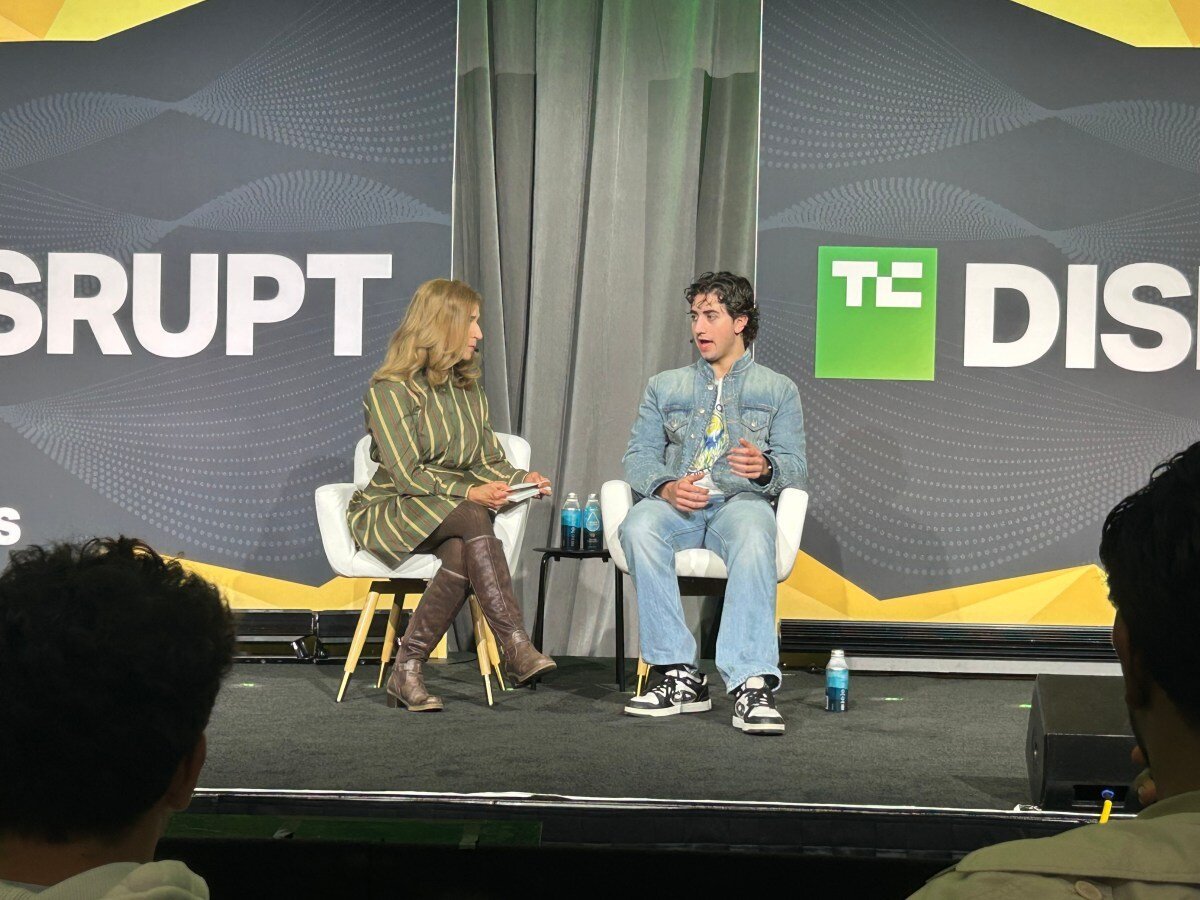
Clem Delangue, Hugging Face’s chief executive, has recently argued publicly that open models deserve stronger support and that the U.S. should not handicap them with broad restrictions. He has also pointed to the rising capabilities of Chinese open-source systems as evidence that the U.S. should move carefully.
How Hugging Face aligned itself with Nvidia
The reported sale would not come as a total surprise to observers who have watched the two companies draw closer. Hugging Face’s CEO has appeared increasingly aligned with Nvidia’s position in public remarks this year, especially around the argument that open models should remain available and competitive.
In recent appearances, Delangue described how Hugging Face used an Nvidia-modified version of an open-source Chinese model to help defend against a cyberattack. He also referenced a letter signed by Nvidia CEO Jensen Huang and two dozen other companies, including Hugging Face, urging the U.S. government to support open models rather than restricting them.
That alignment suggested more than a casual partnership. It showed that the two companies already shared a common message about the strategic importance of open systems. A sale would formalize that relationship and place the platform under the ownership of one of its most prominent backers.
What do the numbers say about the deal?
The reported valuation is striking when measured against Hugging Face’s recent fundraising and revenue profile. The company’s last publicly known financing came in 2023, when it raised $235 million at a $4.5 billion valuation. Nvidia was among the backers in that round, alongside investors such as Salesforce Ventures, GV and IBM Ventures.
By contrast, the reported acquisition price of $12.9 billion would represent a dramatic step up. It would also come at a time when Hugging Face’s revenue is growing rapidly but still sits far below that headline valuation. The company was recently said to be generating about $150 million in annual revenue, up from roughly $100 million only a couple of months earlier.
That revenue growth matters because it shows the business is scaling, but it also underscores how expensive the deal would be. Even with momentum and a path toward profitability, a purchase price near $13 billion would be a hefty multiple for a company of Hugging Face’s size.
| Item | Reported figure | Context |
|---|---|---|
| Acquisition price | $12.9 billion | Reported deal value cited by The Information |
| Last funding valuation | $4.5 billion | 2023 round backed by multiple strategic investors |
| Recent annual revenue | About $150 million | Up from roughly $100 million a few months earlier |
| Rejected investment offer | $500 million | Nvidia reportedly proposed this late last year |
| Earlier implied valuation | $7 billion | Associated with the rejected investment proposal |
Why this deal would matter for open-source AI
The larger significance of the transaction is that it would mark a major moment in the competition between open and closed AI models. Open-source developers have been trying to narrow the gap with proprietary systems from companies like OpenAI, Anthropic and Google. Hugging Face has been central to that effort because it helps developers discover, test and distribute alternatives that can be run on cheaper infrastructure.
Owning Hugging Face would give Nvidia a stake in that movement, potentially strengthening the company’s role as the default hardware provider for an open-model ecosystem. That may sound contradictory, but it fits Nvidia’s broader business logic: if more AI workloads remain on its chips, it retains market power even if the models themselves become more open.
In that sense, the reported deal can be read as a defensive move. As closed labs work to reduce Nvidia dependence by developing custom silicon, Nvidia may be seeking to anchor the other side of the market more firmly to its own stack.
How Washington factors into the story
Policy concerns appear to be part of the backdrop. Open-weight models have sparked debate in Washington because of their speed, accessibility and potential misuse. Critics worry that powerful models can be copied, adapted or deployed in ways that are harder to monitor. Supporters argue that restricting them would only slow U.S. innovation while ceding ground to foreign competitors.
The reported Nvidia-Hugging Face deal lands directly in that debate. If one of the leading open-model platforms comes under the control of a major U.S. hardware company, it may reassure policymakers who want domestic champions supporting open AI. At the same time, concentration of influence across chips, model hosting and developer tooling could invite new scrutiny.
Delangue has recently warned that China is advancing quickly in open-source AI and used public forums to argue that the U.S. should encourage, not constrain, open systems. His message has aligned closely with Nvidia’s own lobbying posture on the issue.
How the deal compares with Nvidia’s earlier approach
The reported acquisition would be the culmination of a relationship that has already included investment. Nvidia reportedly made a $500 million investment offer to Hugging Face late last year, a proposal that would have implied a $7 billion valuation. Hugging Face declined, citing concern about having a dominant backer that could influence its direction.
That earlier rejection helps explain why an outright sale could be more appealing now. A controlling acquisition is different from taking on a powerful minority investor. In a buyout, existing owners receive liquidity and the company gains access to deeper resources, even if it means ceding independence.
For Hugging Face, that tradeoff may be easier to justify if the strategic environment has changed. The company has grown, the AI infrastructure market has become more competitive, and valuations in the sector have continued to rise. A bid near $13 billion could be hard for shareholders to dismiss, especially given the company’s still-modest revenue base.
What the broader AI market signals
The reported acquisition also reflects a larger trend: infrastructure companies are racing to own more of the AI stack. Rather than selling one product line or one service, the most powerful firms are trying to control the pathways through which developers choose models, acquire compute and deploy applications.
That trend has already been visible in other recent dealmaking. When large infrastructure players buy the tools that route traffic or manage model selection, they are not just buying revenue; they are buying position. Nvidia’s reported interest in Hugging Face fits that pattern neatly.
It also suggests that the AI market is entering a new phase in which distribution platforms are as strategically important as the models themselves. The real power may lie not only in creating the most capable system, but in controlling the ecosystem that decides which systems get used, where and at what cost.
Open-source momentum is becoming a business asset
Open-source AI used to be framed mostly as a community ethos. Today, it is increasingly a commercial asset. Companies that host, curate or standardize model usage can sit at critical junctions in the value chain. That makes them attractive targets for larger firms looking for market leverage.
Hugging Face is particularly valuable because it already has the trust of developers. That trust is difficult to manufacture. For Nvidia, acquiring that relationship would be a shortcut to influence in a segment that is likely to grow more important as more enterprises experiment with model choice across multiple providers.
What happens next?
At the moment, the key question is whether the reported deal becomes official. Neither Nvidia nor Hugging Face has commented publicly on the latest reports, and both companies have remained quiet despite earlier outreach. Until there is a signed agreement and formal disclosure, the transaction remains a report rather than a completed fact.
Even so, the strategic rationale is strong enough that markets and developers will likely keep watching closely. A finalized deal would reshape expectations around open-source AI, cloud capacity and chip market power. It would also send a message that the biggest infrastructure companies now see the open-model ecosystem not as a side project, but as the next major front in the AI race.
If the transaction closes, Nvidia would gain far more than a popular startup. It would acquire a central gateway into the open-source AI world at a time when control over that world may matter as much as control over the chips that power it.
- Reported deal value: $12.9 billion.
- Hugging Face is a major open-source AI model hub founded in 2016.
- Nvidia would gain influence over the open-model ecosystem and a possible re-entry into cloud services.
- The deal comes amid growing competition from closed labs and their custom chip efforts.
Timeline of key events
| Date | Event |
|---|---|
| 2016 | Hugging Face is founded and begins building its model-sharing platform. |
| 2023 | Hugging Face raises $235 million at a $4.5 billion valuation. |
| Late 2025 | Nvidia reportedly offers a $500 million investment at a $7 billion valuation. |
| Mid-2026 | Hugging Face leaders publicly emphasize open models and U.S. support for them. |
| Aug. 2026 | Reports emerge that Nvidia has agreed to acquire Hugging Face for $12.9 billion. |
For now, the reported acquisition remains the story to watch in AI infrastructure. If confirmed, it would be one of the clearest signs yet that the open-source side of the industry has become too strategically important to stay independent for long.
As the competitive line between chips, clouds and model platforms continues to blur, this reported deal suggests the next AI power struggle may be decided less by software alone than by who owns the ecosystem around it.
Frequently asked questions
Has Nvidia officially bought Hugging Face?
No, not yet. The transaction has been reported by The Information and earlier discussed by Business Insider, but neither company has publicly confirmed a signed agreement as of the latest reports.
Why would Nvidia want Hugging Face?
Nvidia would want Hugging Face to gain a stronger foothold in open-source AI, preserve demand for its chips, and possibly regain a route into cloud services and model hosting without building a new platform from scratch.
How much is Hugging Face reportedly worth in the deal?
Hugging Face is reportedly being valued at $12.9 billion in the acquisition talks. That is well above its $4.5 billion valuation from its 2023 funding round and far above its recent revenue base.
What does this mean for open-source AI?
It could give open-source AI a major corporate champion inside one of the industry’s most powerful hardware companies. At the same time, it would also concentrate more control over the ecosystem inside Nvidia’s broader AI stack.
Did Nvidia try to invest in Hugging Face before?
Yes. Nvidia reportedly offered $500 million in late 2025 in a deal that would have valued Hugging Face at $7 billion. Hugging Face declined, saying it did not want a dominant investor that could influence its decisions.