In short
Inertia Enterprises says it has reduced the time needed to make fusion fuel pellets from days to a few hours. The improvement could lower tritium costs, simplify manufacturing and move the company closer to a commercial power plant.
- Inertia says it cut fusion fuel pellet production from days to about 2-3 hours.
- The startup worked with Lawrence Livermore National Lab on the process.
- Faster production reduces how much costly tritium the company must store.
- The company plans a plant that would use about 10 pellets per second.
- Inertia says the advance removes one of the major barriers to commercialization.
Inertia Enterprises says it has sharply accelerated one of fusion energy’s hardest manufacturing problems, cutting the time needed to produce its fuel pellets from days to just a few hours. The advance matters because the startup is trying to turn a laboratory fusion concept into a commercial power plant, and fuel production has been one of the biggest bottlenecks.
The company, which has raised $450 million to commercialize technology rooted in work at Lawrence Livermore National Laboratory’s National Ignition Facility, says the new manufacturing process brings it closer to a system that can produce power at industrial scale. The change also reduces how much expensive radioactive tritium the company must keep on hand, lowering cost and complexity.
Inertia gave TechCrunch an exclusive look at the process, which reflects a broader challenge facing the fusion industry: moving from one-off scientific experiments to repeatable, factory-style production.
Why fuel pellet manufacturing matters
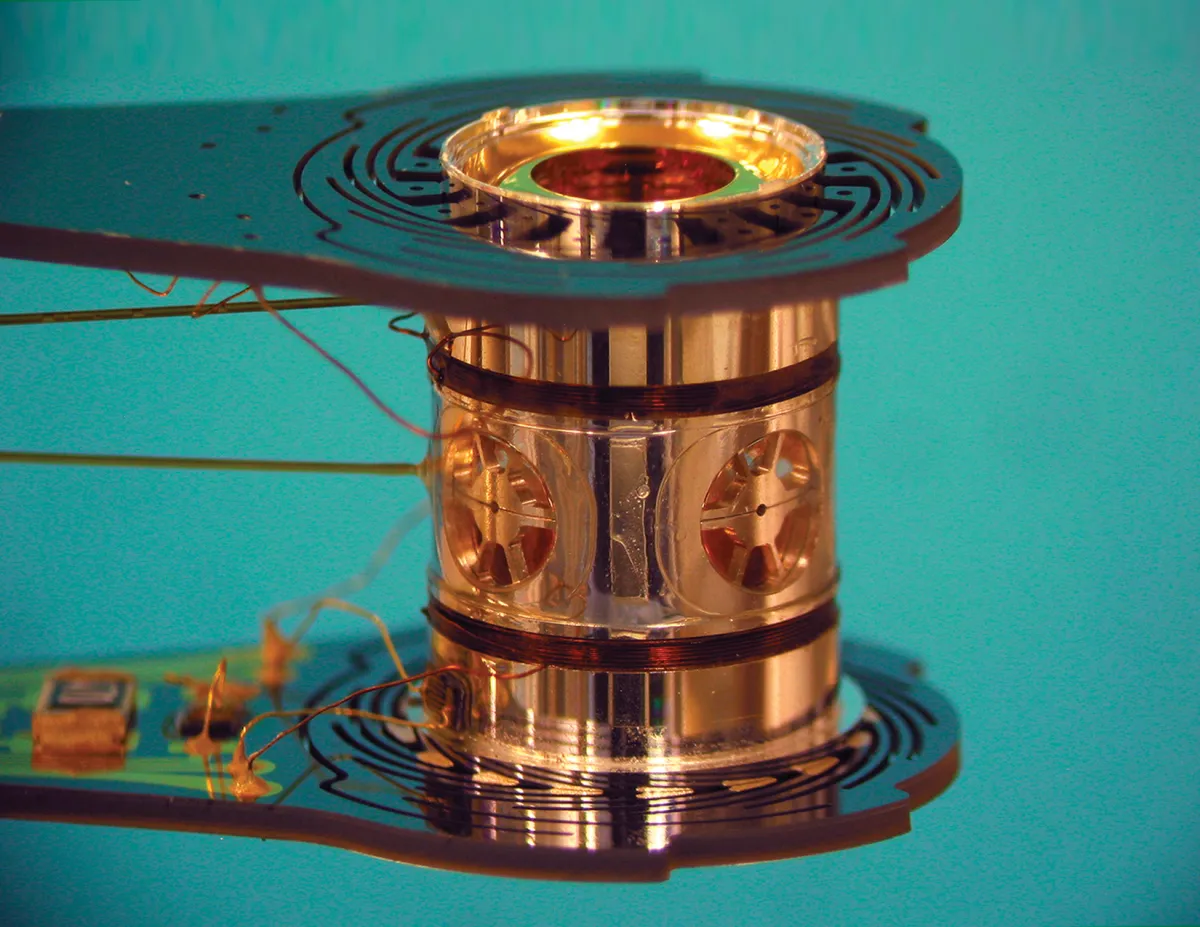
Fusion reactors depend on tiny fuel capsules that have to be made with extreme precision. Inertia’s pellets use a diamond shell and layers of deuterium and tritium, the hydrogen isotopes that can fuel fusion. Those layers must be shaped with near-perfect symmetry, because even small flaws can interfere with the compression needed to trigger ignition.
At the National Ignition Facility, the process is painstaking, expensive, and slow. Producing a pellet can take a week or more, and the facility only makes a small number of them each year. That is acceptable for research, but it is far too slow for a commercial plant that eventually must feed reactions continuously.
Jeff Lawson, Inertia’s co-founder and chief executive, said the company looked at the NIF process and judged it like a product engineer would rather than a scientist. In his view, the technology was still at the prototype stage, not yet a manufacturing process.
Lawson said the company’s approach was to treat the NIF design as a proof of concept and then redesign it for mass production, drawing on industrial talent from companies such as Apple.
How did Inertia speed up the process?
Inertia says it reworked the pellet-making workflow so that a single fuel pellet can now be completed in roughly two to three hours. The biggest change came in crystal growth, which the company says it reduced to about 30 minutes, compared with as long as a week in the NIF environment.
The company did not abandon the physics behind the NIF design. Instead, it tried to preserve the scientific principles while simplifying the manufacturing steps enough to make the process commercially practical.
According to Lawson, the key question was not whether the fuel capsule could be made faster in theory, but whether it could be made faster without compromising the plant’s ability to function as intended.
Lawson framed the work as a practical engineering exercise: speed up the manufacturing step, keep the physics intact, and make the system economical enough to build at scale.
What role did the National Ignition Facility play?
The National Ignition Facility provided both the scientific foundation and the development partnership behind Inertia’s work. Annie Kritcher, Inertia’s co-founder and chief scientist, designed the first fusion experiment at NIF that produced more energy than it consumed.
Inertia worked with NIF at Lawrence Livermore through a public-private partnership to develop the new manufacturing method. That arrangement helped the startup translate a national lab breakthrough into something that could, in theory, be produced repeatedly in a commercial setting.
That transition is important because the NIF was never designed as a factory. It is a sophisticated research instrument, and its fuel manufacturing process reflects that reality. Inertia’s challenge was to preserve the capsule’s precision while removing the hand-crafted nature of the workflow.
Why does a more powerful laser change the equation?
Inertia says its system can tolerate more imperfections because it plans to use a laser about four times more powerful than the one currently operating at NIF. That larger energy margin gives the company more flexibility in the fuel pellet design and manufacturing process.
In practice, the extra headroom means the capsules do not have to meet the same ultra-stringent tolerances required in the lab setup. That reduces the time and cost of manufacturing and makes a faster production line more feasible.
Lawson said the company’s strategy is to oversize the laser driver so that other parts of the system have room to vary without undermining performance.
He described the approach as building “margin” into the driver so the rest of the plant can be engineered with more flexibility and less manufacturing friction.
What does faster fuel production mean for tritium?
Faster manufacturing also reduces the amount of tritium Inertia has to store at any given time. That matters because tritium is radioactive, tightly controlled, and extremely expensive. The isotope currently costs about $30,000 per gram, and only around 25 kilograms are believed to exist in global stockpiles, according to Science.
Fusion companies generally plan to breed their own tritium from the reactions they produce, but they still need an initial inventory to start operations. By making pellets faster, Inertia says it can keep that starting inventory smaller, which lowers both safety burden and capital costs.
The tritium issue is one of fusion’s quietest but most important constraints. Even if a reactor can physically work, it still has to be fueled in a way that is safe, affordable, and scalable. For a startup trying to build a first commercial plant, inventory management can be as important as plasma performance.
How much fuel would a commercial plant need?
Inertia expects a full-scale power plant to use around ten fuel pellets every second. At that rate, any delay in pellet production would quickly become a major operational problem.
The company says shaving latency off the manufacturing process shrinks the facility’s overall footprint and improves efficiency across the plant. In other words, the speedup is not just a convenience for the factory; it is central to whether the full system can be built at all.
That is why the pellet breakthrough is being framed as one of the startup’s first major milestones on the path to commercialization. A fusion plant does not just need to ignite. It needs a reliable supply chain for the tiny capsules that feed it.
What Inertia still has to solve
Fuel pellet manufacturing may be only one part of the puzzle, but it is a crucial one. Inertia says it has ten barriers to clear before it can deliver the first phase of its commercial plant ambitions, and this advance appears to remove one of them.
Those remaining hurdles likely include reactor engineering, laser performance, tritium handling, repetition rate, heat management, plant integration, and long-term economics. The company has not said publicly that those issues are solved, only that the fuel process is now much closer to the cadence a power plant would need.
The broader significance is that fusion has long been criticized for treating scientific success as if it were synonymous with commercial readiness. Inertia’s work suggests the company understands that the industrialization problem may be as difficult as the ignition problem itself.
Why investors are paying attention
Investors put $450 million into Inertia on the assumption that it could turn a major scientific breakthrough into a real business. That is a high-stakes bet, especially in a field where some companies remain years or even decades from proving durable power generation.
What makes Inertia unusual is its emphasis on manufacturing discipline. Rather than assuming a lab process can simply be scaled by brute force, it is trying to redesign the supply chain for the reactor from the ground up.
That philosophy has become increasingly important across fusion startups, many of which are learning that plant economics can hinge on components as small as a pellet. A technology that works only with artisanal, slow-batch production is not yet a power industry technology.
Fusion’s manufacturing problem in context
Fusion energy has historically been judged on its physics: can you ignite fuel, sustain reaction, and extract more energy than you put in? But commercialization introduces an entirely different test. Can you produce thousands, millions, or billions of identical components reliably and affordably?
The answer often determines whether a system can ever move beyond the pilot stage. Inertia’s latest claim speaks directly to that challenge, because it addresses a step that must be repeated constantly in a functioning reactor.
There are three big reasons this matters:
-
Throughput: a commercial plant needs a continuous supply of pellets, not lab-scale batches.
-
Cost: slower production raises labor, equipment, and material expenses.
-
Inventory: more time in process means more tritium held in storage and more capital tied up.
That combination makes manufacturing speed a strategic issue, not just a technical one.
Key facts at a glance
| Item | Details |
|---|---|
| Company | Inertia Enterprises |
| Funding disclosed | $450 million |
| Pellet production time | About 2 to 3 hours |
| Crystal growth time | Roughly 30 minutes |
| Old NIF-style timeline | Several days to more than a week |
| Expected pellet use in full plant | 10 pellets per second |
| Tritium price cited | About $30,000 per gram |
| Global tritium stockpile cited | About 25 kilograms |
Timeline of the development
| Stage | What happened |
|---|---|
| NIF research era | Scientists refine ignition physics and produce highly precise fuel pellets in a slow, hands-on process. |
| Breakthrough experiment | Annie Kritcher leads the first NIF fusion experiment to produce more power than it consumes. |
| Inertia partnership | The startup works with Lawrence Livermore National Laboratory on a public-private development effort. |
| Manufacturing redesign | Inertia shortens pellet production from days to hours and crystal growth to about 30 minutes. |
| Commercial target | The company says the process can be scaled toward a power plant using ten pellets per second. |
What this means for the fusion race
Inertia’s claim will likely draw attention well beyond its own investor base, because the industry is increasingly judged by execution rather than ambition. Several fusion companies have announced impressive physics milestones, but fewer have shown a credible path to industrial manufacturing.
If the startup can sustain this pace and prove the pellets work in an integrated system, it would strengthen the case that fusion can be engineered as a product, not merely demonstrated as a scientific event. That is the difference between a headline and a business.
The company still has a long road ahead. But in fusion, where the gap between laboratory proof and commercial reality is often the widest part of the story, cutting a critical production step from days to minutes is a meaningful signal.
For now, Inertia is arguing that the future of fusion may depend as much on factory design as on plasma physics. That may turn out to be one of the sector’s defining lessons.
Frequently asked questions
What did Inertia Enterprises announce about fusion fuel?
Inertia Enterprises said it has reduced the time required to make its fusion fuel pellets from several days to roughly two to three hours. The company says the change is an important step toward building a commercial fusion power plant.
Why is faster fusion fuel production important?
Faster fusion fuel production matters because a commercial reactor would need pellets continuously and at industrial scale. Shorter production times can lower costs, reduce tritium inventory, and make the overall plant smaller and more practical to operate.
How did Inertia speed up the pellet-making process?
Inertia says it redesigned the manufacturing workflow while preserving the physics developed at the National Ignition Facility. The company says crystal growth now takes about 30 minutes, helping bring total pellet production down to a few hours.
How much tritium does the process save?
The faster process should reduce how much tritium Inertia has to store at once. That is important because tritium is radioactive, difficult to handle, and costly, with a cited market price of about $30,000 per gram.
Who worked with Inertia on the technology?
Inertia developed the process with help from the National Ignition Facility at Lawrence Livermore National Laboratory. The company also says co-founder and chief scientist Annie Kritcher helped design the first NIF experiment to produce more power than it consumed.