In short
Melius, founded by former Ramp engineers, has raised $25 million to scale an AI ad platform after scrapping its original product and rebuilding around campaign, image and video generation. The company says it reached more than $1 million in annualized revenue shortly after coming out of stealth.
- Melius raised $25 million in total funding, led by CRV and General Catalyst.
- The startup abandoned its first AI performance marketing product and rebuilt around creative generation.
- Melius says it crossed $1 million in annualized revenue within two months of stealth.
- The company enters a crowded market that includes Higgsfield, Krea and Flora AI.
- Its pitch focuses on using plain language to generate ad campaigns, images and videos.
Melius, a New York startup founded by former Ramp engineers, has raised $25 million to build an AI platform for creating ad campaigns, images and videos after abandoning its first product and rebuilding from scratch. The company says it has already passed $1 million in annualized revenue within two months of emerging from stealth, making it one of the more closely watched entrants in the fast-growing AI creative tools market.
The financing combines a $20 million Series A led by CRV with a $5 million seed round led by General Catalyst. It also marks a rare second-act story: Melius originally tried to build an AI system for performance marketing, but after months of work, the founders decided the concept was too limited and erased the codebase to start over.
That pivot now places the company in a crowded but expanding field of startups using generative AI to speed up creative production for marketers, agencies and brands. Melius is betting that the bigger opportunity is not optimizing ad spend, but generating the actual creative assets and campaigns that drive it.
What Melius is building
Melius describes its product as an “agents lab for creative work,” a platform designed to help users generate campaign concepts, images, video assets and copy from plain-language prompts. The pitch is straightforward: instead of jumping between tools to brainstorm, draft, edit and design, marketers can use one AI system to assemble the raw material of a campaign more quickly.
The startup says the platform is aimed not only at individual marketers and small teams, but also at experienced creative professionals who want to accelerate production without giving up control over the final output. In practical terms, that puts Melius at the intersection of advertising technology, generative AI and workflow automation.
How the product changed from version one to version two
The company’s first idea was much narrower. When Melius launched more than a year ago, its founders were building an AI-powered tool focused on performance marketing, with an emphasis on helping users manage and optimize advertising spend. After roughly six months of development, the team concluded the product did not have enough potential to justify continuing down that path.
Rather than iterate around the edges, the founders made a blunt decision: they scrapped the original code and restarted the company’s product effort around the more ambitious goal of content generation. The rebuild took the startup nearly another year before it publicly unveiled the platform now under the Melius name.
Co-founder Joowon Kim said the team eventually concluded the original product “didn’t have legs,” and that the company chose to throw away the entire codebase and rebuild around a different problem.
That kind of reset is risky, especially in a competitive AI market where timing matters and capital can vanish quickly. But in Melius’s case, the founders appear to believe the pivot gave them a better shot at a much larger customer base.
Why did the founders pivot away from ad optimization?
The founders pivoted because they saw that the bigger value in advertising AI was not just measurement and optimization, but the generation of the creative work itself. According to co-founder Joowon Kim, the company realized there was a broader opportunity in helping users produce campaigns rather than merely decide how to distribute them.
That shift reflects a larger trend in marketing technology. As generative models improve at image, video and text generation, startups are increasingly targeting the earliest and most labor-intensive stages of campaign production. The logic is that if AI can speed up the creation process, it can shorten launch cycles, reduce dependence on multiple vendors and lower the cost of experimentation.
For brands, that can mean producing more variations for testing. For agencies, it can mean turning concepts into deliverables faster. For smaller businesses, it can mean access to creative output that would otherwise require a larger in-house team or outside agency budget.
From Ramp to startup founders
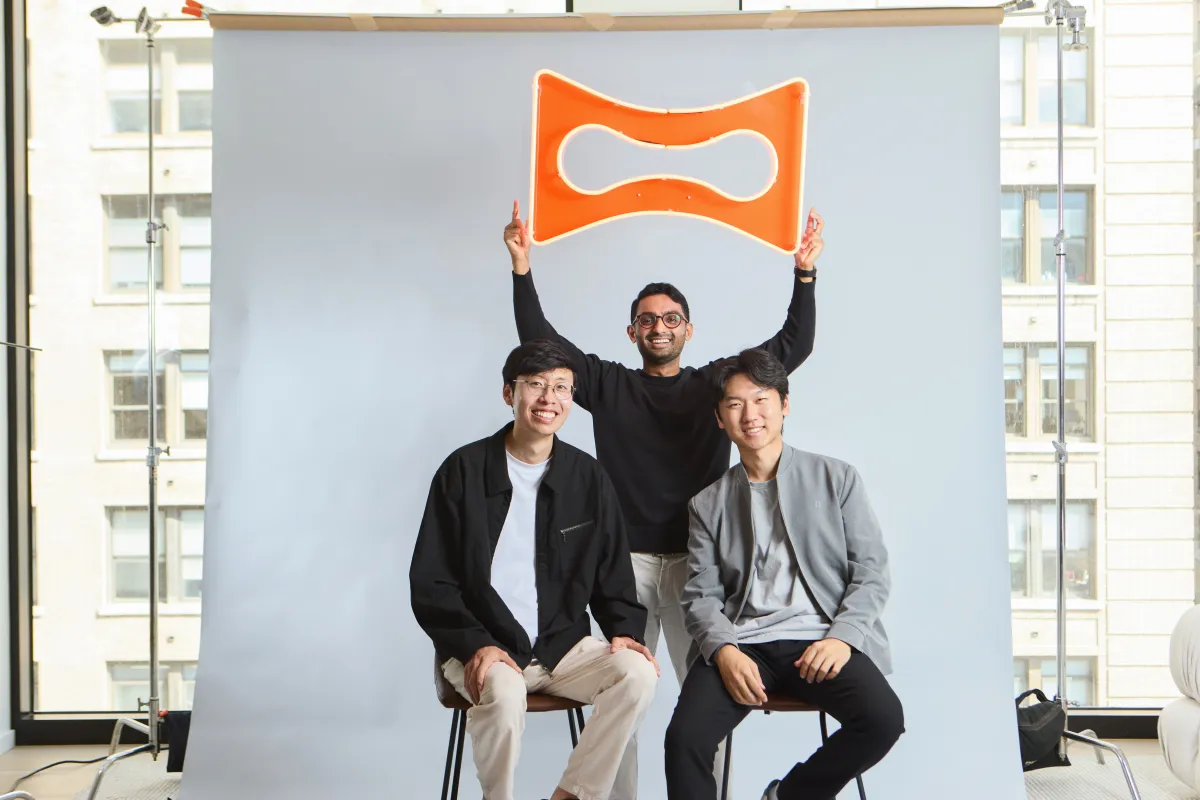
The three co-founders — Joowon Kim, Young Kim and Arnav Ramu — knew one another from their time as engineers at Ramp, the corporate spending and finance software company. Their shared background likely helped them move quickly through the early experimentation stage, even if the initial product direction ultimately failed to stick.
That Ramp connection also underscores a familiar pattern in the startup ecosystem: teams often leave successful software companies to pursue adjacent opportunities in a different market, bringing engineering discipline and product instincts with them. In Melius’s case, the team used that experience to attack one of the hottest categories in AI software.
How crowded is the AI creative tools market?
The market is crowded enough that Melius is entering a race with several well-funded peers, but the founders argue the opportunity is still large enough for multiple winners. Competing companies include Higgsfield, which reached a reported valuation of $5.4 billion in August, as well as smaller startups such as Krea and Flora AI.
Melius does not appear to be trying to outcompete these companies by claiming the market is tiny. Instead, it is positioning itself as part of a broader wave of AI-native creative platforms that are still in the early stages of adoption across advertising and media production.
The company’s strategy seems to rest on a familiar startup thesis: if demand is large and workflows are still fragmented, there is room for differentiated products even when there are already visible market leaders.
Kim said the presence of many competitors is evidence of strong demand, not a sign that the sector is saturated. He argued that a large market can support multiple players because customers are still being won and the category continues to expand.
Why competition may not be the biggest problem
Competition is real, but in a category as new as AI-driven creative production, the bigger challenge may be customer trust and product fit. Marketers need tools that are not only fast, but also useful, brand-safe and consistent enough to fit into existing workflows.
That means startups in this area must prove more than technical novelty. They need to show that their outputs are high quality, that teams can use them repeatedly, and that the platform can save time without adding a new layer of complexity.
For Melius, the revenue figure it disclosed is one early signal that some customers are willing to pay for that promise. But in a market moving as quickly as generative AI, early traction is only the first milestone.
Who is Joowon Kim, and why does his background matter?
Joowon Kim is the co-founder and public face of Melius, and his personal background helps explain the company’s creative focus. He has described himself as someone with a long-standing interest in social media and short-form video, dating back to elementary school.
Before Melius, that interest took the form of early vlogs and aspirations of becoming a well-known YouTube creator. Although those experiments did not become a breakout media career, Kim says they left him with a lasting fascination for digital storytelling and the mechanics of making online content.
That perspective likely shapes Melius’s product philosophy. Instead of treating AI as a pure infrastructure layer, the company is building tools that sit directly in the content-making process, where speed, experimentation and visual quality matter most.
Kim said he has long wanted a tool that would let anyone, including professional creative directors, turn ideas into reality by describing them in ordinary language.
What does Melius’s funding signal about investor appetite?
The financing suggests investors remain highly interested in AI tools that can touch revenue-generating workflows, especially in marketing and creative production. A $20 million Series A led by CRV and a $5 million seed round led by General Catalyst indicate that backers see enough upside in the product direction to support both the platform and its go-to-market expansion.
Investors have shown a steady appetite for startups that use generative AI to improve business operations, but advertising is one of the most attractive areas because it sits close to commercial outcomes. Companies spend heavily on creative production, testing and iteration, so even modest efficiency gains can translate into meaningful savings or higher performance.
At the same time, the funding environment for AI startups has become more selective. Backers are increasingly looking for evidence of real customer demand, not just model demos. Melius’s claimed revenue momentum helps it stand out from the many startups still searching for product-market fit.
| Milestone | Details | Why it matters |
|---|---|---|
| Initial launch | Melius began more than a year ago with an AI performance marketing tool | Shows the company started with a narrower ad-tech product |
| Pivot decision | Founders scrapped the original codebase after around six months of building | Signals a major strategic reset toward creative generation |
| Stealth exit | Company emerged publicly in July | Marks the start of its current market push |
| Revenue claim | More than $1 million in annualized revenue within two months of stealth | Suggests early customer adoption and strong demand |
| Funding announced | $25 million total, including a $20 million Series A and $5 million seed round | Provides capital for growth in a competitive category |
How Melius fits into the broader AI advertising boom
Melius is part of a broader shift in which generative AI is moving from experimental novelty to practical production tool. In advertising, the pressure to create high volumes of tailored content for different audiences makes the category especially attractive to AI startups.
Campaign teams increasingly need dozens or hundreds of asset variations across platforms, formats and audience segments. That scale has become difficult to manage with traditional workflows alone, creating a gap that AI startups are eager to fill.
Some companies are attacking the problem from the creative side, others from the optimization side, and some from both. Melius has chosen to lean into the creative layer, betting that generation itself is where the highest leverage sits.
What the platform may mean for agencies and brands
If Melius delivers on its promise, agencies could use the platform to prototype campaign ideas faster and generate more variants during client work. Brands could potentially compress the time between concept and launch. Small teams could use it to produce polished material without building large internal studios.
That said, the value of any AI creative tool depends on output quality, editing flexibility and integration with existing workflows. The market has already seen plenty of tools that impress in demos but fail to hold up under day-to-day use.
That is why the company’s early revenue matters. It suggests Melius is already finding some level of willingness to pay, though it remains too early to know whether the product will become a staple in creative teams or just another short-lived point solution.
What comes next for Melius?
The next challenge is turning early momentum into durable growth. Like many young AI startups, Melius will need to keep improving product quality while proving that its platform can serve a repeatable use case across customers with different needs and creative styles.
It will also need to distinguish itself in a market where competitors are well funded and moving fast. In that setting, brand positioning, product depth and workflow integration can matter as much as model performance.
For now, the company’s story is notable for two reasons: it has already secured major backing, and it was willing to abandon a first product rather than force a weak idea to market. That combination of capital and decisiveness is often what founders need when building in a fast-changing AI category.
Whether Melius becomes one of the enduring names in AI-powered advertising will depend on execution from here. But after a difficult reset, the startup has at least bought itself a meaningful amount of time — and investor attention — to prove the pivot was the right one.
Key facts at a glance
- Company: Melius
- Founders: Joowon Kim, Young Kim and Arnav Ramu
- Previous employer: Ramp
- New funding: $25 million total
- Lead investors: CRV and General Catalyst
- Current product: AI platform for ad campaigns, images and videos
- Reported traction: More than $1 million in annualized revenue within two months of stealth
- Original concept: AI performance marketing tool
For now, Melius is trying to do something many startups promise but few achieve: use AI not just to analyze or optimize marketing, but to help build the creative engine behind it.
Frequently asked questions
What is Melius?
Melius is an AI startup that helps marketers and creative teams generate ad campaigns, images and videos. The company describes its product as an agents lab for creative work and says users can turn plain-language ideas into campaign assets.
How much funding did Melius raise?
Melius raised $25 million in total. The round includes a $20 million Series A led by CRV and a $5 million seed round led by General Catalyst, giving the company fresh capital to expand its AI creative platform.
Why did Melius change its product?
Melius changed direction because its original AI performance marketing tool did not seem big enough to support the company’s ambitions. After about six months, the founders decided the idea did not have enough upside and rebuilt the product around creative generation instead.
Who founded Melius?
Melius was founded by Joowon Kim, Young Kim and Arnav Ramu. The three co-founders previously worked together as engineers at Ramp, which gave them a shared technical background before launching the startup.
Is Melius profitable or growing quickly?
Melius is not reported to be profitable, but it says it reached more than $1 million in annualized revenue within two months of coming out of stealth in July. That early traction suggests the platform is already finding paying customers.