In short
Hark has released Hark Pro, a privacy-focused AI personal assistant that can access a user’s digital tools and carry out tasks on their computer. The startup says the product is designed to build trust by showing its work and avoiding ad-driven profiling.
- Hark Pro is now available in a free tier, with paid access for heavier users.
- The assistant is built to perform computer tasks end-to-end, not just answer questions.
- Privacy and transparency are central to Hark’s pitch against larger rivals.
- The company plans to release an AI-native device in 2027, though details are still vague.
Hark has launched Hark Pro, a new AI personal assistant that it says is designed to use your computer for you while keeping privacy front and center. The startup, founded by serial entrepreneur Brett Adcock less than a year ago, is opening the product to users for free, with a paid plan for heavy use.
The release puts Hark into a crowded race to define the next must-have AI interface, alongside products such as Muse, Instinct and Dots. But Hark’s pitch is narrower and more practical than the grand ambitions often attached to frontier AI: it wants to build the software layer that helps people get real work done, not a system that claims to solve humanity’s hardest problems.
That distinction matters. As more AI assistants move from answering questions to taking actions, the winner may be the company that convinces users to hand over access to their email, calendars, files and payment methods without feeling they are surrendering control of their digital lives.
What Hark Pro is and why it matters
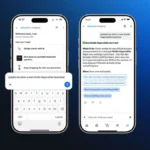
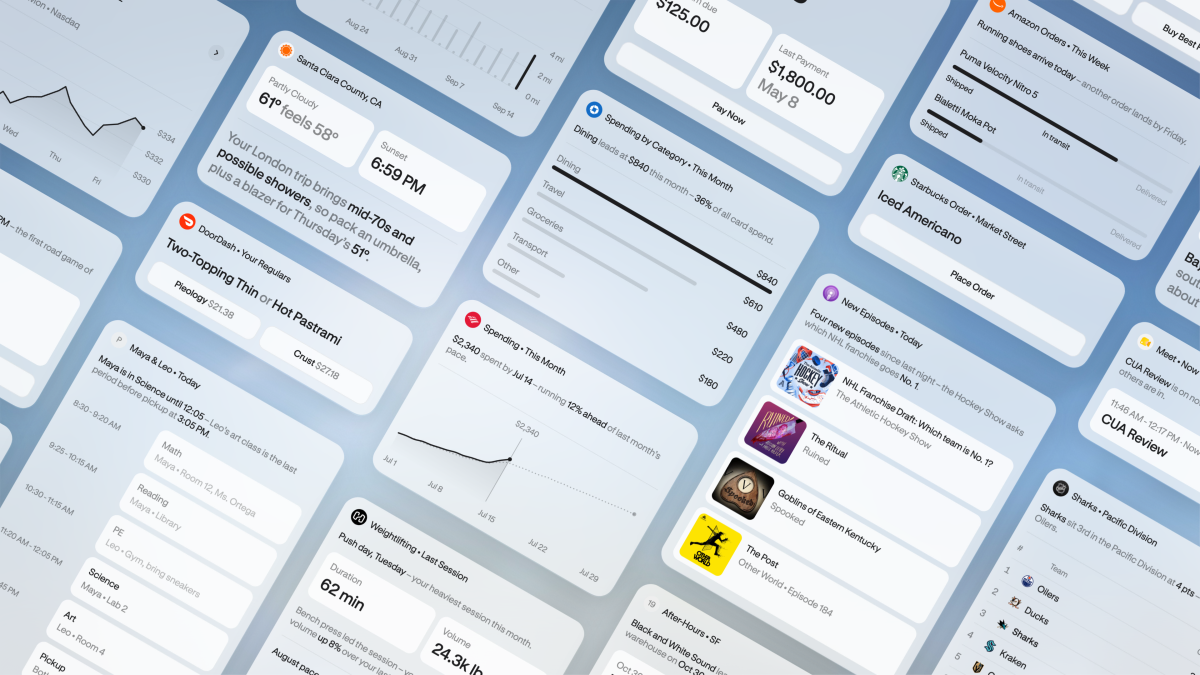
Hark Pro is a full-screen assistant experience built around a central chat box, a stream of suggested actions and a set of interactive “panels” that act like small dashboards for topics the user cares about. Rather than feeling like a standalone chatbot, the product is meant to function more like a command center for an AI agent.
The company says the assistant is based on a model specifically trained for computer use. In practice, that means Hark Pro is designed to carry out tasks on a user’s behalf by controlling software and web interfaces directly, rather than simply drafting a response for the user to complete manually.
Hark’s broader goal is more ambitious than the interface itself suggests. The company wants to create what it sees as an operating system for the AI-first computers of the future, even if the current product looks and feels closer to a powerful assistant than a new computing platform.
How Hark Pro works
Hark Pro starts by connecting to the services that make up a user’s digital life. That can include email, calendars, hard drives and credit cards, giving the assistant the context it needs to act on behalf of the user.
Once connected, the assistant can handle both practical chores and ordinary chatbot-style questions. The difference, Hark argues, is that the software is not just responding with text; it is meant to complete the task from start to finish.
That promise is central to the product’s appeal, and also to the larger challenge facing the category. Many AI assistants can identify useful work, but fewer can consistently finish it without requiring the user to step in halfway through.
“We’re not here to like sell you ads and steal your data,” Hark design lead Abidhur Chowdhury said, framing privacy as a core differentiator for the company.
Why privacy is the company’s central selling point
Hark is trying to position itself against larger rivals by arguing that an assistant meant to understand your life does not have to become a surveillance engine. That pitch is especially pointed at companies such as Meta and OpenAI, which have the scale and data ambitions to make many users uneasy.
To be genuinely useful, AI assistants often need broad access to personal information. They must know which meetings matter, which emails can wait, what expenses need approval and which travel arrangements need booking. But the same access that makes them useful can also create deep privacy concerns if handled carelessly.
Hark’s team is betting that users will respond to a product that makes its intentions clearer. Instead of treating the assistant like an invisible black box, the company emphasizes transparency around what the agent is doing and why.
How Hark tries to build trust
One of Hark Pro’s most notable design choices is the way it reveals the assistant’s web activity in a small window while the agent works. Many competing systems perform the same kind of browsing or clicking in the background without showing the user much about the process.
According to Chowdhury, surfacing that activity is meant to reassure users that the system is behaving properly. If a product is going to act on your behalf, Hark’s logic goes, it should not feel like a secret operation happening off-screen.
That visibility also reflects a broader truth about the consumer AI market: trust may be as important as intelligence. If users cannot tell what an assistant is doing with their information, they may never feel comfortable giving it the permissions it needs to be genuinely helpful.
What the assistant can actually do today
In a demonstration of the product, Hark showed how the assistant can proactively surface tasks it thinks the user should take care of. In one case, it flagged emails that needed replies, expenses awaiting approval and a pending meeting. It also noticed a flight the user needed to book and offered to handle it.
The flight-booking example may sound familiar. AI companies have spent months showcasing similar demos, and the joke has become that nearly every assistant wants to reserve your travel. Hark seems aware of that fatigue, but still sees travel as a useful test of whether the software can handle a real-world task without collapsing into a partial automation that still requires too much human work.
Chowdhury also pointed to a more grounded example: the assistant recently recognized that a colleague needed to renew a car registration with the California DMV and completed the process through the agency’s website.
That kind of task is more interesting than a polished demo because it demonstrates the sort of dull, bureaucratic work people would actually pay to outsource. Booking a flight is convenient. Dealing with a government form is the kind of time sink that makes an assistant feel worthwhile.
What makes the product different from rivals?
Hark says the key difference is not speed alone but completion. The company argues that Hark Pro may not always be the fastest system, but it is built to deliver a better end result by finishing the job rather than handing it back to the user midway through.
That claim goes to the heart of the current AI assistant race. Many products are impressive when they first start working, but they lose momentum once a task gets complicated or requires judgment across multiple websites and services.
Hark is essentially trying to solve for reliability, not just capability. If it can consistently close the loop on tasks that other assistants only partially automate, it may have a clearer value proposition than products that lean heavily on novelty.
| Area | Hark Pro approach | Why it matters |
|---|---|---|
| Core function | Uses the computer on the user’s behalf | Moves beyond simple chat into task completion |
| Interface | Full-screen assistant with chat, prompts and panels | Makes the assistant feel like a working environment, not just an app |
| Privacy pitch | Emphasizes user trust and rejects ad-driven profiling | Targets concerns about data harvesting and surveillance |
| Transparency | Shows web navigation in a small window | Lets users see what the agent is doing |
| Business model | Free access plus subscription for power users | Lowers the barrier to adoption while monetizing heavy usage |
How Hark Pro fits into the AI assistant race
AI personal assistants are becoming one of the clearest battlegrounds in consumer technology. Different teams are converging on the same question from slightly different angles: what kind of interface makes a digital helper so useful that people will keep it open every day?
Some companies are treating assistants as companions, others as productivity hubs and others as full task agents. Hark is clearly in the last camp. It believes the assistant should not only answer questions but also execute work across software and the web.
That view is rooted in a larger shift in computing. As models improve, the biggest product opportunity may no longer be in generating text, images or code alone. It may be in orchestrating the systems people already use, from inboxes and calendars to forms, payments and websites.
The problem is that orchestration is harder than it looks. A system must not only understand intent, but also identify the right sequence of actions, deal with edge cases and preserve user confidence along the way. Hark’s product seems designed with that difficulty in mind.
Why the model choice matters
One open question is whether the best assistant needs the biggest general-purpose model. Hark’s system is trained specifically for computer use, which the company says makes it faster and cheaper for those tasks.
That specialization may come with trade-offs. A model optimized for manipulating software interfaces may not have the same broad knowledge or flexible reasoning as a frontier large language model. For Hark, the bet is that specific competence beats general intelligence when the goal is getting concrete tasks done.
This is a familiar tension in AI product design. Broad models are impressive, but practical products often benefit from narrower training, stronger constraints and a tighter focus on one kind of job.
Who is Brett Adcock and why does his background matter?
Adcock is best known as a serial founder, and his involvement gives Hark instant visibility in the startup world. Although the company is still young, his reputation helps frame Hark as more than a one-off experiment in consumer AI.
Chowdhury, Hark’s design lead, also brings notable hardware experience from Apple. That background matters because the company’s ambitions extend beyond software alone. Hark has hinted that its long-term future includes a dedicated AI-native device, which would require the kind of product thinking usually associated with consumer hardware launches.
For now, though, the company is making its first serious push with software. Hark Pro is both the product and the proof of concept: if users find it useful, they may be more willing to trust the company’s longer-term vision.
What the company says about its future device
Hark says it plans to release an AI-native device in 2027. The company has not disclosed exactly what form it will take, but Chowdhury has signaled skepticism toward wearables that rely on cameras, calling that approach too invasive.
That leaves room for speculation, and a fair amount of it. Hardware startups in the AI era often promise a device that will reinvent computing but stop short of naming the exact object. Hark appears to be following that familiar playbook, at least for now.
Still, the company insists that the first device it is building will be something genuinely new. Whether that turns out to be a breakthrough product or simply a fresh packaging of familiar ideas will not be clear until much later.
Chowdhury said the first product the company is building is something that has never existed before, while also expressing discomfort with always-on wearable cameras.
Why the user experience matters as much as the model
Hark’s design philosophy suggests that the battle for AI assistants may be won as much by interface design as by raw model capability. A clever product can fail if it is awkward, opaque or hard to trust.
That is why Hark’s full-screen layout, suggested actions and visible browsing workflow matter. The company is trying to make the assistant feel understandable and useful rather than magical and unnerving.
Chowdhury’s view is that the future of AI should not feel like a chat window with extra steps. Instead, the interface should do more of the work users currently do themselves, which is why he describes Hark less as an app and more as a new kind of operating system.
He also criticized the irony of modern AI interactions still relying so heavily on typing into a text box. In his view, the future of computing should feel more natural and more capable than a terminal dressed up as a conversation.
That complaint speaks to a bigger issue in the AI market. Many products are technologically advanced but still operationally old-fashioned. They can answer questions about the future while forcing people to use the past’s interface conventions.
What happens next for Hark?
Hark’s immediate challenge is straightforward: prove that Hark Pro can become a daily habit rather than a novelty demo. The assistant needs to consistently identify useful work, complete it reliably and stay trustworthy enough that users continue granting it access.
The company’s second challenge is strategic. If it wants to turn this software into a broader platform, it will need to show that it can retain users long enough to justify the eventual hardware bet.
The third challenge is competitive. The AI assistant field is likely to become more crowded, not less, and every major tech company has reason to believe it can dominate the category. Hark is trying to carve out space by being narrower, more transparent and more privacy-conscious than the biggest players.
Whether that is enough remains to be seen. But in a market full of grand promises, Hark’s insistence on practical task completion may be the kind of modesty that users actually reward.
Timeline: Hark’s rollout and next milestones
| Date | Milestone | Significance |
|---|---|---|
| Less than a year ago | Hark founded by Brett Adcock | Set the company on a fast startup timeline |
| October 6, 2026 | Wide release of Hark Pro | Opened the AI assistant to users for free and with a paid tier |
| 2026 and beyond | Product refinement and user adoption | Will determine whether Hark can turn task automation into daily usage |
| 2027 | Planned AI-native device launch | Could expand Hark from software into hardware |
Bottom line
Hark is entering the AI assistant race with a product that is more pragmatic than flashy, more privacy-minded than ad-driven and more focused on completing tasks than generating buzz. Hark Pro is a bet that users will value an assistant that can actually do things on their behalf, especially if it shows its work and respects their data.
If the company can deliver on that promise, it may find an audience among people who are intrigued by AI but wary of handing their entire digital life to a giant platform. And if its future hardware plans materialize, Hark could become part of a much larger conversation about what the next generation of computing should look like.
Frequently asked questions
What is Hark Pro?
Hark Pro is an AI personal assistant that Hark says can use a user’s computer to complete tasks end to end. It combines chat, action suggestions and interactive panels in a full-screen interface designed to feel more like an operating environment than a standalone app.
How is Hark Pro different from other AI assistants?
Hark Pro is different because it is built around task completion, transparency and privacy. The company says it shows users how the agent navigates the web and avoids the ad-driven profiling model associated with larger platforms, while aiming to finish tasks without handing control back midway.
Is Hark Pro free to use?
Yes, Hark Pro is available for free, with a subscription tier aimed at heavy users. That pricing approach lowers the barrier to trying the assistant while giving the company a path to monetize more intensive use.
What kinds of tasks can Hark Pro handle?
Hark Pro can handle tasks tied to connected services such as email, calendars, files and payment methods. In demonstrations, it flagged unread messages, highlighted expenses to approve, surfaced a meeting and even offered to book flights or handle DMV-related paperwork.
Does Hark plan to make hardware too?
Yes, Hark says it plans to launch an AI-native device in 2027. The company has not revealed what the device will look like, but it says the first product in development is something that has never existed before.