Updated July 19, 2026 12:53 pm
In short
David Pierce’s reader-setup roundup now adds that he is buying more physical books, while readers also highlighted BookFusion, the Bookshop.org app, Audible, Spotify Premium’s audiobook time, BookBub and Chirp.
- Readers are building multi-app, multi-device setups instead of relying on one platform.
- Kindle, iPad mini, Readwise Reader and library apps were among the most mentioned tools.
- Many users are trying to improve how they save, organize and revisit highlights and notes.
- The newsletter also spotlighted gadgets, AI-oriented controls and major culture picks.
Update — July 19, 2026 12:53 pm
The newest source adds a fresh note about Pierce’s own habits: he says he is buying more print books now, partly because his toddler makes him more aware of his screen time. He also says he is trying to get those books from Bookshop.org, local libraries, or neighborhood bookstores.
The reader-sourced recommendations also widened. In addition to the tools already mentioned, people specifically called out BookFusion and the Bookshop.org app, while audiobook listening showed up more clearly through Audible and the audio time bundled with Spotify Premium.
Two discovery services were also highlighted as useful for finding deals: BookBub and Chirp.
Update — July 18, 2026 3:55 pm
The updated newsletter adds a few new details to the reader-setup roundup. Pierce says he is now buying more physical books, in part because his toddler keeps him aware of how often he is looking at screens, and he’s trying to source them from Bookshop.org, local libraries or neighborhood bookstores.
The community response also broadened beyond the tools we previously listed. Readers mentioned BookFusion and the Bookshop.org app, while audiobook listening surfaced more clearly through Audible and Spotify Premium’s included listening time. BookBub and Chirp were also called out as useful discovery and deal-finding services.
The latest edition of David Pierce’s Installer newsletter, published on July 18, 2026, is a snapshot of how people are rebuilding their reading habits around better apps, e-readers, note tools and library services. At its center is a clear message: reading is not dying, but the way people read is becoming more fragmented, more app-driven and more dependent on a carefully assembled personal tech stack.
This week’s issue ranges from high-profile entertainment picks and a much-talked-about movie release to a reader survey that surfaces the devices, services and habits people rely on to keep up with books, articles, newsletters and highlights. The result is a useful look at how digital reading is evolving in the age of tablets, e-readers, RSS, note apps and subscription software.
What made this Installer edition stand out?
This edition stood out because it blended culture recommendations with a practical, crowd-sourced guide to modern reading tools. Instead of treating books and articles as a single category, it mapped the entire ecosystem: where people read, how they save what matters, which platforms they use for subscriptions and where they still prefer print.
The newsletter also offered a rare first-person inventory of one editor’s own setup, then widened into a community response that showed just how many different paths now lead to the same goal: reading more, and reading more comfortably.
The reading stack behind modern media habits
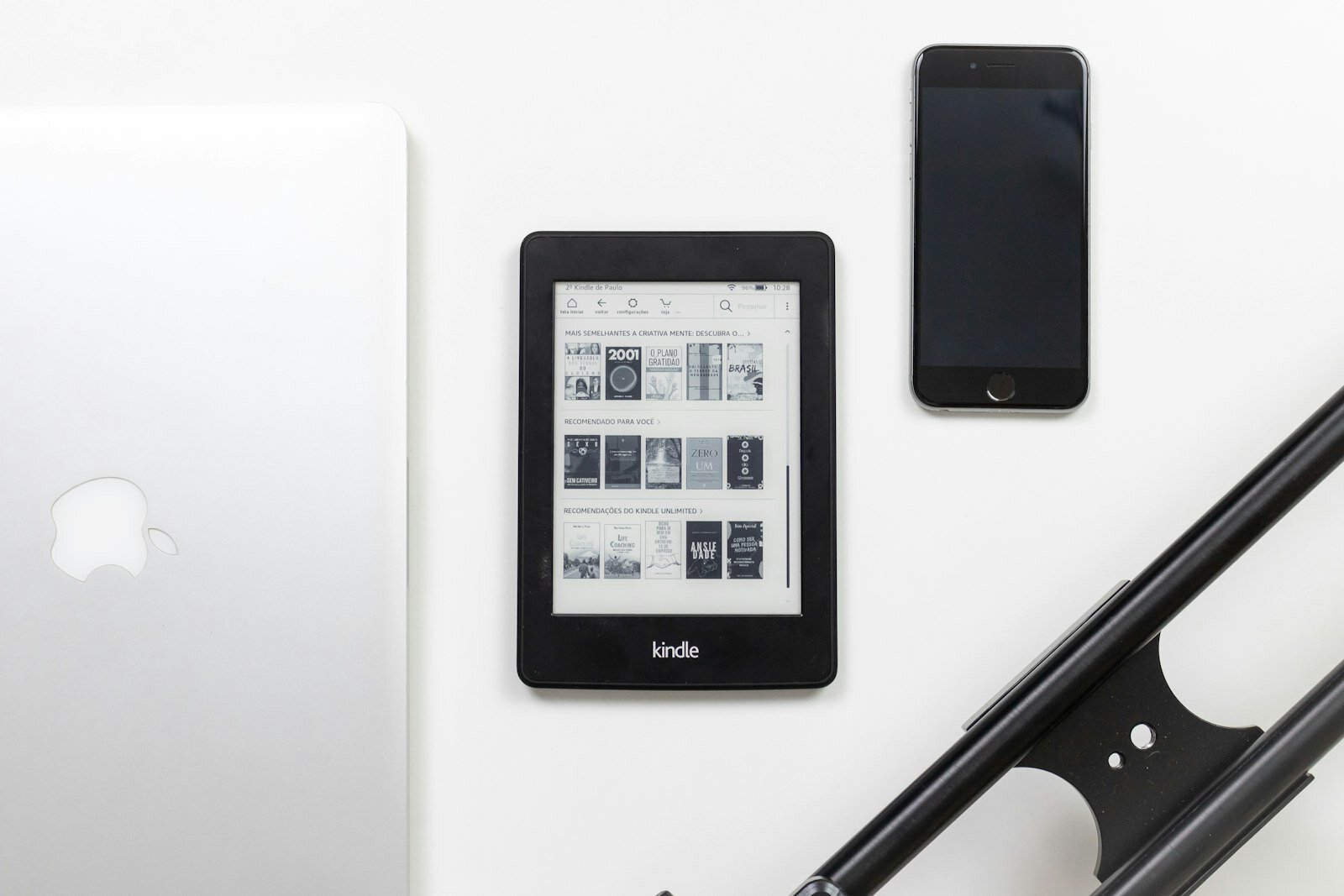
The core of the issue was a detailed look at reading setups. Pierce described a workflow spread across a Kindle Paperwhite, an iPad mini and a Boox Palma 2, with each device serving a different purpose. The Paperwhite stays by the bed, the iPad mini handles heavier annotation and the Palma is the portable companion that goes everywhere.
That kind of multi-device reading routine reflects a broader shift. Many people no longer rely on one device or one app for everything. Instead, they combine dedicated e-readers, tablets, cloud libraries, RSS readers and clipping tools to manage a growing mix of books, articles, newsletters and PDFs.
Why are readers using so many apps?
Readers are using so many apps because no single platform yet handles every format well. E-books, long-form articles, newsletters, web pages, PDFs and saved highlights all have different needs, and the best tools tend to specialize.
In Pierce’s case, Kindle remains the main book ecosystem, Readwise Reader handles most saved digital reading, Feedbin manages RSS and Unread serves as the preferred mobile interface. That division of labor is increasingly common among power users who want speed, searchability and strong organization features.
Pierce said Readwise Reader stands out for its search, organizational tools and ability to turn PDFs into a smoother reading experience, while noting that switching away from Kindle’s closed ecosystem would be difficult even if he would prefer a more open option.
How readers are organizing books, highlights and notes
The newsletter’s crowd-sourced section showed that the biggest pain points are not just reading itself, but what happens after the reading is done. People want better ways to track progress, save highlights, preserve notes and move information across apps without friction.
That is why services such as Readwise, Notion, Craft and Obsidian came up repeatedly. The modern reader is often also an archivist, building a personal knowledge system around everything they encounter.
The most popular reading and note tools
Among the tools most frequently mentioned by readers were Kindle, Apple Books, Readwise Reader, Feedbin, Unread, Reeder, Instapaper, Matter and Wallabag. On the tracking side, The StoryGraph and Book Tracker drew praise, while many people said they were moving away from Goodreads or actively trying to leave it.
That mix suggests a market in transition. Traditional platforms still dominate in convenience and scale, but readers increasingly want finer control over organization, recommendations and data portability.
| Tool or service | Primary use | Why readers like it |
|---|---|---|
| Kindle Paperwhite | E-books | Dedicated reading device with long battery life |
| iPad mini | Reading and annotation | Useful for note-taking and highlighting |
| Boox Palma 2 | Portable reading | Compact e-reader that travels easily |
| Readwise Reader | Article and PDF reading | Strong search, organization and file parsing |
| Feedbin | RSS | Reliable feed management across devices |
| Libby | Library borrowing | Easy access to public library ebooks and audiobooks |
Which devices are readers choosing most often?
The Kindle and the iPad mini emerged as the biggest winners in the community feedback. That is not surprising: one is optimized for focused, distraction-light reading, while the other offers flexibility for books, PDFs, note-taking and general media use.
But the responses also revealed a loyal niche for alternative hardware. Kobo readers praised models such as the Clara and Libra, while others mentioned the Xteink X4, the Boox Palma and even an iPod Touch repurposed for reading. The hardware market remains small compared with smartphone dominance, but there is still room for highly specific use cases.
What role do dedicated e-readers still play?
Dedicated e-readers still matter because they reduce friction and support longer reading sessions. They are easier on the eyes than phones, offer longer battery life and help separate reading from the many distractions built into multipurpose devices.
That separation was central to the article’s broader theme. Reading tools are increasingly being chosen not just for content access, but for the psychological experience of focus.
The library is having a moment
Public libraries featured prominently in the crowd-sourced response. Readers praised services and apps including Libby, Hoopla, MyLibro and Sora, all of which help borrow books digitally through a library card.
The enthusiasm matters because it points to a more pragmatic, and in many cases cheaper, alternative to subscription-heavy reading ecosystems. Libraries remain one of the most useful digital content platforms around, even if they rarely receive the attention of the major commercial apps.
Many readers in the newsletter’s community response said the library is still one of the best ways to access books, especially as ebook prices rise and subscription fatigue grows.
What else was in the newsletter beyond reading?
The issue also served as a weekly guide to other notable tech and culture releases. Pierce highlighted a mix of movies, sports, gadgets and media criticism, giving the edition the usual Installer blend of enthusiasm, utility and internet-era curiosity.
Among the most prominent mentions were Christopher Nolan’s new film, a World Cup final, a podcast episode about microtransactions in gaming, a photo-editing app, a new notes app and a whimsical gadget designed to control AI workflows.
The movie, the match and the media
One of the biggest recommendations was Nolan’s latest film, described in terms of both scale and surprise. The issue positioned it as the major theatrical event of the summer, especially for viewers planning to see it in IMAX.
The World Cup final also received strong billing as one of the biggest TV events of the year. In the newsletter’s framing, it is the kind of match that even casual viewers can treat like a communal watch party.
On the audio side, an episode of Pablo Torre Finds Out examining microtransactions in gaming drew a strong recommendation for the way it argues that the business side of games has distorted the medium.
The gadget side of Installer: useful, silly and expensive
Installer’s gadget coverage leaned playful but practical. Among the items that drew attention was the Flipper Busy Bar, a desk display that Pierce described as a device he liked but was unsure how to use in daily life. Another notable mention was the Codex Micro from Work Louder, a compact shortcut control system aimed at agent-driven workflows.
The latter was singled out as an example of a category that may sound excessive at first but becomes appealing once people imagine faster command control for modern software tools. The price, however, was presented as hard to justify.
Why are control gadgets so appealing now?
Control gadgets are appealing now because more workers are spending time inside software and less time interacting with physical tools. Shortcut buttons, macro pads and dedicated control surfaces can reduce repetitive actions and make software feel more tactile.
Even when they are not essential, these products resonate with people who want to shape digital work around muscle memory and speed rather than menus and clicks.
How are AI tools showing up in everyday hardware?
AI tools are showing up in everyday hardware through products that try to turn voice, taps and physical buttons into faster ways of interacting with software agents. In this Installer issue, that trend appeared most clearly in the mention of the Codex Micro and in the general attention to a new crop of AI-adjacent gadgets.
The newsletter did not frame these devices as revolutionary, but it did capture the current mood: curiosity mixed with skepticism, and a willingness to test whether agent-based tools are actually useful or just novel.
That reflects a broader consumer technology pattern. AI is increasingly leaving the screen and entering the physical world through specialized devices, but the utility question remains open.
The community response: what readers say is working
The most revealing part of the issue may have been the reader replies. Community recommendations stretched across books, websites, apps, podcasts, newsletters and even experimental social tools. The diversity suggested that readers are not converging on one dominant product stack. Instead, they are building personal systems out of overlapping pieces.
Some of the most interesting recommendations included a European email alternative, an app that keeps notes pinned to the top of the page, a visual reading game from The New York Times and a ring-shaped note-taking device that can dictate short reminders.
- Email migration: Some readers are trying to move away from Google and Gmail to privacy-focused European services.
- Note-taking: Simpler tools that reduce clutter are gaining attention.
- Micro-reading and games: Puzzle-like apps and lightweight web games continue to attract loyal users.
- Voice input: Wearables and dictation tools are being explored as ways to reduce app friction.
- Open social reading: New apps are experimenting with RSS as a social network-like experience.
Why newsletters remain such a hard problem
Newsletters remain a hard problem because they sit awkwardly between email, reading apps and feed readers. People want a way to collect them, search them, archive them and read them later, but no single tool fully solves the workflow.
Pierce pointed out that many readers still do not know where newsletters belong: in Gmail, in RSS, in a read-later app or in a more customized archive system. That uncertainty is part of why newsletter management has become one of the most persistent annoyances in modern digital life.
What does this say about the future of reading?
It says the future of reading will likely be modular rather than unified. Instead of one app to rule all formats, readers are assembling systems that separate books, articles, newsletters, highlights and audio into different lanes.
That model is more complicated, but it also gives people more control. The trade-off is obvious: better organization, but more maintenance. For many readers, that seems worth it.
A broader picture of the reading market
The newsletter also revealed how much reading has become tied to platforms, subscriptions and ecosystems. Kindle remains dominant for ebooks, Apple Books retains a strong role for many Apple users, and Readwise Reader has become a favorite for people who want to convert web clutter into a curated library.
At the same time, people are looking for alternatives whenever they can find them. Bookshop.org came up as a preferred place to buy physical books, local libraries were celebrated as essential and services like BookBub and Chirp were valued for helping people find discounts on ebooks and audiobooks.
The result is a fragmented but active market. Readers are not abandoning technology; they are becoming more selective about which kinds of technology deserve a place in their reading routines.
| Reading need | Common solution | Why it matters |
|---|---|---|
| Focused book reading | Kindle, Kobo, Boox | Reduces distraction and supports long sessions |
| Web articles and saved links | Readwise Reader, Instapaper, Matter | Creates a searchable reading queue |
| News feeds | Feedbin, Unread, Reeder | Keeps RSS manageable across devices |
| Library access | Libby, Hoopla, Sora | Expands access without extra cost |
| Highlight archiving | Readwise, Notion, Obsidian | Preserves notes for later use |
What the newsletter suggests about tech culture right now
The issue suggests that tech culture has entered a more mature, more selective phase. People are less interested in one-size-fits-all apps and more interested in systems that respect how they actually work. That applies to reading, note-taking, listening and even hardware buttons.
It also shows that nostalgia still matters. The popularity of the Loading Museum, a site that recreates the experience of waiting for old web pages to load, underscores how much people still care about the emotional texture of the internet’s earlier era.
In that sense, Installer is doing more than recommending products. It is documenting how digital life is being reorganized around attention, convenience, cost and comfort.
The bottom line
This week’s Installer newsletter is a useful portrait of the modern reader’s toolkit. The biggest takeaway is not just which apps are popular, but how carefully many people now construct their reading lives from a mix of dedicated devices, library services, RSS readers, note apps and saving tools.
As books, articles and newsletters continue to multiply, the value of a good reading setup only grows. And if this issue is any guide, the best setups are the ones that help people read more while making the process feel less like work.
Frequently asked questions
What is the main focus of this Installer newsletter?
The main focus is how people are setting up their reading lives with apps, gadgets and services. It looks at the devices, note tools, RSS readers and library platforms readers use to manage books, articles, newsletters and highlights.
Which reading tools were mentioned most often?
Kindle, Apple Books, Readwise Reader, Feedbin, Unread, Reeder, Libby and Hoopla were among the most frequently cited tools. The issue also highlighted The StoryGraph, Book Tracker, Instapaper, Matter and Wallabag.
Why are so many readers using multiple apps?
So many readers are using multiple apps because no single service handles every format well. Books, articles, newsletters, PDFs and highlights all require different features, so people combine specialized tools to get better search, organization and portability.
Are libraries still important in digital reading?
Yes, libraries are still very important in digital reading. Readers in the newsletter praised Libby, Hoopla, MyLibro and Sora, showing that public library apps remain one of the most practical and affordable ways to borrow ebooks and audiobooks.
What other tech topics did the newsletter cover?
The newsletter also covered a new Christopher Nolan film, the World Cup final, a podcast about gaming microtransactions, a photo-editing app, a new notes app and AI-oriented gadgets such as the Codex Micro and the Flipper Busy Bar.