In short
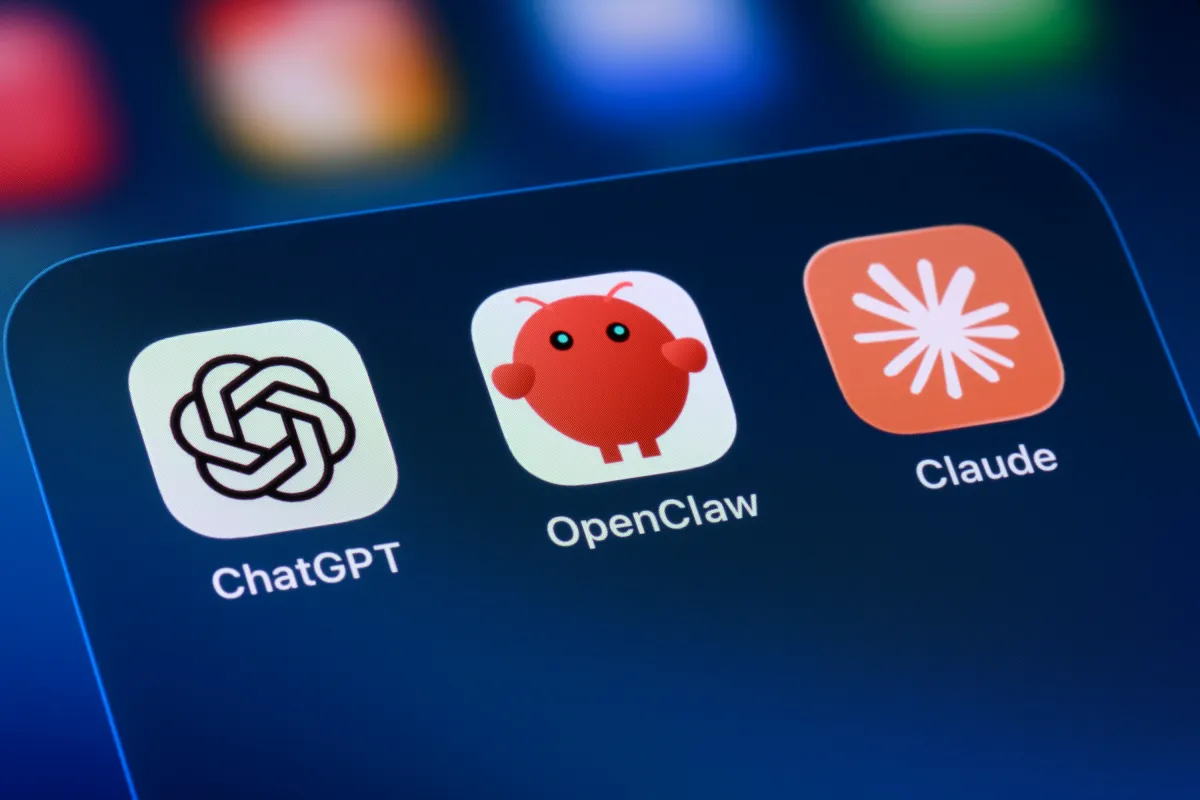
OpenClaw, the viral open-source AI agent project, is now available on iOS and Android. The release lets users connect their phones to the Gateway routing layer and run agents on mobile.
- OpenClaw has launched mobile apps for both iOS and Android.
- Users can connect through the Gateway to run AI agents from their phones.
- The project’s viral rise was fueled by the MoltBook stunt, but credibility questions remain.
- The launch reflects the broader shift toward AI agents becoming mainstream consumer tools.
The viral open-source AI agent OpenClaw is now available as a mobile app on both iPhone and Android, giving users a way to run agentic workflows from their phones instead of only from a desktop browser or local setup. The rollout marks another sign that AI agents are leaving the lab and the desktop and moving into the devices people carry every day.
OpenClaw announced the launch on X on Tuesday, saying the app connects to its Gateway service, a routing layer that links user requests to the AI agents, tools and skills needed to carry out tasks. In practical terms, that means users can trigger agents from a phone and let them handle jobs such as coding assistance, planning, research or other task automation.
The release arrives at a moment when the agent market is growing rapidly, even as skepticism remains about how reliably these systems can perform when asked to do real work. OpenClaw became a breakout name earlier this year after an attention-grabbing launch tied to a social platform experiment, and its move to mobile suggests the project is trying to turn internet buzz into broader utility.
What OpenClaw is and why the launch matters
OpenClaw is an open-source AI agent system that gained a large online following after being framed as a glimpse into a more automated internet. Unlike a standard chatbot that mostly answers questions in text, an agent is designed to take action across apps, services and tools on a user’s behalf.
The mobile app matters because phones are where a growing share of everyday work happens. If AI agents are supposed to become part of daily routines, then availability on mobile is a logical next step. It lowers friction for users who want to prompt, supervise or deploy agents without returning to a laptop.
That does not mean the technology has solved its problems. OpenClaw users have shared a mix of strong use cases and rough edges, with the software being applied to tasks ranging from programming support to meal planning. At the same time, some early users have reported disappointing output, a reminder that agent systems can be powerful but inconsistent.
OpenClaw’s mobile debut is meant to make its agents more accessible by letting users connect their phones to the company’s Gateway routing layer and launch tasks from anywhere.
How the OpenClaw mobile app works
The core of the new experience is the OpenClaw Gateway. Rather than handing every request directly to a single model, the Gateway acts as an intermediary layer that routes a user’s request to the appropriate agent and the set of tools or capabilities that agent needs.
This design reflects a broader shift in AI architecture. Increasingly, developers are building systems that do not just generate text, but also decide which tools to use, which steps to take and when to call external services. In other words, the “agent” is as much about orchestration as it is about language generation.
What users can do on mobile
According to the company’s announcement and examples from users, OpenClaw agents have been used for:
- coding-related tasks and developer workflows
- meal planning and everyday organization
- general automation and task execution
- experiments with app-to-app or tool-based actions
On a phone, these capabilities could be especially useful for quick commands, checking progress on longer tasks or supervising an agent that has already been set up to run in the background.
That said, mobile access does not magically make an agent reliable. It simply makes it easier to use. The real question remains whether the system can consistently complete tasks correctly, safely and with enough context to be useful.
The viral backstory that brought OpenClaw here
OpenClaw’s rise was not the product of a slow, careful rollout. The project drew widespread attention earlier in the year when it was tied to MoltBook, a social network described as being filled entirely with agents. The concept landed because it captured a futuristic idea that has long fascinated AI watchers: software systems interacting with one another with minimal human intervention.
But the spectacle also came with complications. Researchers later suggested that parts of the MoltBook presentation involved humans pretending to be agents. That revelation undercut some of the project’s mystique, even if it also helped amplify the brand.
In the fast-moving AI world, theatrical launches can have a real impact. They generate awareness, create a narrative and help a product stand out in a crowded field. OpenClaw’s climb followed that familiar pattern: a novel concept, strong online attention and then, eventually, a more conventional product expansion.
Peter Steinberger’s departure adds another layer
OpenClaw was created by Peter Steinberger, who in February said he had joined OpenAI. His move introduced uncertainty around the future of the project, though the new mobile apps suggest OpenClaw is still advancing as a public-facing product.
That detail matters because many open-source projects depend heavily on the momentum of a founder or small core team. When a creator moves on, the project often either stalls or takes on a life of its own. OpenClaw appears to be attempting the second path.
Why agents are suddenly everywhere
OpenClaw’s mobile launch fits into a much larger industry trend. AI agents have become one of the most heavily marketed ideas in the sector, with major companies and startups alike racing to build systems that can do more than answer questions.
The pitch is appealing: instead of asking a model to generate a response, users can ask it to complete a multistep task. That may include browsing information, interacting with software, manipulating data or carrying out structured workflows.
In theory, this shift could turn AI from a conversational assistant into a true operational layer. In practice, many systems still struggle with accuracy, reliability, permissions and safe execution. That tension is shaping the market right now.
What makes an AI agent different from a chatbot
A chatbot responds. An agent acts.
That distinction is not absolute, but it captures the direction of the industry. A chatbot can answer a question about dinner ideas. An agent can take those ideas, check constraints, plan a menu and potentially generate a shopping list or coordinate with other software.
Because agents can touch external systems, they raise the stakes. Their value depends on how well they can reason, sequence actions and recover when something goes wrong.
| Milestone | What happened | Why it matters |
|---|---|---|
| Early 2026 | OpenClaw gained viral attention around the MoltBook launch | Introduced the project to a broader audience and made it a symbol of agentic AI |
| February 2026 | Creator Peter Steinberger said he joined OpenAI | Raised questions about the long-term direction of the project |
| Mid-2026 | Researchers said parts of the MoltBook experiment involved human impersonation | Added skepticism around the stunt but kept the project in the spotlight |
| June 30, 2026 | OpenClaw launched on iOS and Android | Expanded the platform from a web-first phenomenon to a mobile tool |
Mobile availability could broaden adoption
Apps tend to normalize technologies that once felt technical or experimental. By moving onto mobile, OpenClaw becomes easier to test, easier to demo and easier to keep open throughout the day.
That could help the project reach three kinds of users:
- Experimenters who want to test the latest agent workflows.
- Developers looking for open-source infrastructure they can adapt or inspect.
- Productivity users hoping to automate small but repetitive tasks.
Open-source software also benefits from portability because it can be adopted, modified and extended by communities that may never have engaged with the desktop version. For a project like OpenClaw, that could mean more integrations, more feedback and more scrutiny.
What could limit its reach
There are still obvious hurdles. Agent systems often require setup, permission management and careful prompts. Mobile screens are smaller, which can make complex workflows harder to manage. And any system that claims to act on a user’s behalf must be transparent about what it is doing and why.
Another issue is trust. OpenClaw’s viral rise gave it visibility, but the MoltBook episode also created a credibility challenge. For some users, the brand now carries both excitement and caution.
The business and industry context
The OpenClaw release also reflects a larger competitive pressure in the AI sector. Startups and established tech companies are all trying to position themselves around the same future: one where users delegate tasks to software rather than manually clicking through interfaces.
That market vision is broad enough to support many different products, from enterprise automation tools to consumer-facing assistants. But it also means every company is competing for attention with similar claims about productivity, autonomy and convenience.
OpenClaw’s edge has been its open-source identity and its viral origin story. The new app could help it convert that attention into actual usage, especially if mobile access proves smoother than the project’s early reputation might suggest.
For OpenClaw, the challenge now is not just getting noticed; it is proving that its agents can be useful, dependable and easy enough to use from a phone.
What to watch next
The most important question is whether OpenClaw’s mobile app changes how people interact with the platform or simply gives existing users another place to access it.
Watch for three signals in the coming weeks and months:
- whether the app leads to higher daily usage
- whether developers build new workflows around the Gateway model
- whether users report better or worse reliability on mobile than on desktop
If the app works well, it could serve as a case study for the next stage of AI adoption: not just chat windows and web demos, but persistent agent systems living in our pockets. If it does not, it may become another reminder that the gap between AI hype and useful automation is still large.
Either way, OpenClaw’s arrival on iOS and Android underscores a simple reality: AI agents are no longer an abstract idea confined to presentations and prototypes. They are becoming ordinary apps, entering the same ecosystem as banking tools, messaging clients and calendars. The future of automation may be arriving one home screen icon at a time.
For now, OpenClaw has achieved something many viral AI projects never do. It has turned attention into a real product update. The harder part will be turning that update into lasting trust.