Updated August 28, 2026 2:23 pm
In short
Plaud has launched its AI earbuds for preorder at $249.99, but the company now says shipping is expected in Q4 2026 rather than September.
- Plaud One Explorer Edition is priced at $249.99 and is available to preorder in selected markets.
- The earbuds and charging case can record conversations, transcribe them and generate summaries using Plaud Intelligence.
- The charging case includes 4G connectivity, allowing uploads without a phone or Wi-Fi connection.
- Plaud Agent integrates with Gmail, Google Calendar, Notion and Slack to move notes into work tools.
- Shipping is expected to begin in late September.
Update — August 28, 2026 2:23 pm
Plaud has now clarified that shipping for the $249.99 Plaud One will not begin in September as originally indicated. The company says orders are still open in selected markets, but delivery is now expected in Q4 2026.
The Verge also says it corrected earlier press material from Plaud that had pointed to a late-September launch date.
Plaud has launched a new wearable built to capture conversations, turn them into text and generate summaries, with the company now taking preorders for the $249.99 Plaud One Explorer Edition and planning to begin shipping in September. The product is important because it pushes AI note-taking beyond clip-on devices and into a form factor people may actually wear all day.
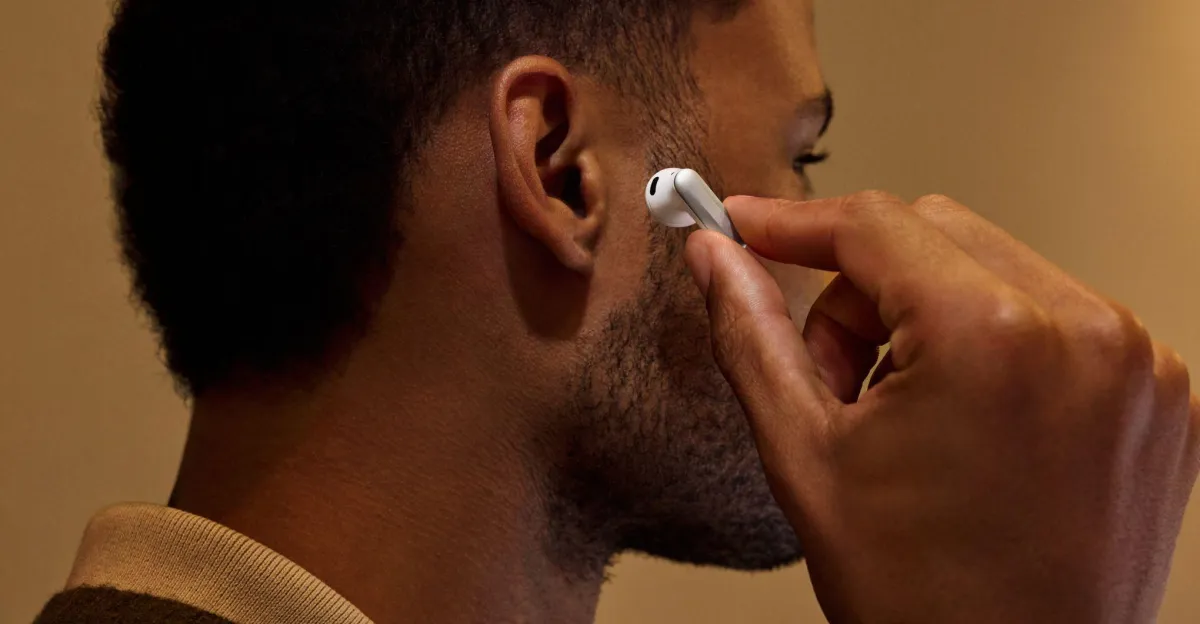
The new earbuds are designed to work both as regular wireless earbuds and as a standalone recording system through their charging case. Plaud says the case includes cellular connectivity, allowing conversations to be uploaded and processed without depending on a phone or nearby Wi-Fi, a feature aimed at making the device more self-sufficient than many earlier AI recorders.
What Plaud is trying to do with its AI earbuds
Plaud’s pitch is straightforward: make it easier to capture spoken information in meetings, calls and other conversations, then use AI to turn that audio into something useful. Instead of relying on a phone app, a notebook or a pin-style recorder, the Plaud One package is meant to sit in an everyday object people already understand — a set of earbuds.
That design choice matters because Plaud is clearly trying to widen the appeal of AI-powered recording. Previous tools in this category have often looked like workplace gadgets or novelty accessories. By moving into earbuds, Plaud is betting that a familiar consumer product can make recording, transcription and summarization feel less specialized and more natural.
The company describes the system as being powered by Plaud Intelligence, which is meant to interpret spoken exchanges and produce structured outputs from them. Plaud also says the technology is intended to “understand and execute on human intent,” language that places the product squarely in the newer wave of AI assistants focused not just on transcription, but on action.
How the Plaud One works
The Plaud One uses a mix of onboard storage, microphones and cloud processing to handle recording and later summarization. According to Plaud, each earbud carries 16MB of local storage, giving the pair a combined 32MB, while the charging case adds 512MB more.
The earbuds each have three microphones and can record from as far as two meters away. Plaud says they can run for up to six hours, which also matches the company’s stated maximum battery life for the earbuds themselves. The device includes noise cancellation and force-sensitive stem controls, suggesting the company wants it to function like a conventional premium earbud set as well as a recording tool.
The charging case appears to be the more distinctive part of the system. Plaud says it contains four microphones with a five-meter recording range, a built-in speaker and 4G connectivity. The company claims the case can deliver a combined battery life of up to 36 hours and can be recharged over USB-C.
That split approach gives Plaud two ways to use the product:
- as earbuds for personal use with built-in capture features
- as a recording and upload hub through the case
- as a mobile AI assistant that can process audio without a phone nearby
Why the 4G case matters
The 4G connection is the feature that most clearly separates this device from ordinary earbuds. It allows the case to upload and process conversations even when there is no Wi-Fi connection and no phone in range, which could be useful for people who move between meetings, commutes and field work.
That also makes the Plaud One less dependent on a companion app in the moment. For users, the goal may be to press a button, record what matters and let the system take over the rest later. For Plaud, the upside is a more seamless workflow that can keep the user inside its own software ecosystem.
Plaud says the platform is built to take spoken conversations, convert them into organized notes and then connect those notes to productivity tools people already use.
The company says its Plaud Agent feature is launched from a button on the charging case and integrates natively with services including Gmail, Google Calendar, Notion and Slack. In practical terms, that means a recorded meeting could potentially feed directly into scheduling, messaging or documentation workflows without much manual copying or switching between apps.
What is Plaud Agent?
Plaud Agent is the software layer that gives the hardware its main selling point. The company says the AI button on the case activates an assistant that can work with common productivity apps, reducing the need to juggle separate tools after a recording is made.
That positioning is significant in a crowded AI assistant market. Many companies are now trying to move from generic chatbots toward systems that can complete tasks across services. Plaud’s approach is narrower than that of a broad personal assistant, but it is also more concrete: capture a conversation, create a summary and route the information into the place where work happens.
In that sense, Plaud is not just selling earbuds. It is selling a workflow.
How does the Plaud One compare with earlier AI recording devices?
The Plaud One is part of a broader trend in which hardware companies are trying to embed AI note-taking into objects people already wear or carry. Earlier products in the category have included clips, pins and standalone recorders, but Plaud’s latest device leans heavily on the convenience and familiarity of earbuds.
That may give it a broader consumer profile than some of its predecessors, especially for users who already wear earbuds for music, podcasts or calls. At the same time, the product’s success will depend on whether people are comfortable using a pair of earbuds for ongoing recording and whether the transcription quality is strong enough to justify the price.
The Plaud One also stands out because of its use of the charging case as part of the recording system. Rather than treating the case only as a battery accessory, Plaud has turned it into a miniature hub with microphones, storage, a speaker and cellular data support.
| Feature | Plaud One Explorer Edition |
|---|---|
| Price | $249.99 |
| Availability | Preorders open in selected markets |
| Shipping | Expected in late September |
| Earbud microphones | 3 per earbud |
| Earbud recording range | Up to 2 meters |
| Case microphones | 4 microphones |
| Case recording range | Up to 5 meters |
| Earbud storage | 16MB per earbud, 32MB total |
| Case storage | 512MB |
| Battery life | Up to 6 hours on earbuds; up to 36 hours combined |
| Connectivity | 4G in the charging case |
Why Plaud may believe consumers will pay $249.99
The pricing suggests Plaud sees the One as a premium productivity tool rather than a mass-market audio accessory. At $249.99, it sits in the range of higher-end earbuds, but its value proposition is not sound quality alone. Plaud is asking buyers to pay for convenience, automation and the promise of better memory through AI.
That kind of pitch has become more common as AI hardware matures. Companies are increasingly trying to justify standalone devices by tying them to real-world workflows — meetings, phone calls, note-taking, scheduling and follow-up. If the software works well, the device could be useful for professionals who routinely capture information on the move.
But the pricing also creates a high bar. Users may expect excellent transcription, reliable summaries, strong battery life and enough audio fidelity to justify replacing or supplementing their existing earbuds. Any weakness in those areas could quickly make the product feel expensive for what it does.
Who is the likely audience?
The likely audience is professionals who spend a lot of time in meetings, founders, sales teams, journalists, researchers and other users who frequently need to remember details from spoken conversations. The 4G-enabled case may also appeal to people who work outside traditional office environments and do not always have reliable connectivity.
At the same time, the product could attract consumers already comfortable with AI transcription tools and willing to pay for a more integrated experience. Its earbud design may make it easier to adopt than a clip-on recorder that feels obviously tied to work.
How the launch fits into the broader AI hardware race
The Plaud One arrives at a moment when hardware makers are trying to prove that AI is more than a software layer on top of existing devices. The market has seen AI pins, voice recorders, smart glasses and app-based assistants, but many of these ideas have struggled to become essential products.
Plaud’s strategy is notable because it avoids some of the novelty associated with experimental AI hardware. Earbuds are already a mainstream device category, and that familiarity may help the company sidestep some of the skepticism that greeted earlier AI gadgets.
Still, the challenge remains the same: the hardware has to solve a real problem better than a phone app can. In Plaud’s case, that problem is capturing and organizing spoken information with less friction. If the device delivers on that promise, it could carve out a meaningful niche.
There is also a growing expectation that AI devices should not merely record information but actively process it. Plaud’s emphasis on transcription, summarization and integrations with business tools shows how much the category has shifted from passive recording to workflow automation.
What happens next?
Plaud says the Plaud One is available to preorder in selected markets now, with shipping scheduled to start in late September. That timeline gives the company a short runway to persuade buyers that an AI-enabled earbud system is worth the premium price.
The bigger test will come after launch, when early users determine whether the device truly saves time and reduces friction. In AI hardware, the gap between an impressive demo and a daily-use product can be wide. Plaud will need to show that the One is dependable enough for repeated use and smart enough to make its automation genuinely helpful.
If it succeeds, the company could help define a new class of AI wearables that look less like speculative gadgets and more like practical office tools. If it does not, the Plaud One may become another example of how difficult it is to turn AI ambition into must-have hardware.
Key details at a glance
- Product: Plaud One Explorer Edition
- Price: $249.99
- Availability: Preorders open now in selected markets
- Shipping: Expected in late September
- Core functions: Recording, transcription and summarization
- Connectivity: 4G-enabled charging case
- Integrations: Gmail, Google Calendar, Notion and Slack
For Plaud, the launch is less about earbuds as audio devices and more about rethinking how people capture and use spoken information. The company is wagering that the next useful AI gadget might not sit on a desk or clip to a shirt, but rest in the ears.
Frequently asked questions
What are Plaud AI earbuds?
Plaud AI earbuds are a wearable recording device that can capture conversations, transcribe speech and generate summaries. The Plaud One Explorer Edition uses earbuds plus a smart charging case to process audio and connect with productivity apps.
How much do Plaud One AI earbuds cost?
The Plaud One Explorer Edition costs $249.99. Plaud says preorders are open in selected markets now, with shipping expected to begin in late September.
Do Plaud AI earbuds work without a phone?
Yes, the charging case includes 4G connectivity, so the system can upload and process conversations without depending on a phone or Wi-Fi. Plaud says that makes the device more flexible for use on the move.
Which apps does Plaud Agent integrate with?
Plaud says its Agent feature integrates natively with Gmail, Google Calendar, Notion and Slack. The idea is to move summaries and notes into the tools people already use for communication, scheduling and documentation.
How long can the Plaud One record for?
Plaud says the earbuds can record for up to six hours, while the combined battery life of the earbuds and charging case can reach up to 36 hours. The case also includes four microphones and additional storage.