In short
Meta launched Muse Spark Open, its most capable U.S. open-weight AI model yet, and said it runs efficiently on two Apple M5 Ultra Mac Studios using MLX. The unusual collaboration highlights a growing push to bring advanced AI models onto desktop hardware.
- Meta says Muse Spark Open is its most capable U.S. open-weight model yet.
- Apple and Meta collaborated for months to optimize the model for Mac Studio hardware.
- The model is natively multimodal and targets software engineering and long-horizon reasoning.
- Apple’s MLX framework is central to running large AI models efficiently on Macs.
- The launch underscores a broader move toward powerful local AI on desktop systems.
Meta and Apple have unexpectedly teamed up to help Meta’s new Muse Spark Open model run more efficiently on Mac hardware, marking a rare public alignment between two of the tech industry’s biggest rivals. The collaboration matters because Meta is pitching Muse Spark Open as its most capable U.S.-developed open-weight model yet, while Apple is using the launch to show how far its Mac Studio machines and MLX software can push on-device AI.
The model’s debut signals a broader shift in artificial intelligence: not just bigger models, but more serious efforts to make advanced systems usable locally on desktop computers. Meta says the model can run on two Apple M5 Ultra Mac Studios with MLX, and both companies’ top executives have publicly praised the work.
What Meta announced with Muse Spark Open
Meta unveiled Muse Spark Open on Thursday and framed it as a major step forward in open-weight AI development. According to the company, it is the most capable U.S.-based open-weight model released so far and is designed for demanding tasks such as software engineering, extended multi-step reasoning, and more complex forms of multimodal input and output.
The company describes the system as natively multimodal, meaning it is built to handle more than just text. Meta said the model contains 816 billion total parameters, a figure that places it among the largest models publicly discussed in the open-weight category.
That scale is part of what makes the launch notable. In the AI race, model size alone does not guarantee usefulness, but it often signals ambition. Meta is clearly aiming to position Muse Spark Open as a showcase for high-end open infrastructure that can compete with leading closed systems on difficult tasks.
Why the model launch is drawing attention
The release stands out not only because of the model’s size and capabilities, but because Meta is emphasizing accessibility. Open-weight models make their learned weights available to developers and researchers, which can make them easier to study, adapt, and deploy than fully closed models.
For developers, the most important part of the announcement may be the claim that Muse Spark Open is the first model in its class that can run effectively on a desktop setup built around Apple Silicon. That is a meaningful claim in a market where AI workloads have often been associated with remote cloud infrastructure and expensive GPU clusters.
By highlighting local execution on Macs, Meta is signaling a future in which serious AI work is not confined to data centers. Instead, high-end desktop systems could become practical stations for developers who want privacy, lower latency, and more control over where their models run.
How Meta and Apple ended up working together
Meta and Apple are competitors in multiple arenas, from mobile software and hardware to platform control and AI strategy. Even so, the companies quietly collaborated over several months on the launch of Muse Spark Open, according to reporting cited by Axios. Their cooperation focused on getting the model to run efficiently on Apple hardware through Apple’s MLX framework.
That arrangement may seem unusual, but it reflects how AI development increasingly depends on interoperability. A company may compete fiercely in the marketplace while still benefiting from technical collaboration that improves developer adoption or demonstrates a system’s real-world performance.
In this case, the partnership gives Meta a launch story that highlights portability and performance, while Apple gets a high-profile example of how its silicon and software stack can support large-scale AI workloads on the desktop.
“Muse Spark Open — weights releasing today — runs great on new Mac Studios thanks to work with @johnternus and Apple,” Meta CEO Mark Zuckerberg said on X.
Apple CEO John Ternus replied that the team had done impressive work getting a model of this scale to run efficiently from a desk and said Mac Studio continues to push the limits of on-device AI.
Meta chief AI officer Alexandr Wang also described the relationship in a more playful way to Axios, saying the companies were happy to be “playing nice again,” a reminder that the partnership is notable precisely because the firms are typically seen as rivals.
What is MLX, and why does it matter?
MLX is Apple’s array framework for machine learning on Apple Silicon, and it is central to the practical significance of this launch. In simple terms, MLX is designed to help developers make better use of Apple’s chips for AI tasks, including running large models locally rather than depending entirely on cloud resources.
Apple also published a technical post to accompany the launch, discussing MLX, Muse Spark Open, and two other open models. That kind of documentation is important because Apple has increasingly positioned itself as a platform company for on-device AI, not just a hardware vendor.
The company’s pitch is straightforward: if developers can run advanced models efficiently on Mac Studio machines, then Apple hardware becomes more attractive for AI experimentation, fine-tuning, and deployment. That could matter for independent developers, startup teams, and enterprise users who want strong local compute without building out full server infrastructure.
How does local AI on Macs change the picture?
Local AI changes the picture by reducing dependence on the cloud, which can lower latency, improve privacy, and make costs more predictable. It also gives developers a way to test, prototype, and operate models without constantly sending data to external servers.
For Apple, the benefit is strategic. The company has been working to make its Macs relevant to AI buyers who might otherwise default to GPU-heavy systems from competitors. If a cutting-edge open-weight model can run well on Mac Studio hardware, that is powerful marketing for Apple’s silicon roadmap and software stack.
For Meta, the benefit is different but equally important. The company gets to show that an advanced model of considerable size is not limited to proprietary cloud environments. That may appeal to the research community, to enterprise users looking for flexibility, and to developers who want to build on a more open foundation.
Why this matters for the AI industry
The Meta-Apple collaboration points to a broader industry trend: AI is moving from a pure “who can build the biggest model?” race toward a “who can make the model actually usable?” contest. That usability question includes cost, portability, deployment flexibility, and support for local hardware.
Open-weight releases are especially important in that context. They can accelerate experimentation because outside developers can inspect behavior more easily, adapt the model to specific use cases, and build tools on top of it. If the model is also optimized for premium consumer hardware, it broadens the audience even further.
This also underscores a subtle change in AI competition. Not every strategic partnership has to involve product integration for consumers. Sometimes the real value lies in platform validation: proving that a model and a machine can work together well enough to attract developers and shape expectations for the next wave of AI tools.
Why Apple benefits from the spotlight
Apple benefits because the announcement turns its Mac Studio into a showcase for AI capability. Apple has long marketed its chips on efficiency and performance per watt, but AI has given that pitch new urgency as developers look for machines that can handle increasingly demanding workloads.
By tying itself to a headline-making model release, Apple is also sending a message to the developer community: its hardware is not only good for everyday productivity or creative work, but also credible for advanced AI experimentation.
That message is especially relevant as more developers ask whether they can run smaller or specialized models locally instead of renting cloud compute. Apple’s answer is becoming more confident, and the Muse Spark Open launch gives that answer a real-world test case.
Key facts at a glance
| Item | Details |
|---|---|
| Model name | Muse Spark Open |
| Announced by | Meta |
| Model type | Natively multimodal open-weight AI model |
| Total parameters | 816 billion |
| Claimed strengths | Long-horizon tasks, software engineering, multi-step reasoning |
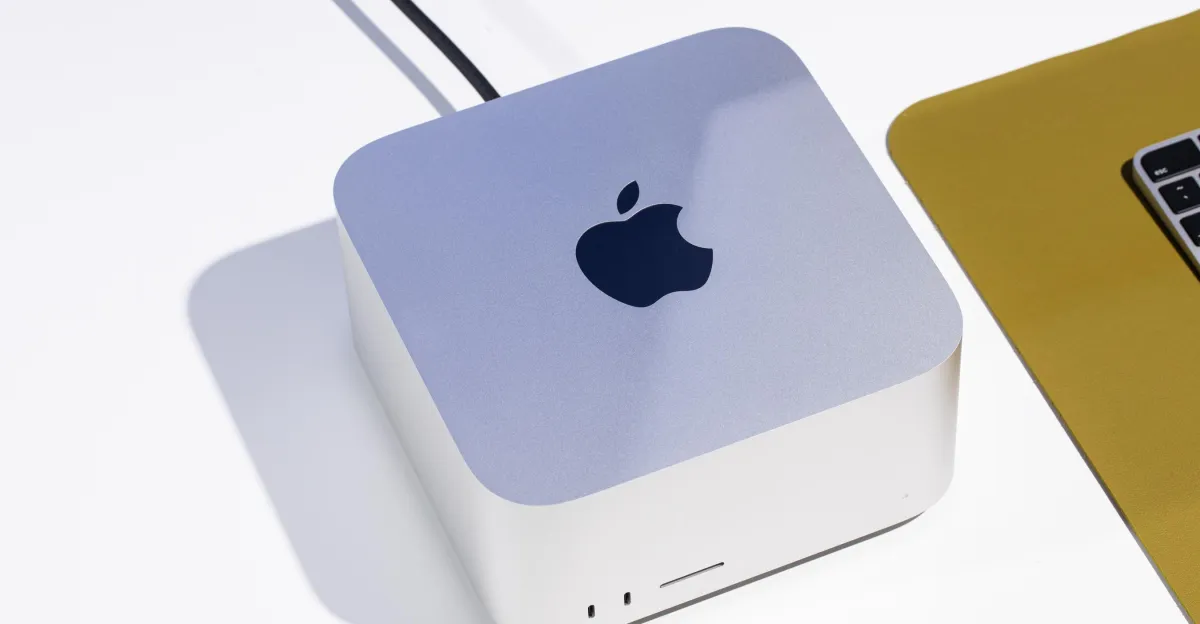
| Apple hardware support | Runs on two Apple M5 Ultra Mac Studios with MLX |
| Collaboration status | Meta and Apple worked together for months on the launch |
Timeline of the launch
| When | What happened |
|---|---|
| Over several months | Meta and Apple reportedly collaborated on technical support for the launch |
| Launch day | Meta introduced Muse Spark Open and described its capabilities |
| Launch day | Apple published a technical post about MLX and open models |
| Launch day | Executives from both companies publicly praised the collaboration on social media |
What Meta is really signaling with this release
Meta is doing more than releasing another large model. It is making a statement about openness, scale, and the future of desktop AI. By attaching the model to Apple’s hardware ecosystem, the company broadens the launch beyond a single product announcement and turns it into a demonstration of interoperability.
The emphasis on being a U.S.-developed open-weight model also appears deliberate. In a global AI market where model leadership is often framed in geopolitical terms, Meta is trying to position itself as an American source of frontier capability that still leaves room for broad developer access.
That could resonate with businesses and researchers who want a strong model without depending entirely on closed systems controlled by a handful of vendors. It could also help Meta compete for mindshare among developers who value freedom to inspect and adapt models.
How the Apple-Meta pairing could influence future releases
If the collaboration proves useful, it may become a template for future launches. Model makers increasingly want their systems to run on a range of devices, while hardware vendors want a strong reason for developers to choose their platforms.
That mutual incentive could lead to more public cooperation between companies that are otherwise competitive. For users, this is good news: a healthier ecosystem usually means more model choices, more optimization work, and better performance on consumer hardware.
Still, the broader market will judge Muse Spark Open on practical results. The key questions are whether it genuinely performs well in everyday developer workflows, how much memory and tuning it requires, and whether MLX makes deployment simple enough to matter beyond a demonstration.
What happens next?
The next stage will likely focus on adoption. Developers will test the model, benchmark its speed and accuracy, and compare its performance with other open-weight and closed models available today. Apple’s MLX ecosystem will also face scrutiny as users see whether the framework delivers on its promise of efficient local AI.
For now, the launch is most important as a proof point. Meta wants to show that a very large open model can still be practical. Apple wants to show that its Mac hardware belongs in the center of the AI conversation. Together, the two companies have produced a launch that is both technically significant and strategically revealing.
In an industry where companies often compete by sealing off their best work, this collaboration suggests that some of the most interesting AI advances may come from unlikely partnerships. The real story is not just that Meta built a large model or that Apple has powerful Macs. It is that both companies saw value in proving that frontier AI can run closer to the desktop than many expected.
FAQ
What is Muse Spark Open?
Muse Spark Open is Meta’s new open-weight AI model. Meta says it is a natively multimodal system with 816 billion total parameters and strong performance on long-horizon tasks, software engineering, and multi-step reasoning.
Why is the Meta and Apple collaboration important?
The collaboration is important because it shows an advanced AI model running efficiently on Apple hardware, which could help make local AI more practical for developers and strengthen Apple’s position in the AI market.
Can Muse Spark Open run on a Mac?
Yes. Meta says the model can run on two Apple M5 Ultra Mac Studios using Apple’s MLX framework, which is designed for machine learning on Apple Silicon.
Are Meta and Apple now partners?
Not in the broader business sense. The companies collaborated on the technical launch of Muse Spark Open and publicly supported each other, but they remain major competitors across hardware, software, and platform strategy.
Why does open-weight AI matter?
Open-weight AI matters because it gives developers and researchers more flexibility to study, adapt, and deploy models. That can speed up innovation and make advanced AI more accessible outside closed cloud systems.
Frequently asked questions
What is Muse Spark Open?
Muse Spark Open is Meta’s new open-weight AI model. Meta says it is a natively multimodal system with 816 billion total parameters and strong performance on long-horizon tasks, software engineering, and multi-step reasoning.
Why is the Meta and Apple collaboration important?
The collaboration is important because it shows an advanced AI model running efficiently on Apple hardware, which could help make local AI more practical for developers and strengthen Apple’s position in the AI market.
Can Muse Spark Open run on a Mac?
Yes. Meta says the model can run on two Apple M5 Ultra Mac Studios using Apple’s MLX framework, which is designed for machine learning on Apple Silicon.
Are Meta and Apple now partners?
Not in the broader business sense. The companies collaborated on the technical launch of Muse Spark Open and publicly supported each other, but they remain major competitors across hardware, software, and platform strategy.
Why does open-weight AI matter?
Open-weight AI matters because it gives developers and researchers more flexibility to study, adapt, and deploy models. That can speed up innovation and make advanced AI more accessible outside closed cloud systems.