In short
Meta has rolled out voice conversations and animated avatars for Muse in the US, making its AI agent more lifelike and better suited to wearables. The update is the first step toward bringing voice mode to Meta AI glasses and the upcoming Muse Charm gadget.
- Meta launched real-time voice chat for Muse in the US app.
- Muse avatars now animate while speaking during conversations.
- Voice mode is planned for Meta AI glasses and the Muse Charm gadget.
- The rollout suggests Meta wants Muse to work across apps and hardware.
Meta has begun rolling out real-time voice conversations and animated speaking avatars for its Muse AI agent in the US, a move that makes the assistant feel more human and ties it more closely to the company’s wearable ambitions. Mark Zuckerberg announced the update on Nov. 5, 2026, and The Verge reported that the feature was already live in the Muse app on iOS after rollout.
The change matters because it pushes Muse beyond text-based interaction and into the kind of voice-first, face-on interface that could define the next phase of consumer AI. Meta is not only making the product more expressive inside the app; it is also preparing voice mode for Meta AI glasses and the upcoming Muse Charm gadget, which is expected to ship this year.
What Meta changed in Muse
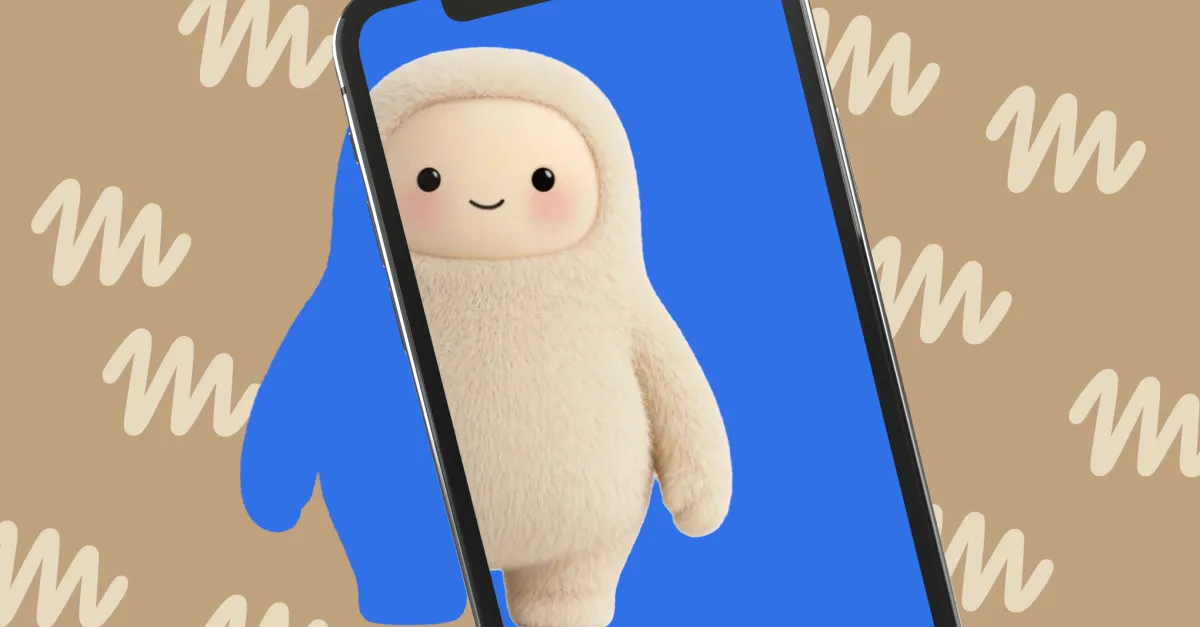
Meta added live voice chat to Muse and paired it with animated avatars that now move while speaking during conversations. According to The Verge, the rollout lets users talk to the AI agent in real time rather than only typing prompts.
The voice itself is not fixed. Users can alter the tone either by asking Muse directly or by changing settings tied to the avatar. That gives Meta a way to make the same assistant feel more formal, casual or stylized, depending on preference.
How the new voice experience works
The Verge reported that voice responses were generally fast in testing, though the assistant sometimes paused while looking up information. That suggests Meta is trying to balance speed with responsiveness to live queries, a key expectation for any conversational AI product.
On the visual side, the animated avatar performance was described as effective but uncanny in one test. That reaction is familiar in AI interfaces that aim for realism: small gains in expressiveness can also make the system feel more uncanny if the motion or timing lands just slightly off.
| By the numbers | Detail | What it means |
|---|---|---|
| Nov. 5, 2026 | Date Zuckerberg announced the update | The rollout was introduced publicly that day |
| US | Initial market for the Muse app voice mode | The feature is starting with American users |
| This year | Expected ship window for Muse Charm | Meta is linking the assistant to near-term hardware plans |
| Soon | Planned timing for Meta AI glasses support | Voice mode is heading beyond the phone app |
Why it matters
Meta’s update is more than a cosmetic refresh. It signals that the company wants Muse to compete in the emerging market for AI assistants that speak naturally, display personality and travel across devices.
That strategy could matter for three reasons. First, voice interaction can make an assistant feel easier and faster to use than text, especially on phones and wearables. Second, expressive avatars give Meta a way to build a branded identity around Muse instead of leaving the product to function as a generic chatbot. Third, the rollout reinforces Meta’s broader push to connect AI features across its apps and hardware.
For users, the immediate implication is a more immersive assistant that can answer in real time and visually react as it speaks. For Meta, the larger implication is strategic: if Muse can work smoothly in the app, on glasses and in a future gadget, the company can present it as a unified AI layer rather than a standalone feature.
Why voice and avatars are important now
Voice is becoming a central interface in consumer AI because it lowers friction. People can ask questions hands-free, multitask and get responses in a format that feels closer to a conversation than a search session. Avatars add another layer, making the experience feel less abstract and more social.
Meta’s approach also plays to its strengths. The company has invested heavily in products where hardware, identity and communication overlap, and Muse now appears to be following that path. The assistant is being positioned not just as software, but as a voice that can move with the user across devices.
Background: how Meta got here
Muse is Meta’s AI agent product, designed as a conversational assistant. Meta has been adding AI features across its apps and hardware, including wearable devices, and this rollout fits that pattern.
The company’s recent direction suggests a broader effort to make AI less text-bound and more present in daily use. Instead of keeping the assistant inside a chat window, Meta is turning it into a voice-enabled companion that can appear in hardware environments where speech is more natural than typing.
That is especially relevant for wearables. On smart glasses, for example, voice is often the most practical input method, and a responsive AI assistant can be more useful if it speaks back clearly and quickly. The same logic applies to a small gadget like Muse Charm, where limited screen space makes conversational interaction more valuable.
What Meta is building toward
Based on the announcement and The Verge’s reporting, Meta appears to be building a layered product family around Muse:
- a voice-capable Muse app in the US;
- animated avatars that make chats feel more expressive;
- voice mode for Meta AI glasses coming soon;
- support for the upcoming Muse Charm gadget, expected to ship this year.
That sequence points to a single ambition: make Muse feel consistent whether the user is on a phone, wearing glasses or using a dedicated device.
What The Verge’s testing showed
The Verge said it tested the feature on iOS after the rollout, giving a first look at how the product behaves in practice. The reporting found that responses were generally quick, but there were moments when Muse paused to look up information before answering.
Those pauses are not unusual in AI systems that need to retrieve or check information on the fly. The real test is whether the assistant can keep the exchange feeling natural even when it needs a beat to gather an answer.
The animated avatar, meanwhile, appeared to do the job Meta intended: it made the conversation feel more alive. But the same test also noted an uncanny quality, which is a risk whenever companies push digital humans closer to realism.
“soon”
That was the company’s timing signal, as cited by The Verge, for the arrival of voice mode on Meta AI glasses.
How the rollout fits Meta’s hardware plans
The app update is only the starting point. Meta said voice mode is coming soon to Meta AI glasses and is also planned for Muse Charm, a gadget expected to ship this year. That makes the rollout look less like an isolated software update and more like the first step in a broader hardware rollout.
Hardware is where voice assistants can become especially sticky. A phone app can be opened and closed. A wearable assistant, by contrast, can sit closer to the user’s daily routine, making the service feel more immediate and more personal. If Meta can make Muse work well in that setting, it could improve the product’s relevance beyond the app itself.
What the company still has to prove
Meta still needs to show that Muse’s voice mode scales cleanly outside the app. Open questions include how widely the US rollout extends, whether there are access limits, and how the experience changes when it reaches glasses or the Muse Charm gadget.
There is also the matter of consistency. A feature that feels polished in one app may behave differently on a wearable device, where latency, battery life and input constraints matter more. Meta’s challenge is to keep the assistant fast and useful as it moves across platforms.
What happens next
The immediate next milestone is the broader US rollout of voice mode in the Muse app, followed by support for Meta AI glasses and, later, Muse Charm. The company has not provided detailed timing beyond “soon” for the glasses feature and “this year” for the gadget, so those remain the key markers to watch.
For users and competitors alike, the bigger question is whether Meta can make the voice-and-avatar experience feel natural enough to matter. If it can, Muse may become a model for how the company wants people to interact with AI across its products. If not, the update could be remembered as an early step in a longer refinement process.
Watch these developments
- How quickly the US rollout expands within the Muse app.
- Whether the voice mode on Meta AI glasses arrives on the announced timeline.
- Whether Muse Charm ships this year as expected.
- How users respond to the animated avatars over longer sessions.
- Whether Meta adds more control over tone, voice style or personality.
Competitive implications
Meta’s move comes at a time when voice-forward AI interfaces are becoming a standard benchmark for consumer products. The company is clearly trying to make Muse feel less like a static chatbot and more like a presence that can speak, react and follow users between devices.
That matters because the next phase of AI competition may not be won only on model quality. It may also depend on presentation, convenience and hardware integration. A product that is pleasant to talk to, quick to answer and easy to carry into everyday life has a better chance of becoming habitual.
Meta’s advantage is that it can test that experience across both software and hardware. The risk is that users will judge the assistant not just by what it can answer, but by how it feels to use. The Verge’s report suggests Meta is already aware of that balance, pairing live voice chat with animated avatars in a bid to make Muse more lifelike without losing utility.
Background on the reported rollout
According to The Verge, the feature was announced by Mark Zuckerberg on Nov. 5, 2026 and was already live in the US app at the time of reporting. The same report said the feature includes real-time voice chat, animated avatars and adjustable tone controls.
That combination tells a clear story: Meta is building Muse as a conversational product that is meant to be heard, seen and used across devices. The phone app is the first public proof point, but the planned expansion to glasses and Muse Charm suggests the company sees the assistant as part of a broader platform shift.
Summary of the rollout
Meta has started giving Muse a voice, and it is doing so in a way that ties the assistant to a future beyond the app. The update is live in the US, the avatars now animate while speaking, and the feature is set to spread to Meta AI glasses and the Muse Charm gadget.
For now, the significance is less about a single new button than about direction. Meta is signaling that its AI future will be conversational, expressive and hardware-aware.
Frequently asked questions
What is Meta’s Muse voice mode?
Meta’s Muse voice mode is a new feature that lets users hold real-time voice conversations with the company’s AI agent in the US app. The update also adds expressive animated avatars that move while speaking, making the assistant feel more lifelike.
When did Meta announce the Muse update?
Meta announced the Muse update on Nov. 5, 2026, according to The Verge. The feature was reported as live in the US app after the announcement.
Will Muse voice mode be available on Meta AI glasses?
Yes, Meta says voice mode is coming soon to Meta AI glasses. The company has not given a precise release date, so the timing remains one of the main things to watch.
What is Muse Charm?
Muse Charm is an upcoming Meta gadget that is expected to ship this year. Meta plans to support voice mode on it, suggesting the assistant will be part of the company’s broader hardware strategy.
How did the feature perform in testing?
The Verge reported that voice responses were generally fast, though the assistant sometimes paused to look up information. The animated avatar was described as effective, but also a little uncanny in one test.