Updated November 6, 2026 2:23 am
In short
Airbnb says its AI travel agent will arrive in the first half of 2027, with a custom travel-focused interface and support features that extend beyond booking into trip changes, refunds and safety help.
- Airbnb plans to launch its own AI travel agent in the first half of 2027.
- The agent is designed as a travel-specific interface with maps, photos, comparisons and itineraries.
- Crypto Briefing reported Airbnb is already using AI in support, with about 40% of Q3 issues resolved without humans.
- Airbnb raised its 2026 revenue growth outlook to the high teens after Q3 revenue rose 19% to $4.87 billion.
- The company is betting travel planning needs a richer, more contextual AI experience than generic chatbots provide.
Update — November 6, 2026 2:23 am
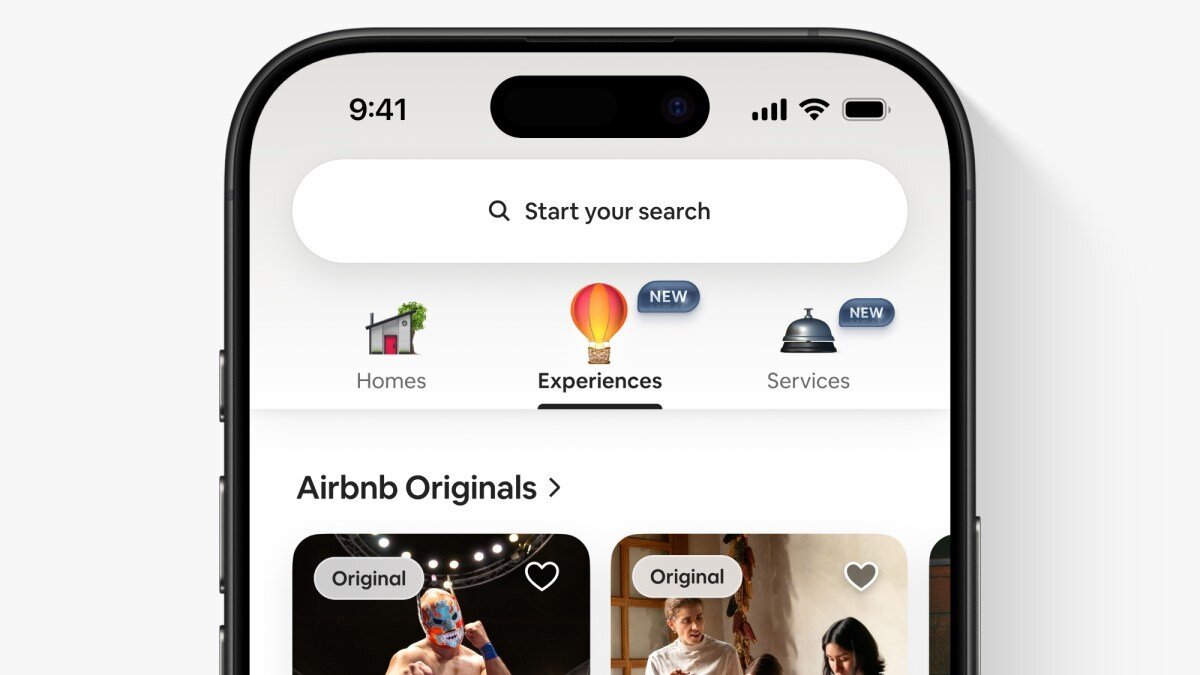
Airbnb says its new AI travel agent will launch in the first half of 2027, and the company is now spelling out a bit more clearly how it wants it to work. Rather than acting like a standard chatbot, the assistant will assemble a travel-specific interface around each question using tools like maps, photos, comparisons, calendars and itineraries.
CEO Brian Chesky also said the agent is being built for collaborative trip planning, including helping people make decisions with the companions they’re traveling with. Airbnb says the system will go beyond search and booking to help with reservation changes, payment problems, refunds, rebooking and 24-hour safety support.
The company added that it expects the agent to expand over time into homes, hotels, services and experiences.
Update — November 6, 2026 12:23 am
The Verge also reports that Airbnb plans to let users make decisions together with the people they’re traveling with, not just search and book on their own. The company says the assistant will act on trip-planning choices directly inside Airbnb, using a custom interface built around the question rather than a standard chat window.
In its shareholder letter, Airbnb went further and called AI “the best thing to ever happen to Airbnb,” saying it has already changed both product development and operations. The company’s CEO, Brian Chesky, has also previously said the 2027 agent would offer an interface that is “much richer than a chatbot,” The Verge notes.
Airbnb said its in-house AI travel agent will launch in the first half of 2027, a move that could fold search, planning, booking and service into one app-native experience. The company is positioning the product as a travel-specific assistant rather than a generic chatbot, arguing that trip planning needs maps, photos, comparisons and live itinerary context that broad AI tools do not handle well.
Why it matters: Airbnb is not just chasing a consumer AI trend. It is trying to build a tool that can both increase bookings and reduce service costs, while keeping travelers inside its own platform from the first question to the final payment, according to reporting from TechCrunch and Crypto Briefing.
What Airbnb is building
Airbnb disclosed the launch window in its Thursday shareholder update and offered more detail on how the agent is supposed to work. TechCrunch reported that the product will have a travel-specific interface built into the Airbnb app, not merely a text box that answers prompts the way a general chatbot would.
Instead, the assistant is expected to surface maps, photos, comparisons, calendars and itineraries in real time. The point, according to the company’s framing, is to make the experience look and feel like travel planning rather than a generic conversation with software.
Brian Chesky, Airbnb’s chief executive, has been drawing a line between simple AI assistants and the kind of product Airbnb wants to ship. In remarks cited by TechCrunch, he said:
“Today’s AI agents like Muse and Instinct are good at simple routine tasks like making a restaurant reservation or scheduling an appointment.”
He then made the case that travel is different. In the same set of remarks, Chesky said:
“Travel is aspirational.”
That distinction is the centerpiece of Airbnb’s strategy. The company argues that travelers do not just want a transaction bot; they want help weighing options, visualizing destinations and making decisions that feel personal and often emotional.
How is Airbnb’s AI travel agent different from a chatbot?
It is different because Airbnb says the product is being built around travel tasks, not general conversation. According to TechCrunch, the interface will lean on hundreds of components and draw on maps, photos, comparisons, calendars and itineraries so users can plan and book within a single flow.
That matters because Airbnb appears to believe generic AI agents are not the best fit for trip planning. The company’s position is that broad-purpose tools can help with narrow tasks, but travel involves more variables, more back-and-forth and more dependence on visual context than a simple prompt-response system can reliably handle.
Crypto Briefing added another layer to that picture, reporting that users are expected to book directly through the agent and keep the transaction inside the Airbnb app from the initial query to payment. If that holds, the assistant would function less like an external concierge and more like a full-service front end for Airbnb’s marketplace.
Planned functions
- Trip search and planning inside the Airbnb app
- Booking support with contextual travel information
- Reservation changes and rebooking help
- Payment issue handling and refund support
- Safety-related assistance during a trip
Those in-trip service features are important. TechCrunch reported that Airbnb believes outside agents cannot easily handle these post-booking tasks, which means the company is not just trying to win the planning stage. It is trying to own the service layer after the booking is made as well.
Why it matters
Airbnb’s plan matters because it could reshape two parts of the travel business at once: how people book trips and how they get help when something goes wrong. If the company can combine discovery, booking and support inside one AI-driven interface, it may reduce friction for travelers and make the app more useful at every stage of a trip.
There is also a clear business incentive. Crypto Briefing reported that Airbnb already uses AI in customer support, with tools resolving about 40% of issues in the third quarter without human help, up from one-third in the second quarter. That suggests the company sees AI not only as a customer feature but also as an operating lever.
For Airbnb, that matters because support is expensive, and travel problems tend to be urgent. A cancellation, refund dispute or rebooking request can become a customer-service burden fast. If an agent can resolve more of those cases automatically, the economics improve even if the consumer experience stays the same.
The market implication is broader than Airbnb itself. Travel is one of the consumer categories where AI could prove most valuable if it can move beyond generic chat. Airfare, lodging, schedules and local logistics are all information-heavy decisions. A product that can manage them in context, inside a booking app, could set a template other platforms try to copy.
What the numbers say
Airbnb’s AI push comes as the company says its business is growing and that the underlying travel demand remains strong. TechCrunch reported that the company’s third-quarter revenue rose 19% year over year to $4.87 billion, and Airbnb raised its full-year 2026 revenue growth forecast to the high teens from the mid-teens.
Crypto Briefing reported that the company also logged 155 million booked nights and seats in the third quarter of 2026. That number underscores the scale of the platform the agent may eventually sit on top of.
| Metric | Figure | What it refers to |
|---|---|---|
| Launch window | First half of 2027 | Planned release for Airbnb’s AI travel agent |
| Q3 2026 revenue | $4.87 billion | Airbnb’s reported quarterly revenue |
| Revenue growth | 19% | Year-over-year Q3 growth |
| 2026 forecast | High teens | Updated full-year revenue growth guidance |
| Support AI resolution rate | 40% | Issues resolved without human help in Q3 2026 |
| Support AI resolution rate in Q2 | One-third | Issues resolved without human help in Q2 2026 |
| Booked nights and seats | 155 million | Q3 2026 travel activity across the platform |
The company’s use of AI in customer support also appears to be improving over time. According to Crypto Briefing, the share of issues handled without a human rose from one-third in the second quarter to about 40% in the third quarter. The outlet also reported that support cost per booking fell more than 17% year over year.
Background: how Airbnb got here
Airbnb began as a home-sharing platform and grew into a broader travel-booking business. Over time, it expanded beyond lodging into services and experiences, which helps explain why an AI travel agent fits the company’s larger direction. The more stages of a trip Airbnb touches, the more valuable a single assistant becomes.
That history also shapes the product design. Airbnb says its long host-guest experience informs how the agent will behave, implying the company sees itself as better suited than a generic AI startup to understand the messy realities of booking, staying and resolving problems while on the road.
Crypto Briefing said the agent will rely on about 20 years of guest-behavior data. If so, that data advantage could be one of Airbnb’s main defenses against competitors that can imitate the interface but lack the same depth of travel-specific usage patterns.
The company is also leaning on the fact that travel shopping is already a deliberate process. Airbnb says roughly 80% of travelers enjoy researching trips, which helps explain why it believes a richer interface — one that can show photos and comparisons rather than just text — will be especially effective.
What Chesky is signaling
Chesky’s comments suggest Airbnb does not want to be seen as simply adding an AI wrapper to an existing product. Instead, the company seems to be redesigning the trip-planning experience around a new kind of assistant that can act like a guide, a service desk and a booking layer all at once.
TechCrunch also reported that Chesky publicly repeated the richer-interface AI agent plan at the Skift Global Forum on Sept. 23, 2026, well before the shareholder letter. That suggests Airbnb has been telegraphing the direction of the product for some time, even if the precise launch date was only disclosed later.
What happens next
The next major checkpoint is the first half of 2027, when Airbnb says the agent will launch. What remains unclear is how quickly it will roll out, where it will be available, and whether the company will make the tool broadly accessible from day one or phase it in across markets and use cases.
Several practical questions remain open:
- Will the agent launch globally or in limited regions first?
- Which actions will be automated, and which will still require human review?
- Will booking, payment and support all run through the same flow?
- Will Airbnb charge separately for the agent or bundle it into standard booking?
- How will it handle safety concerns and more complicated itineraries?
The company’s own framing suggests the answer to those questions will determine whether the product is a useful assistant or a truly integrated travel system. If Airbnb gets it right, the agent could become the default way many users search, book and manage trips. If it stumbles, it risks being remembered as another AI feature that sounded smarter than it performed.
For now, the clearest takeaway is that Airbnb is not treating AI as an accessory. It is treating it as a core interface for travel, backed by its own data, its own service infrastructure and a business that is already showing strong growth.
By the numbers
The table below summarizes the figures Airbnb and the reporting outlets put on the record.
| Item | Value | Source framing |
|---|---|---|
| Launch timing | First half of 2027 | Airbnb’s stated window for the AI travel agent |
| Revenue growth | 19% | Q3 2026 year-over-year increase |
| Revenue | $4.87 billion | Q3 2026 reported revenue |
| Guidance | High teens | Updated 2026 revenue growth outlook |
| Support automation | 40% | Q3 issues resolved without human help |
| Support automation in Q2 | One-third | Previous quarter’s resolution rate |
| Support cost change | More than 17% lower | Year-over-year support cost per booking |
| Platform activity | 155 million | Booked nights and seats in Q3 2026 |
Airbnb’s wager is straightforward: a travel-native AI agent can do what generic bots cannot, and it can do it while making the company more efficient. The coming year will show whether that is a product breakthrough, a clever interface experiment, or both.
Either way, the company is making a clear bet that the next phase of travel search will not be a search box at all. It will be an assistant that knows the difference between a prompt and a trip.
How TechCrunch and Crypto Briefing differ
The two outlets largely align on the direction of Airbnb’s strategy, but they emphasize different parts of the story. TechCrunch focuses on the product design: the richer interface, the travel-specific workflow and Chesky’s view that trip planning is more complex than a standard AI task. Crypto Briefing puts more weight on the transaction flow, the support automation gains and the data advantage behind the system.
That split matters because it reflects two sides of the same business case. The interface is what travelers see. The economics — support automation, booking retention and reduced service costs — are what Airbnb is likely measuring behind the scenes.
On both readings, though, the conclusion is the same: Airbnb wants its AI travel agent to be more than a helper. It wants it to be the place where the trip happens.
Frequently asked questions
What is Airbnb’s AI travel agent?
Airbnb’s AI travel agent is a planned in-app assistant designed to help with trip planning, booking and service tasks. According to TechCrunch, it will use a travel-specific interface with maps, photos, comparisons, calendars and itineraries rather than acting like a generic chatbot.
When will Airbnb launch the AI travel agent?
Airbnb says the AI travel agent will launch in the first half of 2027. That is the company’s stated window, and no more exact rollout date has been given yet, so the launch could still come in several phases.
Why is Airbnb building its own AI instead of using a general chatbot?
Airbnb says general-purpose agents are not the best fit for travel planning. The company argues that travel is aspirational and requires visual context, comparison tools and support after booking, including changes, refunds, rebooking and safety help.
Will users be able to book directly through the agent?
Yes, according to Crypto Briefing, users are expected to book directly through the agent and keep the transaction inside the Airbnb app from query to payment. That would make the agent part of the full booking flow, not just a search helper.
How is Airbnb already using AI in its business?
Airbnb already uses AI in customer support, and Crypto Briefing reported those tools resolved about 40% of issues in Q3 2026 without human help. The outlet also said support cost per booking fell more than 17% year over year.