In short
TechCrunch Disrupt 2026 will feature a large slate of interactive roundtables in San Francisco, with sessions focused on AI, fundraising, enterprise software and physical AI. The event is pitching the format as a practical way for founders, investors and operators to get direct advice and make useful connections.
- TechCrunch Disrupt 2026 takes place October 13-15 at Moscone West in San Francisco.
- The event includes interactive roundtables on AI, fundraising, enterprise software, healthcare, commerce and robotics.
- Physical AI and enterprise agentic AI are major themes across the agenda.
- Tickets are currently discounted by $100, with a second pass available at 50% off.
- The roundtables are designed to deliver practical, direct advice rather than standard conference presentations.
TechCrunch Disrupt 2026 is set to bring more than 10,000 founders, investors, operators and technology leaders to San Francisco next week, and one of the event’s biggest draws is its schedule of interactive roundtables. The sessions, included with admission, run October 13-15 at Moscone West and are designed to give attendees direct access to experts on the issues shaping startups, enterprise software, fundraising, AI, and physical-world automation.
For founders and operators, the roundtables matter because they move beyond stage presentations and into practical problem-solving. Attendees can question speakers, compare notes with peers and walk away with advice they can actually use — whether they are building a company, raising capital, adopting AI, or trying to scale operations without losing control of the business.
The event also comes with a limited-time ticket promotion: Disrupt passes are currently discounted by $100, and buyers can get a second pass for half price. With registration closing in on one of the startup calendar’s most closely watched gatherings, TechCrunch is emphasizing the networking value of the roundtable format as much as the main-stage program.
Why the roundtables matter for founders and investors
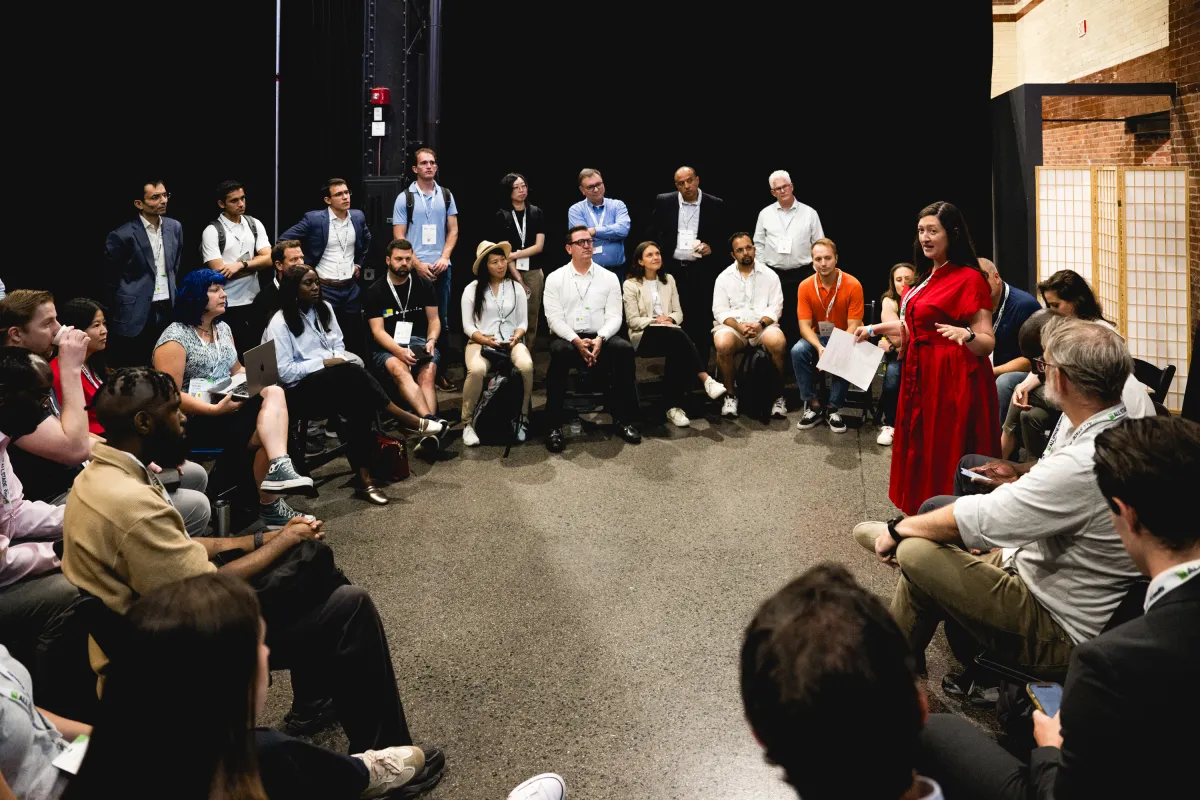
The roundtables are meant to be smaller, more interactive sessions where the conversation goes deeper than a typical conference talk. TechCrunch says the format is intended to help attendees tackle the same problems they are facing in real time, with speakers ranging from founders and operators to investors and product leaders.
That approach reflects a broader shift in startup conferences: people are increasingly looking for concrete guidance, not just inspiration. The sessions at Disrupt 2026 are built around high-friction topics such as early fundraising, enterprise AI adoption, robotics deployment, and the operational realities of growth.
Roundtables are framed as a place where attendees can bring their own questions, share experience, and get practical perspectives from people who have faced similar challenges.
The lineup also mirrors the market’s current preoccupations. Artificial intelligence appears in multiple formats — from model choice and agentic workflows to post-training data and AI in healthcare, commerce, and science. Physical AI, meanwhile, is represented by several sessions focused on robotics, construction, infrastructure and the challenge of turning impressive demos into dependable products.
What is on the Disrupt 2026 roundtable agenda?
The agenda spans startup strategy, technology trends and hard operational questions. Below is a summary of selected sessions and the core issue each one addresses.
| Session | Speaker(s) | Main theme |
|---|---|---|
| Arm Wrestling Your Data: The Physical AI Challenge | Radha Basu, iMerit | Data pipelines for robotics and autonomous systems |
| Can AI Take You Public? | Eléonore Crespo, Pigment; Sofia Fatakhova, Chime | IPO-ready finance and AI-enabled operations |
| Beyond Inventory: The Commerce AI Playbook for the Intent Era | Srishti Chaudhary, Walmart eCommerce | Agentic shopping and intent-based commerce |
| From Pilot to Production at Scale | Dr. Maha Achour, Kodamai; Pankaj Kedia, 2468 Ventures | How enterprises move agentic AI into production |
| How to Land Your First Institutional Check | Aditi Maliwal, Upfront Ventures | What early investors look for before traction |
| What Comes After ChatGPT? AI for the Physical World | Jack Hidary, SandboxAQ; Stacie Calad-Thomson, Nvidia | AI grounded in physics, chemistry and biology |
AI sessions span the stack
Several roundtables are centered on the AI ecosystem, but they approach the topic from different angles. Some focus on infrastructure and model selection, while others focus on enterprise adoption, specialized data, or practical use cases in medicine, commerce and science.
- Open-weight models: Mercedes Bent and Vanessa Larco will discuss trade-offs involving cost, security, performance and control.
- Specialty post-training data: Dani London will explore why domain-specific datasets are becoming a key differentiator.
- Agentic enterprise AI: Ankita Mehta will look at where autonomous workflows are actually delivering value.
- Enterprise rollout: Dr. Maha Achour and Pankaj Kedia will examine why many pilot projects fail to scale.
The common thread is that AI is no longer being treated as a single product category. Instead, the sessions highlight a stack that includes foundation models, data, workflow orchestration, reliability layers and sector-specific deployment. For many startups, the most important question is not whether to use AI, but where exactly it creates defensible advantage.
How are enterprise software companies adapting to AI?
Enterprise software is being forced to rethink its value proposition because AI is changing how work gets done across organizations. One roundtable, led by Smartsheet CEO Rajeev Singh, argues that AI is exposing fragmentation inside traditional SaaS products rather than simply replacing them.
That idea reflects a common industry debate: software buyers do not just want smarter tools, they want systems that understand context across workflows. As organizations add more AI capabilities, the pressure is increasing on software vendors to coordinate data, people and processes instead of offering disconnected point solutions.
Other sessions extend the same logic into adjacent areas. Naren Krishna of Balerion and Travis Skelly of Pruven Capital will discuss why large enterprises often prefer an AI layer on top of existing systems rather than a wholesale replacement. Meanwhile, Kevin Bai of Anthropic will examine the role of forward-deployed engineers in enterprise sales, a model that blends product, implementation and consulting.
Why the enterprise AI debate is still unresolved
The enterprise market is still looking for the right balance between speed, trust and integration. Many companies want the productivity boost of AI, but they do not want to rip out core infrastructure that already runs finance, operations, sales or compliance.
That tension helps explain why so many AI projects remain stuck in pilot phase. Teams can often prove value in a demo, but production deployment requires safeguards, workflow changes, governance and a clear return on investment. Disrupt’s agenda repeatedly returns to that challenge.
What founders need to know about fundraising at Disrupt 2026
Fundraising is a major focus of the roundtable program, and several sessions are built around helping founders navigate a market that has become more selective and more complex. Topics include landing a first institutional check, running a competitive process, and structuring a fundraise without damaging the company’s future flexibility.
Alex Li of MVP Ventures will discuss how to architect a strong fundraising process, while Aditi Maliwal of Upfront Ventures will explain how investors think about very early-stage companies before traction is visible. Itamar Novick and Brian Sparkes will cover the basics of securing a first venture round, and Neil Sequeira will discuss how founders can raise enough capital without overdoing it.
One of the core messages across the fundraising sessions is that a round is not just about the pitch; it is also about investor fit, timing, narrative and the long-term impact on the cap table.
That is especially relevant in today’s market, where capital is still available but more closely scrutinized. For founders, the difference between a helpful round and a burdensome one can affect hiring, dilution, board dynamics and future exits.
Key fundraising topics on the agenda
- Building the narrative: How to explain the company clearly enough to generate urgency.
- Choosing the right investors: Why alignment matters beyond valuation.
- Managing process: How to create momentum without losing leverage.
- Planning for later rounds: Why cap-table decisions now can constrain growth later.
Why physical AI is getting so much attention
Physical AI is one of the strongest recurring themes in the roundtable lineup. Multiple sessions focus on robotics, autonomous systems, infrastructure and other industries where software has to function in the messy, unpredictable real world.
Radha Basu’s session on data challenges in physical AI is especially notable because it highlights a problem many newcomers underestimate: robots and autonomous systems are only as good as the data pipelines behind them. In physical environments, edge cases, sensor fusion and multimodal inputs become central to product quality.
Logan Farrell of Rugged Robotics and Austin Yount of Brick & Mortar Ventures will explore a different but related issue: why a robotics demo is not the same thing as a product customers can depend on. Their discussion is expected to touch on reliability, workflow integration, customer trust and the economics of adoption.
How physical AI differs from software-only AI
Physical AI must contend with friction that digital tools usually avoid. A software feature can be updated overnight, but a robot working in a warehouse, construction site or industrial facility has to perform safely, repeatedly and under changing conditions.
That raises the bar on testing, maintenance, deployment and support. It also means companies need a closer connection between engineering, operations and customer success than many pure software startups do.
- Reliability: Systems must work consistently in variable environments.
- Safety: Mistakes can have physical and financial consequences.
- Integration: Products must fit into existing workflows and equipment.
- ROI: Buyers want measurable gains, not just technical novelty.
Sessions featuring MetaProp’s Jackson Feder and SandboxAQ’s Jack Hidary, along with Nvidia’s Stacie Calad-Thomson, further reinforce the idea that AI’s next phase is expanding beyond chat interfaces into the physical world.
How will AI change healthcare, commerce and science?
AI is already moving into regulated and high-stakes sectors, and the roundtable schedule reflects that reality. In healthcare, Brian Butler of Questa Capital will discuss why generative AI adoption happened far faster than electronic health records, and what barriers still stand in the way of durable adoption.
In commerce, Srishti Chaudhary of Walmart eCommerce will look at how shopping may evolve from keyword search toward intent-based interactions powered by agents and large language models. The underlying question is whether the customer relationship will remain with retailers, platforms or new AI intermediaries.
In science, Piotr Byrski of Molecule.one will tackle the limits of frontier models and the promise of autonomous experimentation. His session suggests that AI may become more valuable not just by generating text or code, but by helping scientists test more hypotheses more quickly.
Where the next breakthroughs may come from
The strongest opportunities may not be in generic AI tools alone, but in applications where AI can be connected to domain-specific processes, data and experimentation. That includes drug discovery, materials science, clinical workflow, industrial research and retail personalization.
Those domains share a common requirement: the AI system must do more than sound intelligent. It must produce results that are measurable, auditable and useful in a workflow where errors are costly.
What else is on the agenda beyond AI?
Although AI dominates the program, Disrupt 2026 also covers broader startup and investment topics. That includes a session on the “$100 billion entry fee” question — whether anyone can still compete in AI given the sheer amount of capital flowing into frontier development.
There is also a roundtable on quantum computing, where investors will get a practical overview of the technology and the milestones that matter. Another discussion, led by Cassie Kozyrkov, focuses on founder decision-making and how human judgment still matters even in an AI-heavy world.
Other sessions extend into operational and strategic territory:
- growth versus profit discipline for founders and CFOs;
- cybersecurity mistakes that can derail leadership careers;
- what happens after an IPO, acquisition or tender offer;
- why some cities are becoming magnets for hard-tech companies;
- how Berkeley’s startup ecosystem continues to feed new founders and investors.
Who will benefit most from the roundtables?
Founders, product leaders, operators and investors are likely to get the most immediate value from the roundtables. The sessions are especially useful for people who are actively building, fundraising or evaluating how AI fits into their business.
The format also suits attendees looking for practical context rather than broad trend analysis. Because the sessions are interactive, participants can use the time to pressure-test assumptions, compare strategies and learn how others are approaching similar problems.
For early-stage startups, the advice may help sharpen a pitch or investment strategy. For more established companies, it may clarify where AI belongs inside a larger system and where it does not.
How to think about the Disrupt 2026 experience
TechCrunch is positioning Disrupt 2026 as more than a conference — it is being marketed as a place to build relationships, ask difficult questions and find practical answers. The roundtables are central to that pitch because they turn the agenda into a conversation instead of a lecture series.
That distinction matters in a year when startup teams are under pressure to do more with less, investors are more selective, and AI is changing the rules across multiple sectors at once. In that environment, access to experienced operators and investors can be just as valuable as hearing the latest product announcements.
With Moscone West set to host the event from October 13-15, Disrupt 2026 is shaping up as a timely snapshot of where the startup market stands now — and where its next phase may be heading.
| Event detail | Information |
|---|---|
| Event | TechCrunch Disrupt 2026 |
| Dates | October 13-15, 2026 |
| Location | Moscone West, San Francisco |
| Attendance | 10,000+ founders, investors, operators and tech leaders |
| Offer | $100 off passes and 50% off a second pass |
| Format | Interactive roundtables across two dedicated spaces |
For those headed to San Francisco, the message is straightforward: if you want to hear how founders, investors and operators are thinking about AI, fundraising, enterprise software and the physical world of robotics, the roundtables may be the most practical part of the event.
Frequently asked questions
When is TechCrunch Disrupt 2026?
TechCrunch Disrupt 2026 runs from October 13 to October 15, 2026. The event is scheduled as a three-day startup conference at Moscone West in San Francisco, bringing together founders, investors, operators and technology leaders.
What are the roundtables at Disrupt 2026?
The roundtables are small, interactive sessions where attendees can ask questions and discuss topics directly with speakers and peers. They cover AI, fundraising, enterprise software, physical AI, healthcare, commerce and other startup issues.
Who should attend the Disrupt 2026 roundtables?
Founders, startup operators, product leaders and investors should attend because the sessions are built around practical business problems. The format is especially useful for people working on fundraising, AI adoption, scaling and product-market fit.
Are there ticket discounts for Disrupt 2026?
Yes. TechCrunch says passes are currently discounted by $100, and buyers can get a second pass for 50% off. The offer is aimed at encouraging attendees to bring a co-founder, colleague or partner.
Why is physical AI a major theme at Disrupt 2026?
Physical AI is a major theme because robotics, autonomous systems and real-world automation need more than large models. The sessions focus on data, reliability, workflow integration and the challenge of building products that work outside the lab.