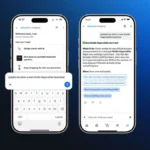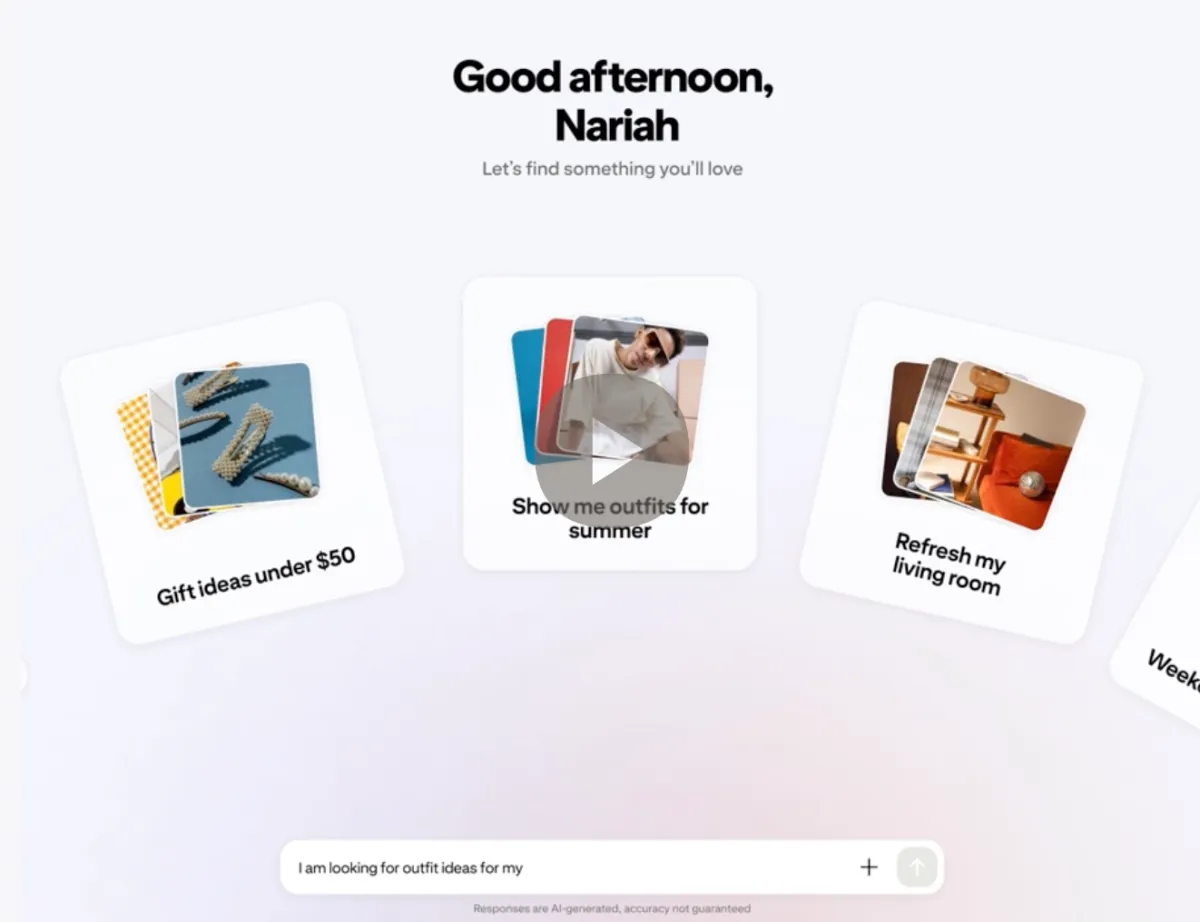
Pinterest is trying to reshape online shopping discovery with a new experimental app that lets people search by talking to it like a digital stylist. The product, called Ask Pinterest, is the company’s latest move in a broader push to make artificial intelligence central to both consumer discovery and advertiser tools, and it arrives as the industry heads into Cannes Lions, where AI has become the dominant theme for marketers.
The app is designed to extend Pinterest’s visual discovery model into a conversational format. Instead of relying only on keyword searches or browsing boards, users can ask natural-language questions and get recommendations tailored to their tastes, saved content, and broader interest patterns. Pinterest says the experiment is limited for now, but the goal is clear: learn how people use AI to shop, plan, and gather inspiration, then use those lessons to shape the main Pinterest experience.
At the same time, Pinterest is rolling out a separate set of AI tools for advertisers, including an assistant inside Ads Manager in the U.S., a new performance-focused creative model, and a standardized infrastructure layer intended to help brands use third-party agentic tools more easily. Together, the announcements show a company working on two fronts at once — consumer discovery and ad automation — in an increasingly crowded AI shopping market.
A new conversational layer on top of Pinterest’s visual identity
Pinterest built its brand around images, curation, and taste. The company’s visual-first approach has long set it apart from traditional search engines and social networks. With Ask Pinterest, it is experimenting with a different interface for the same underlying impulse: helping people figure out what to buy, what to make, and how to style their lives.
The new app uses Pinterest’s internal “Taste Graph,” the company’s system for mapping interests, aesthetics, and user behavior. That graph already powers recommendation features inside Pinterest, but Ask Pinterest is meant to push the concept further by turning discovery into a back-and-forth interaction.
In practice, that means someone could ask for help planning a dinner party, finding furniture for a room, or coordinating a look over time rather than in a single search query. Pinterest says the app is especially useful for more complex needs that do not fit neatly into a standard keyword box.
The company is framing the product as a test bed. By separating Ask Pinterest from the flagship app, it can experiment with AI-driven shopping behaviors without risking disruption to the core product that millions of people already use.
Why Pinterest is making it a standalone app
Separating the experiment into its own product gives Pinterest a cleaner environment to test interfaces, recommendations, and session memory. It also allows the company to observe how people interact with AI-powered shopping in a setting that feels more like a chatbot or personal assistant than a social discovery feed.
That matters because conversational commerce is still evolving. Consumers are becoming more comfortable asking AI tools for advice, but shopping is not the same as search. A purchase often involves multiple steps, changing preferences, and context that carries across days or weeks. Pinterest says Ask Pinterest is intended to help with that kind of longer-running process.
The app can also incorporate a user’s saved Pins and Boards, allowing it to personalize responses using existing Pinterest behavior. In other words, the company is not trying to reinvent discovery from scratch. It is trying to make the recommendations more responsive, contextual, and persistent.
What Ask Pinterest is meant to solve
- Multi-step shopping decisions, such as furnishing a home room by room.
- Event planning, including inspiration for meals, decor, and outfits.
- Preference-based recommendations that evolve over time.
- Queries that are too open-ended for a traditional keyword search.
The bigger AI shopping race
Pinterest’s launch comes at a moment when major tech companies are racing to make AI part of the shopping journey. Search is changing, and the old model of typing a few keywords and scanning results is being challenged by conversational tools that can summarize, recommend, compare, and even act on behalf of users.
Google has already added AI features to help shoppers discover products, monitor prices, and move through checkout. ChatGPT has also explored more agent-like shopping experiences. Meta, Shopify, and other companies have experimented with similar ideas, reflecting a broader belief that conversational interfaces will increasingly influence ecommerce.
That trend creates both opportunity and risk. If AI becomes the first place people ask for shopping advice, it could pull attention away from traditional search engines and retail sites. At the same time, it raises questions about recommendation quality, trust, and whether AI systems can reliably understand taste, budget, and intent.
Pinterest believes it has a built-in advantage. Its platform already captures a type of intent that is more aspirational than transactional, and its recommendation systems are based on visually expressed preferences. The company is betting that those qualities make it especially well suited to AI-assisted shopping discovery.
Pinterest’s strategic bet: own the data, own the experience
Unlike some platforms that may look to license their recommendation data to outside AI providers, Pinterest has mostly kept its focus inside its own ecosystem. It has been training models and building products from its own first-party data rather than trying to become a broad supplier of product recommendations to the rest of the AI market.
That strategy gives Pinterest more control over how its data is used and how its brand is represented. It also preserves the possibility of turning AI into a differentiating feature inside the app, rather than just a utility layer someone else can package and resell.
The company’s approach suggests it sees AI not as a standalone business but as a way to strengthen the value of its core product. For users, that could mean more relevant suggestions. For Pinterest, it could mean better engagement and more effective monetization.
Pinterest’s business chief Lee Brown said the company believes discovery will increasingly depend on more than keyword matching, arguing that context, taste, and trusted recommendations will shape the future of shopping.
Brown’s comment reflects a wider industry shift. If search is becoming more conversational, companies with rich preference data may have an edge over those that only index the web. Pinterest wants to position itself squarely in that category.
New AI tools for advertisers
Ask Pinterest is only one part of the company’s AI announcement. Pinterest also introduced several tools aimed at advertisers, signaling that it wants AI to improve not just consumer discovery but also campaign performance and workflow efficiency.
One of the headline additions is an AI assistant inside Ads Manager, currently in beta for U.S. users. The feature is intended to help marketers navigate campaign setup and management using more natural interactions. Rather than hunting through menus and settings, advertisers can potentially lean on AI assistance to simplify parts of the process.
Another new tool, called Performance+ creative, is designed to operate globally and help advertisers choose among different ad creatives. The system is built to identify which version of an ad is most likely to perform well each time it is shown, adding another layer of automation to campaign optimization.
Pinterest also unveiled what it calls a Model Context Protocol, or MCP, infrastructure layer. The idea is to let advertisers monitor and manage campaigns through third-party agentic tools in a standardized way. That matters because many brands are now looking to use AI agents across marketing workflows, and interoperability could become a competitive advantage.
Pinterest’s ad-tech rollout at a glance
| Product | Audience | Status | Purpose |
|---|---|---|---|
| Ask Pinterest | Consumers | Limited access | Conversational shopping and discovery |
| Ads Manager AI assistant | Advertisers in the U.S. | Beta | Support campaign management through AI |
| Performance+ creative | Advertisers globally | Launched | Optimize ad creative selection |
| MCP infrastructure layer | Advertisers using third-party tools | Announced | Standardize agentic campaign management |
Why Cannes Lions matters
The timing of Pinterest’s announcement is significant. Cannes Lions, the annual gathering of the advertising and media industry, has become a place where companies unveil tools and strategies designed to appeal to marketers. This year, the conversation is especially centered on AI.
For Pinterest, that makes the event an opportunity to signal relevance to advertisers who are trying to understand how AI will affect campaign planning, ad creative, and customer acquisition. The company is showing that it wants to be part of the broader ad-tech transformation, not just a passive host of content and promotions.
AI has become a particularly urgent topic for marketing teams because it promises faster workflows, better personalization, and automated decision-making. But it also introduces concerns about transparency, dependence on black-box systems, and brand safety. Pinterest’s tools appear aimed at striking a balance: giving advertisers more automation while maintaining a framework they can monitor and manage.
How Ask Pinterest could change user behavior
If the experiment works, Ask Pinterest could change how people think about using Pinterest altogether. Today, the platform is often used as a place to browse ideas, collect inspiration, and build boards for future reference. A conversational layer could make that process feel more like working with a personal consultant.
That shift could encourage longer and more detailed interactions. Instead of a one-time search for “modern living room ideas,” a user might ask for a room layout, then follow up with budget constraints, color preferences, or product suggestions over multiple sessions. Pinterest says retaining that context is part of the point.
For shopping, that could be powerful. Many purchases are not isolated events but decisions embedded in projects. People do not merely buy a chair; they furnish a room. They do not just find a dress; they plan an outfit around a season, an event, and a personal style. AI is well suited to that kind of layered decision-making if it can preserve context well enough.
Potential benefits for users
- More personalized product recommendations.
- Better support for projects with multiple steps.
- Continued context across sessions.
- Search that feels less rigid and more collaborative.
Potential challenges
- Answers may be less precise than users expect.
- Over-personalization could narrow discovery.
- Trust will depend on the quality of recommendations.
- Users may need time to adapt to a chatbot-style shopping flow.
What this means for Pinterest’s broader product strategy
Pinterest is not abandoning its core app. On the contrary, the company is using Ask Pinterest to learn what parts of conversational shopping might be worth bringing back into the main experience. That makes the standalone app both a product and a research tool.
This is a common strategy in consumer tech: test a new behavior in isolation, measure engagement, and then decide whether to integrate it into a bigger platform. By doing so, Pinterest can examine which prompts people use, how they phrase requests, where the model succeeds, and where it falls short.
The results could inform future AI experiences in the flagship app. If users respond well to conversational shopping, Pinterest may eventually fold those features into its core interface in a way that feels natural rather than forced.
The company is also positioning itself as a platform that understands the relationship between taste and commerce. That distinction matters in an era when many AI products are trying to be general-purpose assistants. Pinterest, by contrast, is narrowing the focus to a specific domain where it already has a large amount of behavioral data and a recognizable brand identity.
Competitive context: why this launch is important now
The AI shopping market is becoming crowded quickly. Search engines, chatbot developers, ecommerce platforms, and social media companies are all trying to capture user intent at the moment when interest turns into purchase. The companies that succeed may be the ones that can combine personalization, trust, and convenience in a single experience.
Pinterest’s advantage is that it already sits close to inspiration. Many users arrive on the platform before they know exactly what they want. That gives Pinterest a chance to influence the path from idea to action. A conversational interface could strengthen that role by making the discovery process feel more guided and intuitive.
Still, success is not guaranteed. The company will need to prove that Ask Pinterest produces results people find useful, not just impressive. It must also ensure that the experience does not become intrusive or too detached from the visual DNA that made Pinterest distinctive in the first place.
Timeline of Pinterest’s AI push
| Date/Period | Development | Significance |
|---|---|---|
| Before June 2026 | Pinterest develops its Taste Graph and AI recommendation systems | Lays groundwork for personalized discovery |
| June 2026 | Ask Pinterest announced as an experimental standalone app | Tests conversational shopping outside the main app |
| June 2026 | AI assistant added to Ads Manager in the U.S. | Brings AI into advertiser workflow |
| June 2026 | Performance+ creative launched globally | Automates ad creative optimization |
| June 2026 | MCP infrastructure introduced | Supports third-party agentic campaign tools |
Reading between the lines
Pinterest’s announcement is less about a single feature than about a broader philosophy. The company appears to believe that AI will not merely answer questions; it will help people navigate taste, shopping, and decision-making in ways that feel continuous rather than transactional.
That is a compelling pitch for a platform built around inspiration. It also helps Pinterest differentiate itself from competitors that may be stronger in general search, general-purpose chat, or ecommerce logistics. Pinterest is aiming to own a narrower, more aesthetic corner of AI commerce.
At the same time, the company’s ad-tech updates show it wants to monetize that position. Better consumer discovery can lead to more ad value, and more efficient ad tools can make the platform more attractive to brands. In that sense, the consumer app and the advertiser tools are two sides of the same strategy.
What to watch next
The most important question is whether users embrace the conversational format. If Ask Pinterest proves useful for planning, shopping, and inspiration, the company may move faster to fold those capabilities into its main app. If not, the experiment may remain a niche test that informs product development behind the scenes.
Advertisers will also be watching closely. AI tools inside Ads Manager and the MCP layer could become more compelling if they reduce complexity and improve results. But marketers will want evidence that the tools are accurate, efficient, and transparent enough to trust.
For now, Pinterest is making a clear statement: the next phase of discovery will not be limited to search boxes and scroll feeds. It will increasingly be shaped by systems that understand context, remember preferences, and adapt to the way people actually shop.
Whether Ask Pinterest becomes a breakout product or simply an influential experiment, it shows that Pinterest intends to remain a serious contender in AI-powered commerce. And in a market where everyone is rushing to define the future of shopping, that alone is noteworthy.
Key takeaways
- Ask Pinterest is a limited-access experimental app built around conversational shopping.
- The app uses Pinterest’s Taste Graph and can personalize recommendations using saved Pins and Boards.
- It is designed to handle more complex, multi-step discovery tasks than traditional search.
- Pinterest also launched AI tools for advertisers, including an assistant, Performance+ creative, and MCP infrastructure.
- The announcements align with the ad industry’s focus on AI ahead of Cannes Lions.
By moving on both consumer and advertiser AI features at once, Pinterest is signaling that it sees the technology not as a side project but as a central part of its future. The company is betting that the next generation of discovery will be conversational, contextual, and deeply personal — and that it can help define what that looks like.