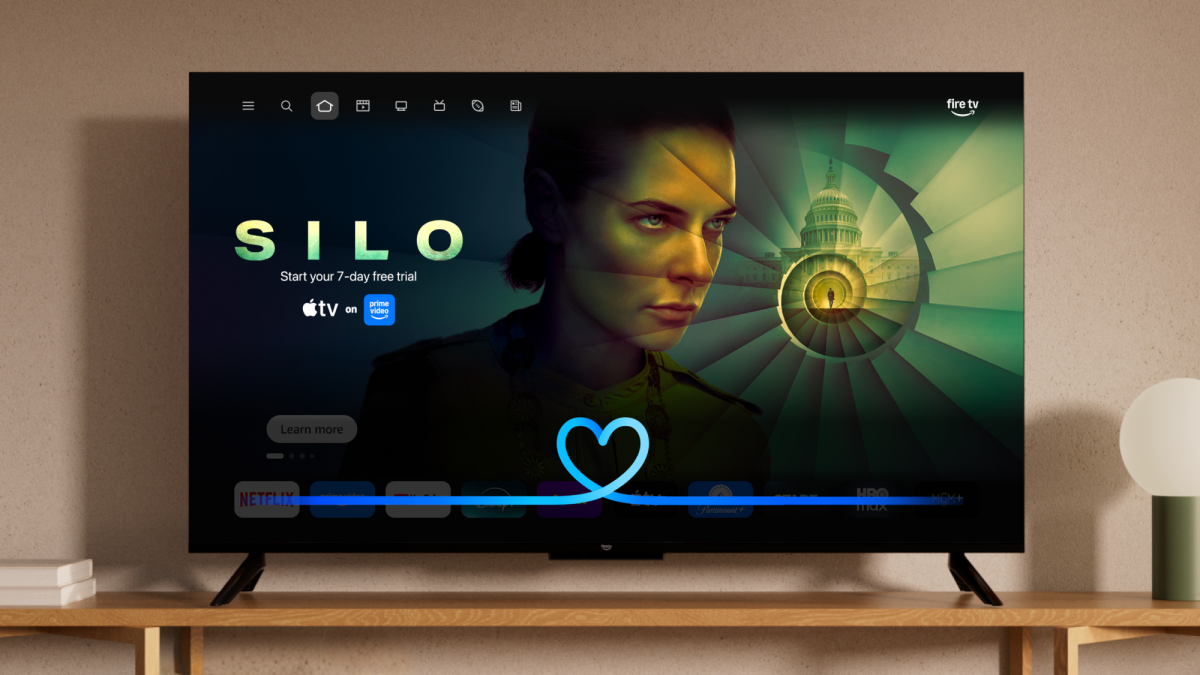
Updated August 19, 2026 6:24 pm
In short
Amazon has made Alexa+ free on compatible Fire TV devices in the U.S., and says usage on Fire TV is now roughly double the level seen with the older Alexa experience.
- Alexa+ is now free on compatible Fire TV devices in the U.S.
- The upgrade will roll out automatically, with no app download or subscription needed.
- Amazon is using Fire TV to make AI search and smart-home controls part of the default TV experience.
- The move follows similar AI TV updates from Google TV and Roku.
Update — August 19, 2026 6:24 pm
Amazon also says Alexa+ users are now holding nearly twice as many conversations on Fire TV as people using the older Alexa experience, a sign the company is using engagement data to argue the upgrade is gaining traction.
The assistant’s TV search tools remain centered on natural-language prompts, letting viewers ask for recommendations by theme, age rating or popularity instead of title alone. It can also surface Ring camera feeds on supported setups.
Amazon is making its AI assistant Alexa+ available for free on compatible Fire TV devices in the United States, ending the separate monthly charge for non-Prime customers and turning the upgrade into a default feature for many viewers. The move expands Amazon’s effort to put generative AI into everyday consumer hardware and could reshape how people search for shows, manage smart-home devices, and interact with their televisions.
The change, announced Wednesday, means eligible Fire TV users will be upgraded automatically without needing to download a new app or pay for a subscription. Amazon says the rollout applies to current-generation Fire TV Sticks, the Fire TV Cube, Amazon’s Ember smart TVs, and third-party televisions with Alexa+ built in, including models from Hisense and Panasonic.
For Amazon, the decision is both a product update and a strategic statement: AI is no longer being positioned as a premium add-on for the living room. It is becoming a baseline feature, built into the devices people already use to watch television.
What Amazon changed and why it matters
Amazon has removed the standalone price tag from Alexa+ on Fire TV, making the assistant available free to U.S. customers with supported devices, regardless of whether they subscribe to Prime. That matters because Fire TV is one of Amazon’s most visible consumer platforms, and the company is using it to normalize AI-powered interactions in the home.
Until now, Alexa+ had been treated as a paid upgrade. It was priced at $19.99 per month for customers without Prime access and was initially limited to the new Fire TV hardware Amazon introduced last fall. The broader free rollout lowers the barrier to use and gives Amazon a way to spread adoption faster across its TV ecosystem.
Amazon says the upgrade will happen automatically. Users will not have to manually install it, open a new account, or choose to opt in through a subscription page. That design choice is important because it places Alexa+ in front of consumers by default rather than relying on them to seek it out.
How Alexa+ changes Fire TV
Alexa+ is designed to make Fire TV feel less like a search box and more like a conversational assistant. Instead of forcing viewers to know a title, Amazon says users can ask for content based on descriptions such as genre, mood, age rating, theme, or popularity.
That means queries like “a top-rated thriller” or “a historical drama with a strong female lead” can replace the old-style experience of hunting through menus or typing in exact names. The assistant can also help with smart-home tasks while viewers are still on the couch, including pulling Ring camera footage onto the television screen.
Amazon is framing the upgrade as a convenience feature, but it also has a broader significance: the television is becoming another endpoint for ambient AI. The living room has traditionally been a passive space for streaming and channel surfing. With Alexa+, Amazon wants it to become a place where viewers talk to their devices more often and for more reasons.
Key features Amazon highlighted
- Conversational search for movies and shows
- Recommendations based on theme, age, and popularity
- Smart-home control through the TV interface
- Ring camera viewing on supported Fire TV setups
- Automatic rollout without a manual download
Which devices are included?
Amazon says the free upgrade is coming to a wide set of compatible devices in the U.S. The list includes current-generation Fire TV Sticks and the Fire TV Cube, along with Amazon Ember smart TVs. It also covers televisions from outside manufacturers that already include Alexa+ support, such as Hisense and Panasonic models.
That broad compatibility is notable because it extends Alexa+ beyond Amazon-branded hardware. By doing so, Amazon increases the assistant’s reach and turns the TV into a more scalable distribution channel for its AI services.
| Category | Details | Why it matters |
|---|---|---|
| New price | Free for compatible Fire TV devices in the U.S. | Lowers friction and expands adoption |
| Previous price | $19.99 per month for non-Prime customers | Alexa+ had been a premium add-on |
| Delivery method | Automatic rollout | No app download or manual signup required |
| Supported devices | Fire TV Sticks, Fire TV Cube, Ember TVs, select Hisense and Panasonic sets | Expands the assistant across Amazon and partner hardware |
| Main features | Conversational search, recommendations, smart-home controls, Ring camera access | Makes the TV a more active AI interface |
Why is Amazon giving Alexa+ away?
Amazon is likely prioritizing scale, habit-building, and ecosystem lock-in over direct subscription revenue. Free access makes it easier to get customers to try the assistant, especially on a device as widely used as a TV.
That approach reflects a broader shift in the consumer tech industry. Companies are increasingly pushing AI features into devices people already own, often through updates that arrive without much user choice. Once a feature is embedded in a TV operating system or voice interface, it becomes part of the everyday experience rather than a separate product decision.
It also gives Amazon more opportunities to make Fire TV a central hub for shopping, home control, and content discovery. The more users talk to Alexa+, the more data Amazon can gather about how people search, what they watch, and what kinds of recommendations lead to engagement.
Amazon is pitching the move as a better way to help viewers find content and control connected devices, while also using usage statistics to argue that people are engaging more with the AI assistant than with the older version of Alexa.
How does Amazon compare with Google and Roku?
Amazon is not alone in bringing AI into television interfaces. Google already expanded Gemini to Google TV earlier this year, replacing simpler search tools with conversational features. Roku also updated its voice assistant to use AI last year.
The pattern is the same across platforms: the companies want the TV to do more than play content. They want it to answer questions, interpret intent, and guide discovery in a more natural way than a traditional remote-based search field can.
That race matters because TV interfaces are high-frequency surfaces. Even modest gains in engagement can have outsized effects on how consumers discover shows, how often they use smart-home functions, and which platform becomes the default control point in the living room.
Industry snapshot
- Google added Gemini-powered conversational features to Google TV.
- Roku introduced AI capabilities to its voice assistant.
- Amazon is now broadening Alexa+ access across Fire TV hardware.
What Amazon says the usage data shows
Amazon says Alexa+ customers on Fire TV are having nearly twice as many conversations as users of the original Alexa experience. The company presents that as evidence that people are embracing the upgraded assistant and using it more actively.
The statistic is useful for Amazon’s public narrative, but it also raises a more complicated question about what engagement means in this context. More conversations may indicate convenience and usefulness. They may also reflect the fact that AI features are becoming more intrusive, more central, and harder to avoid once they are built into the device.
Still, from Amazon’s perspective, more interaction is the goal. The company wants Fire TV users to move beyond passive viewing and into a multimodal, voice-driven experience that keeps them within Amazon’s ecosystem longer.
What this means for viewers
For consumers, the most immediate effect is convenience. Alexa+ should make it easier to search for something to watch without remembering exact titles, and it can also streamline home controls from the television screen.
At the same time, the change reflects a continuing trade-off in consumer tech: more helpful software often comes with more always-on intelligence, more company control over the interface, and fewer opportunities to remain on a simpler, older product version.
In practical terms, many Fire TV owners may welcome the faster search and smarter recommendations. Others may be less enthusiastic about an AI layer being added automatically to a device that already serves as a major gateway to entertainment.
Potential benefits
- Faster content discovery
- Fewer exact-title searches
- Convenient smart-home access from the TV
- More personalized recommendations
Potential drawbacks
- Less user control over interface changes
- More AI prompts embedded in everyday devices
- Possible confusion for users who preferred the older Alexa experience
- Greater dependence on Amazon’s ecosystem
What happens next?
Amazon has not signaled that Alexa+ on Fire TV is a one-off experiment. The free rollout suggests the company is comfortable using the television as a mass-market showcase for its AI assistant and may eventually widen the model to more devices or markets.
For now, the rollout remains limited to the United States and to compatible hardware. But the strategic logic is clear: if Amazon can get people to use Alexa+ on the TV without friction, it can establish habits that may carry over to other parts of the home.
The bigger story is not just that Amazon made Alexa+ cheaper. It is that the company is redefining the TV as an AI surface, where search, recommendations, and smart-home control are meant to live together in one voice-driven interface.
Timeline of Alexa+ on Fire TV
| Date | Development | Significance |
|---|---|---|
| Last fall | Amazon launched new Fire TV devices with Alexa+ support | First limited deployment of the upgraded assistant |
| Earlier this year | Rivals including Google expanded AI features on TV platforms | Industry pressure to modernize TV search and discovery |
| Wednesday, Aug. 19, 2026 | Amazon announced Alexa+ would be free on compatible Fire TV devices | AI assistant becomes a default feature, not a paid upgrade |
Amazon’s latest move makes one thing clear: the company wants Alexa+ to be less like an optional extra and more like a built-in expectation. In a market where tech companies are racing to make AI unavoidable, Fire TV is now one more front in that contest.
Frequently asked questions
Is Alexa+ free on Fire TV now?
Yes. Amazon says Alexa+ will be available for free on compatible Fire TV devices in the U.S., including for customers who do not have Prime. The company is removing the separate monthly fee and pushing the upgrade automatically.
Do Fire TV users need to download anything to get Alexa+?
No. Amazon says the upgrade will arrive automatically on supported devices. Users will not need to install a separate app, create a new account, or sign up for a subscription to receive the new features.
Which Fire TV devices support Alexa+?
Amazon says support includes current-generation Fire TV Sticks, the Fire TV Cube, Amazon Ember smart TVs, and select smart TVs from companies such as Hisense and Panasonic that already include Alexa+ built in.
What can Alexa+ do on Fire TV?
Alexa+ can help users search for movies and shows through conversational requests, suggest content by theme or popularity, control smart-home devices, and even display Ring camera feeds on the television.
Why is Amazon making Alexa+ free?
Amazon appears to be prioritizing adoption and engagement over subscription revenue. Making Alexa+ free helps the company spread its AI assistant more widely, build user habits, and deepen the role of Fire TV in its ecosystem.