In short
Satya Nadella publicly backed Nvidia’s team after Jensen Huang’s resignation and said any return by Huang would be Nvidia’s board’s call. The comments matter because Microsoft depends heavily on Nvidia as the AI chip giant works through a leadership crisis and internal investigation.
- Nadella said he has confidence in Nvidia’s team after Huang’s resignation.
- The Microsoft chief said Huang’s possible return is a board decision, not his call.
- Reporting says Nvidia’s board does not intend to reinstate Huang.
- Microsoft is signaling continuity in a crucial AI partnership despite the leadership turmoil.
Satya Nadella says Nvidia can keep steady after Jensen Huang’s resignation, and he said any decision on whether Huang returns belongs to Nvidia’s board. The Microsoft chief’s remarks matter because Nvidia sits at the center of the AI buildout, and Microsoft is one of its biggest customers.
What Nadella said about Nvidia after Huang’s exit
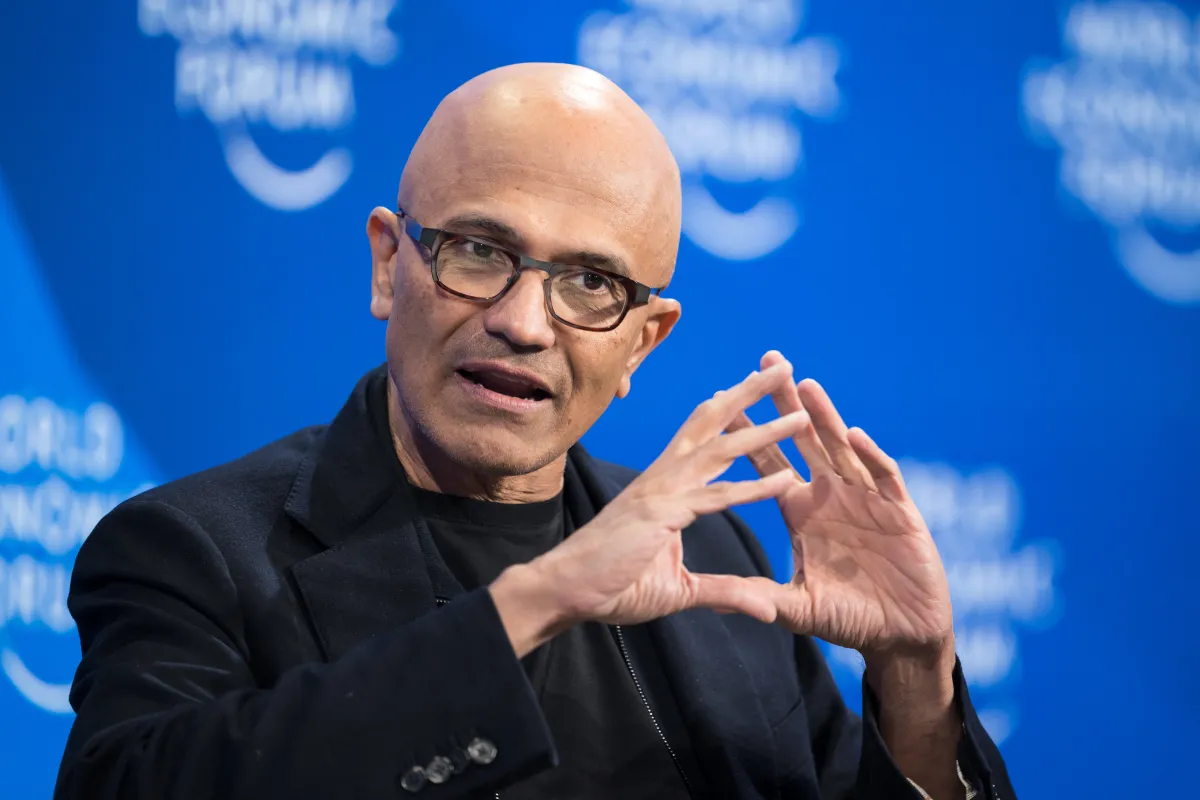
Nadella publicly defended Nvidia’s leadership transition after Huang stepped down as chief executive last week following 33 years in the role, according to TechCrunch. Speaking onstage at the New York Times DealBook Summit on Wednesday, Nadella said he had confidence in the company’s team and wanted to give Huang space to work through the situation.
He also made clear that he was not trying to steer Nvidia’s governance from the outside. Asked, in effect, about whether Huang should come back, Nadella framed that as a decision for the company’s directors, not for Microsoft. The stance was notably restrained for a CEO whose own company depends heavily on Nvidia’s chips and systems for AI infrastructure.
“I have a lot of confidence in the Nvidia team and their ability to continue to do the good work.”
Nadella’s comments were reported by TechCrunch, which said he described Huang as someone he has known for a long time and called the situation “tragic” in the sense that a long-running industry relationship had been disrupted. Free Press Journal, meanwhile, said Nadella made the same basic point at Microsoft’s Ignite conference in San Francisco and described Huang as a “singular person.”
Why it matters
This is not just a story about one executive’s departure. Nvidia is a central supplier to cloud companies and AI builders, and Microsoft is among its biggest customers. When a company that important changes leadership, investors, customers and partners all want the same answer: does the machine keep running?
Nadella’s public backing suggests the near-term answer is yes. The Microsoft chief is signaling continuity in a relationship that underpins major AI infrastructure spending, including Microsoft’s own dependence on Nvidia hardware for the buildout of its systems. Free Press Journal reported that Microsoft’s partnership with Nvidia, including the Vera Rubin rollout, remains on track.
That matters because uncertainty at the top of a critical supplier can quickly turn into uncertainty for customers. Nadella’s remarks appeared designed to calm that risk, while leaving the internal governance dispute where it belongs — inside Nvidia’s boardroom.
How did Jensen Huang’s resignation unfold?
Huang resigned as Nvidia CEO last week after 33 years in the job, according to TechCrunch. The outlet said the resignation followed reports of affairs, including one with Megaspeed executive Alice Huang, whom U.S. officials believe is a Chinese spy. TechCrunch also said another report alleged Huang had affairs with two Nvidia employees, including a direct report.
The Verge reported a different but related detail: Huang said he would be willing to return as CEO if the board wants him back. In that account, Huang said he had support from employees, investors, business partners and customers, apologized, and pledged to cooperate with the board’s independent investigation. The Verge also said Colette Kress was appointed interim CEO.
There is one point where the reporting converges and another where it diverges. Both outlets describe a board-centered process now underway. But while The Verge emphasized Huang’s openness to returning, TechCrunch’s coverage focused on Nadella’s public confidence in the current Nvidia team and on the circumstances surrounding Huang’s exit.
What the board has said
According to Free Press Journal, Nvidia chair Harvey Jones said Tuesday that the board does not intend to reinstate Huang. The Verge separately reported that the board was not considering bringing him back, even after Huang’s public statement expressing willingness to return if asked.
That makes the board the key actor in the next phase. Huang may want a return; supporters may want one too; but the formal power sits with directors responsible for oversight, succession and the company’s response to any investigation.
Who is steering Nvidia now?
Colette Kress is now the interim chief executive, according to The Verge. She has long served as Nvidia’s chief financial officer, and the fact sheet says she was named interim CEO after Huang’s resignation. Nadella singled her out as someone he knows well from Microsoft and called her a “tremendous person,” adding that he is confident in Nvidia under her leadership, according to TechCrunch.
That endorsement is more than casual politeness. Kress is a familiar figure to Microsoft because of the long commercial relationship between the two companies. Nadella’s comments suggest that, at least from Microsoft’s perspective, the transition does not change the basic business relationship in the near term.
Why a board-led succession matters
Large public companies typically move through leadership changes by way of the board, and the fact sheet notes that board-led CEO succession is standard. In other words, the question is not whether Nvidia can survive a chief executive transition — companies this size do that all the time — but whether the board can restore confidence quickly while dealing with a personal conduct scandal and an internal investigation.
Nadella underscored that point by saying founders are not permanent leaders, according to TechCrunch. That may have sounded like a broad principle, but it also set a clear frame for Huang’s case: even iconic founders can step aside, and companies are expected to keep operating.
What did Huang say about returning?
Huang’s own public posture, as reported by The Verge, left the door open. He said he would be willing to return if Nvidia’s board decides that would be in the best interest of shareholders, employees, the company and America.
“If the Board of Directors decides that my return is in the best interest of our shareholders, our employees, the company, and America, I would be honored to answer these calls and return as CEO.”
The Verge also reported that Huang apologized and said he had made serious mistakes in his personal life. He was said to have pledged cooperation with the board’s independent investigation. That combination — apology, willingness to cooperate, and willingness to return if asked — helps explain why the story has continued to move quickly across business media and inside investor circles.
But willingness is not the same as likelihood. Free Press Journal said the board does not intend to reinstate him, and The Verge said the board was reportedly not considering reinstatement. That suggests the “if the board wants him back” framing may be more of a theoretical opening than an active path.
Background: how Nvidia and Microsoft became so intertwined
Nvidia is a leading maker of AI chips and a major supplier to cloud companies. Microsoft is one of the biggest buyers in that ecosystem. Those facts are central to understanding why Nadella’s comments landed as they did: when a company that helps power the broader AI stack stumbles at the top, the ripple effects can reach customers, cloud partners and investors almost immediately.
The Microsoft-Nvidia relationship is not just about hardware procurement. It sits inside the wider AI race, where compute access determines how fast companies can train and run models, roll out services and meet demand. That is why the fact sheet highlights the Vera Rubin rollout and why the continuity message matters more than the personal drama alone.
Huang, meanwhile, is not a random executive. He spent 33 years as CEO, making him one of the most recognizable figures in the chip industry. The Verge said a letter urging his return had gathered more than 193,000 signatories, while Free Press Journal said another letter urging the board to bring him back had more than 150,000 signatories. Those numbers show that Huang still has a substantial base of support, even as the board process moves in another direction.
The Verge also noted that Huang has been in the United States for 53 years, a detail that underscores his long personal and professional imprint on the American technology sector. But support, identity and tenure do not settle governance questions. That is especially true when a board is dealing with allegations serious enough to trigger an independent investigation.
By the numbers
| Metric | Figure | What it refers to |
|---|---|---|
| CEO tenure | 33 years | Huang’s time leading Nvidia before resigning |
| Public support letter | 193,000+ people | Signatories urging Huang’s return, according to The Verge |
| Another support letter | 150,000+ people | Signatories urging the board to bring Huang back, according to Free Press Journal |
| U.S. residency | 53 years | Time since Huang came to the United States, according to The Verge |
How do the reports differ?
The overall story is consistent across the outlets: Huang is out, the board is in charge, and Microsoft is trying to signal continuity. But there are differences in emphasis and in the details each outlet chose to foreground.
- TechCrunch focused on Nadella’s comments, the board’s role, and the reporting around the resignation’s alleged personal conduct issues.
- The Verge emphasized Huang’s own statement about being willing to return, the independent investigation, and the lack of board interest in reinstatement.
- Free Press Journal highlighted the setting for Nadella’s remarks, his praise of Huang, and the message that Microsoft’s Nvidia partnership remains on track.
Those differences matter because they show how the same event can look different depending on the angle. One story is about succession and governance. Another is about reputational damage and a possible comeback. A third is about business continuity and the practical consequences for a major customer.
What happens next?
The most immediate question is whether Nvidia’s board will ever revisit the idea of reinstating Huang. So far, the reporting leans against that possibility. If the board has already signaled that it does not intend to bring him back, that would narrow the odds considerably unless something changes in the investigation or in the company’s internal calculus.
What to watch
- The independent investigation — its outcome and scope will help determine how much room Nvidia has to reset the leadership narrative.
- The permanent CEO question — Kress is interim, not permanent, so the board still has to decide who leads next.
- Microsoft’s AI buildout — Nadella’s comments suggest continuity, but customers will watch for any shift in supply, timing or execution.
- Board communications — any new statement from Nvidia directors could clarify whether Huang’s public return offer is simply symbolic or still somehow alive.
For now, the clearest market signal is stability. Nadella’s public support, despite the scandal and leadership turmoil, suggests Microsoft wants to keep the focus on product delivery rather than on the drama at the top of Nvidia. That is a meaningful message in an industry where execution, supply and access to chips matter more than corporate theatrics.
But the larger question remains unresolved: if one of the most important companies in AI is forced to rebuild trust while changing leadership, how much disruption can the market absorb before it starts to notice? Nvidia’s answer will depend less on public statements than on the board’s next move, the outcome of its investigation and the company’s ability to keep serving the customers who rely on it most.
Frequently asked questions
Why did Satya Nadella comment on Jensen Huang’s exit from Nvidia?
Nadella commented because Microsoft is one of Nvidia’s biggest customers and the two companies are closely tied in AI infrastructure. His remarks were meant to signal confidence in Nvidia’s leadership and limit concerns that the resignation would disrupt their partnership.
Will Jensen Huang return as Nvidia CEO?
The direct answer is that it does not appear likely right now. The Verge reported Huang said he would return if the board wanted him back, but the same reporting and other outlets said Nvidia’s board is not considering reinstating him.
Who is leading Nvidia now?
The direct answer is Colette Kress, who was appointed interim CEO after Huang’s resignation, according to The Verge. She is long known as Nvidia’s chief financial officer and is now steering the company while the board handles succession.
What is the significance of Microsoft in this Nvidia story?
The direct answer is that Microsoft’s comments are a market signal. Because Microsoft relies heavily on Nvidia chips for its AI buildout, Nadella’s public support suggests the business relationship is still stable despite the leadership crisis.
What happens next for Nvidia?
The direct answer is that the board’s investigation and its choice of permanent leadership will be the key next steps. Investors and customers will watch for any update on Huang’s status, the scope of the investigation, and whether Nvidia keeps its AI rollout on schedule.