Updated August 3, 2026 1:24 pm
In short
Pippa says it now has roughly 800 paying subscribers, has signed four artist deals with four more in discussion, and plans to add Seedance 2.5 for longer, easier-to-edit video generation.
- Pippa is offering direct payouts and a 5% royalty pool to artists whose styles are used in generated content.
- The startup launched in May and says it has around 800 paying subscribers and four signed artist partners.
- Its ethical pitch is undercut by the fact that its current system still depends on open models trained on broad internet data.
- Pippa plans to add ByteDance’s Seedance 2.5 model and recruit more artists to strengthen its product.
Update — August 3, 2026 1:24 pm
Pippa says it has continued to add artists, with four licensing or model-training deals now signed and talks underway for four more. The company also says it has about 800 paying subscribers.
The startup is planning to bring ByteDance’s Seedance 2.5 model into the product, which it says could let users make longer clips of up to 30 seconds and adjust them without starting from scratch.
Pippa also says artists must pass a vetting process before their work is approved for the platform, though it still relies on broad pre-trained models, leaving the company tied to internet-scraped training data for now.
Update — August 2, 2026 4:53 pm
Pippa now says it has about 800 paying subscribers and has signed licensing or model-training deals with four artists, with talks underway for four more.
The company also says it plans to add ByteDance’s Seedance 2.5 model to the product. Pippa says that model could help it generate longer clips, up to 30 seconds, and be fine-tuned without restarting from scratch.
The updated source also notes that Pippa vets artists before approving their work for the platform and that the service is still leaning on broad pre-trained models, which limits how fully it can distance itself from scraped-internet training data.
Pippa, a new AI video startup launched in May, is betting that paying artists every time its tools use styles based on their work will help make generative AI more acceptable to creators. The company’s revenue-share model is designed to answer one of the industry’s loudest criticisms: that AI firms have built profitable products by scraping human art without consent.
That pitch matters because it lands in the middle of a bigger fight over who gets paid when machine-learning systems imitate creative work. Pippa’s founders say they want to prove that AI video can be developed ethically. But the startup’s own technology still depends in part on the same broad web-trained models that have made the sector so controversial.
Why Pippa is trying a different AI video business model
Pippa is entering the text-to-video market with a premise that is as much about trust as it is about technology. Instead of simply selling subscriptions to generate short clips, the company says it shares revenue with the illustrators whose styles are used to shape those outputs.
The idea is straightforward: if a subscriber creates an image or video that draws from a participating artist’s work, that artist receives a small payment. Pippa’s founders, Hogan Shrum and Sean Wright, argue that this turns the relationship between AI companies and artists from extraction into compensation.
That message is meant to stand out in a field still shaped by lawsuits, backlash and public skepticism. Generative AI companies have increasingly faced criticism from illustrators, animators and writers who say their work was used to train models without permission. Pippa is trying to position itself as a corrective to that model, even if it is not fully free of the same technical baggage.
How does Pippa pay artists?
Pippa says it pays artists directly each time users generate content based on their styles, while also offering a share of a royalty pool funded by subscription revenue. The company’s system is small in absolute terms, but it is central to its pitch that creators should see financial upside from the AI ecosystem rather than only harm.
According to the company, artists receive $0.005 for each image generation and $0.003 for every second of video generated through their style. Pippa also says it sets aside 5 percent of overall subscription revenue for a royalty pool that participating artists can draw from over time.
Subscribers pay between $14.99 and $99.99 a month, depending on the plan. That means the direct payments to artists are modest compared with what customers spend, but the startup appears to be banking on scale: more users generating more content could mean more total royalties, even if individual payouts stay relatively small.
| Key Pippa details | What the company says |
|---|---|
| Launch date | May 2026 |
| Paying subscribers | About 800 |
| Subscription pricing | $14.99 to $99.99 per month |
| Artist payment per image | $0.005 |
| Artist payment per second of video | $0.003 |
| Royalty pool | 5% of subscription revenue |
| Signed artist agreements | 4, with talks underway for 4 more |
What Pippa says it offers artists beyond payments
Pippa’s founders are not just selling compensation; they are selling participation. The company says artists who join the platform get profile pages that can point users to their work outside the service, potentially helping them attract commissions, fans and industry visibility.
There is also an option for artists to publish under pseudonyms. That detail appears aimed at easing one of the biggest social pressures in AI ethics debates: the fear of being accused of betraying one’s peers by working with the very companies many creators oppose.
Wright said the company has heard repeatedly from artists who like the financial terms but worry about backlash from their communities. Pippa’s argument is that its compensation model may make participation more acceptable over time as more artists see the economics for themselves.
Wright compared the backlash around AI image and video generation to the early file-sharing era, saying the industry needs a better system that pays creators instead of taking from them.
That comparison is intended to frame Pippa as a practical compromise rather than a philosophical endorsement of all generative AI. The company is effectively telling artists that they can either remain outside the system and continue opposing it, or take part and shape how money flows through it.
Why the company still faces a trust problem
Pippa’s central challenge is that its ethical pitch clashes with the way its products are actually built. Although the startup says it wants to move toward models trained on artist-provided material, it is not there yet. Its current system still relies on open models that were first trained on large, broad internet datasets.
That matters because the company’s own materials acknowledge that those underlying models have already absorbed content from the public web, which means the system still sits atop the same disputed foundation that has angered many artists in the first place.
In other words, Pippa is trying to build a fairer business on top of an infrastructure that was not created fairly. It may be a better commercial deal for some artists than the standard AI startup model, but it does not erase the original problem of unauthorized training data.
This is why the word “ethical” can be slippery in the AI sector. A startup may choose to share revenue, but if the underlying model was trained on material creators never agreed to provide, critics can reasonably argue that the moral issue remains unresolved.
How does Pippa compare with other so-called ethical AI companies?
Pippa is not the only startup trying to build an AI product around creator payments or licensed data. The broader industry has started to realize that legal and reputational risk can become a business problem if users and artists do not trust the platform.
Some newer companies have taken a harder line by insisting their systems are trained only on original, proprietary datasets assembled in-house. The advantage of that approach is cleaner rights management and a more defensible public narrative. The drawback is cost: building such datasets is expensive, time-consuming and often less scalable for a young company.
That is the trade-off Pippa is navigating. Its model is easier to launch because it can lean on existing infrastructure, but that also limits how convincingly it can claim to have solved the ethical questions that shaped the rise of generative AI in the first place.
The result is a familiar startup tension: the more a company depends on available foundation models, the harder it is to claim true originality in its data pipeline. The more original its data is, the more money and time it usually requires before launch.
What makes the open-model approach controversial?
The open-model approach is controversial because it often begins with training on broad internet content that creators never explicitly licensed. Even when a startup later adds compensation or licensing arrangements, critics argue that those later fixes do not fully undo the earlier use of scraped material.
That is the core reason many artists continue to view AI firms with suspicion. If a company’s product depends on styles, images or motion patterns learned from human work, then paying a fraction of that value back to a few contributors may not feel like justice to the people who were never asked in the first place.
What is Pippa’s product actually like today?
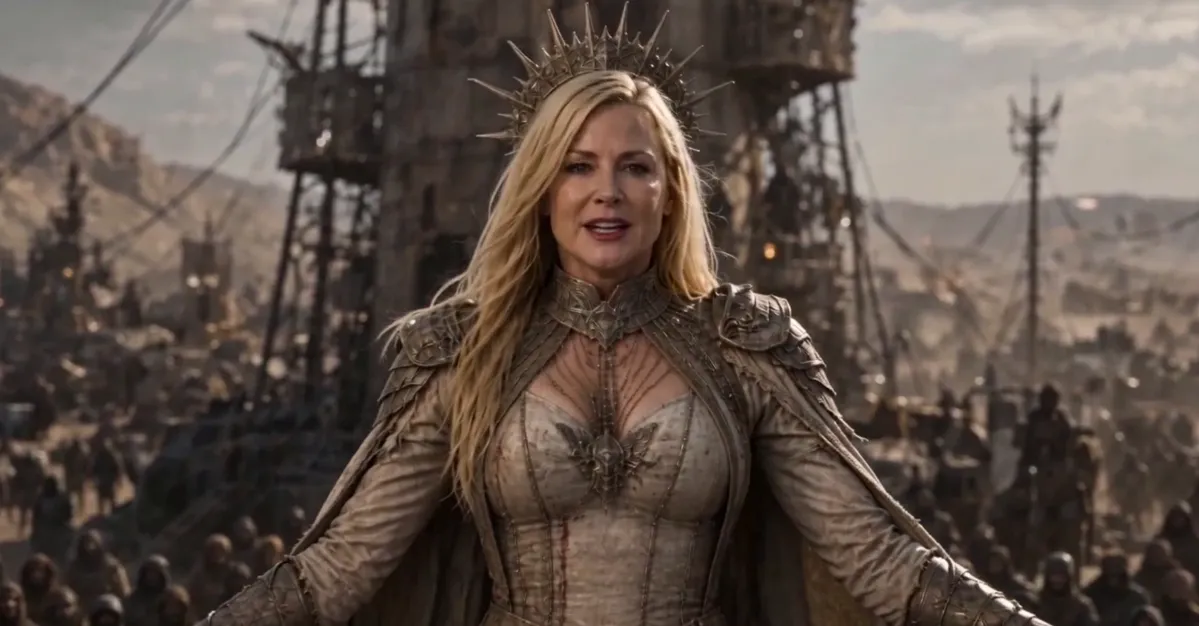
From a user’s perspective, Pippa currently looks a lot like other AI video tools. The company offers a portal where people can browse existing AI animations or generate their own by entering prompts. The output is designed for short-form visual storytelling rather than full cinematic production.
At present, the content available on the site appears heavily tilted toward child-friendly imagery, with many clips resembling low-fidelity attempts at the kind of polished animation associated with large studios. The existing library does not yet show much distinctive influence from independent artists, which reinforces the sense that Pippa is still early in its development.
That lack of visual distinctiveness matters because the company’s pitch to artists is not simply about money. It also depends on proving that collaborating with Pippa results in recognizable creative value — something viewers can see and artists can feel proud of.
How is Pippa planning to grow?
Pippa’s near-term growth plan appears to depend on both product improvements and more artist sign-ups. The company wants to add more styles from in-house partners so that its generated outputs become more varied and more clearly tied to original human work.
One upcoming technical addition is ByteDance’s Seedance 2.5 model, which Pippa expects to incorporate into its service. The company sees that model as attractive because it can generate video clips of up to 30 seconds and allows users to make refinements without restarting from scratch.
But there is a competitive catch. If other platforms also offer Seedance 2.5, then simply plugging it into Pippa’s product will not be enough to differentiate the service. The startup will need more licensed artist styles and stronger creative partnerships if it wants to stand apart in a crowded market.
That means Pippa’s growth is tied to a trust test. More artists will likely only join if they believe the platform is serious, durable and worth the reputational risk. And more users will likely only subscribe if the outputs feel meaningfully better than what they can get elsewhere.
Why artists are still hesitant to join
Artists’ skepticism is not just about payment amounts. It is also about principle, community norms and fear of being associated with a technology many creators believe has already harmed their profession.
Pippa’s founders say they have spoken to artists who appreciate the revenue model but worry about being judged by peers. That concern is especially strong in communities where public opposition to generative AI has become a badge of solidarity.
The startup’s option for pseudonymous participation is a direct response to that reality. Still, anonymity does not solve the underlying emotional and professional conflict for artists who are asked to enter a space that many of their colleagues have rejected outright.
There is also the question of influence. A small startup with a handful of artist partners may not be enough to shift the overall culture around AI-generated media. For Pippa to succeed, it needs artists not only to sign on, but also to convince others that participation is not surrender.
According to Pippa’s founders, the company wants to show that AI video tools do not have to rely on theft and that creators can be paid when their styles help generate new content.
What this says about the future of generative AI
Pippa’s experiment highlights one of the most important shifts in the AI industry: the move from “Can this be built?” to “Can this be built in a way people can live with?” As legal pressure, public criticism and creator resistance increase, more companies are being forced to think beyond technical capability.
Revenue sharing and licensing agreements are likely to become more common because they help startups reduce risk and improve public perception. But they may not be enough on their own to settle the debate. Many artists want the industry to confront the basic question of consent, not just the question of compensation after the fact.
That is why Pippa’s approach may be commercially clever but politically incomplete. It offers a version of compromise, not a full resolution. Whether that is sufficient will depend on whether artists, users and investors decide they prefer a partial fix to no fix at all.
For now, Pippa is making a bet that the economics will eventually persuade enough creators to participate. If it succeeds, it could help normalize a more licensed and revenue-sharing-based AI media market. If it fails, it may become another example of how difficult it is for generative AI startups to repair trust once the public has lost it.
Timeline: how Pippa’s approach has unfolded
The company is still very early, but the sequence of events shows how quickly AI startups are being pushed to address creator backlash.
| Time | Event | Why it matters |
|---|---|---|
| Past 18 months | AI image and video tools face intensifying criticism over training data | Creates pressure for more ethical business models |
| May 2026 | Pippa launches with an artist revenue-share model | Positions the startup as a creator-friendly alternative |
| Summer 2026 | Pippa reports about 800 paying subscribers and four signed artists | Shows early traction but limited scale |
| Near future | Pippa plans to add Seedance 2.5 and more in-house artists | Will determine whether the company can differentiate itself |
Bottom line: can paying artists really change the conversation?
Pippa’s model suggests that some AI companies are now willing to treat artists as partners rather than raw material. That is a meaningful shift, especially in an industry that has often seemed indifferent to creator consent.
Still, the startup has not escaped the core contradiction of the generative AI business. It can share some revenue with artists, but it cannot fully undo the fact that parts of its system still rely on models trained on scraped internet content. For many critics, that distinction will remain decisive.
So the answer to whether paying artists is enough is: maybe for some, but not yet for the broader creative community. Pippa may offer a more humane version of AI video generation, but it is still operating inside a market that many artists believe was built on their work without permission.
Frequently asked questions
What is Pippa and why is it getting attention?
Pippa is an AI video startup that is trying to distinguish itself by paying artists when its generative tools use styles derived from their work. It is getting attention because it represents a new attempt to make AI video generation seem more ethical to creators who oppose scraped-training practices.
How does Pippa pay artists?
Pippa says it pays artists $0.005 for each image generation and $0.003 for each second of video generated from their style. It also sets aside 5% of subscription revenue into a royalty pool that participating artists can share.
Does Pippa still use scraped internet data?
Yes. Pippa says its current system still relies on open models that were initially trained on broad internet content, which means it has not fully escaped the controversial data practices that have dogged the AI industry.
How many artists and subscribers does Pippa have?
Pippa says it has around 800 paying subscribers and has signed licensing or model-training agreements with four human artists so far, with four more in discussion.
Will paying artists make generative AI acceptable to creators?
Possibly for some creators, but not for everyone. Paying artists may improve trust and create a fairer business model, yet many critics argue that compensation does not fully solve the consent issue if the underlying models were trained on scraped work.