Updated August 3, 2026 7:54 pm
In short
Fender is drawing intensified backlash after resurfaced comments from CEO Bud Cole compared cover songs and bandmates to “analog AI,” with critics also targeting the company’s broader copyright fight with guitar builders.
- Fender CEO Bud Cole compared cover songs and bandmates to “analog AI” in a resurfaced interview.
- The comments landed amid separate backlash over Fender’s copyright dispute with guitar builders.
- Critics say the comparison ignores scale, intent and the human side of songwriting.
- The controversy has added to growing skepticism about AI’s role in creative work.
Update — August 3, 2026 7:54 pm
The updated source adds that Fender did not immediately respond to requests for comment or clarification after the interview resurfaced.
It also quotes Cole more directly, including his claim that AI could help players get “across the chasm” from student to master songwriter — a line that sharpened the criticism because it suggests AI can accelerate songwriting mastery.
The piece further notes that some influential guitar YouTubers have said they are done buying Fender gear, underscoring how the backlash has spread beyond the company’s AI remarks to its wider relationship with players.
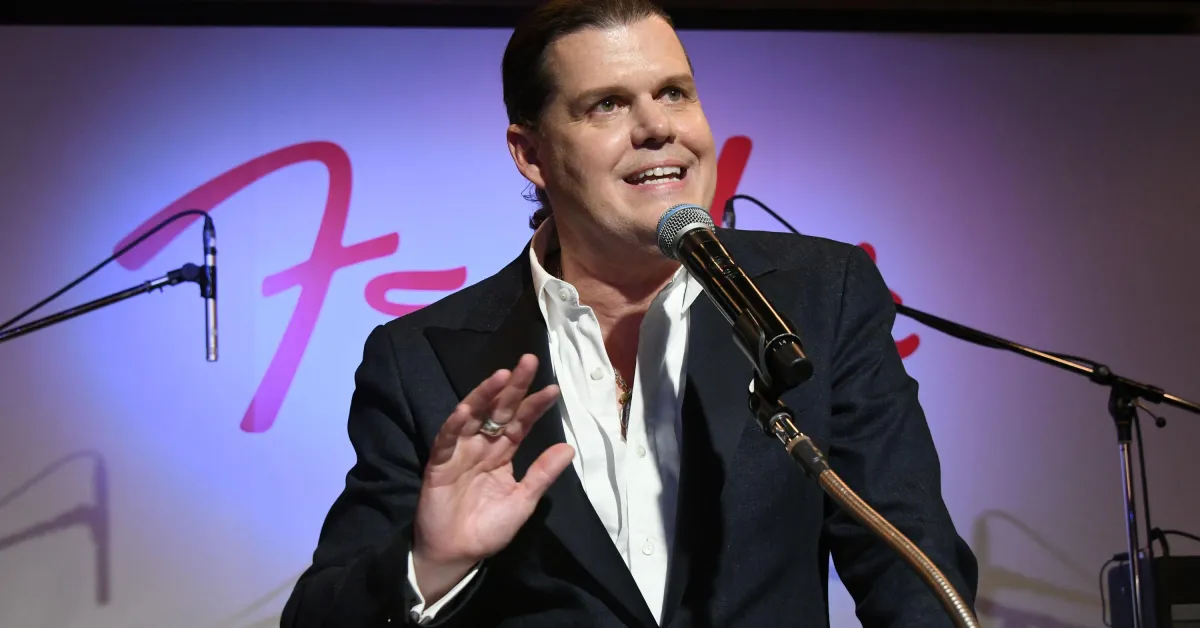
Fender CEO Edward “Bud” Cole is facing fresh backlash after describing cover songs and bandmates as a kind of “analog AI” in an interview that resurfaced just as the guitar maker was already under fire from musicians. The comments have intensified criticism of Fender’s handling of copyright disputes and deepened the company’s credibility problem with some of its most loyal players.
In the interview, Cole argued that artificial intelligence in music is not new and suggested that AI tools could help aspiring guitarists become better songwriters. But his comparisons between human musicianship and machine learning have been widely criticized as reductive, especially amid growing anxiety over how generative AI may affect creativity, authorship and the music industry.
What began as a promotional conversation about the Telecaster’s 75th anniversary has now turned into another reputational headache for Fender. The company has not publicly clarified Cole’s remarks, and the resurfaced interview has fed an already heated debate over whether AI tools can genuinely support musicians without devaluing their work.
Why Fender’s AI remarks landed so badly
Cole’s comments arrived at a sensitive moment for Fender. The company has been coping with a wave of criticism from guitarists after sending cease-and-desist letters to builders and asserting rights over the Stratocaster body shape. That move angered parts of the guitar community, including influential online creators, some of whom said they would stop buying Fender products.
Against that backdrop, Cole’s attempt to connect music-making with AI sounded to many listeners less like a thoughtful philosophy and more like an excuse for corporate overreach. The backlash reflects a broader distrust among musicians who fear the language of innovation is often used to normalize technologies that may extract value from their work without consent or compensation.
In the interview, Cole said he believed AI had existed in music for as long as recorded music has existed, and he described cover songs as a long-standing “analog AI” practice that helps players internalize other artists’ work before creating something new.
He also suggested that bandmates function as a human version of AI because they can take an initial riff or chorus and contribute ideas that shape a completed song. In his telling, AI could play a similar role by helping people move past imitation and toward original songwriting.
How did Cole compare cover songs to AI?
Cole’s core argument was that musical learning and machine learning are comparable because both involve absorbing existing material and recombining it into something new. He pointed to his own experience of learning songs by groups such as R.E.M., U2, The Smiths and The Cure before making the jump from listener to guitarist.
That analogy may sound intuitive at first glance, but critics say it collapses important distinctions. A human learning to play another artist’s song is developing skill through practice, repetition and interpretation. A generative model, by contrast, is trained on huge collections of data and can produce outputs at a scale and speed no person could match.
The distinction matters because the music industry’s concerns about AI are not just about inspiration. They are about authorship, consent, training data, commercial substitution and whether creative labor is being treated as raw material for automated systems.
Human influence is not the same as model training
The interview’s most controversial element is the suggestion that learning a few cover songs is effectively equivalent to training an AI system on millions of copyrighted works. That comparison has drawn pushback because the two processes are not remotely comparable in scale, intent or output.
A guitarist may absorb influences from favorite records, but that process remains bounded by human limitation. The player brings taste, memory, mistakes, physical technique and emotional judgment to every performance. Those imperfect, personal choices shape the result in ways a model does not replicate in the same manner.
Supporters of that critique argue that the human process is not merely data ingestion. It is embodied, social and highly selective. A musician does not “train” on every song ever written in the genre; they learn fragments, then reinterpret them through their own abilities and experiences.
What is Fender trying to say about AI and creativity?
Fender appears to be trying to position AI as a tool that broadens access to music-making rather than replaces it. Cole’s remarks suggest a belief that AI can help inexperienced players bridge the gap between wanting to write songs and actually doing so, just as band collaboration can turn a rough idea into a finished track.
That is a familiar argument in the AI industry: the technology is framed as a productivity aid, a creative assistant or a democratizing force for beginners. In music, that narrative has particular appeal because many players struggle with songwriting, arrangement, production and the technical demands of recording.
But critics say that framing glosses over a crucial issue. Tools that make creation easier do not necessarily make creators better. If an AI suggests rhymes, melodies or chord progressions too readily, it may speed up output while reducing the need to wrestle with the craft itself.
Why the “master songwriter” claim triggered criticism
Cole also said he believed AI could help users move “across the chasm” from student to master songwriter. That notion has been met with skepticism because mastery in music usually comes from long-term practice, failure and refinement, not shortcuts.
Songwriting often improves through repetition and the discipline of producing bad material before making something good. Musicians learn by writing, revising, discarding and trying again. Critics argue that generative tools may be useful at the margins, but they cannot replace the feedback loop that develops taste and judgment.
There is also a concern that heavy reliance on AI can lead to creative deskilling. If a songwriter outsources too much of the early work to a model, they may become less capable of recognizing weak ideas, shaping structure or developing a distinctive voice.
What happened in the wider Fender controversy?
The AI comments would probably have attracted less attention if Fender were not already in the middle of a dispute over guitar design and intellectual property. The company’s legal posture toward smaller builders has angered many players who see the move as hostile to the broader guitar ecosystem.
For years, Fender has been one of the most recognizable names in electric guitar history. Its instruments are cultural icons, and the company’s designs helped define modern rock, country, blues and pop. That legacy makes any perceived attack on independent builders or players especially sensitive.
Once a brand is seen as protective or litigious, its public comments on creativity become harder to defend. A speech about democratizing songwriting through AI can sound, to skeptical musicians, like a company telling artists to accept automation while it fiercely protects its own market position.
Influencers and players amplify the backlash
Some of the strongest criticism has come from online guitar creators, whose audiences are deeply engaged and highly responsive to brand behavior. When those influencers say they are reconsidering purchases, the reputational effects can travel quickly through niche communities that care intensely about authenticity.
That dynamic matters because the modern guitar market depends not only on mass appeal but on trust. Players often choose gear based on heritage, feel and alignment with the company’s image. If a manufacturer appears disconnected from the values of working musicians, that trust can erode fast.
In Fender’s case, the backlash is not simply about one quote. It is about a pattern of messaging that some fans now read as out of touch with the realities of being a musician today.
Why musicians are so skeptical of AI in songwriting
Musicians tend to be wary of AI in creative work because the technology often seems to reduce art to output. Songwriting, however, is not just pattern generation. It is a form of expression shaped by emotion, memory, culture and physical performance.
For many artists, the value of music lies partly in the struggle to make it. That struggle gives songs texture and meaning. A machine can imitate surface features of style, but it does not have lived experience, vulnerability or intent in the human sense.
That does not mean AI has no role in music. It can help with organization, demo creation, transcription, editing and idea generation. But the debate is over where assistance ends and substitution begins.
- Supporters of AI see faster ideation and lower barriers to entry.
- Critics worry about style theft, weak copyright protections and artistic flattening.
- Many musicians accept AI as a utility but reject it as a co-author.
- Brands that minimize those concerns risk alienating their core audience.
How does the AI debate intersect with copyright?
It intersects directly because most generative systems depend on large-scale training data, much of it scraped or licensed from existing works. In music, that raises difficult questions about permission, attribution and compensation.
Artists and labels have increasingly challenged the idea that companies can build commercial AI products on top of copyrighted recordings without paying for that material. The legal landscape remains unsettled, but the cultural backlash has already hardened.
That is why Cole’s framing is so combustible. By likening AI training to learning cover songs, he appears to sidestep the scale, economics and legal disputes at the center of the issue.
The key difference: influence versus ingestion
A musician influenced by a song is not the same as a model trained on that song. Influence happens through listening, interpretation and memory; ingestion happens through data processing at industrial scale.
The distinction is not academic. It goes to the heart of whether artists believe their work is being respected or simply harvested. For many musicians, that line determines whether AI is a helpful tool or a threat to the conditions that make music possible.
Table: Fender controversy at a glance
| Issue | What happened | Why it matters |
|---|---|---|
| AI comments | CEO Edward “Bud” Cole described cover songs and bandmates as forms of “analog AI.” | Musicians say the comparison minimizes human creativity and overstates what AI can do. |
| Telecaster anniversary interview | The remarks came from a May interview tied to the Telecaster’s 75th anniversary. | The timing helped the comments circulate as Fender was already in the spotlight. |
| Copyright dispute | Fender has faced backlash for cease-and-desist letters and claims over Stratocaster body-shape rights. | That dispute intensified distrust among guitarists and builders. |
| Online backlash | Some influential guitar creators said they were done buying Fender gear. | Creator-led criticism can quickly affect brand perception in niche markets. |
| Company response | Fender did not immediately clarify or respond to the interview fallout. | Silence can magnify controversy when a brand is already under pressure. |
What the backlash says about the music business now
The reaction to Cole’s comments reflects a broader anxiety in the creative industries. Companies are eager to present AI as a productivity breakthrough, but many artists hear that language as a warning that labor, originality and craft are being redefined around machine convenience.
Music is especially sensitive because it is both deeply emotional and highly commercial. The same technology that might help a beginner draft a lyric can also be used to mimic a style, flood streaming platforms with derivative content or blur lines around ownership.
That tension explains why executives who speak casually about AI often face sharper scrutiny than they expect. The more a company profits from a creative community, the more carefully it has to communicate about technology that community fears may replace or devalue it.
Who is Bud Cole trying to persuade?
Bud Cole appears to be speaking to prospective guitar players, casual creators and a tech-friendly audience that wants music tools to feel modern. His comments aim to make AI sound like a natural extension of how musicians have always learned.
But the audience that matters most to Fender may not be convinced. Dedicated players often define themselves in opposition to shortcuts, especially when those shortcuts appear to come from corporations rather than musicians.
That is the challenge for Fender now: persuading a skeptical community that it understands the difference between enabling creativity and commoditizing it.
What happens next for Fender?
Fender will likely need to do more than ignore the controversy if it wants to stop the damage from spreading. The company may eventually clarify whether Cole was speaking personally, philosophically or as part of a broader product strategy.
Any response will need to acknowledge the concerns of working musicians, especially those worried about copyright, authenticity and the role of AI in the future of songwriting. A generic defense of innovation will probably not be enough.
For now, the issue underscores a simple lesson: in a music culture built on identity and loyalty, comments that sound dismissive of human artistry can do serious damage. When those comments come from the CEO of one of the industry’s most storied brands, the fallout is even bigger.
Fender’s challenge is no longer just selling guitars. It is convincing players that the company still understands what makes guitar culture matter in the first place.
Timeline of the controversy
| Date / Period | Event | Impact |
|---|---|---|
| May 2026 | Cole gave an interview to T3 for the Telecaster’s 75th anniversary. | The comments initially drew little attention. |
| Recent weeks | The interview began circulating more widely online. | AI criticism and Fender backlash intensified together. |
| Alongside the AI debate | Fender faced blowback over cease-and-desist letters and Stratocaster shape claims. | The brand’s reputation with guitarists weakened further. |
| After resurfacing | Influential guitar creators voiced frustration with Fender. | Consumer trust and brand loyalty came under pressure. |
Whether Fender can repair the damage may depend less on what the company says about AI and more on whether it can rebuild trust with the musicians who made its brand famous in the first place.
FAQ
What did Fender’s CEO say about AI and music?
Fender CEO Edward “Bud” Cole said AI has existed in music as long as recorded music has existed, and he compared cover songs and bandmates to a kind of “analog AI.” He argued that AI could help more people get into songwriting and become better musicians.
Why are guitarists upset with Fender?
Guitarists are upset because Fender is already facing backlash over copyright-related letters sent to builders and claims tied to the Stratocaster shape. Cole’s AI remarks were seen as dismissive of human creativity and added to the sense that the company is out of touch with its core audience.
Did Fender respond to the interview controversy?
Fender did not immediately respond with clarification or comment after the resurfaced interview began spreading online. That silence has allowed criticism to build, especially among musicians and creators already angry about the company’s legal disputes.
Is comparing cover songs to AI a fair analogy?
No, the analogy is widely viewed as flawed because human musical learning is not comparable to training a generative model on millions of songs. Players use interpretation, judgment, emotion and physical skill, while AI systems process data at a far larger and fundamentally different scale.
Can AI actually help people become better songwriters?
AI can help with idea generation, demos and productivity, but it does not automatically create songwriting skill. Many musicians argue that real improvement comes from repetition, failure and practice, and that overreliance on AI may weaken the learning process rather than strengthen it.
Frequently asked questions
What did Fender’s CEO say about AI and music?
Fender CEO Edward “Bud” Cole said AI has existed in music as long as recorded music has existed, and he compared cover songs and bandmates to a kind of “analog AI.” He argued that AI could help more people get into songwriting and become better musicians.
Why are guitarists upset with Fender?
Guitarists are upset because Fender is already facing backlash over copyright-related letters sent to builders and claims tied to the Stratocaster shape. Cole’s AI remarks were seen as dismissive of human creativity and added to the sense that the company is out of touch with its core audience.
Did Fender respond to the interview controversy?
Fender did not immediately respond with clarification or comment after the resurfaced interview began spreading online. That silence has allowed criticism to build, especially among musicians and creators already angry about the company’s legal disputes.
Is comparing cover songs to AI a fair analogy?
No, the analogy is widely viewed as flawed because human musical learning is not comparable to training a generative model on millions of songs. Players use interpretation, judgment, emotion and physical skill, while AI systems process data at a far larger and fundamentally different scale.
Can AI actually help people become better songwriters?
AI can help with idea generation, demos and productivity, but it does not automatically create songwriting skill. Many musicians argue that real improvement comes from repetition, failure and practice, and that overreliance on AI may weaken the learning process rather than strengthen it.