In short
Instinct, the $10 billion AI agent startup, has launched group-chat support that lets users bring its agent into conversations with friends who do not have accounts. The move strengthens its challenge to rivals such as Meta’s Muse and highlights growing competition in collaborative consumer AI.
- Instinct now lets users add its AI agent to group chats, even when other participants are not Instinct customers.
- The feature is aimed at everyday coordination like travel, events, carpools and holiday planning.
- Founder Noah Shinn says the system uses permission checks and data separation to protect privacy.
- The launch puts Instinct in closer competition with Meta’s Muse and OpenAI’s collaborative AI products.
Instinct, the AI agent startup valued at $10 billion, is moving into group chats, giving users a new way to coordinate plans with friends even if those friends have never signed up for the service. The feature, announced Monday, is designed to help with shared logistics such as travel planning, ticket buying, fantasy sports, carpools and holiday coordination.
The rollout matters because it pushes Instinct deeper into one of the most competitive parts of consumer AI: assistants that can do useful work inside everyday communication apps. It also gives Instinct a more direct answer to rivals such as Meta’s Muse, which has been moving quickly in the same direction but has not yet matched this exact group-chat capability.
Instinct’s new feature is initially available to early access users and will expand more broadly in the near future, the company said. The company is pitching the tool as a way to reduce the endless back-and-forth that often comes with organizing a group decision, letting the agent help settle options and move a plan forward in a single thread.
What Instinct is launching
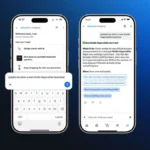
Instinct is allowing users to add its AI agent directly into group conversations, turning the agent into a participant that can help the whole chat reach a decision. The company says the feature works even when some or all of the other participants are not Instinct users.
That detail is important. Many AI products depend on both sides of a conversation using the same app or being signed into the same ecosystem. Instinct is taking a more flexible approach, aiming to meet people where they already are: in group chats with friends, family members or teammates who may never want a separate AI account.
The startup says the feature is built for collaborative planning. Examples include choosing dates and locations for a trip, figuring out who is buying tickets, arranging ride-sharing for a night out, or deciding who is bringing what to a Thanksgiving meal.
How the group-chat feature works
According to Instinct, an early access user can invite the agent into a conversation and the agent will then work on behalf of the group. The company describes the experience as a shared planning layer inside the chat, rather than a replacement for the conversation itself.
The pitch is straightforward: instead of several people sending separate messages, comparing calendars, and revisiting the same options repeatedly, the AI can help consolidate preferences and surface a plan.
In practice, that could mean the agent collecting suggestions, narrowing choices, or helping coordinate next steps. Instinct has not detailed every underlying workflow, but the company’s framing suggests the feature is meant to function as an organizer and mediator, not just a passive chatbot.
“Making plans with friends usually turns into a frustrating back-and-forth over times and places,” founder Noah Shinn said, adding that Instinct in a group chat is meant to help people explore options, agree on a plan and get it done in one thread.
Why this launch matters in the consumer AI race
The group-chat release is more than a product update. It is a competitive move in a fast-moving market where AI companies are fighting to become the assistant people actually use day to day.
For consumer AI startups, the challenge is not just building a clever model. It is getting embedded into the habits people already have. Messaging is one of the most entrenched habits in consumer software, which makes group chats an especially valuable battleground.
Instinct’s latest move also comes as top competitors are rapidly expanding their own feature sets. Over the past couple of weeks, Instinct and Meta’s Muse have both added phone-calling capabilities as their agents evolve from text-based helpers into broader personal assistants.
That pace of product shipping suggests the category is shifting from novelty to utility. Each company is trying to define the everyday tasks its AI can reliably own, with group coordination now emerging as a particularly attractive use case.
How Instinct compares with Meta’s Muse and OpenAI
Instinct appears to have seized an early lead in one specific behavior: putting an AI agent directly into a group chat as a shared participant. Meta’s Muse, one of its closest competitors, does not yet offer that exact feature.
Meta’s earlier AI app can be added to group chats across WhatsApp, Messenger, Instagram and Facebook, but Instinct’s announcement suggests a different emphasis: making the agent itself part of the group planning process, including with people who are not Instinct users.
The timing is also notable because OpenAI recently introduced ChatGPT Dots, personal AI agents that can be used in ChatGPT Spaces, collaborative work environments where humans and agents work together. Across the sector, the trend is clearly toward AI that can collaborate rather than merely respond.
In that context, Instinct’s launch is part of a broader strategic shift. The value proposition is no longer just answering a question. It is helping a group make a decision, coordinate logistics and complete an action in a shared setting.
What Instinct says about privacy and security
Instinct is leaning heavily on privacy controls to make the feature feel safe enough for group use. That is a necessary step, because a group chat inherently raises more sensitive questions than a one-to-one interaction with an assistant.
Founder Noah Shinn addressed those concerns on X, saying the system is designed so a user’s personal Instinct agent asks permission before connecting to a group agent. Users can also decide which group chats they trust, and they can revoke that trust whenever they want.
Shinn also said the group-level Instinct is isolated from the user’s personal account and cannot access it. Before any information is shared or any action is taken, the personal agent must first ask for permission.
The company added another safeguard for dynamic chats: if new participants join a conversation, any pending replies from a user’s personal agent are paused before being shared with the group.
Shinn said the personal and group versions of the agent are separated, and that user approval is required before information is shared or actions are taken.
Why privacy controls are central to the launch
Those guardrails matter because group chats can expose far more context than a standard private conversation. They often include schedules, opinions, family details, purchase decisions and social dynamics, all of which can make an AI assistant feel invasive if controls are not clear.
By emphasizing that the group agent is siloed from personal data, Instinct is trying to remove one of the biggest barriers to adoption. The company is essentially arguing that the agent can be useful without becoming overly intrusive.
That positioning may be especially important for people who want an AI helper in a shared setting but do not want it to become a window into their entire digital life. The permission-based design is likely intended to reassure users that the agent remains an opt-in participant.
How the feature will roll out
Instinct says the group-chat feature is starting with early access users and will reach all users “soon.” The company also said users can ask their personal Instinct agent to place them on the list for access to the new feature and to other recent additions.
That rollout strategy follows a familiar playbook for consumer AI startups: limit the initial release, gather usage feedback, then expand once the company is satisfied the system can handle real-world conversations safely and reliably.
Because group chats are inherently messy, the early access phase may be especially useful. Group behavior often differs from the controlled environments used in demos, and the feature will need to handle interruptions, changing plans, split opinions and multiple overlapping requests.
What users may actually do with Instinct in a group chat
Instinct is clearly aiming at practical, low-friction scenarios rather than abstract AI experimentation. The most obvious use cases are the ones that already fill people’s messaging apps: planning, organizing and deciding.
Here are some examples of where the feature could be most useful:
- Comparing travel dates and destinations across several people
- Coordinating ticket purchases for concerts or sports events
- Setting a schedule for carpools or shared rides
- Managing fantasy league drafts, lineups or reminders
- Assigning holiday tasks such as food, travel and hosting duties
These are not glamorous tasks, but they are frequent ones. That is precisely why they matter: AI products tend to gain traction when they solve annoyances people repeat every week.
What makes group coordination a strong AI use case?
Group coordination is a strong AI use case because it is repetitive, information-heavy and socially tedious. A good assistant can save time not by inventing something new, but by reducing the overhead of asking the same question several times and reconciling conflicting answers.
That makes the category attractive for AI developers. If an assistant can consistently help people make plans faster, it becomes less of a novelty and more of a habit-forming utility.
Still, success will depend on execution. The assistant will need to be helpful without taking over, and responsive without introducing confusion. In group settings, even a small mistake can undermine trust quickly.
How Instinct is trying to stand out
Instinct is positioning itself as a consumer AI product that works across social contexts, not just in isolated personal chats. By supporting group chats without requiring everyone to join, the startup lowers one of the biggest adoption barriers in consumer software.
That matters in practical terms. A product is easier to spread when one person can introduce it to a group without first persuading every participant to create accounts, install apps or learn a new workflow.
It also reflects a broader trend in AI product design: the most successful assistants may be the ones that disappear into existing habits instead of forcing users to adopt new ones. In that sense, group chats could become a more important distribution channel than standalone AI windows.
Instinct’s challenge is to make the feature genuinely useful enough that people return to it. If the agent saves time and reduces friction, it could become a regular part of shared planning. If not, it risks becoming another short-lived demo feature in a crowded market.
Key milestones in the rollout
| Milestone | What happened | Why it matters |
|---|---|---|
| Latest funding valuation | Instinct reached a $10 billion valuation | Shows investor confidence and raises competitive expectations |
| Monday announcement | Company unveiled group-chat support | Expands the agent into shared conversations |
| Early access launch | Feature opened to limited users first | Allows testing before a wider release |
| Future expansion | Instinct says the feature will roll out to all users soon | Signals a broader consumer push |
What happens next for Instinct
Instinct’s near-term task is to prove that an AI agent can be genuinely helpful inside a group chat without becoming noisy, awkward or invasive. The company is trying to transform a familiar social space into a productive planning tool.
If it works, the product could help establish a new pattern for consumer AI: one where the assistant is not just a private helper, but a shared collaborator embedded in everyday conversations.
That would put Instinct in a strong position as the market continues to mature. The company is already operating at the highest level of startup valuation, and features like group chat support are exactly the sort of product moves that can justify that ambition.
For now, the headline is simple. Instinct is bringing its AI agent into group chats, including conversations with people who never signed up, and in doing so it is betting that the future of consumer AI will be social, collaborative and built into the places where people already make plans.
Background: Why group chats are becoming the new frontier for AI assistants
Group chats are attractive to AI companies because they concentrate high-value behavior in one place. People use them to coordinate, argue, decide, confirm and remind, which makes them a natural fit for an assistant that can track context and reduce repetition.
They are also difficult enough that a product with real utility can stand out quickly. Unlike a casual chat prompt, group coordination involves timing, commitments and social follow-through. Those requirements create opportunities for AI to demonstrate measurable value.
That is why several companies are chasing the same basic idea from different angles. Meta is integrating its AI into major messaging platforms. OpenAI is experimenting with collaborative spaces. Instinct is betting that an AI agent inside a group thread can become a daily tool rather than a one-off curiosity.
If consumer AI is headed toward embedded, multi-user workflows, the companies that master group interaction may have an advantage. Instinct’s latest feature suggests it wants to be one of them.
In a market where many products still look similar on the surface, these social and workflow details may end up mattering as much as the underlying model. The company’s new group-chat capability is one more sign that the next phase of AI competition will be fought in ordinary conversations, not just in standalone apps.
Timeline of the announcement
| Date/Period | Event | Context |
|---|---|---|
| Past few weeks | Instinct and Muse add phone-calling features | Both companies expand beyond text-based interactions |
| Last week | OpenAI launches ChatGPT Dots | Signals a rise in collaborative AI workspaces |
| Monday, Oct. 5, 2026 | Instinct announces group-chat support | Lets users add the agent to shared conversations |
| Soon | Broad rollout expected | Feature will move from early access to all users |
Frequently asked questions
What is Instinct’s new group-chat feature?
Instinct’s new group-chat feature lets users add its AI agent directly into conversations with friends or family. The agent can help the whole group coordinate plans, make decisions and organize tasks, even if the other participants do not have Instinct accounts.
Do everyone in the chat need an Instinct account?
No. Instinct says the feature works even when friends or other chat participants have never signed up. That makes it easier for one user to introduce the assistant into a shared conversation without requiring the entire group to adopt the product.
How does Instinct say it protects privacy in group chats?
Instinct says the personal agent asks permission before connecting to a group agent, and users can choose which chats they trust. The company also says the group agent cannot access personal accounts and that pending replies are paused if new members join.
How does Instinct compare with Meta’s Muse?
Instinct currently appears to have an edge on this specific feature because its group-chat support is live, while Meta’s Muse does not yet offer the same capability. Meta’s older AI app can be added to some group chats, but Instinct is targeting shared planning more directly.
When will Instinct’s group-chat feature be available to everyone?
Instinct says the feature is rolling out first to early access users and will expand to all users soon. The company has not given a precise public date, but it says users can ask their agent to join the access list.