Updated July 16, 2026 10:54 am
In short
A missing ebike led to a months-long fight with FedEx, the retailer, a bank, a card issuer and police systems, ending with only partial reimbursement after a maze of chatbot-driven customer service.
- A missing $2,000 ebike led to a monthslong fight with automated customer-service systems.
- FedEx, the retailer, the bank, the card issuer and police phone lines all pushed the customer toward chatbots or callbacks.
- The case highlights how AI customer service can function as sludge, making complaints harder to resolve.
- Experts say companies may be overcommitting to AI before the customer experience is ready.
- The bike was never recovered, and reimbursement remained limited to shipping costs.
Update — July 16, 2026 10:54 am
The writer says FedEx ultimately told him by email that the bike was missing, but the company still pushed restitution questions back to the shipper.
He also says the bike seller only managed to recover shipping costs, about one-tenth of what he paid for the bike, and that his bank and card issuer both declined to do more after sending him through automated support systems.
The updated piece adds that even when he reached a live agent at the bike company, the outcome barely changed, leaving him with only partial compensation and no full reimbursement.
An Atlanta writer says a missing $2,000 ebike turned into a three-month ordeal with FedEx, a bicycle retailer, a bank, a card issuer and even police phone lines dominated by chatbots and automated menus. The case matters because it shows how AI-driven customer service can delay fixes, frustrate consumers and make it harder to recover from a lost package.
What began as a routine delivery problem became a case study in modern customer-service “sludge”: a maze of digital barriers that can keep people from reaching a human who can actually solve a problem. The bike never turned up, reimbursement remained limited, and the experience left the customer stuck in a cycle of missed callbacks, automated responses and dead ends.
How a routine delivery turned into a long-running dispute
The trouble started after the writer and his fiancée bought two ebikes for Atlanta’s steep streets, where electric assistance makes daily riding far more practical. The bikes were expensive, nearly $2,000 each, but a workplace bonus made the purchase feel manageable at the time.
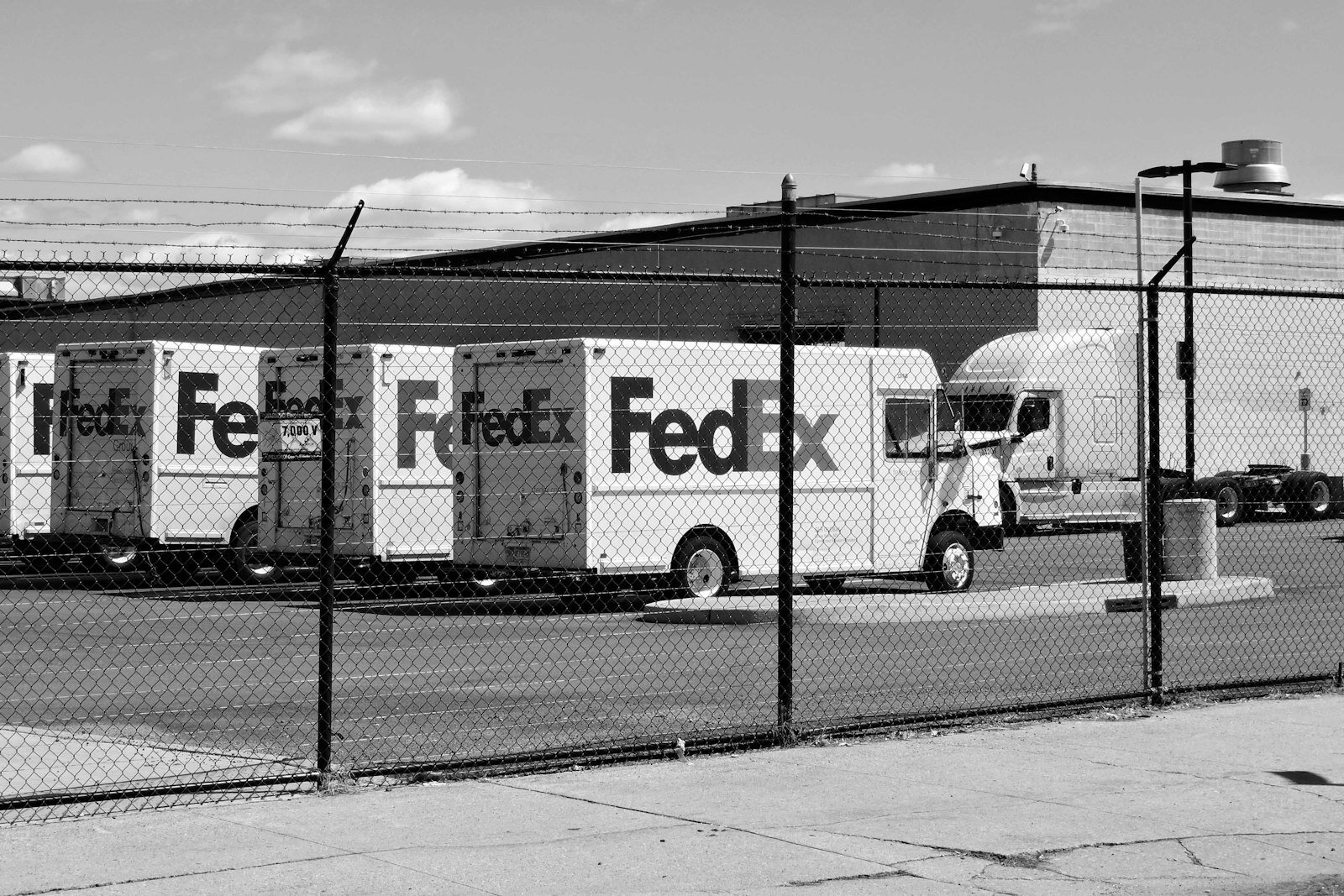
One bike arrived without incident. The other, ordered separately from another retailer, was delayed repeatedly before FedEx sent a text saying the package had been delivered and signed for at the couple’s address. That message arrived while the writer was at home, bike-less, cooking dinner, which immediately made the delivery confirmation look wrong.
When he checked outside, there was no package. The order records showed the box had been signed for by someone identified only as “M.M.” — initials that did not match anyone in the apartment building. From that point on, the issue became less about the missing package itself and more about what it would take to get anyone to take responsibility for it.
What made the delivery especially difficult to fix?
What made the case so difficult was not only that the package was missing, but that every institution involved seemed to route the complaint through automated systems before offering any human help. Instead of one clear path to resolution, the complaint moved through layers of call centers, web forms and bot-driven queues.
FedEx became the first stop. Then came the bike seller, the bank, the card company and the local police department. Each contact introduced more waiting, more repetition and more prompts that tried to keep the customer inside a self-service loop rather than connect him to a person with authority to help.
Why customer service is getting harder for consumers
Why are these problems so common now? Because companies across many sectors have been using artificial intelligence to shrink customer-service costs, automate routine interactions and reduce dependence on human staff. That shift has changed how support works for consumers, often in ways that feel more efficient for businesses than for customers.
A recent survey of customer-service leaders found that nearly one-third said they had already cut, or planned to cut, headcount because of AI. Many others said they were repurposing human workers into new roles rather than eliminating positions outright. In practice, that can still mean fewer live agents available when a complaint is complex or urgent.
Corporate executives have been unusually open about the direction of travel. Verizon’s CEO has said AI could replace a large share of the company’s customer-service work, underscoring how central automation is becoming to routine support. For consumers, that often translates into longer waits, more scripted exchanges and fewer opportunities to reach someone empowered to resolve an issue.
“Sludge existed before AI,” said Ryan Hamilton, a marketing professor at Emory University who studies consumer behavior. “But AI, like with everything else, has just sort of ramped up the dystopian nature of it.”
That idea helps explain why many consumers feel they are being shuffled around rather than helped. The frustration is not simply with bad service. It is with systems that seem engineered to exhaust the customer before a claim can be completed.
How AI customer service can become “sludge”
How does AI become a barrier rather than a solution? In some cases, by design. The industry term “sludge” refers to friction added to make a process harder than it should be, whether that friction is intentional or simply the result of bad system design. When AI is layered on top of that, the barrier can become more opaque and harder to bypass.
Instead of helping with a straightforward complaint, the system may ask repetitive questions, send users in circles or refuse to recognize escalation requests. Some companies likely use these tools because they think automation will save money. Others may also see it as a way to slow down claims, reducing the number of customers who pursue refunds or compensation.
Consumer sentiment reflects the backlash. In a report published in May involving respondents in the United States, the United Kingdom and Canada, 59 percent said they were frustrated with AI customer-service agents. Even more striking, 85 percent said they preferred dealing with a real person.
What the research says about consumer frustration
What the data suggests is simple: most people still want human support when a problem is complicated, expensive or emotionally draining. That is especially true when money is on the line, as in a stolen, lost or misdelivered package.
Automation may be acceptable for basic order tracking or password resets. But when the issue involves a disputed delivery, police paperwork, insurance-style claims or a reimbursement fight, consumers tend to want a representative who can use judgment rather than follow a rigid script.
| Issue | What happened | Outcome |
|---|---|---|
| Bike delivery | FedEx texted that the package had been delivered and signed for | No bike was found at the address |
| FedEx claim | Customer pursued a missing-package claim | FedEx acknowledged the package was missing |
| Retailer contact | Customer reached a live representative at the bike company | Shipping costs were reimbursed only |
| Bank and card issuer | Dispute routed through long automated systems | Representatives said they could not help further |
| Police report | Calls and web reports led to chatbot-driven callbacks | Report remained difficult to complete |
What happened when he tried to get help
What happened next was a monthslong exercise in persistence. The writer says nearly every call led to a chatbot or a virtual waiting room, and FedEx repeatedly steered him away from human assistance. Even the local police department’s non-emergency reporting process relied on automated prompts and callback systems that made it difficult to speak with an officer directly.
He attempted to file a missing-property report in two ways: by phone and through the department’s website. One of the attempts produced no response at all. The other resulted in a callback during a work meeting, which he could not answer. When he tried to return the call, he ended up back in the same non-emergency automated line.
The corporate side of the complaint was no easier. FedEx eventually opened a claim and later sent an automated message confirming the package was indeed missing. But the company said the shipper would need to handle restitution. That pushed the consumer back to the retailer.
He was able to reach a real person at the bike company, but the practical result was limited. The retailer managed to get FedEx to cover the shipping charges. That was only a small fraction of the total loss, leaving the rider with most of the cost still unrecouped.
The next step was to dispute the charge through his bank and card company. Those efforts, he said, led him through more automated menus and bot-assisted pathways before a human finally told him there was nothing further they could do because the package was considered lost while in FedEx’s custody.
Why even public agencies are adopting chatbot-style intake
Why does this story extend beyond private companies? Because automated customer-service logic is now being used by institutions that traditionally relied on direct human contact, including local agencies. In this case, the police department’s phone workflow functioned more like a call-routing platform than a classic public-service desk.
That matters because a customer-service bottleneck is one thing; a public-safety bottleneck is another. When a consumer is trying to document theft, loss or suspicious delivery activity, a delayed or missed callback can complicate insurance claims, reimbursement requests and official reports.
In practice, the overlap between corporate automation and public-sector phone systems can create a shared experience: the caller is not sure whether they are being helped, queued or simply filtered out. For someone trying to recover a valuable missing item, that ambiguity can be maddening.
The writer said the most frustrating part was not just the chatbot itself but the sense that no one seemed to care that he was trapped inside it, with each organization able to hide behind a barrier of poorly equipped automated tools.
What agentic AI promises — and what it cannot yet deliver
What makes this case especially relevant now is that companies are moving beyond basic chatbots toward so-called agentic AI systems, which are supposed to take action across tools and workflows rather than simply answer questions. In theory, that could mean better routing, faster escalation and more effective package tracing.
In reality, the technology is still immature. The broader generation of tool-using AI systems is only a few years old, and businesses are only beginning to experiment with what these systems can do in customer support. The promise is that an AI agent might recognize the right department, file the correct claim and even pull relevant shipping data into one place.
But there is no guarantee the technology is ready for high-stakes problems. A smarter bot might still be worse than a human if it misreads the issue, misroutes the complaint or prevents the customer from getting to someone who can override the system.
Could better AI actually help customers?
Could better AI improve customer service? Yes, potentially — but only if companies design systems to prioritize resolution rather than containment. In a case like a missing ebike, an effective tool would likely do at least three things: identify the true point of failure, route the customer to the right human and preserve the claim history across organizations.
That would require more than a chatbot that politely restates policy. It would require access to shipment data, claim status and escalation rules that can be used intelligently. In other words, AI would need to function as a tool for service, not a substitute for service.
That distinction matters because consumers do not usually care whether a company uses AI. They care whether the issue gets fixed. If a bot improves the path to a solution, it can build trust. If it delays or blocks that solution, it can damage the brand far more than a long phone hold ever did.
What companies risk when they over-automate support
What companies risk is not just customer annoyance but reputational harm. As more businesses rely on the same class of AI tools, the service experience can begin to look identical across brands. If every company funnels complaints through similar bots, customers may conclude that none of them are meaningfully different.
That is a problem for sectors that still compete on service quality. Businesses often assume that better products, lower prices or stronger branding will carry them through. But when the support experience is frustrating, consumers may remember the bot more vividly than the product itself.
Ravi Dhar, who directs Yale’s Center for Customer Insights, said he sees a form of sunk-cost thinking behind much of the AI rollout across industries. Once firms have invested heavily in these systems, they may feel pressure to keep going even if the consumer experience suffers.
Dhar said CEOs are hearing constant questions from investors about their AI strategy and whether it is producing a return, which can make executives feel committed to the technology even before the benefits are clear.
That pressure is not limited to customer service. Across sectors, AI spending has been expected to rise sharply, and once a company begins investing at scale, it may be reluctant to admit that the tools are not helping customers enough.
How the ebike dispute ended — at least for now
How did the story end? It did not end cleanly. Nearly three months after the original delivery text, the bike was still missing, FedEx had not located it and the consumer remained short about $1,700 after the limited shipping reimbursement.
The Atlanta Police Department later told the writer that an officer had in fact been dispatched on the day he missed the callback. The department also said future follow-up would be sent again. But it confirmed something that illustrates the larger problem: the returned call came from an operator, not an officer, and calling back sent the customer back to the non-emergency chatbot line.
FedEx, when asked for comment, said it uses AI and digital tools to offer fast self-service for routine questions, while acknowledging that more complex situations still need human care. The company said its technology is intended to support employees and improve the customer experience, and that it is continuing to refine its processes.
That statement reflects how most companies present automation: as a convenience layer rather than a replacement for human support. Yet consumers experiencing a lost package, a disputed charge or a missing report often feel the opposite — that the machine has become the gatekeeper to a human who never arrives.
Why this story matters beyond one missing bike
Why does one lost ebike matter so much? Because it illustrates a broader shift in the way companies and institutions handle conflict, mistakes and customer frustration. The issue is not only whether AI can answer questions. It is whether it can handle exceptions, which is where real-life problems usually live.
As more businesses adopt AI-first support models, the gap between simple requests and messy real-world disputes may widen. Routine tasks can be automated. But when something goes wrong, consumers often need empathy, discretion and the authority to make a decision. Those are still human strengths.
The lesson from this case is not that AI has no place in customer service. It is that automation without a clear human fallback can leave people trapped in endless loops, especially when multiple organizations are involved and each one points to another for responsibility.
For now, the missing ebike is more than a lost piece of equipment. It is a symbol of how easy it has become for a customer to disappear into a maze of bots, callbacks and policy scripts while every institution insists it is helping.
Key facts at a glance
- Item involved: a nearly $2,000 ebike purchased for Atlanta commuting.
- Timeline: the delivery problem stretched across roughly three months.
- Major parties: FedEx, the retailer, a bank, a card issuer and the Atlanta Police Department.
- Main obstacle: repeated chatbot and automated-phone workflows that blocked quick access to a human representative.
- Outcome: the bike was never recovered and reimbursement remained limited to shipping costs.
The bigger concern is what comes next. As AI support systems become more common, consumers may find that the hardest part of solving a problem is no longer proving what went wrong, but finding a person willing and able to fix it.
Frequently asked questions
What happened to the missing ebike?
The ebike was never recovered after FedEx texted that it had been delivered and signed for at the customer’s address. The recipient says no package was present, and the delivery was tied to initials that did not match anyone in the building.
Why is this being described as AI customer service hell?
It is being described that way because the customer says nearly every attempt to get help routed him into chatbots, automated menus or callback systems instead of a live representative. Those barriers stretched a simple missing-package claim into a monthslong ordeal.
Did FedEx reimburse the full value of the bike?
No. FedEx appears to have covered only the shipping cost after the claim process, while the customer says he remained out roughly $1,700 on the missing bike itself.
Are companies actually cutting customer service staff because of AI?
Yes. Industry surveys and executive comments suggest many companies are reducing or reassigning customer-service workers as AI tools take over more routine support tasks, though the impact varies by company and sector.
Can AI improve customer service in cases like this?
Yes, but only if it is designed to route complaints faster and preserve a path to a human who can fix complex problems. In cases involving lost packages or disputed charges, consumers usually still need human judgment and authority.