In short
Tolan raised $30 million from major venture investors as it says usage, revenue and engagement continue to climb. The AI companion startup is positioning itself as a practical daily-life helper while navigating safety and competition risks.
- Tolan raised $30 million from Union Square Ventures, Khosla Ventures and Homebrew.
- The startup says it has more than 250,000 active users and over 70 million conversations in the past year.
- Annual recurring revenue is in the double-digit millions, according to the company.
- The AI companion market is heating up, but safety and reputational risks remain significant.
- Tolan appears to be gaining traction by balancing emotional support with practical utility.
Tolan, the AI companion app focused on helping people manage everyday life, emotions and relationships, has raised another $30 million and pushed its total funding and valuation sharply higher. The new financing, led by prominent venture firms including Union Square Ventures, Khosla Ventures and Homebrew, comes as the startup claims strong user growth, rising subscription revenue and a rare level of traction in a market where many AI companion products have struggled to win public trust.
The latest round is notable not just for its size, but for what it signals about the next phase of consumer AI: apps are moving beyond novelty chat toward products that promise real-world assistance. Tolan says it now has more than 250,000 active users, has facilitated more than 70 million conversations in the past year, and has reached annual recurring revenue in the double-digit millions, according to reporting from Upstarts Media.
What Tolan says it is building
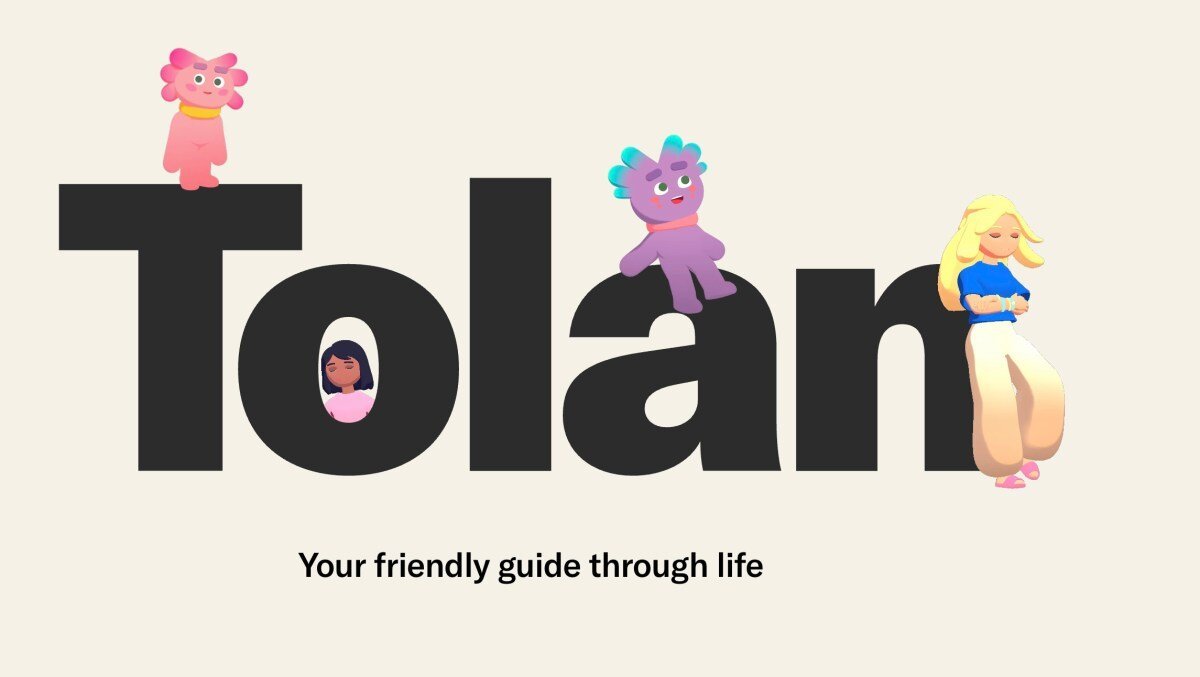
Tolan is designed as a friendly AI companion that people can turn to for practical help and personal support. The app uses a cartoonish character interface intended to feel approachable rather than clinical or intimidating, and it is positioned as a tool that can help users work through to-do lists, organize their days, think through relationships and process emotions.
That positioning matters. The consumer AI market is crowded with chatbots that can answer questions, but far fewer products have managed to convince users that they are worth paying for over time. Tolan’s pitch is that it can do more than converse; it can act like a steady, personalized helper that fits into the rhythms of daily life.
Why investors are paying attention
Investors often look for three signs that a consumer AI app can last: repeat usage, monetization and a clear identity in the market. Tolan appears to have all three, at least by its own account.
The startup said its recurring revenue is now in the “double-digit millions,” a meaningful benchmark for a company in such a new category. It also reported a user base that is large enough to suggest the app has moved beyond early adopters and into broader consumer use.
Tolan’s team told Upstarts Media that the app has more than 250,000 active users, has generated more than 70 million conversations over the past year and has attracted a user base that is around 70% women and 40% parents.
Those usage patterns hint at a product that is not simply a novelty chatbot. The company’s own data suggests it is serving people who want emotional support, planning help or both. That mix may be part of why it has found an audience while other AI companion products have faded or faced backlash.
How much did Tolan raise and who backed it?
Tolan raised $30 million in the latest round, according to the company and reporting cited by TechCrunch. The investors include Union Square Ventures, Khosla Ventures and Homebrew, all firms with a history of backing software and consumer technology startups.
The new funding roughly doubles the company’s total capital raised so far. While Tolan did not publicly announce a new valuation, PitchBook estimated the company at more than $268 million, though that figure was described as carrying “medium confidence.” Earlier reporting had placed the startup’s valuation at $120 million before this round.
| Key detail | Information |
|---|---|
| Latest funding | $30 million |
| Lead investors | Union Square Ventures, Khosla Ventures, Homebrew |
| Total capital raised | Roughly doubled after the round |
| Reported valuation | PitchBook estimate above $268 million |
| Active users | More than 250,000 |
| Conversations in the past year | More than 70 million |
| Revenue | Annual recurring revenue in the double-digit millions |
How is Tolan different from earlier AI companions?
Tolan’s closest peers in the AI companion space have often struggled with reputational problems that limited their growth. Some products were marketed in ways that made them feel uncanny or awkward, while others drew criticism for appearing too emotionally manipulative or too strange for mainstream users.
One example is Friend, the pendant-based AI companion that faced widespread ridicule online and negative press coverage. Tolan, by comparison, appears to have avoided much of that backlash by leaning into a gentler, more utility-focused identity. It is still an AI companion, but one that seems designed to be useful first and “weird” second.
That distinction may be more important than it sounds. Companion apps ask users to engage in a highly personal relationship with software, which means trust, tone and emotional framing can be as important as technical capability. If an app feels too artificial or too self-aware about its own personality, users may reject it quickly. Tolan’s product design suggests the company understands that challenge.
Who is using the app?
Tolan says its audience skews heavily toward women and parents, and anecdotal use cases suggest it may be especially appealing to neurodivergent users who benefit from extra structure, support and conversational prompting. That could include help with planning, prioritizing tasks or thinking through emotionally difficult situations.
The user mix matters because it suggests a more practical market than the stereotypical image of someone chatting with a bot for entertainment. If Tolan is helping users organize their lives, manage mental load or work through stressful decisions, it may have a more durable value proposition than products built only around companionship.
- 70% of users are women, according to the company.
- 40% are parents, suggesting family and scheduling needs may be a major use case.
- The app is also said to resonate with neurodivergent users seeking structure and support.
Why now? The AI companion market is changing
The new financing arrives as the broader market is shifting. The earliest wave of AI companion apps was often centered on conversation and personality, but the newer crop of products increasingly overlaps with AI agents that can help users plan, organize and complete tasks.
That evolution could benefit Tolan if it can broaden its role from conversational support to actual life management. It could also intensify competition, because many of the largest technology companies are now moving in the same direction.
Meta, for example, has introduced its own AI agent, Muse, which includes a character-like avatar and is intended for users to talk to. The company also plans to explore hardware for that product in the future. As major platforms enter the space, smaller startups will need either a sharper niche or stronger engagement to keep pace.
How does the competition affect Tolan?
Competition raises the bar on product quality, retention and safety. A startup like Tolan can no longer rely on the novelty of a conversational avatar alone. It must prove that users come back regularly, pay for premium features and trust the product with sensitive information.
That becomes especially important when the app touches emotional or mental health-adjacent territory. The companies that survive may be the ones that combine practical utility with a carefully managed personality and a clear boundary between support and therapy.
What happened to other major players?
Several once-prominent names in the AI companion category have run into serious trouble. Character.ai, which at one point was one of the best-known services in the space, recently filed for bankruptcy after its founders returned to Google. The company’s remaining staff is transitioning to Disney, which acquired some of its assets.
That collapse underscores how volatile this market can be. Plenty of products can attract attention, but much fewer can sustain growth, build a dependable business model and avoid the legal or reputational risks that come with emotionally responsive software.
Tolan’s rise is therefore notable not only because it has gained funding, but because it appears to have done so while sidestepping some of the most visible pitfalls that damaged its predecessors.
What risks does Tolan face?
Despite the momentum, Tolan is entering a difficult phase for any company offering AI-powered emotional support. The startup must navigate several overlapping risks, from product trust to legal exposure.
- Safety concerns: AI systems can sometimes reinforce harmful thinking or fail to respond appropriately in moments of crisis.
- Legal scrutiny: Multiple lawsuits have already targeted general-purpose AI app makers over claims that chatbot interactions contributed to suicides.
- Market pressure: Big-tech competitors can copy features quickly and distribute them at scale.
- User retention: Consumers may try companion apps once and then stop using them if the experience becomes repetitive.
Those risks are especially sensitive when the product is framed as emotional support. A companion app does not need to be a therapist to be influential, and that influence can create liability if the system responds poorly in moments of vulnerability.
The company’s challenge is not only to grow usage, but to prove that an AI companion can be helpful without crossing into harmful or overly intimate territory.
Why this funding round matters beyond one startup
Tolan’s funding round is a useful barometer for where consumer AI is heading. Investors are still willing to back products that promise emotional utility, but the emphasis is shifting toward apps that feel grounded in everyday needs rather than pure entertainment or synthetic friendship.
If Tolan continues to grow, it may become one of the clearest examples of an AI companion that found a sustainable middle ground: personable enough to feel engaging, practical enough to justify a subscription, and restrained enough to avoid triggering the backlash that hit some of its rivals.
That balance is likely to define the next generation of consumer AI products. The winners may not be the most lifelike or the most ambitious. They may instead be the ones that make users feel less alone, more organized and more capable of getting through the day.
Timeline: Tolan’s latest milestone
| Date / period | Milestone |
|---|---|
| Past year | Tolan says users held more than 70 million conversations on the app. |
| Recent reporting | Upstarts Media reported the company had raised a new $30 million round. |
| Current status | The startup says it has more than 250,000 active users and double-digit millions in annual recurring revenue. |
| Post-round outlook | PitchBook estimated the company’s valuation at more than $268 million. |
For now, Tolan stands out as one of the few AI companion startups to pair public traction with investor confidence. Whether it can keep that momentum will depend on more than charm: the company will need to show that its product can remain helpful, safe and distinct as the category becomes more crowded.
Frequently asked questions
What is Tolan?
Tolan is an AI companion app designed to help users manage daily life, relationships, emotions and goals. It uses a cartoon-style character interface and is positioned as a supportive tool for both conversation and practical organization.
How much funding did Tolan raise?
Tolan raised $30 million in its latest round. The funding was backed by investors including Union Square Ventures, Khosla Ventures and Homebrew, and it roughly doubles the startup’s total capital raised so far.
How big is Tolan’s user base?
Tolan says it has more than 250,000 active users. The company also says those users have held more than 70 million conversations on the app over the past year, suggesting strong ongoing engagement.
Why is Tolan different from other AI companions?
Tolan appears to be more utility-focused and less gimmicky than many earlier AI companion products. It aims to be helpful without feeling overly strange or theatrical, which may explain why it has avoided some of the backlash seen elsewhere.
What risks does Tolan face?
Tolan faces safety, legal and competitive risks because it offers emotional support through AI. The category has already drawn lawsuits and criticism, and larger tech companies are moving into similar agent-style products.