In short
TechCrunch Disrupt 2026 will feature a Builders Stage session on how AI agents are changing startup hiring and team design. The panel will explore what work should stay human, what can be delegated to AI, and how founders keep accountability.
- AI agents are increasingly handling tasks that once required early startup hires.
- Disrupt 2026 will host a panel on how founders should split work between humans and AI.
- The key challenge is maintaining accountability, culture and judgment as automation grows.
- Revenue, support and operations teams are likely to be among the first to change.
- Founders are being pushed to think about ownership, not just headcount.
AI agents are moving from sidekick to staffer, and that shift is forcing founders to rethink how they build their earliest teams. At TechCrunch Disrupt 2026 in San Francisco, leaders from Gusto, Insight Partners and Leland will examine how startups can decide what humans should own and what can be handed to AI.
The discussion matters because the first hires at a startup often shape product execution, customer experience and company culture. If machines can now take on engineering tasks, support workflows and operational work, then the old question of “who should we hire next?” is becoming “what work must be done, and does it need a person?”
That is the core premise behind “Hiring When AI Is a Co-Founder,” a Builders Stage session set for Disrupt 2026 at Moscone West from October 13 to 15. The panel brings together Gusto co-founder and chief executive Josh Reeves, Insight Partners senior vice president Michelle Johnson and Leland co-founder and chief executive John Koelliker to unpack how AI-native startups are redefining the org chart.
Why the startup hiring playbook is changing
Early-stage companies have always been obsessed with efficiency. Lean headcount, fast iteration and a bias toward shipping have long been central to startup culture. What has changed is the type of leverage founders can now get from software.
AI agents are no longer limited to autocomplete-style assistance or single-step prompts. In growing numbers of startups, they are being used to carry out multi-step tasks that previously required an early employee or contractor. That includes customer support responses, research, internal operations, lead qualification and pieces of software development.
For founders, that introduces a different kind of staffing decision. Instead of hiring immediately to cover every operational gap, teams can ask whether a process should be automated, partially automated, or reserved for human judgment.
The result is a shift in how founders think about scale. A startup can potentially reach more customers, move faster and spend less on routine work. But the trade-off is that teams must now manage not just people, but also the systems that assist or substitute for them.
What AI agents can do inside a young company
AI agents are best understood as task-oriented systems that can execute a sequence of actions, not just answer a question. In a startup setting, that can make them useful in functions where work is repetitive, data-heavy or rules-based.
- Drafting and routing customer support replies
- Summarizing research or account information
- Preparing sales outreach and follow-up materials
- Handling internal workflows and administrative tasks
- Helping engineers review, test or document code
That does not mean these tools replace entire teams. It means the composition of the team may change. A smaller group of employees may supervise a larger volume of work, with agents taking on narrow assignments under human oversight.
Who will explain the shift at Disrupt 2026?
The panel is designed to bring together three distinct perspectives on how AI affects early hiring and company design.
Josh Reeves, Gusto
Reeves leads Gusto, a company that serves more than 500,000 businesses across payroll, benefits, compliance, onboarding, HR and retirement products. Because Gusto works so closely with small businesses, Reeves has a view into how founders actually staff and scale once they move from idea to operating company.
His perspective is especially relevant because HR, payroll and compliance are among the functions most affected when startups experiment with AI-assisted operations. Those are also areas where mistakes can be expensive, making human accountability essential even if AI handles some of the workflow.
Michelle Johnson, Insight Partners
Johnson brings the investor and scaling lens. At Insight Partners, she advises CEOs and chief revenue officers across North America and Europe on go-to-market strategy, revenue organization design and AI adoption.
Before joining Insight, she helped scale Flock Safety from under $1 million to $90 million in annual recurring revenue while working in sales and revenue operations. That background gives her a practical view of what AI can do inside revenue teams and what skills still separate high-performing people from automated systems.
John Koelliker, Leland
Koelliker sits at the intersection of talent and technology. As the co-founder and chief executive of Leland, a career and talent platform focused on the AI era, he is building for a labor market in which workers need to adapt as tools change the nature of entry-level and early-career roles.
His experience across product and growth roles at LinkedIn, Curated and Uber adds another layer to the conversation: how people build careers when the first rung on the ladder is no longer defined only by manual execution.
“The question is no longer simply who to hire next,” the session framing suggests. “Founders now have to decide what work belongs to people, what work can be delegated to AI, and who remains accountable when the output matters.”
How should founders decide what people own vs. what AI does?
Founders should treat this as an ownership problem, not just an automation problem. The highest-value human work in a startup is increasingly the work that requires judgment, context, relationships and accountability.
That means founders need to separate tasks that can be executed by a system from responsibilities that still demand human leadership. A person may not need to manually complete every step of a workflow, but someone must still define the goal, monitor quality, and make the final call when the output is ambiguous.
In practice, the line often falls in the following places:
- Customer insight: understanding what users really need and why.
- Strategy: challenging assumptions and deciding where to focus.
- Relationship-building: earning trust with customers, partners and hires.
- Accountability: owning mistakes and correcting them.
- Culture: shaping norms, pace and standards inside the company.
Those responsibilities are hard to delegate because they are not just tasks; they are decisions. A startup may use AI to accelerate the work, but it still needs humans to own the outcome.
Why accountability becomes more important, not less
When AI completes more of the repetitive work, the remaining human jobs become more consequential. If a system misroutes a support issue, writes inaccurate outreach, or misinterprets a customer signal, somebody must catch the problem and own the response.
That is why the startup role of the future may be less about sheer output and more about supervision, judgment and prioritization. The best early employees may be those who can direct both people and machines without losing sight of quality.
What changes for revenue, operations and support teams?
The immediate impact of AI agents is likely to show up first in functions where startups spend a lot of time on repeatable coordination. That includes customer service, sales development, operations and parts of engineering.
For a revenue team, the promise is obvious: AI can help gather background on prospects, draft personalized outreach, organize customer data and manage follow-up. For customer support, AI can triage cases, suggest answers and handle routine requests. For operations, agents can process internal tasks that are valuable but not strategically differentiating.
But these changes also force a redefinition of human roles. Instead of asking employees to perform every step from scratch, startups may increasingly hire for:
- Decision-making under uncertainty
- Escalation handling
- Process design
- Customer empathy
- Cross-functional coordination
That changes both recruiting and career development. A startup may need fewer people performing low-complexity work, but it may need more people who can supervise systems, interpret results and resolve edge cases.
Why Disrupt 2026 is the right place for this debate
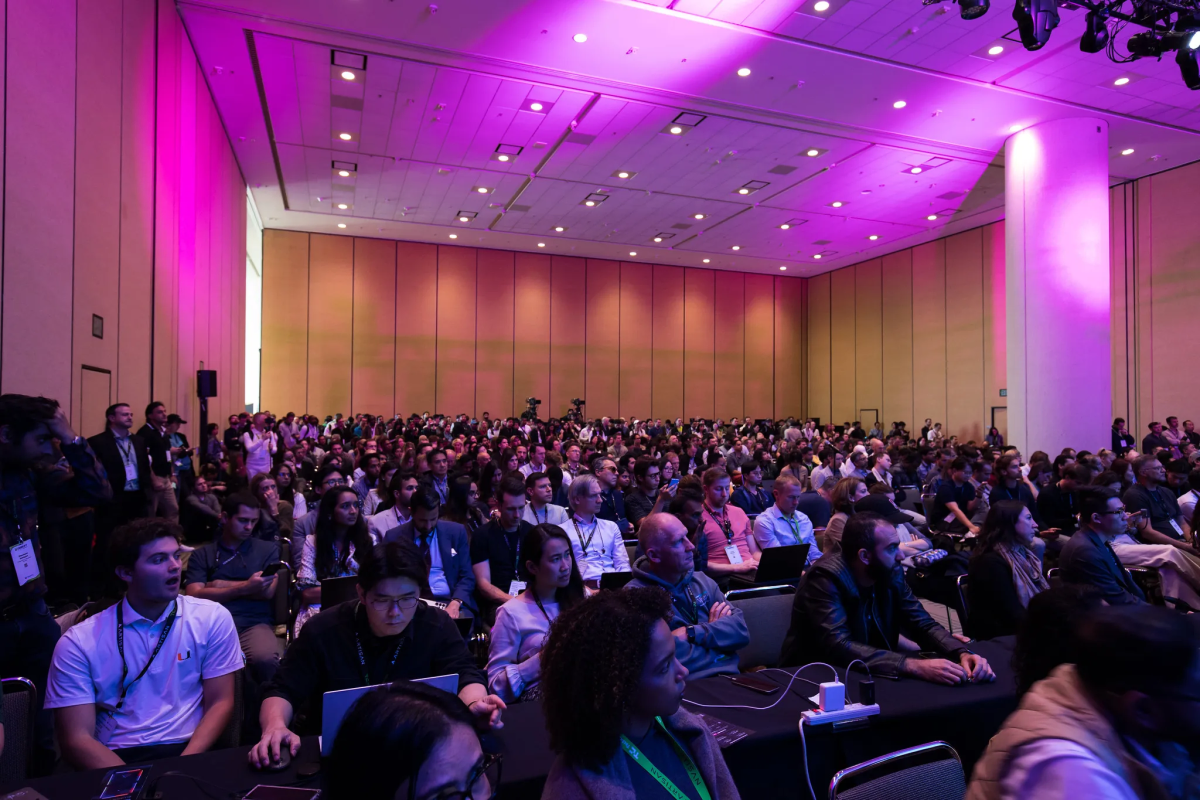
Disrupt has long been a venue where founders compare notes on the changing mechanics of company building. The 2026 edition is expected to draw more than 10,000 startups, investors and technology decision-makers to Moscone West in San Francisco from October 13 to 15.
That concentration of founders and operators makes the event a natural setting for a debate about the AI-driven startup stack. The question is not theoretical anymore. Founders are already deciding whether to hire another person, deploy an AI workflow, or combine the two.
The Builders Stage session aims to move the conversation beyond hype and into practical trade-offs. How do teams stay fast while introducing oversight? What does culture look like when software can do parts of the work? And how does a founder preserve accountability when responsibilities are split between human employees and agents?
How the session is being framed
The event is not being pitched as a futurist prediction. Instead, it is being positioned as a working conversation about how startups can build responsibly in a world where AI is part of the team from the beginning.
That framing is important. The challenge for early-stage companies is not whether to use AI at all. It is whether they can define clear boundaries so that speed does not undermine trust, quality or ownership.
Key dates and details for Disrupt attendees
For founders planning to attend, the Disrupt 2026 session is part of a broader event schedule that combines stage programming, networking and startup showcases. Tickets are being sold ahead of the price increase on September 25 at 11:59 p.m. PT, with discounts available for individual and group registration.
Exhibitors also face a deadline, with the last day to book an exhibit table set for September 18.
| Item | Details |
|---|---|
| Event | TechCrunch Disrupt 2026 |
| Session | “Hiring When AI Is a Co-Founder” |
| Speakers | Josh Reeves, Michelle Johnson, John Koelliker |
| Venue | Moscone West, San Francisco |
| Dates | October 13–15, 2026 |
| Audience | Startups, investors, founders and operators |
| Discount deadline | September 25 at 11:59 p.m. PT |
| Group savings | Up to 30% |
What the rise of AI-native startups means for hiring
The biggest change may be philosophical. In the traditional startup model, headcount often signals momentum. A larger team can indicate growth, ambition and execution capacity. In the AI-native model, momentum may instead come from how effectively a company combines a small number of skilled people with increasingly capable systems.
That does not eliminate the need for hiring. It changes the criteria. Founders may prioritize people who can define workflows, review output, build trust and adapt quickly as tools change. The most valuable employees may be those who can manage ambiguity and exercise judgment rather than simply close the most tickets or send the most emails.
At the same time, founders must be careful not to confuse automation with strategy. AI can reduce the burden of execution, but it cannot replace a company’s understanding of its customers, market or mission. Those remain human responsibilities.
What founders should ask before hiring
Startups considering their next hire may want to ask a few direct questions:
- Is this work repetitive enough for an agent to handle parts of it?
- Does the role require empathy, judgment or negotiation?
- Who will review the output if AI is involved?
- What risks appear if the task is done incorrectly?
- Will this hire add strategic value, or just volume?
Those questions are becoming central to early company design. In many cases, the smartest move may not be choosing between a person and a tool, but deciding how the two should work together.
Beyond the buzz: the real startup org chart is being redrawn
For years, founders have heard that startups should do more with less. AI agents extend that idea, but also complicate it. More work can be automated, but more responsibility concentrates in the humans who remain.
That makes the emerging startup org chart less about traditional layers and more about leverage. Founders need employees who can direct systems, not just fill roles. They need people who can identify when AI is the right answer and when the work is too important to delegate.
The session on the Builders Stage is likely to resonate because it asks a question every founder will soon face in one form or another: if AI can act like a teammate, what kind of team do you actually want to build?
For startups heading into 2026 and beyond, that may be the most important hiring question of all.
Quick reference: what to know about the Disrupt panel
- Theme: How AI agents are changing startup hiring
- Core issue: Dividing responsibilities between people and machines
- Key risk: Losing accountability, culture or quality while chasing speed
- Key opportunity: Letting small teams operate with far more leverage
- Why it matters: The earliest hires can define how AI-native startups grow
Frequently asked questions
What is the main topic of the Disrupt 2026 session on AI and hiring?
The main topic is how startup founders should build teams when AI agents can do work once assigned to early employees. The panel will focus on what should stay human, what can be automated and how to preserve accountability as companies scale.
Who is speaking on the Disrupt 2026 panel about AI as a co-founder?
The panel features Josh Reeves, CEO and co-founder of Gusto; Michelle Johnson, senior vice president at Insight Partners; and John Koelliker, CEO and co-founder of Leland. Together, they represent operating, investing and talent-focused perspectives.
Why are AI agents important for startups right now?
AI agents matter because they can carry out multi-step work such as support, research, operations and parts of sales or engineering. That gives small teams more leverage, but it also forces founders to define where human judgment and ownership remain essential.
When and where is TechCrunch Disrupt 2026 taking place?
TechCrunch Disrupt 2026 will be held at Moscone West in San Francisco from October 13 to 15, 2026. The event is expected to bring together more than 10,000 startups, investors and tech decision-makers.
What should founders ask before replacing a hire with AI?
Founders should ask whether the work is repetitive enough for an agent, whether it requires empathy or judgment, who will review the output and what could go wrong if the task is done incorrectly. Those questions help determine whether a person, an agent, or both are needed.