In short
Meta used Connect 2026 to push its AI glasses strategy, while facing intense scrutiny over privacy concerns tied to camera-equipped wearables. The event could mark a major step toward new hardware, including a rumored camera-free model or other mixed-reality devices.
- Meta is positioning AI glasses as the centerpiece of its next hardware strategy.
- Privacy criticism over camera-equipped glasses is now a major business challenge.
- Connect 2026 may feature new wearables, AI updates and possibly mixed-reality hardware.
- A camera-free glasses model would help address the most obvious bystander concerns.
- The event signals Meta’s effort to shift from social apps toward ambient, AI-driven computing.
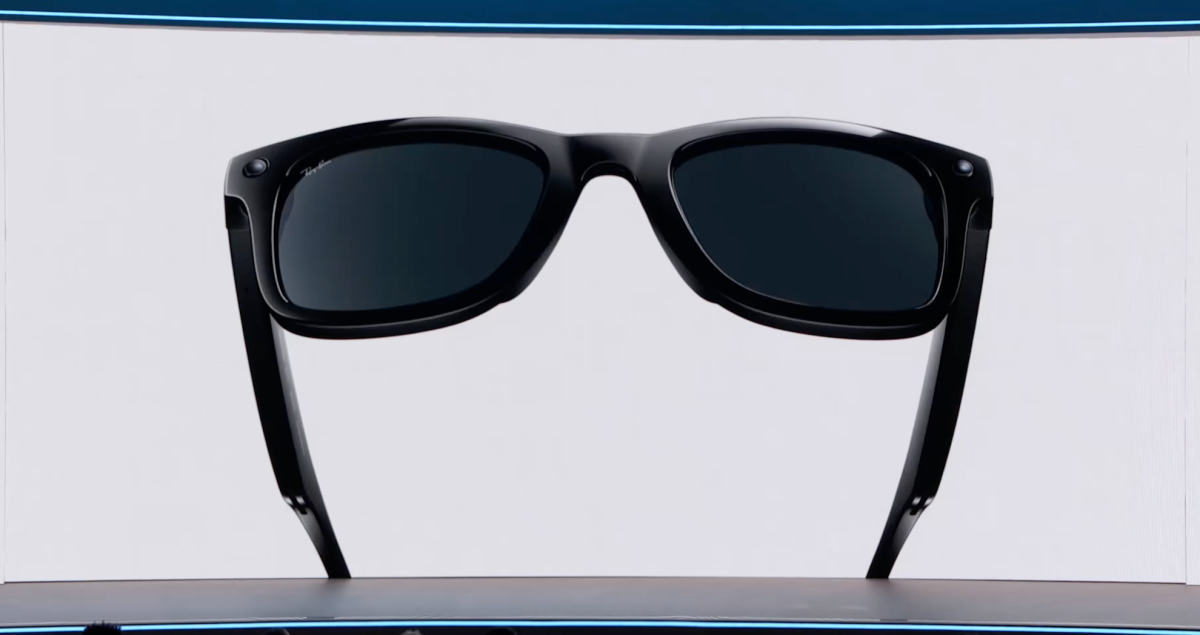
Meta used its 2026 Connect event to push its wearable-AI strategy to the front of the stage, with Mark Zuckerberg expected to frame smart glasses and artificial intelligence as central to the company’s next platform shift. The gathering matters because Meta is trying to turn glasses from a niche gadget into a mainstream computing device while also answering growing criticism over privacy, recording concerns and the optics of its camera-equipped products.
The annual showcase, held in Menlo Park and headlined by Zuckerberg on Wednesday evening, comes at a pivotal moment for the company. Meta has spent years investing in virtual reality, mixed reality and AI, but the strongest commercial momentum appears to be around wearables that sit on the face rather than in the hand. That shift gives Connect 2026 outsized importance: if Meta can persuade consumers that AI glasses are useful, safe and socially acceptable, it could redefine both the company’s hardware ambitions and the wider consumer tech market.
At the same time, the event arrives under a cloud of privacy concerns. Meta’s current glasses line has drawn criticism because its built-in camera can be used to record people in ways that are not always obvious to bystanders, prompting discomfort, jokes and harsher labels online. The company has already tried to respond with product tweaks and fresh marketing, but the pressure to demonstrate a better answer is now higher than ever.
What Meta wants Connect 2026 to accomplish
Meta’s aim is simple: convince developers, investors and consumers that it is building the next major personal computing platform around AI and smart glasses. The company has positioned the event as part product reveal, part vision statement, with Zuckerberg expected to connect hardware, software and AI into one long-term narrative.
That narrative matters because Meta is not just launching gadgets. It is trying to show that its ecosystem can move beyond social apps and advertising into a future where people interact with digital assistants and immersive content through lightweight wearables.
Meta has signaled that the keynote would center on how it is “building a future for everyone,” a framing that places AI and smart glasses at the core of its product strategy.
In practical terms, that means several possible announcements could shape the company’s next phase:
- new smart glasses features or models
- updates tied to Meta’s AI assistant efforts
- fresh mixed-reality or headset hardware
- software improvements for existing wearables
- privacy changes designed to address public concerns
Why smart glasses are Meta’s biggest story right now
Smart glasses have become Meta’s most visible hardware bet because they sit at the intersection of AI, cameras, voice interaction and always-available computing. Unlike headsets, which are still relatively bulky and associated with gaming or specialized use, glasses are more socially familiar and potentially easier to wear all day.
That makes them attractive to Meta for a very specific reason: if the company can make glasses useful enough, they could become the interface for digital assistants, photo and video capture, real-time information and eventually more immersive experiences.
But the same features that make the devices promising also make them controversial. A pair of glasses with an embedded camera can create uncertainty for people nearby, especially in public spaces, bars, classrooms and workplaces. The result has been growing skepticism about whether the product is a convenience tool or a surveillance problem in disguise.
How privacy concerns changed the conversation
Privacy anxiety is now inseparable from Meta’s glasses business. Critics have argued that the camera-equipped frames can be used to record others without meaningful consent, especially when the device looks like ordinary eyewear at a glance.
That concern has fed an awkward public reputation, with some online observers mocking the product line in crude terms. While that label reflects internet culture more than a formal market analysis, it underscores a genuine trust problem Meta has to solve if it wants mass adoption.
Meta has already attempted to respond in two ways. First, it introduced privacy-focused product changes. Second, it launched a new marketing push intended to present the glasses as stylish, useful and socially acceptable rather than intrusive.
Still, the company enters Connect 2026 needing more than cosmetic fixes. It needs a credible story about why these devices should be welcomed rather than watched suspiciously.
Could Meta unveil camera-free glasses?
That is one of the most closely watched possibilities surrounding the event, and for good reason. A camera-free pair of glasses would address the most obvious privacy objection to Meta’s current lineup by removing the feature that most unsettles bystanders.
Such a move would also signal that Meta understands the reputational risk attached to always-on cameras. Even if the company continues to believe vision-based AI is important, a version without recording hardware could widen appeal in settings where cameras are unwelcome.
The source material points to rumors around this possibility, but not confirmation. If Meta does unveil a camera-free option, it would likely be read as both a product expansion and a strategic concession: a way to broaden the category while acknowledging that privacy objections are not going away.
What a camera-free model would mean
A glasses model without a camera would likely trade visual capture for a more limited set of AI and audio functions. That could make the device less powerful in some respects but more acceptable in everyday life.
Possible benefits include:
- lower privacy risk in public spaces
- easier adoption in workplaces and schools
- less stigma attached to wearing the product
- a clearer path for Meta to market the device as an assistant tool
Even so, removing the camera would also reduce one of the main differentiators that currently separates Meta’s glasses from more conventional audio wearables. That trade-off could become one of the defining questions of the event.
What else could Meta reveal at Connect 2026?
Beyond glasses, Meta Connect has traditionally served as a showcase for the company’s virtual reality and mixed reality ambitions. Those ambitions have narrowed compared with Meta’s earlier, more expansive metaverse-era messaging, but the company still has reasons to keep the category alive.
A recent leak suggested Meta may be preparing to show some kind of unannounced mixed-reality glasses or headset, which raises the possibility that the event will include a surprise hardware reveal. If so, Meta could use Connect to signal that it has not abandoned immersive computing even as it concentrates more visibly on AI-powered wearables.
The most likely framing is that Meta will present a layered hardware portfolio: glasses for everyday AI interaction, and more immersive devices for deeper virtual and mixed-reality experiences.
| Area | Why it matters | What to watch at Connect 2026 |
|---|---|---|
| AI glasses | Core consumer hardware bet and public face of Meta’s AI push | New models, features, or privacy-oriented variants |
| AI software | Gives Meta’s hardware a reason to exist beyond novelty | Updates to Meta’s AI assistant and related services |
| Mixed reality | Preserves Meta’s foothold in immersive computing | Possible headset or glasses reveal from leaked hardware |
| Privacy | Central obstacle to mass adoption of camera-equipped wearables | New policies, controls or design changes |
How much of the keynote is about AI?
Quite a lot, and possibly most of it. Meta has been leaning hard into AI across its consumer products, and Connect 2026 is expected to reflect that emphasis. Zuckerberg’s recent public writing has tied the company’s wearables strategy directly to AI, suggesting Meta wants to be seen less as a social-media giant and more as a platform company building ambient computing tools.
One key example is Meta’s recent launch of Muse, an AI agent the company has introduced as part of its broader product story. Whether the keynote expands on Muse specifically or simply uses it as evidence of Meta’s progress, the message is likely to be the same: AI is now the connective tissue across Meta’s hardware plans.
This matters because consumer AI is still searching for its killer interface. Phones have voice assistants and apps, but they are not always ideal for hands-free, context-aware help. Smart glasses offer a plausible alternative, especially if Meta can make the interaction feel natural rather than awkward.
Why Meta sees wearables as an AI gateway
Wearables may be the most persuasive way to sell AI because they keep the technology close to the user’s body and senses. Instead of opening an app and typing a prompt, someone wearing glasses could ask for help, capture a moment, or receive contextual information with minimal friction.
That is the promise Meta is selling: computing that feels less like using a device and more like living with a helper.
The challenge is that promise only works if the hardware disappears into everyday life. If the glasses feel strange, intrusive or socially risky, the software advantages will not matter much.
Why this event is being watched beyond Meta
Meta Connect 2026 is important not only because of what the company announces, but because it offers a read on the broader market for AI hardware. Several tech companies are racing to define the next form factor after smartphones, and the contest is increasingly centered on whether voice, vision and ambient intelligence can be packaged into consumer products people actually wear.
Meta is one of the few companies with the scale, distribution and cash to pursue that goal aggressively. If its glasses strategy gains traction, it could push competitors to accelerate their own efforts. If the products continue to attract privacy criticism without broad consumer enthusiasm, the category may remain a premium curiosity rather than a mass-market shift.
The event also gives a clue to how Meta now sees its identity. A company once defined by social feeds and engagement metrics is trying to recast itself as a hardware-and-AI platform company. That is a major strategic pivot, and Connect is where Meta gets to argue that the pivot is real.
How the company’s past ambitions shape the present
Meta’s current hardware messaging cannot be separated from its earlier, more ambitious bets on virtual reality and the metaverse. The company spent heavily to build a future around immersive environments, but enthusiasm for that vision has been uneven, and Meta has scaled back some of the rhetoric as it has moved toward more practical consumer use cases.
The result is a more focused story now. Instead of promising a fully realized digital universe, Meta is emphasizing products people can buy and use today. Smart glasses and AI assistants fit that strategy much better than a grand concept that may take years to materialize.
That does not mean the metaverse is gone. It means Meta is trying to route toward it through smaller, more understandable steps: first glasses, then richer mixed-reality devices, then whatever comes next.
Timeline of the key moments around Connect 2026
The lead-up to the event shows how Meta’s messaging has evolved from broad ambition to more concrete hardware storytelling. Here is a simple timeline of the major moments referenced in the run-up to Zuckerberg’s keynote.
| Date | Event | Why it matters |
|---|---|---|
| Recent months | Meta’s AI and wearables push intensifies | Shows the company narrowing its focus toward glasses and assistants |
| Before Connect | Privacy concerns over camera-equipped glasses continue to grow | Creates pressure for Meta to respond publicly |
| Before Connect | Meta launches Muse and updates smart-glasses marketing | Signals an effort to make AI wearables look more practical and less controversial |
| Wednesday, Sept. 23, 7 PM ET | Zuckerberg’s Connect 2026 keynote | Main stage moment for product announcements and strategy |
What to watch after the keynote
The real significance of Connect 2026 will not come just from the stage announcements. It will come from how users, regulators and competitors react in the days that follow. If Meta introduces a camera-free pair or other privacy-conscious changes, the company could be signaling a new phase of product design. If it doubles down on camera-first glasses without major concessions, the backlash may intensify.
Developers will also be watching closely. New hardware only matters if third-party apps, AI experiences and services make the devices more useful over time. Meta has to show that its ecosystem is not a single-product story, but a platform with room to grow.
And for the broader tech industry, Connect will help answer a larger question: is wearable AI finally ready for mainstream consumers, or are we still in the stage where product demos outpace real demand?
The bottom line
Meta Connect 2026 is shaping up as a crucial test of the company’s wearable-AI strategy. Zuckerberg is using the event to argue that smart glasses and AI are the future of personal computing, but the company must also confront serious privacy concerns that have shadowed its camera-equipped products.
If Meta can combine useful AI features, better design and stronger privacy safeguards, it may be able to turn a controversial gadget into a mainstream device. If not, the company’s next big product push could end up as another reminder that the path from futuristic demo to everyday adoption is much harder than it looks.
Frequently asked questions
What is Meta announcing at Connect 2026?
Meta is expected to focus on AI glasses, smart wearable features and possible mixed-reality hardware updates at Connect 2026. The company is also likely to use the keynote to reinforce its broader AI strategy and address privacy concerns around camera-equipped devices.
Why are Meta’s smart glasses controversial?
Meta’s smart glasses are controversial because their built-in camera can record people in public without always making that obvious. That has led to privacy concerns, harassment worries and criticism that the products can be used in socially intrusive ways.
Could Meta launch camera-free glasses?
Yes, that is one of the biggest rumors around Connect 2026. A camera-free version would reduce the most obvious privacy objections, although Meta has not confirmed such a product and the source material only suggests it as a possibility.
What is Muse in Meta’s AI strategy?
Muse is Meta’s recently launched AI agent, and it appears to be part of the company’s effort to connect its hardware roadmap with practical AI products. Meta may use it at Connect 2026 to show how its glasses and software ecosystem work together.
Why does Connect 2026 matter for the tech industry?
Connect 2026 matters because it offers a major signal about whether wearable AI can become mainstream. If Meta can make glasses feel useful and socially acceptable, it could help define the next consumer computing platform and push rivals to follow.