In short
Michael Polansky’s Outer Biosciences is combining living donated human skin with AI to accelerate the discovery of skincare ingredients. The startup says its platform can keep tissue alive for weeks, generating richer biology data than conventional lab models.
- Outer Biosciences says it keeps donated human skin alive for up to a month to study longer-term biological responses.
- The company uses AI to predict promising compounds, then tests them in living tissue and feeds the results back into the model.
- Polansky says the startup has raised about $23 million and is now generating a new candidate roughly every six weeks.
- The business is aimed at ingredient licensing and research partnerships rather than building a consumer skincare brand.
- Competitors are pursuing organoids and organ-on-chip systems, but Outer says its human-tissue data is harder to replicate.
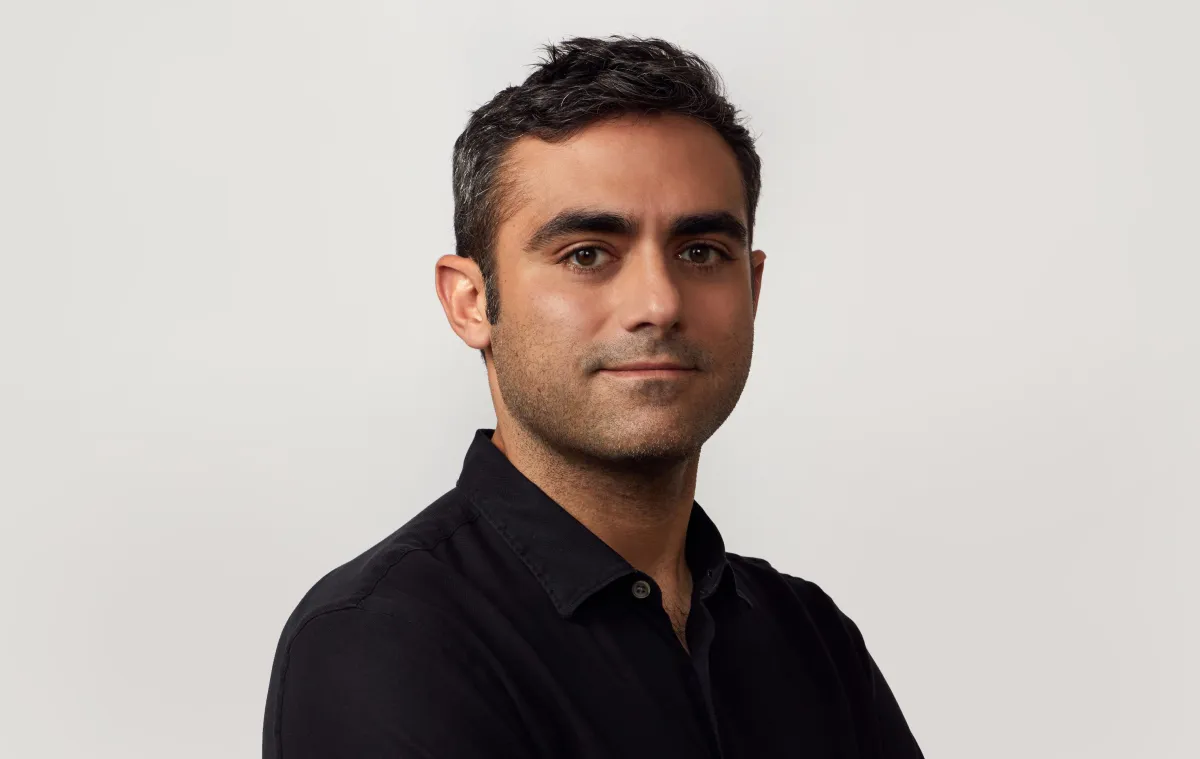
Michael Polansky’s Outer Biosciences is building an AI-powered platform that keeps donated human skin alive for weeks after surgery, giving the startup a way to test ingredients on real tissue instead of relying only on animal models or simplified lab systems. The approach could reshape how cosmetic actives are discovered, and it highlights how biology companies are starting to borrow software-style iteration to accelerate research.
Polansky, best known publicly as Lady Gaga’s partner and professionally as a longtime investor and operator in science and philanthropy, has spent years quietly developing the company with a small team outside Cambridge, Massachusetts. After working almost entirely out of the spotlight, Outer Biosciences is now describing how its platform combines living human tissue, controlled experimentation and machine learning to identify compounds that may improve skin function.
What Outer Biosciences is trying to do
Outer Biosciences wants to make skin-discovery faster, more predictive and closer to human reality. Instead of starting with a synthetic model or a short-lived cell culture, the company uses human skin that would otherwise be discarded after surgery and keeps it viable long enough to study biological changes over time.
The goal is not to grow a replacement organ or create a consumer skincare brand. The startup is building a research engine that can identify promising ingredients, test them in living tissue and then feed the results back into an AI model that improves future predictions.
That loop matters because skin biology unfolds over days and weeks, not hours. Traditional testing systems can catch acute toxicity, but they often miss slower processes such as pigmentation shifts, barrier repair, inflammation and collagen remodeling. Outer Biosciences says its platform is designed to observe those longer-term effects.
Who is Michael Polansky, and why is he leading this?
Michael Polansky is not a bench scientist by training, but he has spent more than a decade around serious life sciences work. He studied applied mathematics and computer science at Harvard, worked at Bridgewater Associates, moved into Silicon Valley through Sean Parker’s network and later helped run Parker’s family office and philanthropy efforts.
His path into biology grew out of cancer immunotherapy, an area he and Parker backed when it was still considered niche. That experience appears to have shaped his interest in building tools that could make biological research more systematic and less dependent on slow, costly trial and error.
His public profile rose again through his relationship with Stefani Germanotta, better known as Lady Gaga, but the startup story is separate from celebrity branding. Outer Biosciences is positioned as a deep-tech biology company with a commercial pipeline that could eventually serve beauty and pharma customers.
How the tissue platform works
Outer Biosciences says it sources human skin from non-controversial channels tied to surgery waste, mainly plastic surgery tissue, through organizations operating with donor consent and institutional oversight. The company emphasizes that it does not buy tissue in the ordinary sense; instead, it pays costs to suppliers that recover collection and handling expenses.
According to Polansky, the company spent about two years building the logistics needed to receive tissue within hours of surgery while it is still alive. Once received, the samples are put into a proprietary support system that supplies nutrients and removes waste, extending viability well beyond what is standard in most labs.
That extra time is the key technical advantage. Most skin samples are only useful for a short window, which limits the kinds of questions researchers can ask. Outer Biosciences says its process can keep tissue alive for up to a month while preserving much of its original structure and molecular behavior.
Why alive skin matters more than a short-lived sample
Living tissue can reveal how skin responds over time, not just at one moment. That means researchers can study delayed reactions and recovery pathways after injury, chemical exposure or UV stress, which are difficult to model in a dish that lasts only days.
Polansky has pointed to UVB damage as an example. In the company’s system, researchers can apply ultraviolet injury and then observe inflammatory and stress responses across multiple weeks. The company says it is watching the biology unfold rather than claiming to “heal” the skin in the therapeutic sense.
This makes the platform valuable for measuring how compounds behave in a more realistic setting. The point is not simply whether something reacts with skin, but whether it alters skin biology in a useful and sustained way.
How does AI fit into a wet-lab biology company?
AI is the prediction layer on top of the tissue system. Outer Biosciences says its model suggests chemicals that may improve a specific skin function, and then the company tests those candidates in living tissue. The outcome is fed back into the model, which gradually gets better at ranking future candidates.
That creates a closed learning loop: prediction, experiment, result, retraining. In practice, the system is supposed to narrow the search space in a field with a limited number of validated active ingredients and a huge number of untested possibilities.
The company says its early discovery process was more manual and literature-driven, with additional exploration of natural compounds from unusual environments. That work produced some leads, but the AI layer changed the pace significantly. Polansky says the startup is now generating a new candidate about every six weeks.
| Key area | Outer Biosciences approach | Why it matters |
|---|---|---|
| Tissue source | Donated human skin from surgical waste | Uses real human biology rather than animal proxies |
| Viability window | Up to about one month | Enables week-long biological observations |
| AI function | Predicts promising compounds | Reduces the number of physical experiments needed |
| Commercial path | Licensing ingredients to beauty or pharma partners | Lets the company monetize discoveries without building a consumer brand |
| Funding to date | About $23 million | Shows early backing without a giant capital burn |
What makes the commercial opportunity so large?
The skincare and cosmetic ingredient market is surprisingly narrow at the core. While there are many products on shelves, the number of scientifically established active ingredients is limited, especially once you exclude broad formulation tricks and marketing language.
Polansky argues that this scarcity creates an opening for a platform that can discover and validate new actives faster than traditional methods. In the cosmetic world, the route to market is also simpler than for a drug: a successful ingredient still needs safety testing and standardized naming, but it does not face the full FDA approval path required for medicines.
That distinction matters because it means discovery can be monetized through ingredient sales and licensing. Outer Biosciences expects other companies to turn its discoveries into serums, creams or other products under their own brands.
Who might buy the results?
Beauty companies are the most obvious customers, but they are not the only ones. The startup has also discussed research collaborations with pharmaceutical partners interested in skin side effects, including rashes associated with cancer treatments.
That broader utility increases the commercial value of the platform. A compound that starts as a cosmetics lead could still generate revenue in adjacent research settings, especially where skin biology is a bottleneck.
Outer Biosciences already has several active leads, and Polansky has said that multiple candidates appear likely to make it to commercialization. The company’s model is built less around one blockbuster product than around a steady pipeline of validated ingredients.
How much data has Outer Biosciences raised and why does that matter?
Outer Biosciences has raised roughly $23 million so far, according to Polansky. Backers include Wing Ventures, Initialized and Hawktail, Polansky’s own investing firm, among others.
The company is still small, with 19 employees and nearly all of them based near Cambridge, Massachusetts. That size suggests a focused research operation rather than a broad consumer-facing company.
The funding level is notable because it reflects a modest capital footprint compared with many AI startups, especially those training large language models. Outer Biosciences says its computing needs are comparatively light, and the team runs its AI systems on-premise rather than in the cloud because of data-security concerns.
Why Outer Biosciences is different from other biotech AI companies
The company is not alone in trying to improve preclinical biology, but its method is unusual. Competitors are building organoids, organ-on-chip devices and other microphysiological systems that simulate human tissue in lab environments.
One nearby rival, Vivodyne, has attracted major funding for lab-grown human organ tissue and says it has raised nearly $80 million to date. Outer Biosciences, by contrast, is focusing on genuine donated tissue kept alive for long enough to generate molecular data directly from human skin.
That distinction gives Outer Biosciences a different kind of moat. The company believes it is generating data that does not already exist elsewhere, which could make its datasets hard to replicate even if the company’s pace is slower than that of software-native AI firms.
What is the downside of the approach?
The main challenge is scale. Biology is slower than software, and one reason AI labs can move quickly is that there is an enormous public internet to train on. Outer Biosciences has no equivalent “biology internet” to scrape.
Another challenge is operational. The company’s pipeline requires careful coordination, donor-consent controls and rapid tissue handling. That makes the platform more logistically complex than a purely computational model.
Still, the payoff could be meaningful if the system can reliably reduce failed experiments and identify promising compounds earlier in the process.
What role does Lady Gaga play in the business?
Lady Gaga is not the point of the company, but her relationship to Polansky adds an unusual layer to the story. Germanotta sits on Outer Biosciences’ board, and there is some overlap between her business interests and the startup’s scientific work.
Germanotta’s cosmetics company, Haus Labs, has collaborated at the margins with Outer Biosciences. For example, the startup’s chief scientist sits on Haus Labs’ scientific advisory board, and the companies have done limited joint projects.
Polansky describes Germanotta as a highly capable businessperson, not merely a celebrity figurehead. He says their partnership is both personal and professional, with their work on major touring logistics and beauty businesses showing a level of operational complexity that is often hidden from public view.
Polansky said the pair’s relationship is collaborative in both business and life, and he argued that Germanotta’s business instincts are not widely understood outside her public image.
How did Polansky’s career lead to this moment?
His route was indirect. After Harvard and Bridgewater, he moved into a network built around Sean Parker and Founders Fund, where he worked in the early days alongside some of Silicon Valley’s most influential investors.
He later ran Parker’s family office and was involved in philanthropic and medical initiatives, including cancer immunotherapy. That exposure to frontier science gave him a long view of how hard it is to move from curiosity-driven biology to commercially useful breakthroughs.
Outer Biosciences appears to be the product of those experiences: a marriage of investor discipline, biological ambition and a software-like belief that better iteration can improve research outcomes.
What happens next for Outer Biosciences?
The immediate plan is to keep building the ingredient pipeline and move more discoveries toward commercialization. The company also plans to expand its product-development capabilities so that it can better support the practical work of formulation, testing and manufacturing scale-up.
For now, much of that downstream work is still done manually by the researchers who discover the compounds. Building a team with experience taking ingredients from lab concept to market-ready product is one of the next steps.
Polansky says the company does not need to decide today whether it will remain a commercial ingredients business, license its discoveries or eventually reorganize around a breakout molecule. The main objective is to create a predictive engine that identifies valuable directions in skin biology before every experiment has to be run by hand.
Timeline of Outer Biosciences
The company’s development has been gradual, then suddenly more visible. Here is a simplified timeline of the main milestones described by Polansky:
| Year/period | Milestone | Why it mattered |
|---|---|---|
| Late 2010s | Polansky becomes interested in biology through cancer immunotherapy work | Sets the stage for a future life-science startup |
| 2022 | Outer Biosciences is co-founded | Formal start of the platform company |
| First two years | Team builds tissue logistics and early discovery workflows | Establishes the human-skin supply chain and experimental setup |
| Recent period | AI is added to accelerate compound discovery | Candidate generation speeds up significantly |
| Now | Company begins speaking more publicly | Signals a shift from stealth to controlled visibility |
Why this matters beyond skincare
Outer Biosciences is part of a larger shift in biotech, where companies are trying to merge computational prediction with better biological test beds. The dream is not just faster beauty product discovery, but a broader reduction in the gap between laboratory models and human reality.
If the platform works as advertised, it could point to a more general approach for biology: keep the tissue as close to its native state as possible, generate high-quality data and let machine learning help direct the next experiment.
That would not eliminate the slow work of wet science. But it could make each experiment more informative, and in fields like dermatology where subtle biological changes matter, that may be enough to change the pace of innovation.
What to watch next
Several signals will show whether Outer Biosciences is more than a clever concept. First, the company will need to prove that its predictions translate consistently into useful compounds. Second, it will need to show that partners are willing to pay for the data and the ingredients that emerge from it. Third, it will have to expand without losing the tightly controlled tissue pipeline that gives the platform its edge.
For now, the startup is betting that the combination of living tissue and AI can do something rare in biotech: produce data that is both biologically meaningful and commercially useful, at a pace faster than traditional discovery.
As Polansky sees it, the real breakthrough is not a single ingredient. It is a system that can find the next one, then the one after that.
Frequently asked questions
What is Outer Biosciences?
Outer Biosciences is a biotechnology startup co-founded by Michael Polansky that combines living human skin samples with AI to discover new skin-active ingredients. The company focuses on ingredient development and research partnerships rather than launching its own consumer skincare line.
How does Outer Biosciences keep skin alive outside the body?
Outer Biosciences says it receives donated human skin soon after surgery and places it into a proprietary support system that supplies nutrients and removes waste. The company says this lets the tissue remain viable for weeks, far longer than the usual lab window of only a few days.
Why is living human skin important for skincare research?
Living human skin is important because many biological processes, such as inflammation, pigmentation change and barrier repair, take place over days or weeks. Short-lived lab models can miss those effects, while longer-lived tissue allows researchers to study how compounds behave over time in a more realistic setting.
Is Outer Biosciences developing drugs or cosmetics?
Outer Biosciences is currently developing cosmetic ingredients and related research tools, not prescription drugs. That means the company does not need the same FDA approval process as a medicine, though it still must complete safety testing and standardized naming before ingredients can reach the market.
How much funding has Outer Biosciences raised?
Outer Biosciences has raised roughly $23 million so far, according to Michael Polansky. Backers include Wing Ventures, Initialized and Polansky’s own investing firm, Hawktail, and the company says it has a small team based mostly near Cambridge, Massachusetts.