In short
TechCrunch Disrupt 2026 opens in three days in San Francisco, with Startup Battlefield, 300+ startups in the expo hall and 200+ sessions on the schedule. The event is being positioned as a major place to find breakout companies before they go mainstream.
- TechCrunch Disrupt 2026 opens October 13 at Moscone West in San Francisco.
- Startup Battlefield 200 will narrow to 20 finalists competing for $100,000 and the Disrupt Cup.
- More than 300 startups will exhibit, alongside 200+ sessions and 250+ tech leaders.
- Discounted tickets are available for a limited time, including a $75 Expo+ Pass for recently laid-off attendees.
TechCrunch Disrupt 2026 begins in three days at Moscone West in San Francisco, bringing together hundreds of startups, thousands of attendees and a packed agenda centered on the next wave of breakout tech companies. The event matters because it is one of the industry’s biggest launchpads for early-stage founders, investors and buyers looking to spot the next major startup before it becomes widely known.
Organizers say the three-day conference opens on October 13 at 8 a.m. PT, with Startup Battlefield 200 again serving as one of the marquee attractions. Beyond the competition, the show floor and conference program are built around discovery, networking and dealmaking, with more than 300 exhibiting startups and more than 200 sessions spread across six stages.
For attendees deciding whether to go, the timing also comes with a clear commercial incentive: TechCrunch is highlighting limited-time savings of up to $100 on passes, plus discounted second tickets and group pricing for larger teams.
What is TechCrunch Disrupt 2026 and why does it matter?
TechCrunch Disrupt 2026 is a major startup conference designed to surface emerging companies, connect them with investors and customers, and showcase new ideas before they reach the mainstream.
For more than a decade, Disrupt has positioned itself as a place where early-stage companies can gain visibility quickly. Unlike a conventional trade show, the event combines a startup competition, an expansive expo hall and a conference program that blends technical talks, business strategy and networking. That mix is what has made the conference a recurring stop for founders trying to raise capital, recruit talent or introduce a product to a broader audience.
This year’s edition arrives at a particularly active moment for the startup ecosystem. AI remains the dominant theme across venture investment and product development, but the event also stretches well beyond artificial intelligence into fundraising, product strategy, go-to-market execution, infrastructure and scaling. That breadth gives Disrupt a broader role than a single-topic conference: it acts as a snapshot of where the tech industry is putting time, money and attention.
TechCrunch is framing the event as a place to meet companies and people before they become widely recognized, with the emphasis on early access to ideas, founders and investment opportunities.
How Startup Battlefield 200 works
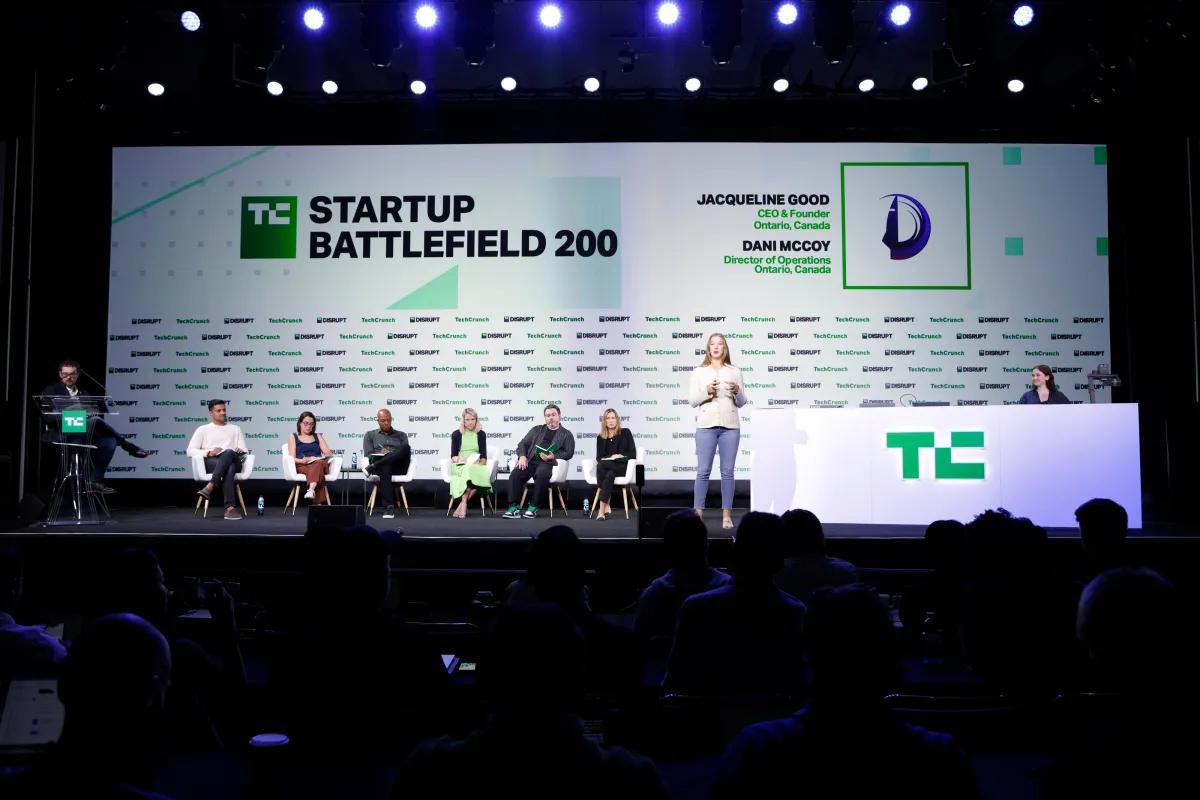
Startup Battlefield 200 is a curated competition that puts selected early-stage startups in front of investors, media, potential customers and other attendees.
The competition is one of the most visible parts of Disrupt. From the larger group of selected startups, 20 finalists will take the Disrupt Stage to compete for a $100,000 prize and the Disrupt Cup. That structure gives founders a high-profile platform and gives attendees a compressed look at companies that organizers believe are worth watching.
The value of Battlefield has traditionally come from its combination of exposure and vetting. Founders get live feedback and the chance to pitch in a high-stakes setting. Investors and journalists get an organized look at companies that have already passed through a selection process. For the wider audience, the competition often serves as a radar screen for trends in software, consumer products, enterprise tools and AI-enabled services.
Why the startup competition still draws attention
The competition still matters because early visibility can accelerate a company’s next stage of growth.
A strong showing at a conference like Disrupt can lead to meetings, media coverage, pilot customers and investor follow-ups. Even for startups that do not win the main prize, the credibility of being featured in a high-profile competition can help them stand out in a crowded market.
That is particularly important in a year when startup buyers and investors are fielding a flood of AI products and fast-moving pitch decks. For many founders, a curated environment offers a chance to differentiate through live demos rather than slide decks alone.
300+ startups will fill the expo hall
More than 300 startups will exhibit at Disrupt 2026, giving attendees a broad view of products and companies across multiple stages and sectors.
TechCrunch says the expo hall is designed for direct conversation, not passive browsing. That matters because startup conferences often succeed or fail on whether the floor feels useful. A dense mix of founders, product teams, investors and prospective customers can turn a walk-through into a sourcing exercise, a partnership conversation or the beginning of a sales relationship.
The range of exhibiting companies also makes the event useful for attendees who are not focused on a single niche. Someone arriving to explore AI tools may still discover companies in fintech, developer infrastructure, workplace software, consumer apps or other emerging categories. In that sense, the expo hall acts as a market map of the startup economy at a specific moment in time.
| Disrupt 2026 feature | What TechCrunch says | Why it matters |
|---|---|---|
| Event date | October 13, 2026 | Marks the start of the three-day conference in San Francisco |
| Venue | Moscone West | Large convention setting suited to startup demos and stage programming |
| Startup Battlefield 200 | 200 selected startups | Creates a curated pipeline of companies to watch |
| Battlefield finalists | 20 startups | Finalists pitch on stage for the main prize |
| Main prize | $100,000 and the Disrupt Cup | Signals competitive prestige beyond the cash award |
| Expo Hall | 300+ exhibiting startups | Expands discovery beyond the competition itself |
| Conference programming | 200+ sessions, 250+ tech leaders, six stages | Provides content and networking across multiple tracks |
What will attendees hear about on stage?
Attendees will hear about AI, product strategy, go-to-market execution, fundraising, finance, infrastructure and scaling.
The conference program includes more than 200 sessions led by more than 250 tech leaders across six stages, along with roundtables and breakout discussions. That mix suggests an effort to make the event useful for both builders and operators, not just investors or reporters.
For founders, the practical appeal is obvious: sessions can help them pressure-test their approach to sales, pricing, hiring, fundraising and customer acquisition. For operators inside larger companies, the event can offer insight into where startups are pushing the state of the art and which categories are maturing fast enough to matter commercially.
Why the agenda is built around practical business topics
The agenda is built around practical business topics because startups need more than inspiration to grow.
While AI will likely dominate much of the conversation, the inclusion of topics such as GTM, finance and scaling shows that the conference is trying to address the operational side of building a company. That balance matters in a market where product innovation alone is rarely enough; execution often determines whether a startup becomes a category leader or disappears after an initial burst of attention.
The presence of more than 250 speakers and panelists also raises the odds that attendees will hear firsthand perspectives from founders and executives who have already navigated the same challenges newer startups now face. In that way, the conference functions as both a showcase and a classroom.
How much does it cost to attend?
TechCrunch is offering limited-time discounts of up to $100 off standard passes, plus 50% off a second ticket of the same type.
There is also a lower-cost option for recently laid-off attendees: an Expo+ Pass priced at $75. For teams heading to San Francisco together, the company says groups of four or more can unlock additional savings.
The pricing strategy reflects a familiar conference reality: events like Disrupt are not only about content, but about maximizing attendance from the people most likely to benefit from the ecosystem. Discounted pair tickets encourage founders to bring a co-founder or colleague. Group deals can help startups and venture firms send multiple team members. And the low-cost Expo+ option makes the event more accessible to people who may be looking for their next opportunity after a layoff.
- Up to $100 off passes for a limited time
- 50% off a second pass of the same ticket type
- Expo+ Pass for recently laid-off attendees: $75
- Extra savings for groups of four or more
Why San Francisco remains the center of gravity
San Francisco remains the center of gravity because it still concentrates venture capital, startup talent and major technology networks in one place.
Moscone West provides the physical scale needed for an event of this size, but the city itself adds to the conference’s pull. For many founders and investors, attending a major event in San Francisco offers more than access to sessions and demos; it creates a week of meetings and side conversations that can be just as valuable as the formal program.
The concentration effect is important. A founder can meet potential customers on the expo floor, reconnect with investors between sessions, hear from peers on stage and attend informal gatherings nearby. That density is one reason large conferences continue to matter even in an era where much startup communication happens online.
What attendees should expect over the three days
Attendees should expect a fast-moving mix of demos, pitches, stage talks and networking across the full three-day event.
Because the event opens early and runs across multiple stages and breakout areas, visitors will need to plan their schedules carefully. The biggest challenge is not finding something to do; it is choosing what to skip. Between Battlefield, exhibitor meetings and concurrent sessions, the conference is structured to keep attendees moving.
- Startup Battlefield activity and finalist pitches
- Expo Hall meetings with more than 300 startups
- Stage programming covering business and technical topics
- Roundtables and smaller breakout sessions
- Networking with founders, investors and tech leaders
That pace is part of the appeal. For many people in the startup world, the value of Disrupt lies in compressing weeks of meetings into a few days and surfacing the most interesting people and companies in one location.
Why this year’s Disrupt is likely to produce headlines
This year’s Disrupt is likely to produce headlines because it combines competition, startup launches and timely industry conversations at a moment when AI and fundraising remain top of mind.
Even though the conference is designed as a broad ecosystem event, the best-known startups on the floor can quickly become newsworthy if they unveil a product, announce funding or attract prominent attention from investors and media. That is especially true in the AI sector, where new tools and platform shifts can ripple through the market quickly.
TechCrunch’s own framing suggests the company views Disrupt as an early-warning system for the industry. The message to attendees is clear: if you want to see what is coming next, the best place to look may be the startups showing up before they hit the mainstream.
What the event says about the startup market right now
The scale of Disrupt 2026 suggests that the startup market still values in-person discovery, especially when the industry is crowded with new tools and competing narratives.
In an online-first business environment, conferences have to justify themselves by offering something that digital channels cannot. Disrupt’s answer is curation, proximity and timing. It brings together a selected group of companies, a large number of industry decision-makers and a program designed to surface practical insights quickly.
That model is particularly relevant in the current market. Investors are selective, startups are under pressure to prove traction earlier, and buyers are looking for efficient ways to identify tools that can solve real problems. A conference that bundles all three groups together still has clear utility.
For TechCrunch, the event also reinforces its role as a gatekeeper and amplifier for the startup community. By combining editorial reach with live programming, the brand can turn a physical event into a recurring source of coverage, networking and market intelligence.
Bottom line for founders, investors and attendees
For founders, Disrupt 2026 is a chance to get in front of the people who can accelerate growth. For investors, it is a way to scan the market efficiently. For attendees looking for the next breakout company, it is a concentrated opportunity to see what is being built before it becomes familiar.
With three days left before the doors open, the event is positioned as both a marketplace and a forecast. The startups are coming ready to pitch, the sessions are lined up, and the audience is expected to arrive in force.
In a startup market that prizes speed and visibility, that combination remains hard to beat.
Frequently asked questions
When does TechCrunch Disrupt 2026 start?
TechCrunch Disrupt 2026 starts on October 13, 2026, at 8 a.m. PT. The three-day conference will take place at Moscone West in San Francisco and will feature startup demos, speaker sessions and networking events.
What is Startup Battlefield 200 at Disrupt 2026?
Startup Battlefield 200 is TechCrunch’s curated startup competition for early-stage companies. From that group, 20 finalists will pitch on the Disrupt Stage for a $100,000 prize and the Disrupt Cup, making it one of the conference’s biggest attractions.
How many startups are exhibiting at Disrupt 2026?
More than 300 startups are expected to exhibit in the Expo Hall at Disrupt 2026. TechCrunch says they will come from different sectors and stages, giving attendees a wide view of the startup landscape.
What topics will Disrupt 2026 sessions cover?
Disrupt 2026 sessions will cover AI, product, GTM, fundraising, finance, infrastructure and scaling. The conference will also include roundtables and breakout discussions across six stages, with more than 250 tech leaders taking part.
Are there discounts for attending Disrupt 2026?
Yes, TechCrunch is offering up to $100 off passes for a limited time, plus 50% off a second pass of the same ticket type. Recently laid-off attendees can also buy an Expo+ Pass for $75, and groups of four or more can access additional savings.