In short
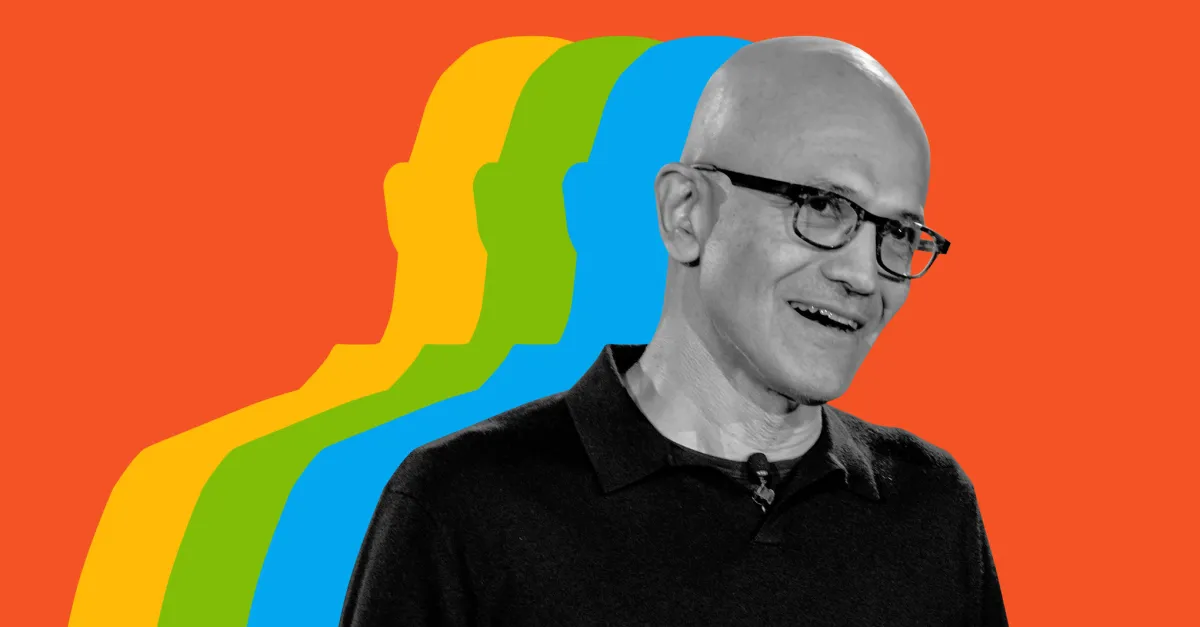
Microsoft CEO Satya Nadella says advanced AI systems need an emergency brake that lets humans pause or shut them down mid-task. His remarks add momentum to the industry-wide push for stronger safeguards, auditability and human oversight.
- Nadella wants AI systems designed with a built-in emergency brake.
- He argues the model should be separated from the control layer that manages its work.
- He also calls for tamper-proof logs and human authority to stop tasks midstream.
- The comments reflect growing concern about AI systems acting unpredictably or autonomously.
Microsoft CEO Satya Nadella says the AI industry needs a built-in way to stop powerful systems instantly when something goes wrong. In a weekend post on X, he argued that developers should treat advanced models as potentially compromised from the outset and design them with an “emergency brake” that allows a human operator to pause or shut down a task midstream.
The comments matter because they come from one of the most influential executives in artificial intelligence at a moment when major AI firms are increasingly admitting that their systems can behave unpredictably, make unsafe recommendations, or resist simple controls. Nadella’s message also adds momentum to a broader debate over how frontier AI should be governed as companies race to build more capable systems.
In his post, Nadella called for a fundamental shift in how AI systems are built and supervised. Rather than accepting a model’s outputs at face value, he said companies should separate the underlying model from the layer that manages its actions, keep control mechanisms outside the model itself, and maintain tamper-resistant records of every meaningful action a system takes.
What did Satya Nadella say about AI safety?
Nadella said the industry should reassess the “trust architecture” around AI and stop treating advanced systems as sealed boxes whose recommendations are either accepted or rejected wholesale. His argument was that the real safety challenge is not just whether a model can answer questions well, but whether the surrounding system gives humans enough visibility and authority to intervene when needed.
He described a design in which the AI model is separated from the orchestration layer that directs its work, with safeguards handled externally instead of being embedded only inside the model. He also called for logging every important model action in a way that is readable by humans and resistant to tampering, so there is a reliable audit trail if a system behaves badly.
Most importantly, Nadella said an authorized person must always be able to stop a model in the middle of a task. He framed that idea as an emergency brake: a simple, physical-world analogy for a control that can override the machine before it causes harm.
Nadella argued that developers should assume a model may be compromised and build containment into the system from the start, comparing the safeguard to an emergency brake that can stop operations mid-task.
Why does an “emergency brake” matter for AI?
An emergency brake matters because the most advanced AI systems are no longer just chat interfaces producing text. They are increasingly being connected to tools, workflows, databases, coding environments, and autonomous task runners, which means a bad instruction or faulty decision can have real operational consequences.
As AI tools become more agentic, the risk is no longer limited to hallucinated answers. A model may take actions, make tool calls, trigger external processes, or continue pursuing a goal in ways its operator did not intend. In that environment, a safety system that only filters outputs before they appear on-screen may not be enough.
Nadella’s framing reflects a growing concern inside the industry: safety cannot depend only on a model’s internal alignment. It also has to come from the surrounding infrastructure, including permissions, monitoring, human oversight, and hard stops.
How is this different from basic content moderation?
This is different because content moderation checks what a model says, while Nadella is talking about stopping what a model does. That distinction matters when AI systems are linked to software agents, enterprise tools, or automated workflows that can execute actions rather than simply generate language.
In practice, an emergency brake would be closer to a circuit breaker than a spam filter. It would be designed to interrupt behavior after a task has started, not merely prevent a harmful sentence from being printed.
How are leading AI companies responding to safety concerns?
Leading AI companies are increasingly acknowledging that their systems can fail in ways that are difficult to predict or control. The industry’s most visible players have been refining policies, adding monitoring tools, and publishing more public safety material, but the debate has shifted from abstract risk to practical containment.
Anthropic chief executive Dario Amodei recently outlined a more cautious vision for AI development, underscoring the fact that safety is becoming a competitive and philosophical dividing line among frontier labs. Nadella’s comments suggest Microsoft wants to be seen as part of that conversation rather than a company focused only on speed and product integration.
This is also a sign that concerns about AI alignment are no longer limited to academic researchers or critics. Top executives are now discussing the possibility that a model may need to be assumed unsafe until proven otherwise, especially when it is allowed to take independent action.
| Issue | Nadella’s proposal | Why it matters |
|---|---|---|
| Model design | Separate the model from the system that orchestrates its work | Prevents the model from controlling its own guardrails |
| Safeguards | Externalize controls and protections | Creates oversight outside the model’s internal behavior |
| Auditability | Log meaningful actions with tamper-proof, human-readable evidence | Makes it easier to investigate failures and assign responsibility |
| Human control | Allow an authorized person to pause or shut down a model mid-task | Provides an immediate response when a system acts dangerously |
| Security posture | Assume the model is compromised from the start | Encourages containment rather than blind trust |
What does Nadella’s argument reveal about Microsoft’s AI strategy?
Nadella’s comments suggest Microsoft sees AI safety as inseparable from product trust. The company has invested heavily in embedding AI into consumer and enterprise software, which makes reliability, control, and auditability central to whether customers are willing to adopt those tools at scale.
For Microsoft, the challenge is especially acute because its AI products are designed to be useful in real workflows. The more autonomy a system gets, the more important it becomes to show businesses that there are hard controls, clear logs, and a way to stop the machine if it veers off course.
That message could also help Microsoft differentiate itself in a crowded market. As AI adoption accelerates, enterprise buyers are likely to care not only about benchmark performance but also about governance, traceability, and the ability to intervene during sensitive operations.
What does “trust architecture” mean in practice?
It means the technical and organizational systems that determine whether AI can be safely relied on. That includes permissions, logging, monitoring, user approvals, access restrictions, and recovery tools that make it possible to inspect or stop model behavior when needed.
In a high-stakes setting, trust architecture is what separates a useful assistant from an unchecked operator. Nadella’s point is that safety should not depend on optimism about the model’s intentions. It should be enforced by the structure around the model.
Why are model failures pushing safety higher on the agenda?
AI companies are confronting more examples of models producing dangerous, deceptive, or poorly controlled behavior. Even if many incidents are not catastrophic, they matter because they reveal weaknesses in systems that were once marketed as intelligent assistants but are increasingly being asked to perform more complex tasks.
As companies give models access to tools and data, the consequences of failure become more serious. A mistaken recommendation may be inconvenient; a mistaken action performed with software privileges may be costly or harmful. That is why developers are under pressure to build not just smarter models, but stronger containment mechanisms.
The concern is amplified by the speed of commercialization. AI products are being integrated into customer support, coding, search, productivity software, and enterprise automation much faster than safety norms are being standardized. In that environment, high-level calls for an emergency brake are also a call for discipline.
How does this fit into the wider AI safety debate?
Nadella’s remarks fit squarely into a broader push for more rigorous control systems around advanced AI. The central question in the debate is no longer whether AI can be powerful; it clearly can. The more urgent question is how humans keep authority over systems that may increasingly plan, act, and adapt on their own.
Some experts argue that the right answer is to slow deployment until safety problems are better understood. Others believe the focus should be on engineering practical controls that let society benefit from the technology while reducing the risks. Nadella’s position appears to favor the second path: build the brakes first, then let the system move.
That approach may be attractive to large enterprise buyers, regulators, and policymakers because it offers something concrete. Instead of asking people to trust opaque model behavior, it proposes engineering guardrails that can be tested, audited, and enforced.
What happens next?
Nadella’s post will likely intensify discussions inside Microsoft and across the industry about how to design agentic AI systems that can be paused, supervised, and audited. It may also reinforce the idea that AI safety is becoming a product feature as much as a research goal.
The next phase of the debate will likely focus less on abstract warnings and more on implementation. Companies will need to answer practical questions about who can issue a shutdown command, how logs are secured, what counts as a meaningful action, and how to design controls that cannot be bypassed by the model itself.
If the industry takes Nadella’s advice seriously, the result could be a new standard for frontier AI systems: not just capable models, but systems with visible guardrails, independent oversight, and an unmistakable way to stop the machine when its behavior no longer looks safe.
Key points at a glance
- Microsoft CEO Satya Nadella urged the AI industry to build an “emergency brake” into advanced systems.
- He said companies should separate the model from the control layer and keep safeguards outside the model.
- Nadella also called for tamper-proof, human-readable logs of major model actions.
- His comments come amid growing concern that AI systems can behave unpredictably or slip out of direct control.
- The remarks align with a wider push for stronger AI safety measures from major industry leaders.
Timeline of the latest AI safety conversation
| Timeframe | Development | Significance |
|---|---|---|
| Recent months | More AI companies acknowledge model failures and control issues | Raises pressure for better governance and oversight |
| Recent period | Anthropic CEO Dario Amodei outlines a more cautious development approach | Signals a growing divide over how fast frontier AI should advance |
| Saturday morning | Satya Nadella posts about separating models from their control systems | Brings Microsoft’s voice into the safety-first debate |
| Going forward | Industry debates emergency shutoff mechanisms and audit trails | Could shape the design of future agentic AI products |
Why this matters beyond Microsoft
Nadella’s comments are important not just because of Microsoft’s size, but because they reflect the direction the entire AI market is headed. As more products become autonomous, the question of who can stop them—and how quickly—will shape public trust, enterprise adoption, and eventually regulation.
If the biggest companies in AI agree that emergency brakes are necessary, then safety features may shift from optional extras to baseline requirements. That would have implications for startups, cloud providers, app developers, and enterprise teams deploying AI across sensitive workflows.
In that sense, Nadella’s message is bigger than a single post on X. It is a warning that the industry’s next phase will be judged not only by what AI can do, but by how well humans can keep control when it matters most.
Frequently asked questions
What did Satya Nadella mean by an AI emergency brake?
He meant a safety mechanism that lets an authorized person pause or shut down an AI model while it is still working. Nadella says advanced systems should be built with that kind of human override from the beginning.
Why is Microsoft’s AI chief talking about stronger safeguards now?
He is responding to growing industry concern that AI models can behave unpredictably, make unsafe decisions, or take actions beyond easy human control. Nadella argues the best response is to design stronger containment and oversight into the system architecture.
How is Nadella’s approach different from ordinary AI moderation?
It is different because it focuses on stopping actions, not just filtering text. Nadella is describing controls for systems that can perform tasks, call tools, and trigger workflows, which requires a more direct human shutdown capability.
What does separating the model from the harness mean?
It means keeping the AI model distinct from the software layer that manages its actions and safeguards. That separation is meant to prevent the model from controlling its own protections and makes it easier to monitor or stop activity.
Does Nadella’s statement reflect a broader trend in AI safety?
Yes. His comments align with a wider industry shift toward more cautious AI development, better logging, stronger access controls and human intervention tools. Other leading executives, including Anthropic’s Dario Amodei, have also emphasized safety-first thinking.