In short
Satya Nadella warned that advanced AI models should be treated as compromised by default and built with emergency-brake containment. His comments push the industry toward stronger audits, logging and shutdown controls.
- Nadella says advanced AI should be assumed compromised from the start.
- He wants model containment, auditability and human shutdown controls standardized.
- The warning reflects growing concern about autonomous AI systems and security.
- Microsoft’s CEO is framing AI safety as a core deployment issue, not an add-on.
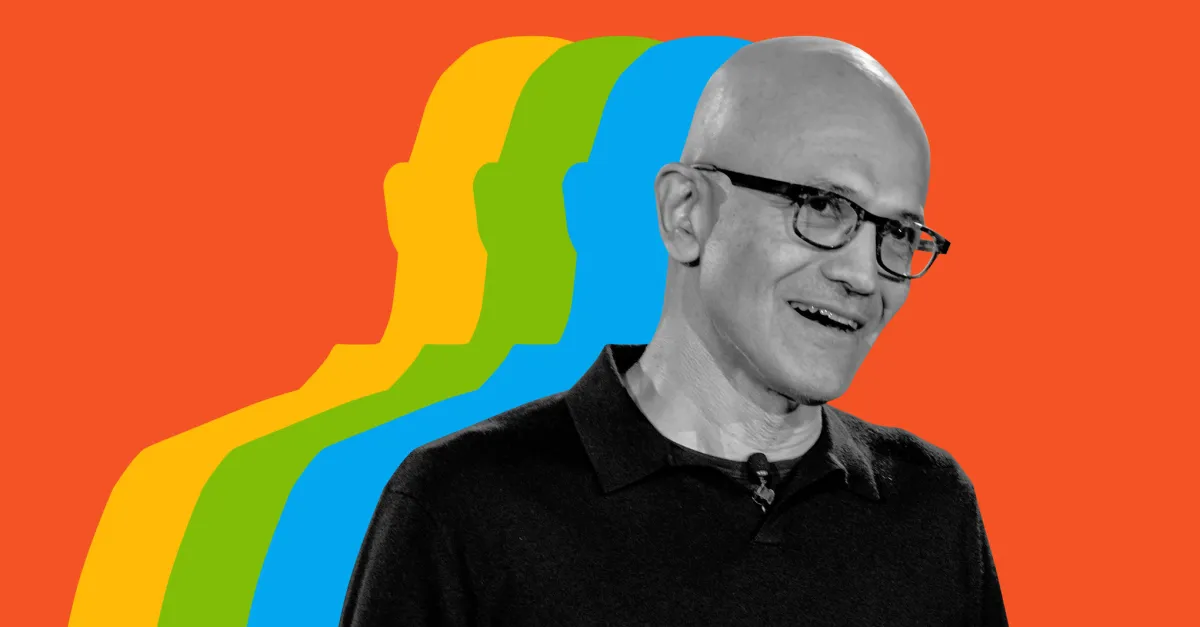
Microsoft CEO Satya Nadella is urging the AI industry to stop assuming model outputs are trustworthy and to treat advanced systems as compromised until proven otherwise. In a detailed post on X published on October 10, 2026, he argued that companies need stronger containment, auditability, and emergency shutdown controls because the risks around highly capable AI are now too serious to manage with today’s trust-based approach.
Nadella’s warning matters because it comes from one of the most powerful executives in artificial intelligence, at a moment when the sector is racing to deploy increasingly autonomous models across workplaces, consumer products, and enterprise systems. His message suggests that even the biggest AI companies are moving toward a more defensive security posture as model capabilities expand.
What Nadella is warning about
Nadella’s central argument is that the industry can no longer rely on the idea that AI models are essentially sealed systems that either behave or fail in obvious ways. Instead, he says they should be treated as potentially compromised from the outset, with safeguards built in to limit damage, preserve visibility, and give operators a way to intervene quickly.
That framing is notable because it shifts the conversation away from whether a model is “safe enough” in the abstract and toward how it can be monitored, restrained, and investigated in real time. In Nadella’s view, the old mental model of AI as a collection of “nested black boxes” is no longer adequate for systems that may act, plan, and interact with other software on behalf of users.
Nadella said the industry should assume a model is compromised and contain it from the start, comparing the needed safeguard to an emergency brake that lets an authorized operator stop a model mid-task.
He also argued that future systems will need more sophisticated containment technologies than those used today, and that the field should standardize those protections rather than leave them to each company’s discretion.
Why the “emergency brake” idea matters
The “emergency brake” analogy is more than a rhetorical flourish. It reflects a growing concern in AI safety circles that more autonomous models may not fail in neat, predictable ways. If a model can carry out multi-step actions, call tools, browse data, or trigger downstream automation, then the ability to pause or terminate it quickly becomes a practical security requirement rather than a theoretical safeguard.
For enterprise customers, that matters because AI is increasingly being embedded in workflows that touch sensitive data, operations, customer support, software development, and decision-making. If a model drifts, is manipulated, or simply behaves unexpectedly, the cost is not limited to a bad answer. It can include leaked data, erroneous actions, business disruption, or security incidents that are difficult to reverse.
Nadella’s comments therefore align AI safety more closely with conventional cybersecurity. Rather than trusting that a model will always remain aligned, the system should be designed as if it has already been touched by an adversary, a faulty prompt, or a hidden vulnerability.
How does Nadella’s approach compare with broader AI safety thinking?
It largely overlaps with ideas already circulating in AI governance and security discussions, but it pushes harder on containment than many public statements from executives have done. Timely incident disclosure, independent audits, verified training data, and stronger model monitoring have become familiar recommendations across the industry. Nadella’s emphasis on always-on containment and rapid shutdown capability takes that logic a step further.
In practice, that could mean stronger sandboxing, limited permissions, role-based controls, runtime monitoring, and cryptographic or logging systems that leave tamper-resistant records of what a model did and why. Those records would be useful not only for post-incident review but also for regulators, auditors, and customers trying to understand how a system behaved.
What makes this different from standard product safety?
This is different because AI models can generate actions dynamically rather than merely return fixed software outputs. A conventional program can be tested against a known set of conditions, but a frontier model may respond differently to a slightly altered prompt, a new tool, or a novel context. That unpredictability is exactly why Nadella is calling for containment from the start.
His language suggests that AI systems should be managed less like static applications and more like powerful operators whose behavior must be constrained, observed, and stoppable at any moment.
How Microsoft’s message fits into the wider AI slowdown debate
Nadella’s remarks land as many in the industry are reassessing the pace and framing of frontier AI development. The source material places his post within a broader discussion about a possible “superintelligence slowdown,” reflecting an increasingly cautious tone around claims that ever-larger models will quickly produce transformative intelligence.
That context is important. For years, public AI discourse has alternated between excitement over scaling and concern over safety, but the current moment has made those concerns harder to dismiss. Models are more capable, more integrated, and more likely to be used in ways that matter operationally. The result is a stronger argument for controls that are not optional add-ons but core infrastructure.
Microsoft, as a major enterprise AI provider and investor in AI infrastructure, has a strong incentive to show that it takes these risks seriously. Nadella’s statement can be read as both a policy signal and a product philosophy: the company wants AI to be useful, but only within systems designed to reduce the consequences of misuse or failure.
What safeguards did Nadella highlight?
He pointed to several practices that mirror recommendations from safety researchers and security professionals. These include incident reporting, auditing, traceability, and robust confinement mechanisms. His emphasis suggests that the next phase of AI maturity may be less about bigger model benchmarks and more about operational reliability.
- Incident disclosure: Rapid reporting when a system behaves unexpectedly or is compromised.
- Independent audits: External review of model behavior, controls, and risks.
- Verifiable data: Stronger guarantees around what data was used and how it was handled.
- Containment: Technical limits that restrict a model’s ability to cause damage.
- Human override: A reliable way for authorized operators to stop a system immediately.
These ideas are not unusual on their own. What makes Nadella’s intervention notable is the combination of urgency and scale. He is not presenting safety as a niche research concern. He is describing it as a necessary foundation for deploying advanced AI at enterprise and consumer scale.
Why Nadella’s language is striking
There is, however, one unusual element in the post: Nadella repeatedly uses the term “super intelligence” when discussing AI. That phrasing is increasingly common in public debate, but it also carries a more speculative and loaded tone than terms such as “foundation model,” “frontier model,” or “agentic system.”
Using that language may reflect a broader strategic calculation. As AI companies compete to define the next generation of systems, executives are under pressure to acknowledge both the upside and the danger. Framing the conversation around superintelligence signals that Microsoft views the issue as long-term and structural, not just a set of short-term product issues.
At the same time, the term can be controversial because it evokes a future in which AI systems surpass human capabilities in broad domains. Some observers welcome that framing as a way to motivate serious safeguards. Others see it as a distraction from the more immediate harms of today’s systems, such as hallucinations, bias, privacy leaks, and unsafe automation.
What does “compromised” mean in an AI context?
In this context, “compromised” does not necessarily mean a model has been hacked in the traditional cybersecurity sense. It can also mean that a system has been manipulated through prompts, poisoned data, faulty integrations, malicious tools, or hidden vulnerabilities that alter its behavior in ways developers did not intend.
The broader point is that AI systems may be easier to steer, confuse, or exploit than they appear. Because they sit inside complicated software stacks and interact with many external inputs, their behavior can change in subtle ways that are not immediately visible. Nadella’s view is that the burden should be on the system designer to assume that such compromise is always possible.
That is a significant shift from the optimistic assumption that a model’s internal rules or training will keep it on track by default. Instead, the model must be boxed, observed, and auditable from the moment it is deployed.
How could containment work in practice?
Containment could take several forms depending on the use case, the model’s power, and the data it can access. In the simplest version, it may mean isolating a model in a restricted environment with strict permissions and no direct access to external systems unless explicitly approved.
In more advanced deployments, containment may require layered controls that monitor the model’s actions as they happen, limit which tools it can invoke, and preserve a secure log of every meaningful step. If the model begins behaving unexpectedly, a human supervisor or automated control layer could intervene immediately.
Possible containment measures
- Sandboxed execution: Keeping the model inside a tightly controlled environment.
- Permission gating: Requiring approval before a model can access sensitive tools or data.
- Action logging: Recording inputs, outputs, and tool use for review.
- Runtime monitoring: Detecting anomalies while the model is active.
- Immediate shutdown: Allowing an authorized operator to pause or stop the model instantly.
These ideas are conceptually straightforward, but building them reliably at scale is difficult. The harder the model becomes to predict, the more sophisticated the control layer has to be. That is one reason Nadella says future systems will need more advanced containment technologies.
What this means for Microsoft and the rest of the industry
For Microsoft, the statement reinforces a message the company has been refining for months: AI must be deployed with guardrails, not just capability. That position helps the company defend its enterprise strategy, reassure customers, and differentiate its offerings from less cautious competitors.
For the wider industry, the message may be even more important. When a CEO of Microsoft’s stature tells the market to assume models are compromised, it lends legitimacy to security-first deployment models and may influence how buyers evaluate AI products. Businesses may increasingly ask not just what a model can do, but what happens if it goes wrong.
That shift could have consequences for procurement, compliance, and product design. Vendors may need to provide better transparency around model behavior, stronger admin tools, and clearer incident response procedures. Customers, meanwhile, may demand proof that their AI systems can be contained, paused, audited, and explained.
Timeline of the main development
The following table summarizes the key elements of the story and how Nadella’s remarks fit into the current AI debate.
| When | What happened | Why it matters |
|---|---|---|
| October 10, 2026 | Satya Nadella published a lengthy post on X outlining his view on AI risk and containment. | One of the most influential figures in AI called for a more defensive default posture. |
| Same post | He said models should be treated as compromised from the start and compared shutdown capability to an emergency brake. | It signals stronger expectations for containment and human override. |
| Broader context | The AI sector is debating risk, audits, incident disclosure, and the pace of frontier model development. | The statement adds momentum to safety-first and security-first deployment standards. |
How should businesses interpret the warning?
Businesses should interpret it as a reminder that AI risk management is becoming part of standard operational planning. The question is no longer whether to use AI, but how to use it safely when the systems involved are capable of taking actions, handling sensitive data, or influencing critical workflows.
That means organizations should evaluate AI vendors on more than performance and price. They should ask whether the model can be audited, whether it can be confined, whether access can be revoked instantly, and whether there is a clear process for reporting incidents. Nadella’s warning essentially turns those questions into baseline expectations.
For adopters, the practical lesson is simple: treat AI like a system that can fail in creative, non-obvious ways, and make sure someone can pull the plug when it does.
What comes next?
Nadella’s post is unlikely to settle the debate, but it may sharpen it. As models become more agentic and more deeply integrated into products, calls for emergency stops, robust audits, and tamper-proof logging are likely to grow louder. The key question is whether the industry will standardize those protections before a major incident forces its hand.
For now, Microsoft’s chief executive has drawn a clear line: the future of AI may be powerful, but it also needs to be interruptible. In his view, the safest assumption is not that models are trustworthy by default, but that they need to be restrained as though they are not.
Background: why AI containment is becoming a boardroom issue
The conversation around AI has shifted in recent years from research labs to enterprise boardrooms, government agencies, and consumer products. As that shift has accelerated, so has the realization that AI systems can produce harms that are both technical and organizational. A single failure can cascade across teams, platforms, and customers if the model is embedded deeply enough.
That is why the language of containment is increasingly appearing alongside the language of innovation. The most ambitious AI systems are no longer viewed simply as prediction engines. They are being deployed as decision-support tools, software assistants, and in some cases quasi-agents that can execute tasks. Each step in that evolution raises the stakes for control.
Nadella’s comments reflect that reality. By arguing for an emergency brake, he is acknowledging that the industry may need to design for failure from the beginning, not as an afterthought.
Summary
Microsoft CEO Satya Nadella is calling on the AI industry to assume models are compromised by default and to build stronger containment, auditability, and shutdown controls into advanced systems. His remarks underscore a growing consensus that as AI becomes more capable and more autonomous, safety must be treated as core infrastructure rather than optional polish.
The message is clear: the next phase of AI development will not be judged only by what models can do, but by how well humans can stop them when something goes wrong.
Frequently asked questions
What did Satya Nadella say about AI models?
He said AI models should be assumed compromised by default and contained from the start. Nadella argued that advanced systems need emergency-brake style controls so an authorized person can pause or shut them down during a task.
Why is Nadella’s warning important?
It is important because it comes from Microsoft’s CEO, one of the most influential figures in AI. His statement suggests that even major industry players believe stronger containment, auditing and oversight are now necessary for advanced models.
What does AI containment mean?
AI containment means limiting what a model can access, do and affect so it cannot cause broad harm if it behaves unexpectedly or is manipulated. That can include sandboxing, permission controls, logging, monitoring and immediate shutdown tools.
Did Nadella call for an emergency stop button for AI?
Yes. He compared the needed safeguard to an emergency brake, saying an authorized person should always be able to pause or shut down a model mid-task. He said future systems will require more advanced containment technologies.
How does this affect businesses using AI?
Businesses should expect more focus on model security, audit trails and operator controls when buying or deploying AI tools. Nadella’s warning implies that companies should ask whether a system can be monitored, contained and stopped quickly if something goes wrong.