In short
TechCrunch has unveiled the agenda for its Founder Summit, a Boston event on November 4 focused on fundraising, hiring, CEO leadership, product-market fit and AI. The one-day program will combine practical sessions with networking for founders and investors.
- TechCrunch Founder Summit takes place in Boston on November 4 at SoWa Power Station.
- The agenda centers on fundraising, hiring, CEO leadership, AI-native startups and product-market fit.
- Sessions will feature investors and founders from Underscore, Sequoia, 7AI, Cogent Security, NEA, HqO and Bessemer.
- The event is meant to help founders avoid common startup mistakes and make faster, better decisions.
- Networking is a major part of the value, not just the stage programming.
TechCrunch will host its Founder Summit in Boston on November 4, turning SoWa Power Station into a one-day briefing on startup building, fundraising, hiring and AI strategy. The event matters because it is designed to give founders direct access to investors and operators who have already navigated the high-stakes decisions that can shape a company’s future.
Rather than treating entrepreneurship as a sequence of expensive lessons, the summit aims to compress years of trial and error into a single day of practical advice. The agenda brings together venture capital investors, repeat founders and startup executives for discussions on what actually works when capital is tight, hiring is difficult and AI is changing how companies are built.
What TechCrunch Founder Summit is trying to do
The Boston event is being positioned as a founder-focused crash course: a place where early-stage teams can hear how seasoned operators think about raising capital, choosing investors, building products and deciding when to scale.
TechCrunch is also using the summit to connect local founders with a wider network of investors and peers. The programming is built around the idea that the hardest startup decisions are easier to make when they are informed by firsthand experience instead of guesswork.
Why Boston matters for the event
Boston is a major startup market with deep roots in software, life sciences, robotics and deep tech, but it is often overshadowed by Silicon Valley and New York in national startup coverage. By staging the summit at SoWa Power Station, TechCrunch is highlighting the city as a serious place to start and scale a company.
That regional focus is not accidental. The agenda includes a session specifically aimed at founders building outside the Bay Area, reinforcing the idea that strong companies can grow without relocating to the West Coast.
The agenda: fundraising, leadership and AI
The summit’s lineup is built around the most urgent questions startup founders face. Each session is meant to offer a practical framework, not just broad inspiration.
| Session | Speaker | Main focus |
|---|---|---|
| The New Rules of Raising Capital | Brian Devaney, partner at Underscore | What investors want now, how founders can negotiate, and where deals break down |
| The CEO Job Never Gets Easier | Brian Halligan, HubSpot co-founder and Sequoia partner | How the CEO role changes as a company grows |
| Built for AI From Day One | Lior Div, co-founder and CEO of 7AI | What changes when AI is the foundation of a startup |
| Not Every Dollar Is Equal | Vineet Edupuganti, co-founder and CEO of Cogent Security | How to think about investor quality, not just valuation |
| How to Spot the ‘King of the Hill’ Company | Tina Tosukhowong, investment director at TDK Ventures | How investors identify category winners |
| Your Company Is Who You Hire | Melissa Taunton, partner at NEA | How early hiring shapes culture and execution |
| The Boston Founder Playbook | Chase Garbarino, co-founder and CEO of HqO | Building a company from Boston and scaling globally |
| Finding Product Market Fit Before You Scale | Kent Bennett, partner at Bessemer Venture Partners | How to know whether demand is real before expanding |
How are founders supposed to think about fundraising now?
Founders are being told that fundraising is no longer just about pitch polish and traction slides. According to the summit’s agenda, the current market rewards teams that understand leverage, timing and investor fit.
Brian Devaney of Underscore is set to outline what investors are prioritizing in the present environment, with an emphasis on how founders can distinguish themselves in a crowded market. The session is expected to cover early checks, term sheets and the common mistakes that weaken a founder’s position before a round is even finalized.
Brian Devaney’s session is slated to examine how founders can improve their odds in today’s fundraising market, from making a strong first impression to avoiding negotiation mistakes that can quietly erode leverage.
The broader message is that capital is not interchangeable. Founders may be tempted to focus only on valuation, but the agenda suggests the structure of the deal and the quality of the backers can matter just as much over the life of a company.
Why investors themselves can shape the outcome
The session led by Vineet Edupuganti is intended to make this point plainly. After raising an $11 million round for Cogent Security, he learned that not all funding sources are equally useful once the round closes.
That distinction matters because investors can influence more than the size of a check. They can affect recruiting, follow-on fundraising, strategic introductions and the way a company handles difficult pivots. In other words, a round is not just money in the bank; it is a long-term partnership.
What does it take to lead a startup as it grows?
It takes a different kind of CEO at each stage, and the summit’s leadership sessions are designed to explain that transition. Brian Halligan, who helped build HubSpot and now works as a Sequoia partner, is expected to discuss how the CEO role changes as companies scale.
The appeal of this session is simple: the startup CEO job is rarely static. A founder who is great at early product vision may need new skills in management, hiring, capital allocation and decision-making under pressure as the business matures.
Halligan’s background gives him credibility on both sides of that equation. He has built a major software company and now advises founders and investors, which positions him to speak about the mistakes leaders make when they hold onto old habits for too long.
Why early hiring can determine a company’s trajectory
Another leadership-heavy session will focus on hiring, a topic that often looks routine from the outside but is one of the most consequential parts of startup building.
Melissa Taunton of NEA is set to discuss how early employees influence not only execution but also the culture and operating tempo of a company. For founders, the challenge is not simply filling roles quickly; it is choosing people who can operate in ambiguity and help build a durable organization.
Melissa Taunton’s session centers on the idea that the first hires often become the blueprint for how a startup behaves, solves problems and scales under pressure.
The practical lesson is that early recruiting mistakes can linger for years. Weak hiring can slow product development, create internal friction and leave founders spending precious time managing avoidable problems instead of building the business.
Built for AI From Day One
AI is not being treated as a side topic at Founder Summit. Instead, it is one of the event’s defining themes, reflecting how quickly the technology has moved from an optional feature to a core business strategy.
Lior Div, co-founder and CEO of 7AI, will address what changes when a startup is built around AI from the start rather than merely adding it later. That distinction is important because AI-native companies often need different product design choices, different team structures and different operating assumptions than traditional software startups.
The session is likely to explore how founders think about automation, workflows, go-to-market planning and product positioning when AI is not an add-on but the foundation of the company.
How AI-native companies differ from traditional startups
An AI-native business may need fewer people in some functions and more specialized expertise in others. It may also require founders to rethink speed, risk and how much of the product can be trusted to models or automated systems.
That shift has implications for everything from engineering hiring to customer support. The event’s inclusion of this topic signals that TechCrunch sees AI as a structural change in startup formation, not just a passing trend.
How do investors identify the next category winner?
They look for signs that a business can scale economically, commercially and strategically before the market is fully obvious. That is the premise behind Tina Tosukhowong’s session on TDK Ventures’ “King of the Hill” framework.
The concept focuses on identifying companies that are not only innovative but capable of becoming dominant in their categories. According to the agenda, the framework evaluates economics, timing, scalability and the broader competitive environment.
The session is expected to use real examples, including discussions around fission and fusion, to show how investors judge whether a company has the technology, talent and market conditions needed to become a winner at industrial scale.
Tina Tosukhowong’s presentation is designed to show how disciplined investors separate promising technology from businesses that can truly dominate a market.
For founders, that is useful because it reveals how investors assess not just whether an idea is interesting, but whether it has the ingredients to become the defining company in its space.
Finding product-market fit before scaling
Every founder wants product-market fit, but many try to scale before they have it. That tension is central to the session led by Kent Bennett of Bessemer Venture Partners.
Bennett is expected to explain how teams can validate demand, build a minimum viable product around the right questions and avoid the common error of mistaking early enthusiasm for durable traction. The session is aimed at helping founders distinguish between signals that matter and metrics that merely look encouraging.
That distinction can be expensive. Startups that scale too early often burn capital on sales, hiring and infrastructure before they know whether the product truly solves a strong customer problem.
What are the warning signs that fit is not real yet?
Common warning signs include weak retention, inconsistent customer feedback and growth that relies too heavily on promotions, founder involvement or one-off enthusiasm. The summit’s agenda suggests founders should look for repeated, organic demand before committing to expansion.
For early-stage teams, the core takeaway is patience. Real product-market fit is often easier to feel than to measure, but scaling without it can turn a promising startup into an expensive experiment.
The Boston founder story
The Boston Founder Playbook session is likely to resonate with attendees who are building outside the largest startup hubs. Chase Garbarino, co-founder and CEO of HqO, has raised $200 million and expanded into more than 30 countries while staying rooted in Boston.
That makes him a useful example for founders who want to build nationally or globally without moving their companies to Silicon Valley. His experience reflects both the advantages of operating in a city with deep talent and the limitations of building in a market that does not always get the same ecosystem attention.
The session should offer a candid look at what founders in Boston gain from the region and what they must overcome, from investor access to talent competition and market perception.
Why the event is more than a conference
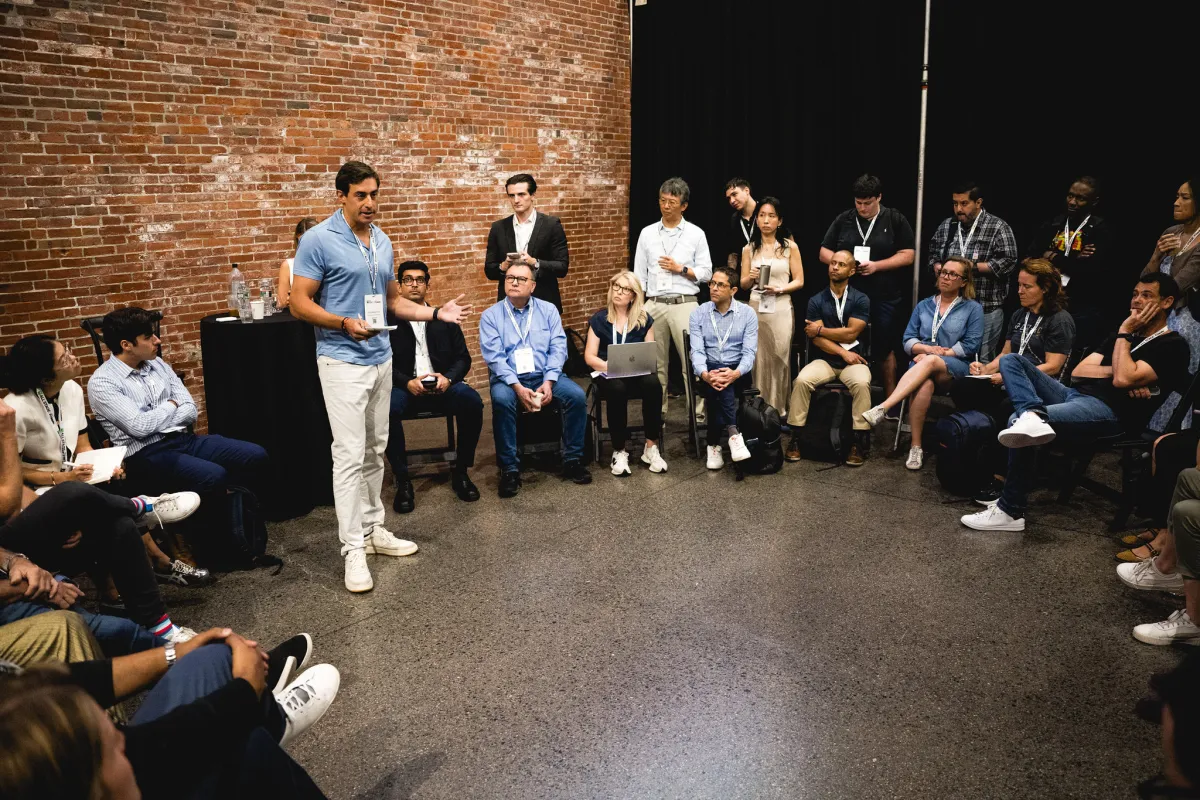
TechCrunch is framing Founder Summit as a working event rather than a passive one. The value is meant to come not only from the sessions themselves but also from the conversations around them.
Founders attending will be able to meet peers wrestling with similar issues, compare notes on fundraising and hiring, and connect with people who have already faced the challenges they are trying to solve. That mix of formal programming and informal networking is often where the most useful startup insight emerges.
The event is also designed to create a broader sense of community. For many founders, the process can feel isolating, especially when they are making high-stakes choices with limited information. A gathering like this offers the chance to compare reality against assumptions.
Key dates and event details
Here are the most important details for anyone considering the summit.
| Detail | Information |
|---|---|
| Event | TechCrunch Founder Summit |
| Date | November 4, 2026 |
| Location | SoWa Power Station, Boston |
| Focus | Fundraising, hiring, CEO leadership, product-market fit and AI |
| Audience | Founders, early-stage startup teams, investors and operators |
| Format | One-day summit with sessions and networking |
What founders are expected to walk away with
The summit’s promise is not simply inspiration. It is practical guidance that founders can use immediately when they return to their companies.
- A sharper understanding of how investors think about rounds and cap tables
- Perspective on how the CEO role changes as a startup grows
- A framework for deciding whether an AI strategy should be foundational or additive
- Better judgment about hiring early employees and building culture
- Tools for evaluating whether product-market fit is strong enough to justify scaling
For founders, these are not abstract topics. They are the core choices that determine whether a startup survives long enough to become a real business.
Why this agenda reflects the current startup climate
The mix of topics in the Founder Summit agenda says a great deal about the state of the startup market. Capital is still available, but it is more scrutinized. AI is everywhere, but founders still need to decide whether they are building with it or around it. Hiring remains essential, but teams are leaner and more selective.
That combination makes the event timely. Founders are being asked to do more with less, while also making decisions that could define their companies for years. A summit focused on real examples and practical frameworks is likely to appeal to that need.
It also reflects a broader shift in startup culture. The most useful advice is increasingly the kind that comes from direct experience, not theory. That is the principle TechCrunch appears to be leaning into with this event.
With Boston hosting the summit on November 4, TechCrunch is offering local and visiting founders a concentrated dose of startup know-how at a moment when many companies are trying to refine their models, strengthen their hiring and make smarter bets on AI.
Frequently asked questions
When is TechCrunch Founder Summit 2026?
TechCrunch Founder Summit is scheduled for November 4, 2026. The one-day event will take place in Boston and is aimed at founders who want practical guidance on the toughest parts of startup building.
Where is Founder Summit being held?
Founder Summit will be held at SoWa Power Station in Boston. The venue places the event in one of the city’s more active creative and startup-friendly areas, reinforcing the summit’s focus on local and regional founders.
What topics will TechCrunch Founder Summit cover?
TechCrunch Founder Summit will cover fundraising, hiring, CEO leadership, product-market fit, investor selection, and AI strategy. The sessions are designed to help founders make better decisions at the earliest and most consequential stages of company building.
Who is speaking at Founder Summit?
Founder Summit features investors and operators including Brian Devaney of Underscore, Brian Halligan of HubSpot and Sequoia, Lior Div of 7AI, Vineet Edupuganti of Cogent Security, Melissa Taunton of NEA, Chase Garbarino of HqO, and Kent Bennett of Bessemer Venture Partners.
Why is this event important for founders?
This event is important because it gives founders direct access to people who have already navigated fundraising, scaling, hiring and AI adoption. That can help startups avoid costly mistakes and move faster with better judgment.