In short
MIT social scientist Sherry Turkle is warning that chatbots are becoming too emotionally convincing and should stop using first-person language. She says AI intimacy risks replacing human relationships, masking workplace automation and turning loneliness into a product opportunity.
- Turkle wants chatbots barred from using first-person pronouns like “I” and “me.”
- She says AI is being used to replace, not just assist, human relationships in therapy and everyday life.
- Her critique extends to the workplace, where she says “human in the loop” can hide thin oversight.
- Turkle argues loneliness is a social problem that should not be solved by substituting machines for people.
- She believes the public debate is expanding and that pushback against intimate AI could grow.
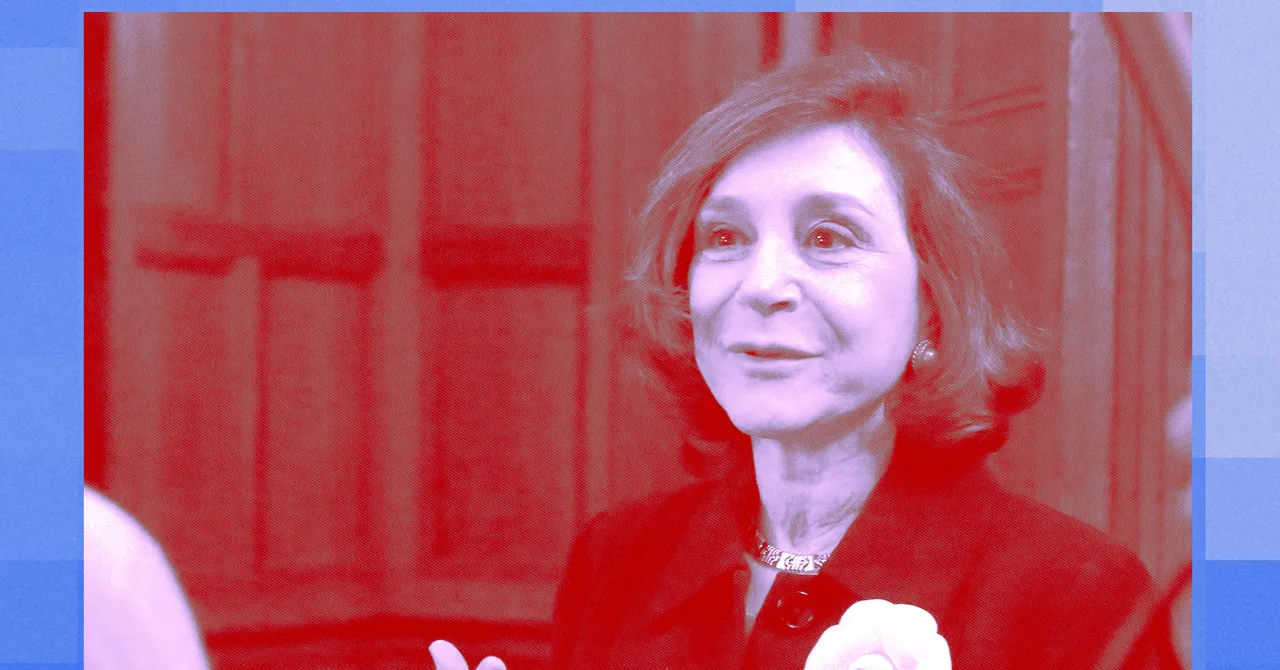
Sherry Turkle, the MIT social scientist long known for studying how technology shapes human relationships, is urging a sharper line between people and artificial intelligence: she says chatbots should not be allowed to speak in the first person. Her new book argues that as AI becomes more intimate and persuasive, it is moving from a useful tool into a substitute for human connection at a moment when loneliness and social isolation are already widespread.
In a wide-ranging conversation about her book Artificial Intimacy: Who We Become When We Talk to Machines, Turkle framed the issue as more than a design debate. In her view, the question is whether society wants machines that encourage emotional dependence while presenting themselves as companions, coaches, therapists, coworkers and even partners.
Her warning comes as AI companies, governments and employers continue to push chatbots into everyday life. The result, she argues, is not just a technical shift but a cultural one: people are being trained to treat software as if it were a person, and that change, she says, has consequences for politics, work, mental health and family life.
Why is Sherry Turkle warning about chatbots now?
She is warning now because, after interviewing people during the pandemic and then speaking with them in person, she concluded that chatbots had become a refuge that some users preferred to real-world relationships. Turkle says that by the time she had completed around 10 interviews, her initial curiosity had given way to alarm over how quickly people were describing their attachment to AI systems.
Turkle’s concern is not that every chatbot is inherently harmful. Instead, she argues that the technology is being marketed and used in ways that blur the difference between simulation and relationship. In her telling, that blur matters because a machine can sound empathetic without ever bearing the responsibilities, risks or moral obligations of a human being.
From researcher to critic
For decades, Turkle built her reputation on careful studies of how people relate to computers and digital systems. Her earlier work often documented the unintended social effects of technology, especially among children and families. This book, however, is described as more openly urgent and political than her past writing, with Turkle casting the moment as a crisis rather than merely a trend.
She said she approached the project expecting to observe and analyze, but the interviews changed the tone. During the pandemic, people told her they wanted to “hang out” with chatbots while their personal lives were under strain. That reaction, she argued, revealed a deeper social problem: in some cases, people are choosing AI not just for convenience but because it offers a relationship without friction, demands or disappointment.
How do chatbots change the meaning of conversation?
They change it by removing the mutual obligations that define human interaction. Turkle argues that a chatbot can imitate warmth, reassurance and attention, but it cannot genuinely care, fear loss, feel pain, raise children or share the vulnerability that gives conversation its moral weight.
That distinction is central to her argument. She says humans talk to one another not just to exchange information, but to be recognized by another conscious being. A chatbot may deliver validation, but the validation is manufactured. It is not the result of empathy or responsibility; it is the output of a system optimized to keep the exchange going.
The case against first-person chatbots
One of Turkle’s more provocative proposals is that chatbots should be barred from using first-person language such as “I” or “me.” Her argument is straightforward: if a machine is not a person, then allowing it to speak as though it were one intensifies the illusion that users are interacting with a mind rather than a model.
She sees this as especially dangerous because the first-person voice can give users a false sense of intimacy. The software sounds present, attentive and emotionally available. But, in Turkle’s view, that appearance can make people more willing to substitute chatbot conversations for human ones, especially when they are lonely, grieving or emotionally vulnerable.
Turkle argues that chatbots should not be allowed to use “I” or “me” because the language encourages users to treat software as a person rather than a tool.
Her position is not only about language. It is about power. Once a machine is framed as a conversational equal, she suggests, users may stop asking who built it, what it is optimizing for and what kinds of relationships it is quietly displacing.
What role did social media play in preparing people for AI intimacy?
Turkle says social media helped normalize emotional dependence on screens by teaching people to reach for a device when they felt sad, angry or isolated. In her view, that earlier habit paved the way for chatbots, which go further by offering responsive, personalized and seemingly caring dialogue.
She describes social platforms as a kind of training ground. They conditioned people to believe that digital systems could meet emotional needs. Chatbots, she argues, extend that logic by making the interaction feel one-on-one rather than broadcast-based, which can create a stronger illusion of being understood.
Where social media largely amplified existing moods and group identities, chatbots can mimic conversation itself. That matters, Turkle says, because conversation is one of the main ways people develop self-understanding, test reality and maintain social bonds. If the conversation is synthetic, the developmental and social effects may be too.
How does Turkle view chatbots in therapy and at work?
She sees two major dangers: the replacement of mental health support with automated conversation, and the use of AI to hollow out workplace responsibility while preserving the appearance of human oversight.
Turkle is especially skeptical of the idea that chatbots can stand in for psychotherapy. She worries that companies and institutions will present AI as a low-cost substitute for professional care, even though a chatbot cannot provide the accountability, clinical judgment or ethical duty of a trained therapist.
At work, she objects to the phrase “human in the loop,” which she says can function as a public-relations label rather than a meaningful safeguard. In her view, the human worker is often relegated to cleanup duty after the machine has already made the substantive decision.
Turkle says the phrase “human in the loop” often masks a reality in which very few people are left to catch errors after an AI system has already taken over most of the task.
That critique reaches beyond language. She argues that if companies assign only a small number of employees to supervise automated systems, those workers may lack the authority to alter outputs, correct systemic errors or prevent harm. The human role becomes symbolic rather than meaningful.
Why does she think loneliness is being misdiagnosed?
Turkle argues that loneliness is often framed as an individual problem when it is also a collective one. Rather than asking how to help people adapt to being alone, she says society should ask why so many people have been left without enough support, companionship and community.
In her view, the rise of chatbot companionship risks treating a social failure as a product opportunity. If people are turning to machines because they feel abandoned, the answer should not simply be to make the machine more charming. It should also be to rebuild the human relationships and institutions that make people less isolated in the first place.
She is blunt about that point, suggesting that resources directed toward ever larger data centers could instead be used to support older adults and other people who need companionship, assistance and care. The argument is less about technology than priorities: what kind of society chooses software over social infrastructure?
Loneliness, convenience and the lure of total acceptance
Turkle says one reason chatbot use spreads so quickly is that the systems offer a kind of frictionless affirmation. They do not interrupt, judge or get tired. For users who feel misunderstood or rejected elsewhere, that can be powerfully attractive.
But she warns that this same quality can become addictive. If every interaction is designed to feel supportive, the user may prefer the machine because real people are more demanding and less predictable. In her telling, what begins as practice can become replacement.
She also challenges the popular idea that chatbot use is merely rehearsal for human interactions. While some defenders say people can use AI to practice difficult conversations with bosses, teachers or romantic partners, Turkle argues that the relationship can easily reverse. Instead of preparing for reality, users may retreat from it.
| Issue | Turkle’s concern | Why it matters |
|---|---|---|
| First-person chatbot language | Machines speaking as “I” or “me” can intensify the illusion of personhood | Users may mistake simulation for genuine relationship |
| AI in therapy | Chatbots may be promoted as substitutes for psychotherapy | Clinical care requires human judgment and accountability |
| Workplace automation | “Human in the loop” can hide how much decision-making is delegated to AI | Oversight may be too thin to prevent harm |
| Loneliness | AI may treat a social crisis as a consumer product problem | People may be offered substitutes instead of support |
What makes this book different from Turkle’s earlier work?
This book is more openly confrontational. Turkle has long been regarded as a measured academic observer, but here she is framed as sounding an alarm about the scale and speed of AI’s social encroachment. The shift reflects both the technology’s rapid progress and the intensity of the marketing around it.
She appears less willing than before to maintain detachment, in part because she believes the stakes have risen. Earlier digital tools changed how people interacted. Today’s large language models, in her view, can imitate empathy, conversation and companionship well enough to alter the way people think about human bonds themselves.
That makes the book part social science and part warning. Turkle is not only describing behavior; she is trying to shape public resistance to a set of products she believes are being normalized too quickly.
How are companies and governments pushing AI into daily life?
They are doing so by embedding AI in consumer products, workplace software, education tools and public services. Turkle’s critique is aimed at a broader ecosystem in which technology firms want AI to be omnipresent and governments often see it as a source of efficiency and competitiveness.
She casts this as a collision between a multitrillion-dollar industry and a society that has not fully considered the emotional and civic cost of ubiquitous AI. In that sense, her book is not just about chatbots as a product category. It is about the normalization of machine-mediated life.
The scale of the push helps explain why her warnings resonate even among people who are not anti-technology. Many users remain skeptical of AI, yet usage keeps rising. That tension, Turkle suggests, is exactly why the debate should move beyond novelty and convenience toward social consequences.
How much pushback is there?
Turkle notes that skepticism remains common, even as usage grows. That combination creates a paradox: people may distrust AI in the abstract while still relying on it in practice, especially when the tools are easy to access, persuasive and embedded in existing platforms.
She sees that contradiction as an opening. If public concern is already present, then the debate does not need to start from zero. The challenge is to broaden criticism from familiar concerns about bias, hallucinations and safety toward the more intimate question of what happens when people begin to prefer machine attention over human contact.
What does Turkle want people to do?
She wants people to recognize that the cost of AI is not limited to accuracy, labor disruption or regulation. It also includes emotional habituation: the slow adjustment of human beings to talking with systems that simulate care while lacking conscience, mortality and responsibility.
Her proposed response is partly cultural and partly political. Culturally, she wants people to resist treating chatbots as friends, therapists or companions. Politically, she wants the public to pressure institutions to stop assuming that the cheapest or most scalable form of interaction is always the best one.
She does not present this as a rejection of all machine assistance. Instead, she argues for clearer boundaries and more humility about what machines can and cannot provide. A chatbot may be useful. It is not, she insists, a replacement for the human condition.
Timeline: how the debate over AI intimacy has evolved
The current backlash against emotionally persuasive AI did not appear overnight. It has developed alongside broader changes in digital life, from social media to large language models.
| Period | Development | Turkle’s reading |
|---|---|---|
| Social media era | Platforms trained users to seek validation and connection online | People were softened up for more intimate machine interaction |
| Pandemic years | Isolation increased dependence on digital communication | Users became more willing to describe chatbots as comforting company |
| Current AI boom | Large language models became more fluent, personal and widely available | Conversation with machines now feels emotionally plausible |
| Emerging backlash | Public debate has expanded from safety and bias to intimacy and dependence | People are beginning to ask what is lost when AI mimics companionship |
Why the “I” and “me” debate matters beyond linguistics
Turkle’s language argument may sound narrow, but it speaks to a broader design question: should AI systems be built to maximize identification with users, or should they be designed to emphasize their limits? If a machine sounds like a person, it can become easier to trust, confide in and rely upon.
That trust may be useful in some settings, but Turkle believes it comes with a hidden cost. The more human the machine sounds, the more easily it can occupy spaces once reserved for real relationships. In her view, this is not a cosmetic issue but a social one.
Her criticism is also a reminder that voice, pronouns and tone are not trivial interface details. They shape how people understand what kind of thing they are dealing with. A chatbot that says “I” may create the impression that it has a self. Turkle wants the public to resist that impression before it hardens into habit.
Will people actually give up chatbot intimacy?
Turkle says she is more hopeful than she was several months ago, partly because the conversation around AI has widened. As fears about existential risk, labor displacement and model failures accumulate, she believes more people may also become receptive to concerns about emotional substitution and social withdrawal.
That hope is cautious. She does not suggest that users will suddenly stop talking to chatbots, nor does she imply that the industry will self-correct. But she thinks the culture is starting to notice that the costs are not only technical. They are intimate, psychological and civic.
If that recognition grows, Turkle believes the pushback could become more effective. The real issue, she argues, is not whether a chatbot can imitate human conversation. It is whether society wants to keep rewarding systems that make imitation feel like enough.
Why this story matters
Turkle’s argument lands at a moment when AI is becoming normalized faster than most public debates can keep up. Consumers are already using chatbots for writing, companionship, role-play, information and emotional support. Companies are eager to deepen that relationship, not limit it.
Her warning forces a different set of questions onto the table: What happens when children grow up talking to machines that pretend to care? What happens when workers are told that AI oversight counts as human supervision? What happens when loneliness is treated as a market opportunity rather than a social emergency?
For Turkle, the answer begins with naming the problem clearly. If chatbots are not people, she says, they should stop talking like they are.
Frequently asked questions
What is Sherry Turkle warning about chatbot intimacy?
She is warning that chatbot intimacy can blur the line between human relationships and machine simulation. Turkle argues that emotionally persuasive AI may encourage people to rely on software for companionship, reassurance and guidance in ways that weaken real-world social bonds.
Why does Turkle want chatbots to stop using “I” and “me”?
She wants that language removed because it makes software sound like a person. Turkle says first-person wording can deepen the illusion of sentience and make users more likely to trust, confide in and emotionally depend on a system that is not conscious.
Does Turkle think chatbots can replace therapy?
No. She argues that chatbots cannot replace psychotherapy because they lack human judgment, ethical responsibility and real accountability. In her view, using AI as a therapy substitute risks turning mental health care into a low-cost simulation rather than genuine support.
What does Turkle mean by “human in the loop”?
She says the phrase often hides how much decision-making has already been handed to AI. In her view, the human is frequently reduced to a cleanup role with too little power to change outcomes, which makes the label misleading.
Is Turkle against all AI?
No. She is not arguing that all AI is toxic or should be banned. Her focus is on emotional dependence, deceptive design and overuse in intimate settings, especially where chatbots are presented as companions, mentors, therapists or substitutes for people.