In short
Mark Wahlberg says AI has a place in filmmaking if it enhances movies without replacing real actors or storytelling. He also said he’d be open to an AI version of his likeness preserving his legacy.
- Wahlberg supports AI in film when it enhances production rather than replaces human creativity.
- He said AI could help with costly visual elements in his Pete Rose biopic, such as stadium scenes.
- The actor said he would be open to an AI likeness or clone managed by his family.
- He emphasized that storytelling should remain more important than effects-driven spectacle.
- His comments reflect Hollywood’s broader struggle to balance innovation, consent and labor rights.
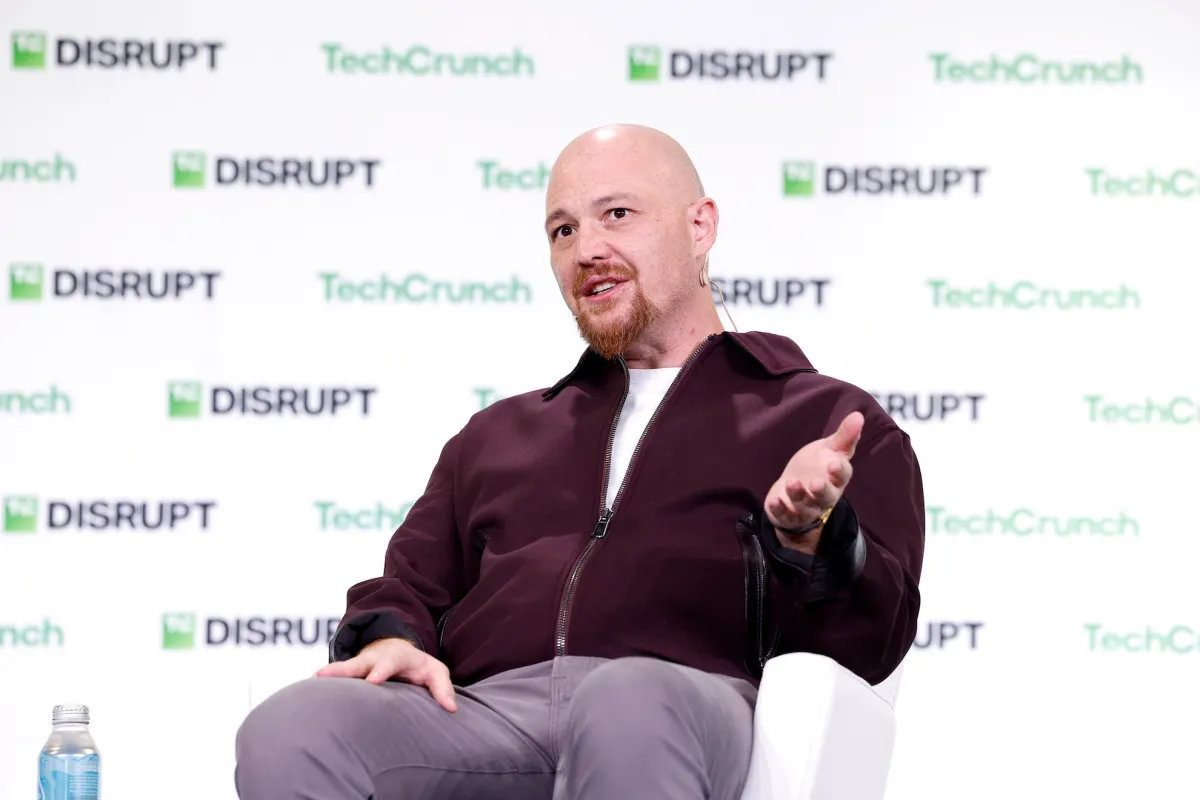
Mark Wahlberg says artificial intelligence belongs in filmmaking if studios use it to enhance movies rather than replace the people who make them. Speaking at TechCrunch Disrupt on Oct. 16, 2026, the actor, producer and investor said he is open to AI-assisted production tools, an AI version of himself, and even the idea of his likeness continuing on after he is gone.
Wahlberg’s comments land in the middle of Hollywood’s most contentious debate in years: how far studios, agencies and talent can go with AI before creativity, labor rights and performance itself start to erode. His view was not a blanket endorsement of machine-generated films. Instead, he drew a line between using AI as a production tool and using it to eliminate actors, writers and the human judgment that gives a movie emotional weight.
The actor said the technology could be useful on his upcoming Pete Rose biopic, particularly for expensive visual elements such as stadium environments. He also suggested he would not object to an AI replica helping preserve his work for future generations, including a possible long-running life for his animated series Ted.
Wahlberg’s message: use AI, but don’t let it take over
Wahlberg’s position was straightforward: AI is fine when it improves a project, but not when it becomes a shortcut around the creative process. That distinction is central to current industry disputes, where some filmmakers see AI as the next evolution of visual effects and others fear it will be used to undercut union protections, lower budgets and automate artistry.
On stage, Wahlberg made clear that he is not interested in a future where a prompt replaces a screenplay, a cast or a director’s vision. He said he does not believe filmmakers should simply ask a chatbot to generate a script and then turn that output into a movie without involving real actors or the people responsible for shaping the story.
At the same time, he said he is comfortable with AI being used in the background to make the filmmaking process more efficient or more visually ambitious. In his view, the right use case is enhancement, not substitution.
Wahlberg said he is comfortable with AI when it helps “enhance” a film, but not when it is used to spit out a script and replace human performers.
How could AI be used in Wahlberg’s Pete Rose biopic?
AI could be used to build or improve large-scale settings without requiring every element to be physically constructed or digitally fabricated from scratch. Wahlberg said one of the possible uses in the Pete Rose project would be to strengthen the look of stadium scenes, a practical example of how AI tools might save time and money on a costly production.
That kind of application fits a broader industry trend. Studios are increasingly exploring AI for background generation, crowd simulation, de-aging, voice cleanup and previsualization. Those uses are often easier for filmmakers and audiences to accept because they sit in the service of a traditional production pipeline rather than displacing it.
Wahlberg did not present the project as an AI movie. Instead, he described it as a conventional biopic that may rely on new tools in some parts of the process. That framing matters, because the line between “assisted” and “AI-made” has become one of the most sensitive questions in entertainment.
Why stadium scenes are a natural test case
Stadiums are expensive, complex and difficult to recreate convincingly. They require large crowd shots, precise period details and a lot of visual texture. For that reason, they are a logical place for producers to test AI-assisted enhancement while leaving the central performance and storytelling intact.
For a biography about a sports figure as recognizable as Pete Rose, authenticity will likely matter to fans. That makes the project a useful example of how AI might operate behind the scenes without changing the core identity of the film.
What did Wahlberg say about storytelling?
Wahlberg said storytelling must remain the foundation of filmmaking, even as tools evolve. He argued that movies are most memorable when they are driven by character, emotion and narrative rather than spectacle alone.
He pointed to an earlier era of blockbuster innovation, saying he grew up during a time when major films such as Jurassic Park and The Perfect Storm showed how new effects could transform what audiences saw on screen. But he also suggested that the industry has become so sophisticated that technical novelty alone is no longer enough to carry a movie.
That perspective reflects a familiar divide in modern Hollywood. Spectacle still sells, but audience fatigue is real, and many studios have learned that visual ambition needs a strong emotional core. Wahlberg positioned himself on the side of movies that begin with human stakes and use technology to support them.
Wahlberg argued that effects can be exciting, but he is more interested in stories that feel grounded and worth watching on their own terms.
Would Wahlberg allow an AI clone of himself?
Yes, at least in principle. When asked about the possibility of scanning technology used to create digital replicas, Wahlberg said he had not yet visited the CAA Vault, a facility that can capture an actor’s body, face, voice and movements for potential AI use, but that he would be open to the idea.
His reasoning was practical as much as philosophical. He said he would like future generations, including his children or grandchildren, to have some control over how his image is used if technology eventually makes that possible.
That is an especially notable stance from a major actor, because legacy rights are becoming a defining issue in the AI era. Many performers are now asking who should control a digital likeness after death, what kinds of uses are acceptable and whether estates should be able to license a person’s image indefinitely.
What is the CAA Vault and why does it matter?
The CAA Vault is part of a broader push by talent agencies and rights holders to create approved digital scans for future use. The goal is to give artists and estates more control over how replicas are made and used, while also giving studios a legal path to access those replicas if an actor is unavailable or deceased.
In practice, that could mean future performances, archival projects or new installments in existing franchises that use a licensed digital likeness rather than a human stand-in. Supporters say the system offers choice and compensation. Critics argue it opens the door to overuse and the slow normalization of synthetic performers.
Could an AI version of Ted continue for decades?
Wahlberg said he would not oppose the idea of an AI version of his likeness keeping his animated series Ted alive far into the future. He suggested that if audiences still wanted to watch it and the rights were handled by the right people, the concept would not bother him.
That comment is important because it extends the discussion beyond one movie into the future of franchise entertainment. Hollywood increasingly relies on recognizable brands, recurring characters and intellectual property that can be refreshed for new audiences over many years.
If AI can keep a character, voice or performance style available long after the original actor is gone, studios may see enormous commercial upside. But that possibility also raises profound questions about consent, artistic legacy and whether audiences are watching a continuation or merely a simulation.
Wahlberg said he would find it interesting if his likeness could continue in projects after he is no longer able to perform, as long as there is real audience demand.
Why Hollywood remains so divided on AI
Hollywood’s AI split is not simply about technology. It is about power, labor and ownership. For studios, AI can mean lower costs, faster workflows and new content possibilities. For actors, writers and crew members, it can also mean fewer jobs, weaker bargaining power and a future in which their labor is copied without adequate control.
The tension intensified after labor negotiations in recent years forced the industry to confront digital replicas, synthetic voices and the use of AI in script development. Those debates have not gone away. If anything, they have only become more urgent as tools improve and adoption spreads.
Wahlberg’s comments matter because they come from a mainstream star rather than an AI vendor or a tech executive. His stance suggests that at least some high-profile talent is willing to accept AI as part of the production toolkit — if, and only if, the human-centered parts of filmmaking stay intact.
How actors are thinking about AI differently now
Many performers are no longer discussing AI in purely defensive terms. Instead, some are exploring what a controlled and compensated system could look like. That includes digital preservation, posthumous licensing, localized dubbing, restoration work and performance enhancement.
But acceptance is usually conditional. The typical ask is not “use AI however you want.” It is “use it with permission, payment and limits.” Wahlberg’s comments fit that model closely.
Timeline: how the conversation around AI in film has evolved
The discussion around AI in entertainment has accelerated rapidly as tools have moved from novelty to practical use. The table below summarizes the major phases that shape the current debate.
| Period | What changed | Why it matters |
|---|---|---|
| Early experimentation | Studios began testing basic CGI, face replacement and digital de-aging. | These tools normalized the idea that screen performances could be altered or extended. |
| Generative AI breakout | Text, image and video generation tools became widely available. | Filmmakers could imagine AI helping with scripts, storyboards and visual development at scale. |
| Labor backlash | Performers and writers pushed for guardrails around scanning, replication and training data. | AI moved from a technical issue to a contract and consent issue. |
| Current phase | Talent increasingly distinguishes between enhancement and replacement. | That distinction now shapes how AI is discussed in mainstream entertainment. |
What Wahlberg’s comments mean for the industry
Wahlberg’s remarks will not settle Hollywood’s AI debate, but they do reinforce where the conversation is heading. The argument is no longer whether AI belongs in entertainment at all. The real issue is how it will be governed, who will benefit and what kinds of uses are considered acceptable.
For studios, the temptation to use AI in ways that streamline production will remain strong. For talent, the priority will be ensuring that any use of likeness or performance is licensed, limited and compensated. The future is likely to be negotiated project by project, with producers, agencies and unions continuing to draw new lines.
Wahlberg’s willingness to engage with the technology may also make him a useful bellwether. As a star who straddles acting, producing and investing, he sits near the intersection of creativity and commerce. His openness suggests that a growing number of entertainment insiders see AI less as a threat to be ignored than as a tool to be shaped.
How far can AI go in film before it changes the job?
AI can go quite far before it fundamentally changes the job, but the limit depends on whether it is being used to assist human creators or substitute for them. Background enhancement, production planning and some post-production tasks are already easier to justify than writing, casting or replacing a performance.
The hardest boundary may be emotional authenticity. Audiences may tolerate digital help in the scenery, but they are less likely to accept synthetic performances if the result feels hollow or manipulative. That is why the human element remains the industry’s most valuable asset.
Wahlberg’s comments reflect that reality. He is not rejecting innovation. He is arguing that the movie still has to feel like a movie, not a software demo.
Key facts at a glance
- Mark Wahlberg spoke at TechCrunch Disrupt on Oct. 16, 2026.
- He said he supports using AI in film “the right way.”
- He suggested AI could enhance stadium scenes in his Pete Rose biopic.
- He said he would be open to an AI likeness or clone of himself.
- He also said storytelling should remain more important than effects.
The bottom line
Wahlberg’s message was measured rather than alarmist: AI can have a future in filmmaking, but only if it serves the story, respects performers and avoids turning creativity into automation. That position places him squarely in the middle of Hollywood’s next major fight — not against AI itself, but over who controls it, who profits from it and how much of a human presence remains on screen.
As the industry continues to test digital replicas, generative tools and AI-assisted production, Wahlberg’s comments show how quickly the conversation is moving from speculation to practical decision-making. For now, the consensus appears to be forming around one principle: AI may help make movies, but it should not be allowed to become the movie.
Frequently asked questions
What did Mark Wahlberg say about AI in film?
Mark Wahlberg said AI belongs in filmmaking if it is used to enhance a project rather than replace writers, actors or storytelling. He stressed that he would not support a system where a chatbot generates a script and humans are removed from the creative process.
How might AI be used in Wahlberg’s Pete Rose biopic?
AI could be used to improve expensive visual elements, especially stadium scenes, according to Wahlberg. He framed it as a production tool that could support the movie’s scale without changing the fact that it is still a conventional, human-led biopic.
Would Mark Wahlberg allow an AI version of himself?
Yes. Wahlberg said he would be open to the idea of an AI likeness or replica of himself, especially if his family controlled how it was used. He suggested it could help preserve his image for future movies or projects.
Why is Hollywood so concerned about AI replicas?
Hollywood is concerned because AI replicas can affect jobs, consent, compensation and posthumous control of a performer’s image. Studios see efficiency and new business opportunities, while many actors and writers worry about unauthorized use and replacement.
Did Wahlberg say AI should replace actors?
No. Wahlberg said the opposite: he does not believe AI should be used to eliminate real actors or hand script creation over to machines. He said the technology should support filmmaking, not become a substitute for people.