In short
Katie Zacharia’s reported role at a Canadian AI-focused mining company appears to have been announced before it was finalized, and she later said it was fake. The episode adds to scrutiny of NRED’s unusual mix of political figures, AI branding and shaky public disclosures.
- NRED announced Katie Zacharia as an advisory-board member, but she says she never took the job.
- The company is pivoting from copper and gold exploration toward an AI-assisted mining platform called MetalCore.
- Kristi Noem’s advisory role and other politically connected hires have drawn criticism and attention.
- The company left the disputed Zacharia announcement online for weeks, adding to credibility concerns.
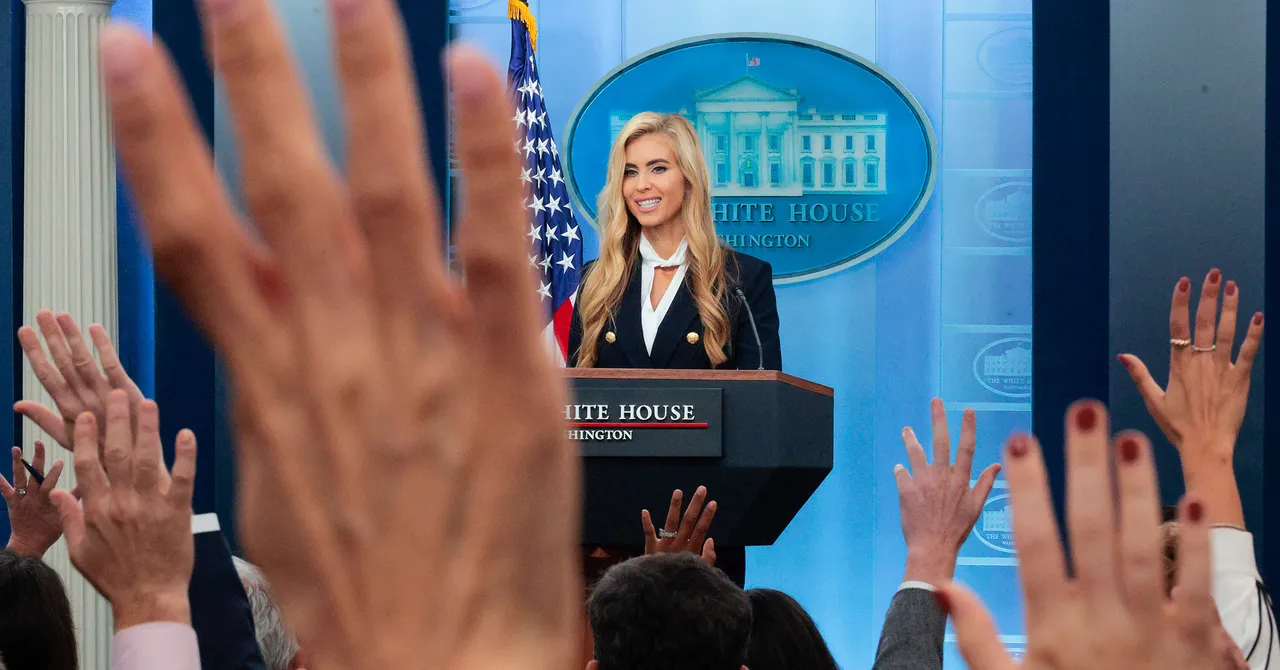
Katie Zacharia, who was dismissed after just five days as White House press secretary, was never actually seated on the advisory board of an AI-focused rare-earths mining company despite a public announcement saying she was. The episode adds another layer to the scrutiny around her short-lived government tenure and the increasingly unusual mix of political operatives, media figures and defense-linked personalities surrounding the Canadian startup now calling itself NRED Intelligent Mining.
The company’s public claims about Zacharia, combined with its pivot from conventional copper and gold exploration to an AI-assisted mineral platform, have turned what might have been a routine junior-mining announcement into a story about credibility, promotional hype and the growing rush to wrap critical-minerals projects in artificial intelligence branding.
What happened with Katie Zacharia?
Katie Zacharia’s connection to NovaRed Mining, now NRED Intelligent Mining, appears to have been far more limited than the company suggested this summer. On June 24, the Vancouver-based miner issued a press release saying Zacharia would join its advisory board alongside former Homeland Security secretary Kristi Noem, offering strategic guidance as the company advanced exploration projects and AI initiatives.
But when asked about the role this week, Zacharia said it was “fake,” according to reporting from WIRED. People familiar with the company’s plans also acknowledged that conversations took place, but said the appointment was never finalized. In other words, the company publicly treated a deal as done before it actually was.
That distinction matters because NRED kept the announcement visible on its website even after it was allegedly withdrawn. An archived version of the site showed Zacharia listed as part of management for at least part of the summer, suggesting the company did not quickly correct the record.
“That was fake,” Zacharia said when asked whether she was still on the board, according to WIRED’s reporting.
Why does this matter?
It matters because the episode touches several overlapping issues: the reliability of corporate disclosures, the use of political names to generate legitimacy, and the broader effort by mining companies to rebrand themselves around artificial intelligence. It also arrives at a moment when Zacharia is already facing close attention over her brief and turbulent public-service career.
Before being fired, Zacharia had already become a lightning rod for questions about her résumé, including the fact that she had represented herself for years as an attorney despite never passing the California bar. WIRED previously reported that she also worked as an affiliate marketer for Beachbody, a multilevel-marketing fitness company. The new mining story further underscores how little is settled about her professional history and the companies eager to associate with her name.
For NRED, the controversy is even more awkward because it is trying to present itself as a serious player in the critical-minerals and AI space. Instead of strengthening that case, the Zacharia episode raises the possibility that the company used a high-profile political connection before the arrangement was real.
How did NRED’s AI mining pitch evolve?
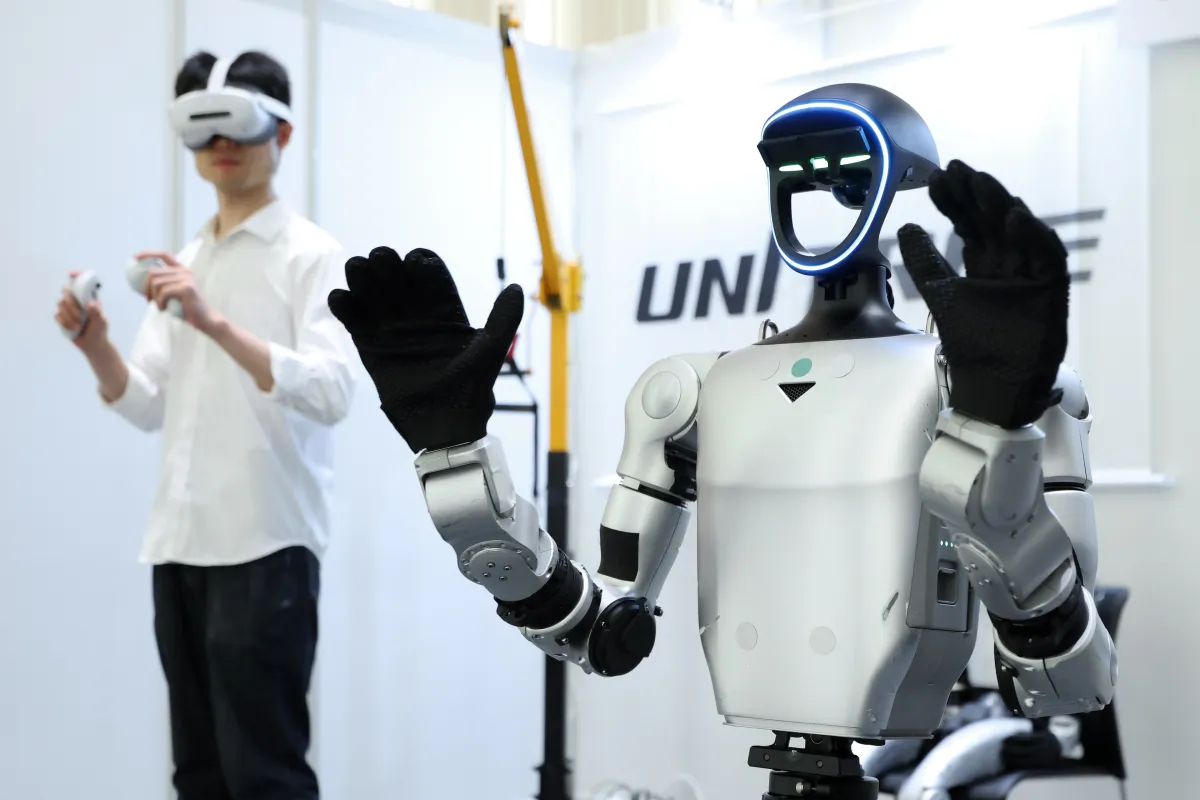
NRED’s shift is dramatic. The company began as NovaRed Mining, a small copper and gold explorer in Canada. More recently, it has rebranded around artificial intelligence and robotics, with chief technology officer Valentin Saitarli describing an ambition to go “full robots and AI.”
The company’s latest emphasis is not just on traditional mineral extraction but on MetalCore, which it describes as an AI-assisted mineral exploration platform. In practical terms, that means the firm is no longer presenting itself solely as a junior mining company looking for ore bodies. It is trying to sell investors, partners and the public on a technology layer that could make the business sound bigger, more futuristic and more investable than a standard early-stage miner.
Saitarli told WIRED the company wants to move from conventional exploration into a broader vision of robotics-enabled mining and global-scale resource development. His rhetoric stretched beyond the ground itself, invoking Mars, lunar weddings and space hotels as part of a long-term vision. The language is colorful, but it also illustrates a broader trend: companies in hard industries increasingly attach themselves to AI to signal innovation, even when the operational details remain fuzzy.
From copper claims to AI branding
NovaRed’s transformation did not happen overnight. The company had been publicly described as a copper and gold exploration venture that generated no revenue, and its financial position had looked fragile earlier in the year. At one point, the company reportedly held only about $65,689 in cash, a sum that was not expected to cover its next 12 months of expenses.
That financial context is important. Startups and junior miners often rely on narrative as much as asset value. When cash is tight and projects are early, advisory-board names can help shape market perception. In that environment, the appearance of a former White House spokesperson or a former cabinet secretary can carry outsized symbolic value, even if the underlying business is still speculative.
Who else is involved in the company?
Several other unusual figures have joined or been linked to the company’s advisory orbit. Former Department of Homeland Security secretary Kristi Noem was announced as a strategic advisor, prompting criticism in Canada because of her past remarks describing Canada as the “51st state.”
The company also brought in Phil Ehr, a retired U.S. Navy commander and Democratic congressional candidate in Florida, who said he knew little about mining but believed the United States needed more copper and critical minerals. Ehr said he was surprised when the company announced that Noem and another DHS spokesperson—whom he understood to be Zacharia—were joining the advisory team.
According to Ehr, the company seemed to favor people with political or media backgrounds over mining specialists. He said he expected geologists and technical experts, not a lineup that included figures with government, royal-family and entertainment credentials.
Ehr said he had to reconsider his involvement after objecting to Noem’s presence, explaining that he did not want to be associated with her politics or reputation.
Other names described in the company’s orbit include Gregory Fedun, previously said to have advised the UAE’s Al Mualla royal family, and media executive Lee Caplin, who co-produced the HBO series True Detective. Taken together, the roster looks less like a traditional mining advisory board and more like a cross-section of politics, media, defense and international networking.
What did the company say about Zacharia?
After WIRED asked about the arrangement, Sam Amsterdam, described as a strategic marketing and media engagement professional, said the release had not been approved by Zacharia and had been issued without her consent. He said there had been conversations about her joining but that she never actually did.
Valentin Saitarli gave a similar account, saying the role had been discussed but never materialized. He compared the process to signing up for a gym membership and never attending a workout, a metaphor that suggests the company views the matter as more of an unfinished negotiation than a formal appointment.
Even so, the public record was not cleaned up quickly. The advisory-board claim remained online after the dispute surfaced, and an archived version of the company website still showed Zacharia in management. That delay may seem minor, but for a company trying to project professionalism and technical seriousness, lingering inaccuracies can be damaging.
Why mixed messages hurt mining startups
Mining startups depend heavily on trust. Investors want to know whether a company actually controls mineral rights, whether its cash position is realistic, and whether management understands the technical risks. When the organization starts making loose or premature claims about people on its team, skepticism spreads quickly.
That is especially true in critical-minerals and AI sectors, where hype is already rampant. Many companies try to ride the same wave of enthusiasm that has boosted artificial intelligence more broadly, even if their underlying businesses are far removed from software or model development. If a company is overstating personnel ties, it may encourage questions about other claims too.
How did Zacharia’s government role end so quickly?
Zacharia’s White House stint was over almost as soon as it began. She was fired after only five days as press secretary, after a tenure that was marked not by policy achievements but by scrutiny of her background and shifting public explanations of her credentials.
Before that job, she had served for about a month as deputy assistant press secretary for public affairs at the Department of Homeland Security under Noem. Reported ties to Corey Lewandowski, a major figure in Trump-era political circles, also drew attention, though Zacharia has disputed some of those characterizations.
The combination of a short White House run, a complicated résumé and now the disputed mining-board claim has made Zacharia a recurring subject of media interest. For public officials and companies alike, the central issue is not just whether someone had a role, but whether the public story told about that role matches reality.
Timeline of the NRED-Zacharia controversy
The events unfolded over several months, with the company’s public messaging changing alongside its business strategy. The following table summarizes the major milestones described in WIRED’s reporting.
| Date | Event | Why it matters |
|---|---|---|
| January 2026 | NovaRed’s finances were reported to be strained, with limited cash on hand. | Shows the company’s need for new capital and a stronger narrative. |
| April 2026 | Zacharia left her DHS spokesperson role. | Set up her later linkage to the mining company. |
| June 24, 2026 | NovaRed announced Zacharia and Kristi Noem as advisory-board additions. | Created the public impression that the company had secured high-profile political figures. |
| July 2026 | An archived site version still showed Zacharia in management. | Suggests the company had not corrected the record promptly. |
| October 2026 | WIRED reported that Zacharia said the role was “fake” and never completed. | Raised new questions about disclosure accuracy and the company’s credibility. |
What is MetalCore, and why is the company emphasizing it?
MetalCore is NRED’s name for an AI-assisted mineral exploration platform, and the company is now putting its resources behind that effort rather than its Wilmac copper-gold project. That pivot suggests the firm is trying to move from a conventional exploration story to a technology-enabled growth story.
There are several reasons a mining company might do this. First, AI is far more attractive in current market conversations than plain-old exploration. Second, software or automation language can make a project sound scalable. Third, in a sector where discovery is slow and capital-intensive, an AI wrapper can create the impression of speed and precision.
Still, the actual performance of such systems is what will matter. If the platform cannot identify prospects better than existing methods, the branding will not change the underlying economics of mining, which remain expensive, uncertain and deeply tied to geology.
Why critical minerals attract political figures
Critical minerals have become strategically important because they feed batteries, electronics, defense systems and clean-energy infrastructure. As a result, startups working in this space often seek out political names that signal access, influence or policy relevance.
That helps explain why a former cabinet secretary, a former DHS spokesperson and a congressional candidate might find themselves attached to the same junior company. The value is not necessarily technical expertise. It may be access to donors, media attention, government familiarity or simply the ability to sound important in a crowded market.
But that strategy cuts both ways. If the public perceives that names were added mainly for optics, the company may gain short-term attention but lose long-term credibility.
How did the Beachbody connection fit into the story?
Zacharia’s past work with Beachbody, the fitness and nutrition company often criticized as a multilevel marketing business, adds another layer of intrigue to her public profile. The company’s network-marketing structure has long been controversial, with supporters calling it entrepreneurial and critics calling it pyramid-like.
In the WIRED exchange, Zacharia reached out to ask a reporter to speak with a Beachbody affiliate for clarification. The affiliate, Jenelle Summers, said she remembered Zacharia as kind and interested in fitness, but not especially active in the business. Summers rejected the notion that the company was a pyramid scheme, saying that description reflected outdated thinking and that the model was network marketing instead.
That side thread may seem unrelated to mining, but it reinforces the central theme of Zacharia’s career: she appears to have moved through several high-visibility or reputation-sensitive spaces without leaving a clear, easily verifiable professional trail.
What the episode says about AI hype in traditional industries
The NRED story is bigger than one disputed advisory-board appointment. It reflects how quickly AI language has spread into industries far from software, from mining to manufacturing to logistics. Companies that once would have marketed themselves through geology, engineering or acreage now frequently emphasize algorithms, automation and “intelligent” platforms.
That does not mean every AI label is meaningless. Some firms genuinely use machine learning to improve exploration, reduce costs or sort through data more efficiently. But the broader market has also become crowded with companies that use AI as a branding shortcut. In those cases, the label often does more work than the product.
NRED’s mix of rebranding, political announcements and aspirational talk about robots and Mars fits that pattern closely. It may appeal to audiences looking for the next big thing, but it also invites skepticism from anyone asking the basic question: what, exactly, is the company selling?
What happens next?
The immediate next step is simple: investors, observers and regulators will be watching whether NRED corrects its public materials and clarifies exactly who was actually on the advisory board, when, and under what terms. If the Zacharia announcement was premature or unauthorized, the company will need to explain why it stayed online as long as it did.
More broadly, the company will need to show that its pivot to MetalCore is more than marketing. That means demonstrating technical traction, credible leadership and a real path toward commercial viability. Without that, the company risks being remembered less for mineral discovery than for a strange blend of political names, AI branding and public-relations confusion.
For Zacharia, the matter adds yet another episode to an already unusual public profile. For NRED, it is a reminder that in markets built on trust, the story you tell about your team can matter almost as much as the assets you say you own.
Key facts at a glance
- NRED Intelligent Mining is the new name for NovaRed Mining, a Vancouver-based copper and gold exploration company.
- The company publicly said Katie Zacharia would join its advisory board in June 2026.
- Zacharia later said that claim was false and that she never actually took the role.
- Kristi Noem was also announced as a strategic advisor, prompting criticism in Canada.
- The company is now emphasizing an AI-assisted platform called MetalCore and a broader robotics-and-mining vision.
The controversy may ultimately prove to be a footnote in a larger business story. But it is also a useful case study in the way AI hype, political branding and fragile corporate disclosures can combine to create a narrative that is bigger than the underlying facts.
Frequently asked questions
Did Katie Zacharia actually join NRED’s advisory board?
No, according to WIRED’s reporting and comments from people associated with the company, the role never became official. Zacharia said the announcement was fake, and others said discussions happened but the appointment was never completed.
What is NRED Intelligent Mining?
NRED Intelligent Mining is the rebranded version of NovaRed Mining, a Vancouver-based junior miner that once focused on copper and gold exploration. The company is now pitching an AI-assisted mineral exploration platform called MetalCore and a broader robotics-driven strategy.
Why is Kristi Noem connected to the company?
Kristi Noem was announced as a strategic advisor to the company, which drew criticism in Canada because of her past comments about Canada being the “51st state.” Her involvement is part of a broader pattern of politically connected names being attached to the firm.
Why is this story important for AI and mining watchers?
It shows how quickly AI branding is spreading into traditional industries and how that can blur the line between real technical progress and marketing. It also highlights the reputational risks when companies publicize personnel ties before they are fully confirmed.